Cloning Lagunitas IPA requires meticulous attention to a balanced malt backbone, assertive but not overpowering hop bitterness, and vibrant aroma. Aim for an Original Gravity of 1.063, fermenting down to 1.011 for a 6.8% ABV. Key to its character are late additions of Centennial, Cascade, and Simcoe hops, along with a careful dry-hopping regimen and a clean American ale yeast.
| Metric | Target Value |
|---|---|
| Original Gravity (OG) | 1.063 |
| Final Gravity (FG) | 1.011 |
| Alcohol By Volume (ABV) | 6.8% |
| International Bitterness Units (IBU) | 58 |
| Standard Reference Method (SRM) | 9 |
| Mash Temperature | 66°C (151°F) |
| Fermentation Temperature | 19°C (66°F) |
| Batch Size | 19 Liters (5 Gallons) |
When I first set out to clone Lagunitas IPA, I thought it would be as simple as throwing a bunch of C-hops into the kettle. I mean, it’s an IPA, right? More hops, more better! Boy, was I wrong. My first few attempts were either too bitter, too malty, or lacked that distinct bright, piney-citrus aroma with a subtle underlying caramel sweetness that makes Lagunitas so effortlessly drinkable. I learned quickly that achieving balance is paramount, and it’s a tightrope walk between malt, bitterness, and aromatic punch. The true magic, I discovered, lies not just in the quantity of hops, but in their precise timing and the thoughtful construction of the malt bill. After years of iterative brewing and meticulous note-taking, I’ve dialled in a recipe that consistently delivers a clone I’m genuinely proud of. Let me share my experience and the hard data I’ve gathered so you can skip my early missteps.
The Math: Decoding the Recipe
Brewing isn’t just an art; it’s a science, and understanding the numbers behind your beer is critical. Here’s how I break down the components for a 19-liter (5-gallon) batch of my Lagunitas IPA clone, targeting an Original Gravity of 1.063 and 58 IBUs.
Grain Bill: The Foundation
The malt bill provides the fermentable sugars for alcohol, body, and a crucial counterpoint to the hop bitterness. My goal is a slightly sweet, bready, and caramel-accented base without overshadowing the hops.
| Malt Type | Weight (kg) | Weight (lb) | Percentage (%) | Contribution |
|---|---|---|---|---|
| Two-Row Pale Malt | 5.45 kg | 12.0 lb | 88.2% | Base fermentables, bready notes |
| Crystal Malt (40L) | 0.34 kg | 0.75 lb | 5.5% | Light caramel, color |
| Munich Malt I | 0.25 kg | 0.55 lb | 4.0% | Malt complexity, body |
| Carapils Malt (Dextrin Malt) | 0.14 kg | 0.3 lb | 2.3% | Head retention, body |
| TOTAL | 6.18 kg | 13.6 lb | 100% |
Hop Schedule & IBU Calculation
The IBU calculation is complex, involving hop alpha acids, boil time, and wort gravity. For simplicity, here’s the target IBU contribution from each addition, aiming for a total of 58 IBUs at 75% brewhouse efficiency, which I typically achieve on my system. I don’t get hung up on proprietary blends; I focus on character. Centennial, Cascade, Simcoe, and Columbus work synergistically for this profile.
| Hop Type | Amount (g) | Amount (oz) | Boil Time (min) | Alpha Acid (%) | Est. IBU Contribution | Purpose |
|---|---|---|---|---|---|---|
| Columbus (CTZ) | 28 g | 1.0 oz | 60 | 14.5% | 35.2 | Primary bitterness |
| Centennial | 21 g | 0.75 oz | 15 | 10.5% | 8.5 | Flavor, bitterness lift |
| Cascade | 21 g | 0.75 oz | 10 | 6.0% | 3.5 | Flavor, aroma |
| Simcoe | 21 g | 0.75 oz | 5 | 13.0% | 3.0 | Late flavor, aroma |
| Centennial | 28 g | 1.0 oz | 0 (Whirlpool) | 10.5% | 4.0 | Whirlpool flavor, aroma |
| Cascade | 28 g | 1.0 oz | 0 (Whirlpool) | 6.0% | 2.0 | Whirlpool flavor, aroma |
| Simcoe | 28 g | 1.0 oz | 0 (Whirlpool) | 13.0% | 1.8 | Whirlpool flavor, aroma |
| TOTAL IBU | 58.0 |
*Whirlpool additions are added after heat is turned off, steeped for 20 minutes as wort cools from 98°C to 80°C (208°F to 176°F). This is crucial for maximizing hop aroma and flavor without extracting excessive bitterness.
Yeast Selection: The Fermentation Engine
For this clone, I always use a clean-fermenting American Ale yeast. My go-to is Fermentis US-05 dry yeast (one packet, rehydrated), or Wyeast 1056 / White Labs WLP001 (two vials/smack packs, with a 1.5L starter for optimal cell count). These yeasts produce a neutral profile, allowing the malt and hops to shine.
Water Profile: The Unsung Hero
Water chemistry is often overlooked by homebrewers, but it’s paramount for an IPA. Lagunitas IPA has a distinctive minerality that supports the hop profile without harshness. I start with reverse osmosis (RO) water and build my profile from scratch. For a 25-liter (6.6-gallon) mash/sparge volume, I aim for the following ion concentrations (approximated based on known IPA profiles):
- Calcium (Ca²⁺): 100 ppm
- Magnesium (Mg²⁺): 10 ppm
- Sodium (Na⁺): 20 ppm
- Sulfate (SO₄²⁻): 250 ppm
- Chloride (Cl⁻): 70 ppm
- Bicarbonate (HCO₃⁻): 50 ppm (target residual alkalinity around -50 to -70 ppm as CaCO₃)
This translates to additions like gypsum (CaSO₄·2H₂O) for sulfate and calcium, and calcium chloride (CaCl₂) for calcium and chloride. The higher sulfate-to-chloride ratio (approx. 3.5:1) accentuates hop bitterness and dryness, while still providing enough chloride for a pleasant mouthfeel. I always measure my mash pH, targeting **5.2-5.4** at mash temperature.
Step-by-Step Execution: My Brewing Day Process
This is my tried-and-true process for consistently brewing this clone. Precision at each stage is what separates good beer from great beer.
-
Water Treatment & Heating:
- Start with 19 liters (5 gallons) of RO water for the mash and 13 liters (3.4 gallons) for the sparge.
- Add water salts per your calculations to achieve the target water profile.
- Heat mash water to **71°C (160°F)** to achieve target mash temperature.
-
Mash In:
- Carefully add crushed grains to the mash tun, stirring thoroughly to prevent dough balls.
- Target a mash temperature of **66°C (151°F)**. Verify with a calibrated thermometer.
- Maintain this temperature for **60 minutes**. During this time, I often check the mash pH, adjusting with lactic acid if necessary to hit 5.2-5.4.
-
Mash Out:
- Raise the mash temperature to **76°C (170°F)** for **10 minutes** to halt enzymatic activity and reduce wort viscosity.
-
Recirculation (Vorlauf):
- Begin recirculating the wort gently until it runs clear, usually about 10 minutes. This forms a natural filter bed.
-
Sparge:
- Slowly drain the wort into your boil kettle. As the grain bed becomes exposed, begin adding sparge water at **77°C (170°F)** over the grain bed, maintaining about 1-2 inches of water above the grains.
- Collect approximately **25 liters (6.6 gallons)** of wort in your boil kettle, aiming for a pre-boil gravity around 1.050.
-
Boil:
- Bring the wort to a rolling boil. Skim any hot break foam that forms during the first 10-15 minutes.
- 60 minutes: Add **28g (1.0 oz) Columbus (CTZ)** hops.
- 15 minutes: Add **21g (0.75 oz) Centennial** hops.
- 10 minutes: Add **21g (0.75 oz) Cascade** hops.
- 5 minutes: Add **21g (0.75 oz) Simcoe** hops.
- 10 minutes: Add a yeast nutrient (e.g., 1/2 tsp Wyeast Beer Nutrient) and 1/2 tsp Irish Moss or 1/4 tsp Whirlfloc tablet for clarity.
- After **60 minutes**, turn off the heat.
-
Whirlpool/Hop Stand:
- Initiate a whirlpool, stirring the wort vigorously for 1-2 minutes.
- Add the whirlpool hops: **28g (1.0 oz) Centennial, 28g (1.0 oz) Cascade, and 28g (1.0 oz) Simcoe**.
- Allow the wort to steep and cool for **20 minutes**, keeping the lid on. The temperature should drop from near boiling to approximately **80-85°C (176-185°F)** during this time.
-
Chilling:
- Rapidly chill the wort to pitching temperature, aiming for **18°C (64°F)**. I use an immersion chiller, circulating cold water until the target temperature is reached.
-
Fermentation:
- Transfer the chilled wort to a sanitized fermenter. Aerate thoroughly (shaking, O₂ stone, or pure O₂ injection) to ensure good yeast health.
- Pitch your rehydrated US-05 dry yeast, or your liquid yeast starter.
- Ferment at a controlled temperature of **19°C (66°F)** for 7-10 days, or until fermentation is complete (gravity stabilizes).
- Once fermentation activity slows, after about 4-5 days, perform your first dry hop addition: **56g (2.0 oz) Centennial, 28g (1.0 oz) Cascade, 28g (1.0 oz) Simcoe**. Allow to steep for **3 days**.
- After the first dry hop, check gravity. Once it reaches **1.011** (or your target FG), perform a second dry hop addition: **56g (2.0 oz) Centennial, 28g (1.0 oz) Cascade, 28g (1.0 oz) Simcoe**. This second dry hop is critical for sustained aroma. Steep for another **3-4 days**.
-
Cold Crash & Fining:
- Once both dry hop periods are complete and gravity is stable, cold crash the beer to **0-2°C (32-35°F)** for **48-72 hours**. This helps drop yeast and hop particles, enhancing clarity.
- Optional: Add fining agents like gelatin during the cold crash for crystal clear beer.
-
Packaging:
- Rack the beer carefully to a keg or bottling bucket.
- For kegging, carbonate to **2.4-2.6 volumes of CO₂**. For bottling, use appropriate priming sugar (e.g., 120-135g dextrose for 19L batch) to achieve similar carbonation levels.
- Condition for at least one week in the keg or bottle before enjoying. For an IPA, freshness is key!
Troubleshooting: What Can Go Wrong
I’ve seen it all in my 20 years, and IPAs, while rewarding, can be finicky. Here are common issues and how I prevent or fix them:
- Oxidation (Cardboard/Sherry Flavors): This is the bane of any IPA brewer. Minimize splashing during chilling, transfer, and packaging. I purge my kegs with CO₂ multiple times before transferring. Always cap bottles on foam. Early exposure to oxygen creates stale flavors rapidly.
- Diacetyl (Buttery/Popcorn Flavor): Typically a fermentation issue. Ensure proper yeast health and a consistent fermentation temperature. My **19°C (66°F)** fermentation schedule is designed to allow the yeast to clean up diacetyl precursors. If you detect it, let the beer sit at fermentation temperature for a few extra days (a ‘diacetyl rest’).
- Under-attenuation (Too Sweet, High FG): Usually from poor yeast health, insufficient aeration, or mashing too high. Ensure you pitch enough healthy yeast and aerate well. If your mash temperature creeps above **68°C (154°F)**, it can produce more unfermentable sugars.
- Lack of Hop Aroma (Fading Hops): This often comes from inadequate dry hopping, or dry hopping for too long. My two-stage dry hop schedule is designed to provide both initial punch and sustained aroma. Excessive cold crashing with hops still present can also strip aroma. Drink fresh!
- Harsh Bitterness: Can be caused by over-sparging (extracting tannins from the grain husks), a high mash pH, or an imbalanced water profile. Ensure your sparge water isn’t too hot and doesn’t drop your mash pH too low. Check your water chemistry, aiming for that specific SO₄:Cl ratio.
Sensory Analysis: Experiencing My Lagunitas IPA Clone
After all that effort, the moment of truth arrives. Here’s what I experience when I pour a glass of my best Lagunitas IPA clone:
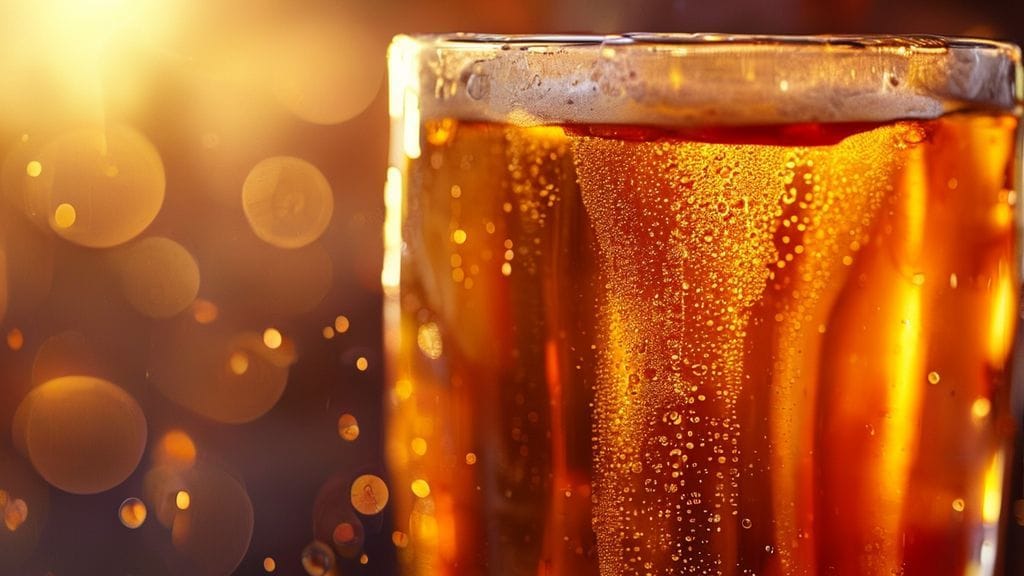
- Appearance: It pours a beautiful, slightly hazy copper-gold with a dense, persistent white head. Good clarity, but not brilliantly bright, which is characteristic of the original. Lacing clings to the glass as I drink, a sign of good head retention and body.
- Aroma: The first whiff is a burst of vibrant citrus (grapefruit, orange peel) and pine, backed by subtle floral and dank undertones from the blend of Centennial, Cascade, and Simcoe. There’s a faint hint of bready malt that provides a pleasant counterpoint, not competing, but providing a grounding note. The aroma is assertive, yet balanced, drawing you in for the first sip. This is where my precise hop timing really shines.
- Mouthfeel: It has a medium body, neither thin nor cloying, with moderate carbonation that provides a gentle prickle on the tongue. The bitterness is firm but smooth, coating the palate without being harsh or astringent. There’s a slight resinous quality that contributes to its classic IPA feel.
- Flavor: The flavor mirrors the aroma, starting with a powerful wave of piney, resinous hops, followed by juicy citrus notes. The malt backbone comes through with a clean, slightly sweet caramel and bready character, supporting the hops rather than fighting them. The bitterness is present throughout, providing a crisp, dry finish that encourages another sip. There’s no distracting yeast character; it’s all hops and malt, exactly as it should be for a true IPA. This consistent experience is why I rely on my detailed process, which you can find more about at BrewMyBeer.online.
Frequently Asked Questions
What specific hop varieties are crucial for this Lagunitas IPA clone?
While Lagunitas uses a proprietary “L” blend, I’ve found that a combination of Centennial, Cascade, Simcoe, and Columbus (or CTZ) is essential to capture the core character. Columbus provides a clean, assertive bitterness, while Centennial and Cascade deliver the classic citrus-floral notes, and Simcoe adds that resinous pine and subtle fruit complexity. Don’t skimp on the whirlpool and dry hop additions with these varieties; that’s where the magic truly happens.
How important is water chemistry for cloning Lagunitas IPA?
Extremely important. I would argue it’s as critical as your hop schedule. Lagunitas IPA’s distinctive bite and clean finish are heavily influenced by its water profile, particularly a high sulfate-to-chloride ratio. Building your water from RO or distilled water with precise mineral additions like gypsum and calcium chloride allows you to dial in that crisp bitterness and help the hops pop, avoiding a muddy or bland character. Without the right water, your hops won’t sing as they should.
Can I use a different yeast strain for this recipe?
You can, but I strongly advise against it if you’re aiming for an accurate clone. My recipe specifies a clean-fermenting American Ale yeast like Fermentis US-05, Wyeast 1056, or White Labs WLP001. These strains are neutral and allow the hop and malt flavors to dominate. Using a yeast with a strong ester profile (e.g., British ale yeasts) or a less attenuative yeast would significantly alter the beer’s character, pushing it away from the crisp, hop-forward profile of Lagunitas IPA.
What’s the ideal conditioning time for this IPA clone?
For IPAs, freshness is paramount. I typically cold crash for 2-3 days, then carbonate in a keg or bottle. I recommend letting it condition for at least **1 week** after packaging to allow carbonation to fully integrate and flavors to meld. However, IPAs are best consumed within **1-2 months** for peak hop aroma and flavor. Don’t let this beer sit around too long; its vibrant hop character is fleeting. For more tips on keeping your brews fresh, check out BrewMyBeer.online.