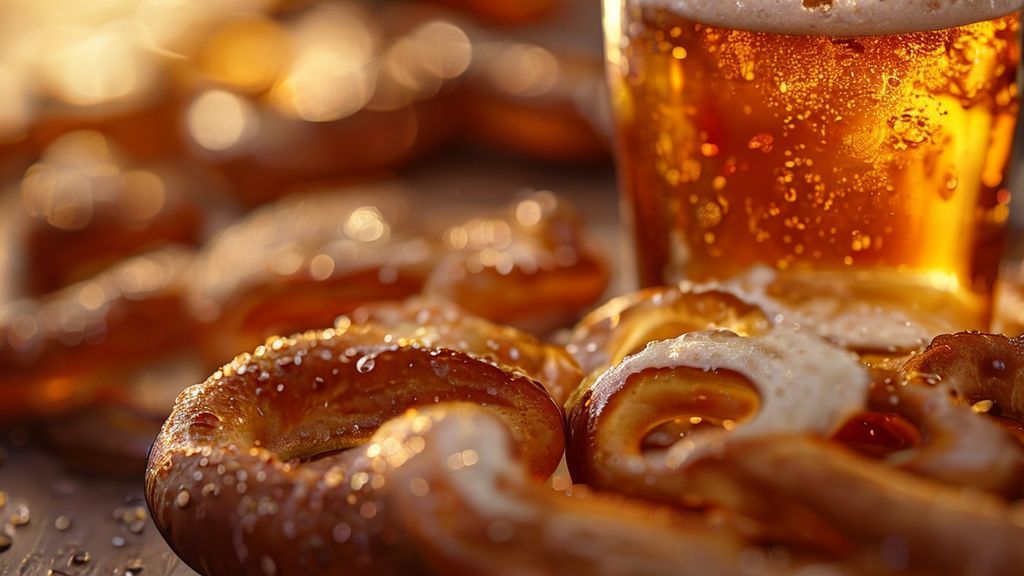
Crafting an exceptional Beer Cheese Dip for pretzels demands the same precision as brewing a flawless batch. Begin by meticulously building a roux, gradually incorporating warm milk and a balanced ale, then slowly emulsifying high-quality sharp cheddar and Gruyère off the heat. Season thoughtfully with dry mustard and a dash of hot sauce to achieve a harmonious, savory profile with optimal viscosity and flavor stability.
| Metric | Value (Approximate) | Notes |
|---|---|---|
| Yield | ~600ml / 2.5 cups | Serves 6-8 as an appetizer |
| Prep Time | 10 minutes | Excludes cheese grating time |
| Cook Time | 15 minutes | From start to finish |
| Ideal Serving Temperature | 60-65°C (140-149°F) | Maintains viscosity without separation |
| Recommended Beer Style | American Pale Ale or Amber Ale | Offers balanced malt and hop character |
| Beer IBU Range | 25-45 IBU | Avoids excessive bitterness; balance is key |
| Beer SRM Range | 6-12 SRM | Contributes a pleasant golden-amber hue |
| Optimal Cheese Fat % | 30-35% | Essential for smooth, stable emulsion |
| Target Dip pH | 5.2-5.4 | Prevents casein coagulation, enhances preservation |
The Brewer’s Hook: Perfecting the Emulsion, One Batch at a Time
In my two decades of brewing, I’ve learned that precision isn’t just for wort; it’s for everything I create in the kitchen, especially when beer is an ingredient. I recall my early attempts at Beer Cheese Dip with a familiar blend of fondness and mild embarrassment. My first few batches were either grainy, separating into an oily mess, or tasted overwhelmingly of bitter hops. I’d grab whatever IPA I had on hand, thinking “more beer, more flavor,” only to realize I was fundamentally misunderstanding the role of beer in a delicate emulsion.
Just as a brewer meticulously controls mash temperatures and fermentation profiles, a great Beer Cheese Dip demands control over heat, ingredient ratios, and the chemical interactions at play. I’ve spent countless hours, and more than a few ruined batches, dialing in the perfect formula. My journey taught me that selecting the right beer and understanding the science of cheese melting are paramount. It’s not just about throwing ingredients together; it’s about crafting a stable, flavorful matrix where every component plays its part. This isn’t just a recipe; it’s a deep dive into the thermal and chemical mechanics that result in a truly glorious dip. Trust me, I’ve made all the mistakes so you don’t have to.
The “Math” Section: Deconstructing the Dip
Just like formulating a grain bill, a superior Beer Cheese Dip relies on precise ratios and an understanding of how each component contributes to the final product. Here, I break down the science of proportion, ensuring consistency and stability.
Manual Calculation Guide: Optimal Ingredient Ratios
| Component Category | Ingredient | Standard Ratio (by weight) | Function & Impact |
|---|---|---|---|
| **Fat/Thickener Base (Roux)** | Unsalted Butter | 1 unit (e.g., 50g) | Provides fat for flavor, medium for flour dispersion. Melts at ~32-35°C. |
| All-Purpose Flour | 1 unit (e.g., 50g) | Starch gelatinization for thickening. Approximately 1g flour thickens 10-15g liquid. | |
| **Liquid Phase** | Whole Milk | 4-5 units (e.g., 200-250ml) | Provides creamy base, essential for cheese emulsion. Milk proteins (casein) contribute to body. |
| Brewed Beer (e.g., Pale Ale) | 3-4 units (e.g., 150-200ml) | Flavor, acidity, residual sugars. Beer’s Original Gravity (OG) of 1.045-1.060 is ideal for balanced malt character. Final Gravity (FG) around 1.010-1.015 leaves enough residual sweetness. | |
| **Cheese & Flavor** | Sharp Cheddar (grated) | 6-8 units (e.g., 300-400g) | Primary flavor, sharp tang. Casein structure breaks down at ~65°C for melt. |
| Gruyère or Fontina (grated) | 2-3 units (e.g., 100-150g) | Melting properties, nutty complexity. Higher fat content (30-35%) aids emulsion. | |
| **Seasoning** | Dry Mustard Powder | 0.02 units (e.g., 1g) | Enhances cheese flavor, provides subtle pungency. |
| Hot Sauce (e.g., Tabasco) | A few dashes (e.g., 1-2ml) | Adds acidity and capsaicin heat, cutting through richness. | |
| Salt & Freshly Ground Black Pepper | To taste | Essential flavor enhancers. |
Scaling the Recipe
To scale this recipe, I use a simple volumetric conversion. If I want to double the yield, I double every ingredient proportionally. The critical aspect is maintaining the roux ratio (1:1 butter to flour) and the overall liquid-to-cheese ratio. For every 100g of butter/flour roux, I target 350-450ml of liquid and 400-550g of cheese blend. This range allows for minor adjustments based on desired thickness and cheese intensity.
The Beer’s Contribution: A Micro-Analysis
The chosen beer isn’t merely a liquid; it’s a complex solution of fermentable sugars, unfermentable dextrins, proteins, hop compounds, and yeast esters. When I select a beer for my dip, I’m thinking about its Original Gravity (OG), Final Gravity (FG), IBU, and SRM values, much like I do when formulating a new brew for BrewMyBeer.online. A beer with an OG of 1.045-1.060 and an FG of 1.010-1.015 will retain enough residual sugars (dextrins) to contribute body and a subtle sweetness that balances the cheese’s lactic acidity. Beers with higher bitterness (e.g., IPAs with >60 IBU) will impart an astringent, lingering bitterness when concentrated, which clashes with the rich, creamy profile of the dip. Aim for 25-45 IBU. The beer’s pH (typically 4.0-4.4) also plays a subtle role in lowering the overall dip pH, helping to maintain emulsification by keeping casein proteins dispersed, though excessive acidity can lead to curdling.
Step-by-Step Execution: Crafting the Perfect Dip
Precision in technique is crucial for a smooth, stable, and incredibly flavorful Beer Cheese Dip. Follow my method closely.
- Prepare Your Mise en Place: Grate your cheeses and allow them to come to room temperature for at least 30 minutes. This ensures even melting and reduces the thermal shock when added to the hot liquid. Measure out all other ingredients. Warm your milk slightly; cold milk can cause the roux to seize.
- Initiate the Roux: In a heavy-bottomed saucepan or Dutch oven, melt **50g unsalted butter** over medium heat until fully liquefied, reaching approximately **90-100°C (194-212°F)**. Add **50g all-purpose flour** and whisk continuously for **2-3 minutes**. The mixture should form a pale, sandy paste (a blonde roux). Cooking out the raw flour flavor is critical here; insufficient cooking will result in a pasty dip.
- Incorporate Liquids Gradually: Slowly whisk in **200ml warmed whole milk** in a thin stream, ensuring no lumps form. Continue whisking until the mixture is smooth and begins to thicken, about **2 minutes**. Next, gradually whisk in **150ml of your chosen beer** (e.g., American Pale Ale or Amber Ale). Maintain medium-low heat, stirring constantly, allowing the mixture to gently simmer and thicken for another **3-5 minutes**. The temperature should be around **80-85°C (176-185°F)**. This slight reduction allows some alcohol to evaporate and concentrates the beer’s malt character.
- Emulsify the Cheese: Remove the saucepan from the heat. This is the most critical step for a smooth, lump-free dip. Add the grated cheeses (300g sharp cheddar, 100g Gruyère) in small handfuls, whisking continuously after each addition until fully melted and incorporated. Adding cheese off the direct heat prevents the casein proteins from denaturing too rapidly and causing a grainy texture. The ideal temperature for cheese melting and emulsification is between **65-75°C (149-167°F)**.
- Season and Refine: Once all the cheese is melted and the dip is smooth, stir in **1g (about ½ teaspoon) dry mustard powder** and **1-2ml (a few dashes) hot sauce**. Season to taste with salt and freshly ground black pepper. Remember, cheese can be salty, so season judiciously.
- Serve Immediately or Hold: Serve the dip warm with soft pretzels, crusty bread, or crudités. If holding, transfer to a small slow cooker on the “warm” setting, maintaining the ideal serving temperature of **60-65°C (140-149°F)**. Stir occasionally to prevent a skin from forming.
Troubleshooting: What Can Go Wrong and How to Fix It
Even with the most precise methods, unforeseen issues can arise. Here’s how I address common Beer Cheese Dip problems, drawing parallels to brewing quality control.
- Grainy Texture:
- Cause: Most often, overheating the cheese. High temperatures cause the casein proteins to coagulate too rapidly, expelling fat and creating a gritty mouthfeel. Also, pre-shredded cheese often contains anti-caking agents (like cellulose) which can hinder smooth melting.
- Fix: If caught early, try adding a tablespoon of warmed milk or beer and whisking vigorously off the heat. For severe cases, re-emulsifying might be possible with a small amount of sodium citrate (0.5% by weight of cheese), but it’s often a lost cause. Always grate your own cheese and add it off the heat, slowly.
- Separated or Oily Dip:
- Cause: Similar to graininess, too much heat or adding acidic ingredients (like hot sauce or lemon juice) too early or in too large a quantity can break the emulsion. Excessive stirring at high heat can also ‘break’ the fat out of the cheese matrix.
- Fix: Remove from heat immediately. Whisk in a teaspoon of cornstarch mixed with a tablespoon of cold milk to re-stabilize the emulsion. If the separation is due to oil, gently dab the surface with a paper towel.
- Too Thick or Too Thin:
- Cause (Too Thick): Too much flour in the roux or over-reduction of the liquid.
- Fix (Too Thick): Gradually whisk in a little extra warmed milk or beer, a tablespoon at a time, until the desired consistency is achieved. Reheat gently.
- Cause (Too Thin): Not enough flour in the roux, or insufficient cooking time for starch gelatinization.
- Fix (Too Thin): In a separate small bowl, whisk together a teaspoon of cornstarch with an equal amount of cold milk to create a slurry. Gradually whisk this slurry into the simmering dip until it thickens. Cook for 1-2 minutes to cook out the starch flavor.
- Overly Bitter Dip:
- Cause: Using a beer with too high an IBU (International Bitterness Unit) or allowing the beer to reduce too much, concentrating hop compounds.
- Fix: This is difficult to remedy once it’s happened. My advice is prevention: stick to medium-hopped ales. If it’s already bitter, you can try to balance it by adding a pinch of sugar or a bit more cheese, but this often only masks the issue.
- Lumpy Dip (from roux):
- Cause: Adding liquid to the roux too quickly, causing the flour to clump rather than disperse evenly.
- Fix: Vigorously whisk off the heat. If lumps persist, you can strain the dip through a fine-mesh sieve, but this will slightly reduce volume and is a last resort. Prevention is key: add liquid slowly and whisk constantly.
Sensory Analysis: The Master Brewer’s Evaluation
Just as I would evaluate a new batch of beer, I apply the same rigorous sensory analysis to my Beer Cheese Dip. Each element contributes to a holistic experience.
Appearance
The ideal Beer Cheese Dip should present with a smooth, velvety consistency, free from any lumps or separation. Its color is a rich, inviting golden-amber, reflecting the blend of golden-hued cheddar and the slight caramel notes from the chosen ale. A slight sheen indicates a well-emulsified dip, while any oil slick or grainy texture suggests a broken emulsion. When stirred, it should flow slowly, clinging to the spoon without being overly thick or watery.
Aroma
A deep inhalation should reveal a complex bouquet. The primary notes are unmistakably savory, dominated by the rich, lactic tang of aged cheese. Beneath this, I detect a pleasant malty sweetness – notes of bread crust, caramel, and sometimes a hint of biscuit, depending on the beer. A subtle, herbaceous, or citrusy hop aroma from the ale should be present but not overpowering. There’s often a warm, pungent undertone from the dry mustard, and a whisper of capsicum from the hot sauce, enhancing the overall savory profile without dominating.
Mouthfeel
This is where the mastery of emulsion shines. The dip should feel luxuriously creamy and coating on the palate, yet surprisingly light. There should be absolutely no graininess or grittiness. It possesses a moderate viscosity – thick enough to cling to a pretzel without dripping excessively, but fluid enough to be easily scoopable. The warmth is comforting, around the **60-65°C (140-149°F)** ideal, enhancing both the cheese melt and the aromatic release. A slight acidic tang from the cheese and beer provides a pleasant counterpoint to the richness, preventing it from feeling heavy.
Flavor
The flavor journey begins with a robust, umami-rich burst of sharp cheddar, immediately followed by the nutty, earthy depth of Gruyère. The beer introduces a nuanced malt character – hints of toasted grain, a touch of residual sweetness from unfermentable dextrins, and a balanced, clean bitterness that provides structure without harshness. The dry mustard adds a subtle, pungent complexity that amplifies the cheese’s character, while the hot sauce delivers a gentle, building heat that lingers pleasantly, cutting through the richness. The finish is savory, balanced, and invites another spoonful. It’s a symphony of fermented flavors, much like a perfectly crafted brew from BrewMyBeer.online.
Frequently Asked Questions About Beer Cheese Dip
What’s the best beer for Beer Cheese Dip?
From my experience, the optimal beer for Beer Cheese Dip is typically an American Pale Ale, an Amber Ale, or a mild Lager. I recommend a beer with an IBU range of 25-45 and an SRM of 6-12. These styles offer a balanced malt profile and moderate hop bitterness that complements the cheese without overpowering it. Avoid overly hoppy IPAs or extremely dark, roasty stouts, as their intense flavors and potential astringency can make the dip bitter or muddy the cheese notes.
How do I prevent my Beer Cheese Dip from getting grainy?
The primary culprit for grainy dip is usually excessive heat during cheese addition. To prevent this, always remove the sauce from direct heat before adding your cheese. Incorporate the grated cheese in small batches, whisking constantly until each addition is fully melted and smooth before adding more. Also, using freshly grated block cheese (avoiding pre-shredded varieties with anti-caking agents) significantly improves melting quality. Aim for a cheese melting temperature of 65-75°C (149-167°F).
Can I make Beer Cheese Dip ahead of time?
Yes, you can prepare Beer Cheese Dip ahead of time, but understand that the texture may change slightly upon reheating. Store it in an airtight container in the refrigerator for up to 3-4 days. When reheating, I always do it gently over low heat on the stovetop, whisking frequently, or in a double boiler. You might need to add a splash of warm milk or beer to restore its creamy consistency. Avoid microwaving on high heat, as this can easily cause separation or a grainy texture.
What’s the ideal serving temperature for Beer Cheese Dip?
My preferred serving temperature for Beer Cheese Dip is between 60-65°C (140-149°F). At this range, the dip is perfectly melted and fluid, ensuring optimal mouthfeel and flavor release without being so hot that it scorches the palate or causes cheese separation. If you’re serving a larger crowd, I recommend using a small slow cooker set to its “warm” function, stirring occasionally to maintain consistency and prevent a skin from forming on the surface.