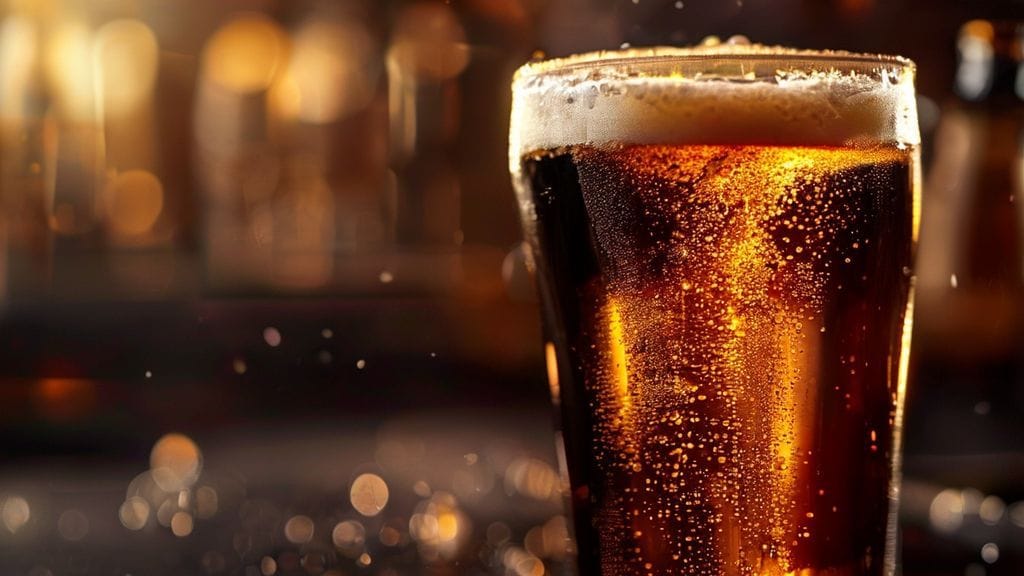
The Black Velvet cocktail masterfully weds the rich, roasty depth of a dry stout with the crisp effervescence of a brut sparkling wine. Achieving the classic layered separation requires precise understanding of liquid densities and a controlled pouring technique. When executed correctly, it delivers an elegant sensory experience, balancing malty complexity with a dry, refreshing finish at a target ABV of approximately 7.5-8.5%.
| Metric | Specification |
|---|---|
| Cocktail Style | Black Velvet |
| Base Stout Style | Dry Irish Stout (e.g., 4.2% ABV, Apparent Extract ~2.5°P, SG ~1.010) |
| Sparkling Wine Style | Brut Sparkling Wine (e.g., 11.5% ABV, Residual Sugar <12 g/L, SG ~0.992) |
| Optimal Ratio (Stout:Wine) | 1:1 (by volume) |
| Target Cocktail ABV | ~7.85% (calculated using example ABVs above) |
| Serving Temperature | 4-6°C (39-43°F) |
| Recommended Glassware | Champagne Flute or Pint Glass |
| Preparation Time | ~3 minutes |
The Brewer’s Hook: Mastering the Density Divide
In my two decades of brewing, I’ve learned that precision isn’t just for fermentation vessels; it extends right into the glass. When I first encountered the Black Velvet, I dismissed it as a simple two-ingredient pour. My initial attempts resulted in a muddy, integrated drink, losing the visual appeal and distinct sensory journey it promises. I’d just dump the sparkling wine in, expecting magic. It wasn’t until I started treating the Black Velvet not just as a cocktail, but as a mini-experiment in fluid dynamics, that I truly appreciated its elegance. The “aha!” moment came when I stopped thinking about just mixing ingredients and started focusing on their individual specific gravities and how temperature impacts them. This is where the brewer’s mindset elevates the bartender’s craft.
The Math: Understanding Density and ABV Dynamics
The beauty of the Black Velvet lies in its layered presentation, and that’s all about density. As brewers, we’re intimately familiar with specific gravity (SG) – the measure of a liquid’s density relative to water (SG 1.000). For this cocktail, the principle is simple: the denser liquid goes first. However, understanding *why* a stout is typically denser than a dry sparkling wine, despite both being mostly water, is crucial.
Manual Calculation Guide: Density & ABV
Here’s how I break it down:
- Stout Density: A typical dry Irish stout, post-fermentation, will have residual sugars and unfermentable dextrins. Its Final Gravity (FG) might sit around 1.008 to 1.012. This means it’s slightly denser than water.
- Sparkling Wine Density: A brut sparkling wine, while having some residual sugar, also has a significant alcohol content (ethanol). Ethanol’s specific gravity is approximately 0.789 g/mL, which is significantly less dense than water. This high alcohol content usually pulls the overall density of the wine *below* 1.000, often in the range of 0.990 to 0.995, even with some dissolved sugars.
This density difference – the stout’s SG > 1.000 and the sparkling wine’s SG < 1.000 – is the fundamental reason the stout forms the base layer. If you were to use a significantly sweeter sparkling wine or a very light, low-gravity stout, this dynamic could change, making layering impossible or even reversing it.
| Component | Example SG at 20°C | Example ABV |
|---|---|---|
| Dry Irish Stout | ~1.010 | ~4.2% |
| Brut Sparkling Wine | ~0.992 | ~11.5% |
Calculating the Cocktail’s Final ABV:
For a 1:1 ratio, the calculation is a simple weighted average. Let’s assume a 150ml serving of each ingredient for a total 300ml cocktail:
ABV_Cocktail = [(Volume_Stout * ABV_Stout) + (Volume_Wine * ABV_Wine)] / Total_Volume
Using our example values:
ABV_Cocktail = [(150ml * 0.042) + (150ml * 0.115)] / 300ml
ABV_Cocktail = [6.3 + 17.25] / 300
ABV_Cocktail = 23.55 / 300
ABV_Cocktail = 0.0785 or 7.85% ABV
This calculation ensures I understand the impact of the stronger sparkling wine on the overall drink profile, allowing me to adjust ratios if I desire a lighter or stronger final product.
Step-by-Step Execution: The Perfect Pour
Achieving the perfect Black Velvet is about precision and respect for fluid dynamics. I follow these steps meticulously:
- Chill Components & Glassware: This is non-negotiable. Ensure both your dry stout and sparkling wine are thoroughly chilled to 4-6°C (39-43°F). Equally important, chill your glassware (flute or pint glass) in the refrigerator for at least 15 minutes prior. Colder liquids are denser, and a cold glass prevents premature warming and helps maintain effervescence.
- The Stout Base: Pour the chilled dry stout into your chosen glass, filling it to approximately halfway. Resist the urge to aggressively pour, which can create excessive foam. A steady, controlled pour down the side of the glass is ideal, aiming for minimal head.
- The Spoon Barrier: This is the key to layering. Take a chilled bar spoon (or any spoon with a flat back) and invert it, holding the convex side up. Position the spoon just above the surface of the stout, with the tip touching the inside wall of the glass. The angle should be about 45 degrees.
- Layering the Wine: Slowly, and I mean *slowly*, pour the chilled sparkling wine over the back of the spoon. The wine should cascade gently onto the stout, spreading out rather than plunging into it. The spoon acts as a baffle, diffusing the kinetic energy of the pour and allowing the lighter wine to float atop the denser stout.
- Fill to the Brim: Continue pouring slowly over the spoon until the glass is full, maintaining the distinct two-layer separation. The contrast should be stark: an opaque, dark base capped by a sparkling golden layer.
- Serve Immediately: This cocktail is at its best when fresh and effervescent. Serve without stirring. The drinker can then experience the layers individually before they naturally (or intentionally) mingle.
For more advanced techniques and to troubleshoot other complex mixed drinks, be sure to check out the extensive guides on BrewMyBeer.online.
Troubleshooting: What Can Go Wrong
Even with precision, things can go awry. Here’s my experience with common issues:
- Layers Don’t Separate or Mix Instantly:
- Cause 1: Insufficient Chilling. Warm liquids are less dense. If your stout isn’t cold enough, its density advantage over the wine diminishes, or even reverses if the wine is significantly colder.
- Cause 2: Aggressive Pouring. Pouring the wine too fast or directly into the stout without a spoon introduces too much turbulence and kinetic energy, forcing the liquids to mix.
- Cause 3: Incorrect Spoon Technique. The spoon wasn’t angled correctly, or its surface wasn’t effectively diffusing the pour. The wine needs to gently flow down the spoon.
- Cause 4: Ingredient Selection. While rare, if your stout has an unusually low FG (e.g., <1.005) or your sparkling wine has a very high residual sugar content (making its SG > 1.000), the natural density gradient might be compromised. Stick to dry stouts and brut sparkling wines.
- Flat or Low Effervescence:
- Cause 1: Warm Ingredients/Glassware. Carbon dioxide solubility decreases with increasing temperature. Warm wine will lose its fizz faster.
- Cause 2: Old/Opened Sparkling Wine. The CO2 has already escaped. Always use a freshly opened bottle of sparkling wine.
- Cause 3: Overly Vigorous Stout Pour. If you pour the stout too aggressively, it can release excessive CO2, leading to a flatter base.
- Flavor Imbalance:
- Cause 1: Poor Ingredient Pairing. An overly sweet stout will clash with a dry wine. A highly hopped stout might introduce unwanted bitterness. Stick to a classic dry Irish stout.
- Cause 2: Incorrect Ratio. While 1:1 is classic, some prefer 2:3 (stout:wine) or 3:2. Adjusting can balance the flavors to your preference, but understand the impact on ABV and density.
Sensory Analysis: A Symphony in Black and Gold
This is where the true appreciation of the Black Velvet comes alive. My detailed notes:
- Appearance: A striking duality. The bottom two-thirds are an impenetrable, opaque black, characteristic of a dry stout, capped with a dense, creamy tan head. Above that, the top third glistens with the lively, pale golden effervescence of the sparkling wine. The visual separation is critical for the initial impression.
- Aroma: On the first sniff, I get a complex interplay. There’s the unmistakable roast character from the stout – notes of dark coffee, bitter chocolate, and sometimes a hint of char. This is beautifully counterpointed by the vinous, bready, and subtly fruity aromas of the sparkling wine, perhaps green apple, pear, or a touch of yeast autolysis. The combination is surprisingly harmonious, not clashing but creating a deeper, more intriguing bouquet.
- Mouthfeel: The initial sip, if taken before the layers fully mingle, can be a revelation. You might first encounter the dry, crisp, and high-carbonation prickle of the wine, followed by the smoother, often creamier, and medium-bodied texture of the stout. As the layers begin to mix, the effervescence of the wine brightens the stout’s body, while the stout adds a delightful velvety texture. The finish is typically dry, cleansing, and refreshing.
- Flavor: The palate is a journey. Robust flavors of roasted barley, dark chocolate, and sometimes a subtle earthy bitterness from the stout lay the foundation. This is lifted and cut by the bright acidity, dryness, and delicate fruitiness (often apple or citrus) of the sparkling wine. It’s not sweet, but rather a sophisticated balance of malty depth and crisp vinous refreshment. The roast often takes a backseat to the acidity, creating a dynamic interplay that leaves you wanting another sip. The slight bitterness of the stout is tempered by the wine’s dryness, resulting in a remarkably balanced and complex flavor profile. This drink demands attention, much like a well-crafted Imperial Stout or a meticulously aged Saison – it’s more than the sum of its parts.
Frequently Asked Questions
What kind of stout is best for a Black Velvet?
My recommendation is always a dry Irish stout. Its relatively lower ABV (typically 4-5%), pronounced roast character, and clean, dry finish provide the ideal counterpoint to sparkling wine. Avoid sweet stouts, milk stouts, or overly hoppy stouts, as their characteristics can create an unbalanced or cloying final product. The key is a stout with a lower final gravity, enhancing the density difference and preventing clashing sweetness.
Can I make a non-layered Black Velvet?
Absolutely, though purists might argue it loses some of its visual appeal. If you’re not concerned with the layered look, simply pour both chilled ingredients into the glass at the same time, or pour the wine first and then the stout, allowing them to mix. The flavor profile will largely be the same, but you miss the distinct sensory progression of the layered drink. For those just interested in the flavor marriage, it’s a perfectly acceptable approach.
What if my sparkling wine is sweeter (e.g., Demi-Sec)?
Using a sweeter sparkling wine (like a Demi-Sec or Doux) will significantly impact the drink’s balance. A sweeter wine will have a higher residual sugar content, which increases its specific gravity. This could reduce or even eliminate the density difference needed for layering, making a clean separation difficult. Furthermore, the added sweetness will likely clash with the dry, roasty character of the stout, creating a less harmonious and potentially cloying flavor profile. For an optimal experience, stick to Brut or Extra Dry (which is actually drier than “Dry” in sparkling wine terminology).
Are there variations or twists I can add?
While the classic Black Velvet is a two-ingredient affair, I’ve experimented with slight twists. Some have tried adding a small splash of crème de cassis or a dark fruit liqueur to the stout layer for added depth and sweetness, but this significantly alters the profile and complicates the layering due to increased sugar content. Others might experiment with different stout styles, like a robust porter for a richer, less roasty profile, but always be mindful of the density and flavor balance. For more ideas on how to innovate classic beer and cocktail recipes, explore the advanced sections at BrewMyBeer.online.