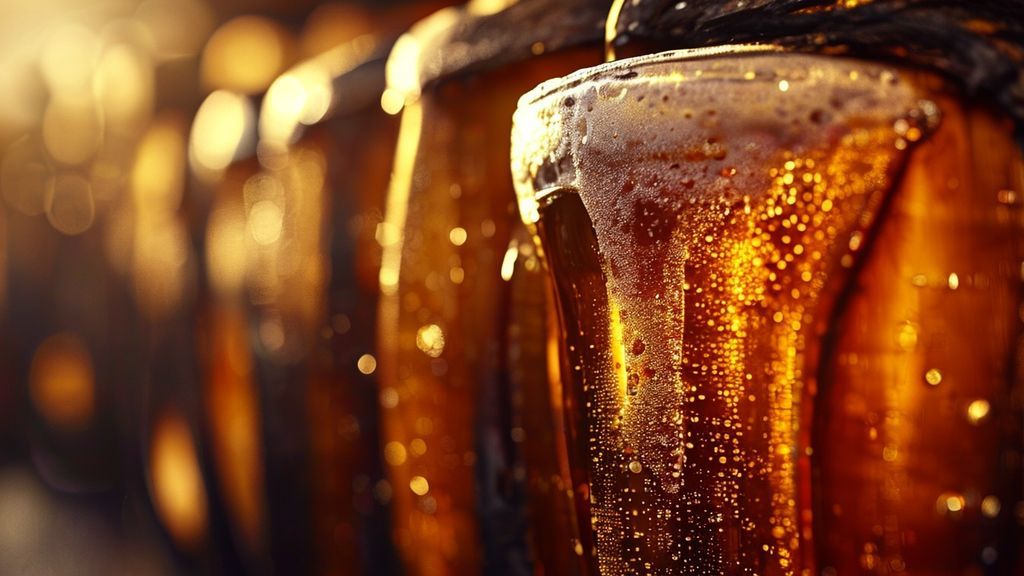
Barrel aging beer in 5-gallon oak vessels amplifies complexity but demands precise control due to the accelerated wood extraction and oxidation rates inherent in smaller volumes. My experience shows that meticulous preparation, consistent environmental monitoring, and timely sensory evaluation are paramount to crafting exceptional, harmoniously integrated barrel-aged beers, preventing over-extraction and spoilage.
| Metric | Optimal Range/Value | Notes |
|---|---|---|
| Barrel Size | 5 Gallons (approx. 19 Liters) | High surface area to volume ratio accelerates aging. |
| Wood Type | American Oak, French Oak | American for vanilla, dill; French for subtle tannins, spice. |
| Char Level | Medium (Char #2) to Heavy (Char #4) | Medium for balanced oak/vanilla; Heavy for more caramel, toast, color. |
| Recommended Beer OG | 1.070 – 1.120+ | High gravity beers protect against oxidation, provide complex base. |
| Recommended Beer FG | 1.015 – 1.040+ | Residual sweetness balances oak tannins and spirit character. |
| Target ABV (pre-barrel) | 8.0% – 13.0%+ | Higher alcohol acts as a solvent for wood compounds and inhibits spoilage. |
| Aging Temperature | **13°C – 18°C** (55°F – 65°F) | Stable temperature is critical for consistent extraction. Avoid fluctuations. |
| Humidity (Storage) | **65% – 80% RH** | Minimizes ‘Angel’s Share’ evaporation, prevents staves from drying out. |
| Typical Aging Duration | **2 – 6 Months** (First Use) | Varies significantly by beer, barrel, and desired profile. Shorter than large barrels. |
| pH (Beer going in) | 4.2 – 4.6 (typical for non-sour) | Low pH offers some protection against spoilage organisms. |
When I first considered barrel aging at home, my initial thought went straight to those imposing 500-liter giants I’d seen in commercial cellars. But reality quickly intervened; I didn’t have a forklift, let alone the space for such a behemoth. So, like many intrepid homebrewers, I scaled down, setting my sights on the humble 5-gallon barrel. My first foray was with a batch of Imperial Stout, a recipe I’d refined over years. I thought, “More oak, more flavor, right?” I seasoned the barrel, filled it, and left it to its destiny for a full year, just as I’d heard professionals do with larger barrels. What I pulled out was a dark, viscous liquid that tasted less like beer and more like a liquid oak tree that had been set on fire. It was brutally tannic, overwhelmingly woody, and the delicate nuances of my carefully crafted stout were utterly lost. That experience, a palpable mistake, taught me the fundamental truth of small-scale barrel aging: it’s a completely different beast, one that demands a deep understanding of surface area to volume ratios and the accelerated kinetics of flavor extraction. I vowed then to master it, and through rigorous experimentation and meticulous data tracking, I did. Now, I’m going to share the technical insights I’ve gleaned, so you don’t repeat my initial, wood-chipped folly.
The Math: Understanding Accelerated Extraction in Small Barrels
The core principle differentiating small barrel aging from its larger counterparts is the **surface area to volume (SA/V) ratio**. This isn’t just an academic point; it’s the bedrock of successful small-batch barrel aging. The higher the SA/V ratio, the faster oak compounds are extracted and the faster oxygen ingress affects the beer.
I calculated this precisely for a typical 5-gallon barrel versus a 53-gallon barrel, assuming cylindrical geometry with standard dimensions for ease of comparison. While barrels are not perfect cylinders, this approximation provides critical perspective.
| Barrel Characteristic | 5-Gallon (18.9 L) | 53-Gallon (200 L) |
|---|---|---|
| Approximate Height | 35 cm | 89 cm |
| Approximate Diameter (max) | 27 cm | 66 cm |
| Internal Surface Area (SA) | Approx. 0.45 m2 | Approx. 2.1 m2 |
| Volume (V) | 0.0189 m3 | 0.200 m3 |
| **SA/V Ratio** | **~23.8:1 m-1** | **~10.5:1 m-1** |
As you can see, the SA/V ratio for a 5-gallon barrel is more than double that of a 53-gallon barrel. This means every liter of beer in a small barrel is exposed to significantly more wood surface, leading to much faster extraction of compounds like vanillin, lactones, tannins, and guaiacol. It also means increased oxygen permeability per unit volume, driving oxidation reactions at an accelerated pace.
Angel’s Share Calculation
The “Angel’s Share” is the portion of liquid lost to evaporation through the porous oak staves. While romantic, it’s a measurable reduction in volume and concentration of flavor. For a 5-gallon barrel, the relative loss is often higher than in larger barrels due to the same SA/V principle, assuming similar humidity levels.
My typical observations:
- **Monthly Loss Rate (5-gallon barrel):** I generally budget for **0.5% to 2.0% volume loss per month** when stored at optimal humidity (**65-80% RH**). This can jump to **3-5%** in drier environments.
- **ABV Concentration:** If you lose 1% of water, your ABV increases. For example, if you start with 10% ABV beer and lose 2% volume to evaporation over two months, your final ABV will be approximately:
Initial ABV / (1 - (Total % Loss / 100)) = 10% / (1 - (0.02 * 2)) = 10% / 0.96 = **10.42% ABV**
I always track my barrel volume using a dipstick or by weighing the barrel periodically. This data is critical for understanding the actual concentration happening within the barrel and for making precise blending decisions later.
Step-by-Step Execution: Mastering the 5-Gallon Barrel
My process for successful small-batch barrel aging has been refined through many trials. Consistency and attention to detail are paramount.
- **Barrel Preparation (The Swelling & Sanitization Ritual):**
- **Inspection:** Upon receiving a new barrel, I inspect it for visible cracks or damage. Small leaks are common; don’t panic.
- **Hot Water Swell:** Fill the barrel with **hot water (70-80°C / 158-176°F)** and let it sit. I usually let it stand for **24-48 hours**, topping up as needed. The hot water expands the wood, sealing minor leaks. Expect initial leaks; they should diminish.
- **Acid/Sulfite Solution:** Once swollen, drain the water. Mix **10 liters of cool water** with **10g of potassium metabisulfite** and **5g of citric acid**. Fill the barrel completely with this solution. This creates a mild sanitizing and anti-oxidizing environment. I let this sit for **24 hours**, rotating the barrel occasionally to ensure all surfaces are exposed.
- **Final Rinse & Drain:** Drain the acid/sulfite solution thoroughly. Rinse with cool, dechlorinated water, then drain completely. Immediately proceed to filling. Any significant delay will require re-sanitization.
- **Beer Selection & Transfer (High Gravity, Low Oxygen):**
- **Style Choice:** I prioritize high-gravity, malt-forward beers for barrel aging: Imperial Stouts, Barleywines, Old Ales, Strong Scotch Ales. Their inherent complexity and higher alcohol content (above **8% ABV**) provide a robust canvas and some protection against spoilage. Avoid hoppy beers; hop aroma fades quickly and often clashes with oak.
- **Fermentation:** Ensure your beer is fully fermented and stable. I target a final gravity (FG) that’s settled for at least a week, ideally two. Any residual fermentable sugars can become fuel for spoilage organisms in the barrel.
- **Oxygen Mitigation:** This is critical. Purge your barrel with CO2 before transfer. I typically run **15-20 PSI of CO2** into the bung hole for **5 minutes**. Transfer the beer from your fermenter to the barrel via a closed system if possible (e.g., using a pump and transfer wand into the bung hole, or gravity feed from a higher vessel). Minimize splashing and air exposure.
- **Fill Level:** Fill the barrel to the brim. The less headspace, the less surface area for oxygen interaction.
- **Aging Environment & Monitoring (The Cellar is Your Friend):**
- **Temperature Control:** My aging space maintains a stable temperature between **13°C and 18°C (55°F – 65°F)**. Fluctuations accelerate oxygen ingress and can lead to uneven extraction.
- **Humidity Control:** I aim for **65% – 80% relative humidity**. This is crucial to minimize the “Angel’s Share” and prevent the barrel staves from drying out and cracking, leading to leaks or increased oxygen ingress. I use a small humidifier in my cellar.
- **Bung & Seal:** Use a proper silicone bung. Check it periodically to ensure a tight seal.
- **Sampling Schedule:** This is where small barrels diverge significantly from large ones. My rule of thumb for a first-use 5-gallon barrel is to begin sampling at **1 month**, then every **2-3 weeks** thereafter.
- **Procedure:** Sanitize a wine thief or turkey baster. Gently remove the bung, take a small sample (**10-20ml**), and immediately re-bung. Be quick to minimize oxygen exposure.
- **Sensory Evaluation:** Assess for oak character (vanilla, toast, coconut), spirit notes, oxidation levels (pleasant sherry notes vs. cardboard/paper), tannic harshness, and any off-flavors (acetic acid, sourness).
- **Specific Gravity & pH:** I’ll take an occasional SG reading to check for unexpected secondary fermentation or dramatic changes from evaporation, and a pH reading to track potential souring. A drop in pH below 4.0 often indicates microbial activity.
- **Pulling, Blending, & Packaging (The Finish Line):**
- **The Critical Decision:** This is perhaps the hardest part. Pull the beer when it tastes *just right*. Don’t wait for perfection, as over-extraction happens rapidly. If it tastes slightly aggressive on the oak, that’s often the time to pull, as it will mellow slightly in conditioning. For a first-use 5-gallon barrel, this is typically between **2-6 months**.
- **Blending (My Secret Weapon):** For me, blending is key to balancing small-batch barrel character. I often brew an un-oaked, fresh version of the same base beer. I’ll then blend the barrel-aged beer with the fresh beer to achieve the desired balance. My typical blend ratios range from **50/50** to **70% barrel-aged / 30% fresh**, but this is entirely sensory-driven. Blending allows me to correct for slight over-extraction or to add back vibrancy that might have been lost. I do this in a purged secondary fermenter or keg.
- **Packaging:** Package as you would any other beer. Kegging minimizes oxygen exposure. If bottling, ensure proper carbonation and consider conditioning for another month or two. The flavors will continue to integrate and mellow over time.
- **Barrel Maintenance & Re-Use:**
- **Immediate Action:** As soon as the beer is out, rinse the barrel immediately with **hot water (70-80°C / 158-176°F)** until the rinse water runs clear. This removes residual beer sugars and yeast.
- **Sulfite/Citric Acid Storage:** Fill the barrel with the same **sulfite/citric acid solution (10g K-Meta, 5g Citric per 10L water)** I used for initial sanitization. This prevents microbial growth and oxidation of the wood. Store with this solution until the next use.
- **Re-use Cycle:** A 5-gallon barrel will impart strong oak character for **1-2 uses**, then moderate character for **2-3 more uses**. After 5-6 uses, the oak impact will be minimal, suitable for subtle aging or souring projects.
Troubleshooting: What Can Go Wrong in a 5-Gallon Barrel
Barrel aging, especially in smaller volumes, has its unique pitfalls. Here’s what I’ve encountered and how I mitigate it:
Over-Extraction / Excessive Oak Character
This was my first major mistake. The beer tastes like chewing on a plank of wood – too tannic, too much vanilla, or an overpowering “lumberyard” aroma.
- **Prevention:** My diligent sampling schedule is the best defense. Pull the beer early if it’s trending this way.
- **Remedy:** Blend! This is why I stress blending. If you’ve gone too far, blending with an un-oaked base beer (even if brewed fresh) can rescue the batch. I’ve successfully diluted aggressively oaked beer by **50% or more** with fresh beer.
- **Further Use:** The barrel will have less extractable character for its next use, which can be a good thing if you like more subtle oak.
Excessive Oxidation
While a touch of oxidation (sherry, dried fruit notes) is desirable in some barrel-aged beers, too much leads to cardboard, stale, or wet paper bag off-flavors.
- **Prevention:** Minimize oxygen ingress during transfer and throughout aging. Purge with CO2, use closed transfers, fill to the brim, maintain a tight bung, and control humidity to keep staves swollen. Avoid excessive sampling.
- **Remedy:** Unfortunately, severe oxidation is hard to fix. Blending can help dilute off-flavors, but the damage is often done. Learn from it for the next batch.
Microbial Contamination (Sourness, Acetic Acid, Mold)
The porous nature of oak provides nooks for microbes. Common culprits are *Lactobacillus*, *Pediococcus* (lactic acid producers), and *Acetobacter* (acetic acid producers, usually from oxygen exposure), or molds on the exterior.
- **Prevention:** Meticulous sanitization of the barrel and transfer equipment. Ensure beer is fully attenuated before going into the barrel. Maintain good cellar hygiene. High ABV (>8%) provides some protection, but isn’t foolproof.
- **Remedy:** If you detect sourness or vinegar notes early, it might be recoverable by blending. For acetic acid, it might be embraced as a Flanders Red style if it’s not too harsh. Mold on the exterior isn’t usually an issue unless it’s on the bung or inside. If the beer is visibly contaminated or smells distinctly moldy/musty, it’s often best to discard the batch. Consider dedicating the barrel to sour beer production if it’s heavily infected.
Leaking Barrels
Small leaks are common, especially with new barrels.
- **Prevention:** Proper swelling with hot water is key. Maintain high humidity during storage.
- **Remedy:** For minor weeping, ensure the barrel is full and humidity is high; the wood will continue to swell. For persistent pinhole leaks, a small amount of melted beeswax rubbed into the leak can often seal it. Food-grade beeswax is inert. For more severe leaks, inspect the hoops; tightening them may help.
Sensory Analysis: The Reward of Patience
When done right, a 5-gallon barrel-aged beer is a truly transformative experience. I approach each sample with a critical but appreciative nose and palate.
- **Appearance:** Expect a deep, often rich color, especially if the base beer was dark. There might be a slight haze from oak tannins or very fine sediment, which is normal. The lacing should be thick and persistent, a testament to the robust body.
- **Aroma:** This is where the magic happens. I look for a complex interplay of the base beer and the barrel. Notes of **vanilla, coconut, caramel, and butterscotch** (from oak lactones) should be present. If it was a spirit barrel, clear **whiskey, bourbon, or rum** notes will shine through. I also seek **dried fruit (raisin, fig, prune)**, hints of **dark chocolate or coffee**, and a subtle **toasted marshmallow** character from the char. A delicate hint of **sherry or almond** suggests desirable oxidation, adding depth.
- **Mouthfeel:** The beer should be full-bodied, often with a velvety, warming quality from the alcohol. A slight tannic grip on the finish is acceptable and desirable, providing structure and dryness, but it should not be astringent or overwhelming. Carbonation should be moderate to low to allow the complex flavors to express themselves without distraction.
- **Flavor:** A harmonious symphony. The sweetness of malt should be balanced by the dryness of the oak and any spirit notes. I look for the vanilla and caramel from the oak to complement the roasted or malty flavors of the beer. Notes of **dark fruit, tobacco, leather, and dark chocolate** can emerge. The finish should be long, lingering, and complex, evolving as it warms in the glass. There should be a smooth integration of alcohol, not a harsh burn.
Mastering the 5-gallon barrel is an extreme sport in homebrewing, but the rewards are profound. The deep, nuanced flavors and the unique character imparted by the oak simply cannot be replicated by extracts or chips in a fermenter. It pushes your brewing knowledge and sensory skills to their limits, turning you into a more intuitive and responsive brewer. For more in-depth guides on advanced brewing techniques and equipment reviews, remember to visit BrewMyBeer.online.
Frequently Asked Questions About 5-Gallon Barrel Aging
How long should I age beer in a 5-gallon barrel?
Based on my experience, for a first-use 5-gallon barrel, I typically age beer for **2 to 6 months**. The specific duration is highly dependent on the beer style (higher gravity beers often tolerate longer aging), the barrel’s prior use (new barrels extract faster), and your desired flavor intensity. Due to the high surface area to volume ratio, extraction is rapid, so frequent sensory evaluation (every 2-3 weeks after the first month) is critical to prevent over-oaking.
What’s the best wood/char level for small barrels?
I find **American Oak** with a **Medium to Heavy char (Char #2 to #4)** to be an excellent starting point for 5-gallon barrels. American Oak often imparts strong vanilla, coconut, and dill notes, which marry well with robust beer styles. A medium char gives balanced sweetness and toast, while a heavy char adds more intense caramel, coffee, and sometimes a smoky quality. French Oak offers more subtle spice and tannin characteristics, suitable for more delicate beers, but American Oak handles the aggressive extraction of small barrels robustly. For an authoritative guide on wood characteristics, I often refer to resources on BrewMyBeer.online.
Can I reuse a 5-gallon barrel, and how many times?
Yes, you can absolutely reuse a 5-gallon barrel! I typically get **1-2 “first-fill” equivalent uses** where the oak character is very strong. After that, the barrel transitions to providing more subtle oak influence for another **2-3 uses**. Beyond 4-5 total uses, the oak flavor will be quite diminished, making it suitable for very subtle conditioning or for dedicated souring projects where the wood acts more as a vessel for microbes than a flavor contributor. Proper cleaning and storage (with a sulfite/citric acid solution) are essential for maximizing reuses.
What’s the ‘Angel’s Share’ for a 5-gallon barrel?
The ‘Angel’s Share’ (evaporation loss) for a 5-gallon barrel is often proportionally higher than for larger barrels due to its increased surface area to volume ratio. I typically observe a monthly volume loss ranging from **0.5% to 2.0%** when the barrel is stored in a cellar with **65-80% relative humidity** and stable temperatures. In drier or less controlled environments, this can easily jump to **3-5% per month**. Monitoring your barrel’s weight or volume periodically is key to tracking this loss and understanding its impact on your beer’s concentration and ABV.