
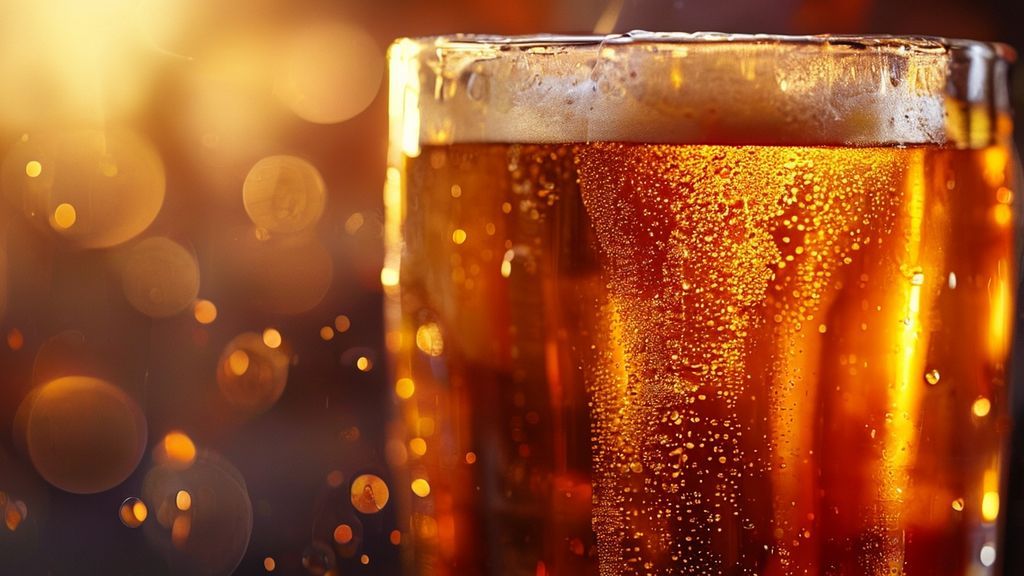
Brewing a 20% ABV beer demands precision, patience, and advanced techniques. Achieving this extreme alcohol content requires meticulous mash management for fermentable sugars, a multi-stage fermentation with robust, high-tolerance yeast, and strategic nutrient additions. My experience confirms that controlling fermentation temperature and oxygenation is paramount to minimize off-flavors and ensure complete attenuation, yielding a complex, potent, and surprisingly balanced brew.
| Metric | Target Value | Notes |
|---|---|---|
| Original Gravity (OG) | 1.188 | Achieved via high grain bill + adjuncts |
| Final Gravity (FG) | 1.035 | Significant residual sugars for body |
| Calculated ABV | 20.0% | (OG – FG) * 131.25 |
| IBU (International Bitterness Units) | 45 | Balanced bitterness to counter sweetness |
| SRM (Standard Reference Method) | 18-20 | Deep amber to mahogany due to specialty malts |
| Mash Temperature | 63°C – 68°C (Multi-step) | Optimized for fermentability and body |
| Primary Fermentation Temp | 18°C – 24°C (Ramped) | Controlled yeast activity, ester profile |
| Pitching Rate (Yeast) | 47 million cells/mL | Aggressive pitch for high gravity |
The Brewer’s Hook: Chasing the Dragon’s Share
When I first decided to brew a 20% ABV beer, many of my peers thought I was either insane or overly ambitious. My initial attempts at even 12-14% ABV were often plagued by stuck fermentations, fusel alcohol bombs, or thin, uninspired brews. I made the mistake of simply scaling up a standard recipe, underestimating the sheer metabolic stress on the yeast and the complexities of sugar management in such a dense environment. I learned, through trial and error, that brewing at this extreme level isn’t just about adding more fermentables; it’s about crafting an ecosystem for your yeast and meticulously managing every single variable. This journey taught me more about brewing science than any other project, pushing my skills to their absolute limit. Now, after years of refinement, I can confidently guide you through brewing a truly exceptional 20% ABV monster.
The “Math” Section: Engineering Extreme Gravity
Achieving 20% ABV is a high-wire act of sugar extraction and fermentation. The primary calculation for ABV is straightforward: ABV = (OG – FG) * 131.25. To hit 20% ABV, with a target FG of 1.035 (to retain some body), my Original Gravity needs to be approximately 1.188. This is a monumental task for a standard mash. My strategy involves a combination of high-yield malts and significant adjunct additions.
Manual Calculation Guide: From Gravity to Grain Bill (for 20 Liters / ~5 Gallons)
To reach an OG of 1.188 in 20 liters, assuming a conservative 75% brewhouse efficiency, we need to extract approximately 5013.3 L*GU (Liter-Gravity Units).
Target Extract = ( (OG – 1) * 1000 * Volume in Liters ) / Brewhouse Efficiency
Target Extract = ( (1.188 – 1) * 1000 * 20 ) / 0.75 = (0.188 * 1000 * 20) / 0.75 = 3760 / 0.75 = 5013.3 L*GU.
Here’s my typical grain and sugar contribution breakdown:
| Ingredient | Percentage of Total Extract | Typical Yield (L*GU/kg) | Approx. Weight (kg) | Contribution (L*GU) |
|---|---|---|---|---|
| Pilsner Malt | 65% | 300 | 10.86 kg | 3258 |
| Caramunich II (SRM 45) | 10% | 250 | 2.00 kg | 500 |
| Aromatic Malt | 5% | 300 | 0.83 kg | 249 |
| Dark Candi Syrup (D-180) | 10% | 320 | 1.57 kg | 502 |
| Dextrose (Corn Sugar) | 10% | 385 | 1.30 kg | 501 |
| TOTALS | 100% | 16.56 kg | 5010 L*GU |
The total weight of fermentables for 20 liters is staggering, about 16.56 kg! This means a very thick mash and careful management.
Yeast Pitching Rate Calculation
For high-gravity brewing, a massive pitching rate is non-negotiable. My target for high-gravity is typically 1 million cells/mL/°P.
First, convert OG to degrees Plato: °P = (OG – 1) * 259.
For OG 1.188: (1.188 – 1) * 259 = 0.188 * 259 = 48.69 °P.
Target Pitch Rate = 48.69 °P * 1 million cells/mL/°P = **48.69 million cells/mL**.
For a 20-liter batch, total cells needed: 48.69 million cells/mL * 20,000 mL = **973.8 billion cells**.
This requires a substantial yeast starter, often built in multiple stages over several days, or buying many packets of liquid yeast. I routinely build a 3-4 liter starter with multiple steps to ensure I have enough healthy cells.
Step-by-Step Execution: Mastering the Monster Brew
This is where the rubber meets the road. Every step must be executed flawlessly.
- Yeast Starter Preparation (3-5 Days Prior):
- Begin with 2-3 vials of a high-alcohol tolerance yeast (e.g., WLP099 Super High Gravity Ale Yeast or WLP530 Abbey Ale Yeast).
- Step 1: Create a 1-liter starter at 1.040 OG. Ferment for 24-36 hours at 20°C.
- Step 2: Decant spent wort, add 2 liters of 1.060 OG wort. Ferment for 24-36 hours at 20°C.
- Step 3: Decant, add 1-2 liters of 1.080 OG wort. Ferment for 24-36 hours.
- Cool starter to 10°C, decant, and re-suspend yeast slurry just before pitching. Oxygenate thoroughly.
- Mash Day – The Mega-Mash:
- Water Chemistry: I use reverse osmosis water, building a profile specifically for a dark, malty beer. Aim for a mash pH of **5.3-5.4** using lactic acid or phosphoric acid. Calcium chloride additions enhance mouthfeel and enzyme activity.
- Milling: Mill your grains finer than usual (but avoid flour) to improve extraction efficiency in this dense mash.
- Mash Schedule (Step Mash): This is crucial for maximum fermentability and sugar conversion.
- Protein Rest: Mash in with 40 liters of strike water at **52°C** for 20 minutes. Maintain a thick mash ratio of approximately 2 L/kg. This aids in breaking down proteins for better clarity and head retention in such a high-gravity beer, and prevents a ‘gummy’ wort.
- Saccharification 1 (Beta-amylase): Raise temperature to **63°C**. Hold for 60 minutes. This promotes beta-amylase activity for highly fermentable sugars.
- Saccharification 2 (Alpha-amylase): Raise temperature to **68°C**. Hold for 30 minutes. This helps convert remaining starches to fermentable sugars and some dextrins for body.
- Mash Out: Raise to **78°C** for 10 minutes to halt enzyme activity and reduce wort viscosity for sparging.
- Lautering & Sparging: This will be slow. Use a good false bottom or manifold.
- Recirculate wort until clear (vorlauf).
- Sparge very slowly with 78°C water. My experience tells me that rushing this leads to a stuck sparge and poor efficiency. Target a total pre-boil volume of around 25-26 liters with an anticipated gravity of 1.150-1.160.
- The Boil:
- Boil Time: A **90-minute** boil is usually sufficient.
- Hop Schedule:
- Bittering: 45 IBU. Add hops (e.g., Magnum or Warrior) at 60 minutes. My 20L recipe would typically use **40g of Magnum (14% AA)** for 45 IBU.
- Aroma/Flavor: Minimal additions for this style, maybe a small addition at 10 minutes for subtle character, but I often skip this to let the malt and yeast shine.
- Sugar Addition Strategy: This is vital. Do NOT add all the sugars at the start of the boil. This can stress the yeast by providing too much simple sugar too quickly, leading to an explosive, uncontrolled fermentation or a stuck fermentation.
- Add 50% of the Candi Syrup and Dextrose at the 15-minute mark of the boil.
- Reserve the remaining 50% for staggered additions during fermentation. This is a critical piece of information I learned the hard way; dumping it all in resulted in volatile fermentations and poor yeast health.
- Cooling & Aeration:
- Chill wort rapidly to **16°C**.
- Oxygenate *aggressively*. I use an oxygen tank with a diffusion stone for 60-90 seconds to reach 15-20 ppm dissolved oxygen. This amount of oxygen is crucial for yeast health in a high-gravity wort.
- Fermentation – The Long Haul:
- Pitching: Pitch your massive yeast starter at **18°C**.
- Primary Fermentation (Days 1-7):
- Maintain **18°C** for the first 3 days to encourage clean fermentation.
- On Day 3, raise temperature slowly to **20°C**.
- On Day 5, raise to **22°C**.
- On Day 7, take a gravity reading. If gravity is around 1.090-1.100, add the remaining 50% of the Candi Syrup and Dextrose, dissolved in a small amount of warm, sanitized water.
- At this point, I gently swirl the fermenter and re-oxygenate (briefly, 10-15 seconds) to give the yeast another boost.
- Raise temperature to **24°C** and hold for another 7-10 days. This higher temperature helps the yeast finish strong and clean up diacetyl.
- Nutrient Additions: I swear by staggered nutrient additions. Add a dose of yeast nutrient (e.g., Fermaid O at 0.5g/L) at **24, 48, and 72 hours** after pitching. This prevents yeast nutrient depletion, which is common in high-gravity beers.
- Secondary Fermentation/Conditioning (Weeks 3-8):
- Once primary fermentation is complete (gravity stable for 3 consecutive days, likely around 1.040-1.050), rack to a secondary fermenter, minimizing oxygen exposure.
- Bring temperature down to **12°C** for 2-4 weeks. This allows the beer to clarify and mellow, and yeast to drop out.
- Then, drop temperature further to **0-2°C** for another 2-4 weeks (cold crashing). This ensures maximal clarity and forces more yeast and haze compounds to settle.
- Packaging:
- Due to the high ABV, bottle conditioning can be unpredictable. I prefer to keg this beer or force carbonate.
- If bottling, prime carefully. Target 2.0-2.2 volumes of CO2. Use a calculator and slightly less sugar than normal, as there might be residual yeast activity. For a 20L batch, this is typically **80-90g of dextrose**.
- Allow 2-3 months in bottles for proper carbonation and conditioning. These beers age exceptionally well, and patience is key.
Troubleshooting: What Can Go Wrong
Brewing a 20% ABV beer is a minefield of potential issues. My worst experience was a completely stuck fermentation at 1.080 because I pitched too little yeast and didn’t oxygenate properly. The result was a cloyingly sweet, unpalatable mess.
- Stuck Fermentation:
- Cause: Underpitching, insufficient oxygenation, nutrient deficiency, or too rapid temperature drop.
- Fix: Re-pitch with a fresh, active, high-tolerance yeast starter. Ensure adequate temperature and add yeast nutrient. Sometimes, gently rousing the yeast bed can help.
- Fusel Alcohols (Solvent/Alcoholic Burn):
- Cause: Fermenting too hot, too quickly, or extreme yeast stress.
- Fix: This is hard to fix post-fermentation. Prevention is key: controlled low-temperature primary fermentation, massive healthy yeast pitch, and staggered nutrient additions. Aging can sometimes mellow fusels, but it’s a gamble.
- Diacetyl (Buttery/Butterscotch):
- Cause: Prematurely dropping fermentation temperature, removing yeast too early, or yeast stress.
- Fix: Raise the temperature towards the end of primary fermentation (the “diacetyl rest” phase at 22-24°C) for several days. This allows the yeast to reabsorb and metabolize diacetyl precursors.
- Oxidation (Papery/Sherry-like):
- Cause: Oxygen ingress during fermentation, racking, or packaging.
- Fix: Prevention is the only cure. Be fanatical about minimizing hot-side aeration and cold-side oxidation. Use CO2 transfers, closed systems, and purge kegs. My experience at BrewMyBeer.online has shown me that oxidation can ruin years of aging potential in high-ABV beers.
- Lack of Attenuation (Too Sweet/High FG):
- Cause: Poor mash efficiency, inappropriate mash schedule (too many unfermentable sugars), or weak yeast.
- Fix: Ensure a proper step mash, and verify your brewhouse efficiency. Use high-attenuating yeast. Sometimes, blending with a drier beer can salvage a batch, but it’s not ideal.
Sensory Analysis: The Extreme Experience
A well-executed 20% ABV beer is a marvel. It’s not just strong; it’s a symphony of flavors and textures.
- Appearance: My 20% ABV creation typically pours a deep, hazy mahogany, almost opaque, with brilliant ruby highlights when held to light. It’s often topped by a persistent, creamy, beige head with very fine bubbles, clinging to the glass like fine lace, a testament to the complex proteins from the step mash and specialty malts.
- Aroma: The initial impression is a powerful, complex bouquet of dark fruit (raisins, figs, dates), rich caramel, and toasted bread. Underneath, there’s a delicate warmth from the alcohol, often hinting at vanilla, dark chocolate, and a subtle spiciness. Clean yeast character is paramount; any fusel alcohol (solvent-like) suggests a flawed fermentation. A clean fermentation allows subtle phenols or esters (depending on yeast choice) to shine, complementing the malt.
- Mouthfeel: It’s surprisingly smooth for its strength, full-bodied, and velvety. The high residual sugars contribute to a chewy, luxurious texture that coats the palate. The alcohol warmth is present but should be integrated, never harsh or burning. Carbonation is typically moderate, providing a gentle effervescence that lifts the heavy body. It’s a beer that feels substantial, demanding respect.
- Flavor: The palate follows the aroma, exploding with layers of dark caramel, rich toffee, burnt sugar, and dried dark fruit. There are often notes of praline, slight roast, and a hint of dark chocolate. The hop bitterness is just enough to prevent cloying sweetness, providing balance without asserting itself. A clean alcoholic presence is crucial, warming the chest on the finish, which is long, complex, and gently drying. The interplay between the residual sugars, alcohol, and nuanced malt character creates a truly unforgettable experience. The best batches I’ve brewed are dangerously drinkable, belying their immense strength.
FAQs About Brewing Extreme ABV Beers
How important is yeast health for a 20% ABV beer?
Yeast health is the single most critical factor. My experience shows that underpitching or pitching unhealthy yeast into a high-gravity wort is a guaranteed recipe for failure. A massive, healthy, and highly oxygenated starter provides the yeast with the best chance to complete fermentation without stalling or producing off-flavors. It’s not just about quantity; it’s about vitality.
Can I achieve 20% ABV without using adjunct sugars?
Theoretically, yes, but practically, it’s incredibly challenging and often results in an overly thick, cloyingly sweet, or unbalanced beer. You’d need an extraordinarily large grain bill, leading to a problematic mash and sparge, and potentially overwhelming the yeast with too many complex sugars. Adjuncts like dextrose or candi sugar provide highly fermentable sugars without adding excessive body, helping you reach that extreme gravity target while maintaining a semblance of balance. This is one of the key takeaways from my journey documented on BrewMyBeer.online.
How long should a 20% ABV beer age before drinking?
Patience is a virtue with these beasts. While you can certainly taste it after 2-3 months post-packaging, a 20% ABV beer truly begins to shine after 6-12 months of aging. I’ve found that the flavors meld, the alcohol mellows, and new, complex notes emerge with time. Some of my best batches have peaked after 2-3 years. Proper cellaring at cool, stable temperatures (10-15°C) away from light is essential for optimal development.
