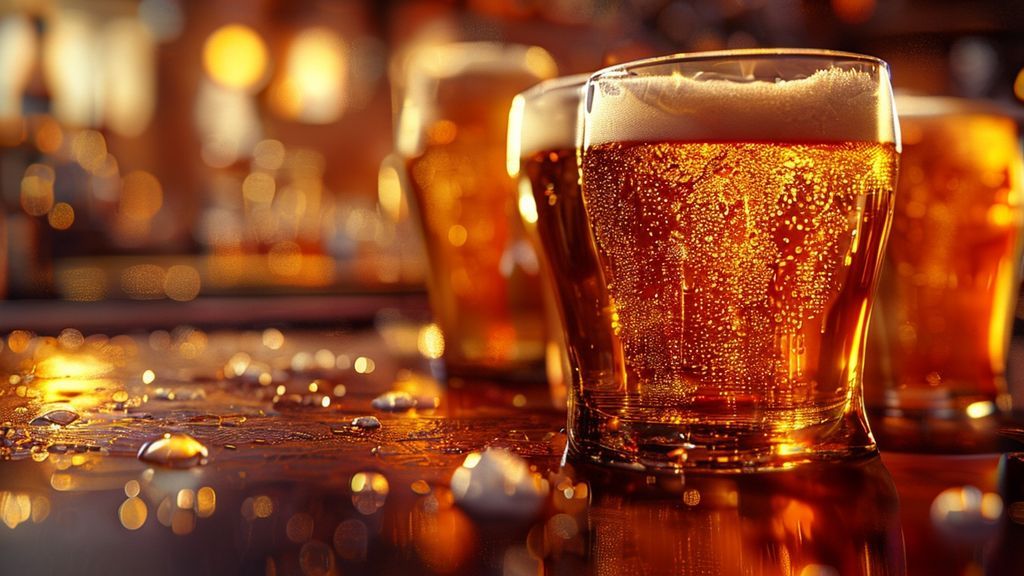
Beer Pong is a game of skill, strategy, and precision, demanding adherence to specific rules and equipment specifications for optimal play. The core objective involves accurately tossing a ping-pong ball into an opponent’s cups, compelling them to consume the contents. Standardized table dimensions, cup configurations, and clear rules for shooting, re-racking, and redemption ensure a fair and competitive experience for all participants.
| Metric | Specification | Notes |
|---|---|---|
| Standard Table Length | 8 feet (244 cm) | Minimum for regulation play |
| Standard Table Width | 2 feet (61 cm) | Allows for adequate cup spacing |
| Standard Table Height | 27.5 inches (70 cm) | Typical folding table height |
| Cups Per Side | 10 | Arranged in a 4-3-2-1 pyramid |
| Cup Volume (Standard) | 16 fl oz (473 ml) | Red plastic party cups are common |
| Liquid Volume Per Cup | ~1-2 fl oz (30-60 ml) | Depends on player preference; often water for hygiene, beer for consumption |
| Ping-Pong Ball Diameter | 40 mm (1.57 inches) | Official ITTF standard for table tennis |
| Ping-Pong Ball Weight | 2.7 grams (0.095 oz) | Official ITTF standard |
| Players Per Team | 1-2 | 2v2 is most common |
| Average Game Duration | 15-30 minutes | Varies with skill level and rule variations |
The Brewer’s Hook: Engineering the Perfect Pour… or Pong
As a brewmaster, my life revolves around precision. pH levels, specific gravity, temperature curves – every detail matters to coax the perfect liquid from raw ingredients. When I first started hosting beer-centric gatherings, I noticed a similar need for precision, not just in the brews I served, but in the games we played. I recall one particularly chaotic evening where the Beer Pong game devolved into endless arguments over rules, ambiguous shot calls, and a table that was clearly too short. It was a mess, and it taught me a valuable lesson: even for fun, a well-defined structure and standardized equipment are paramount. Just as I wouldn’t let a batch ferment at an uncontrolled temperature, I realized I couldn’t leave the integrity of the game to chance. So, I applied my brewing discipline to the realm of Beer Pong, meticulously documenting optimal setups and rules to ensure every game was as smooth and enjoyable as a perfectly conditioned lager.
The Geometry of the Perfect Rack: A Manual Calculation Guide
Understanding the physics and geometry of your Beer Pong setup isn’t just for obsessive types like me; it’s fundamental to consistent, fair play. The distances, angles, and volumes all play a critical role in the game’s flow. Here’s how I break down the key measurements.
Cup Placement Precision
The standard 10-cup pyramid (4-3-2-1) is critical. For 16 fl oz (473 ml) cups with a typical top rim diameter of approximately 3.75 inches (9.5 cm) and a base diameter of 2.25 inches (5.7 cm), precise placement ensures a solid, tight rack. My preferred method is to place the cups so their rims are just touching. This creates a challenging target but prevents easy “splash outs” from loosely packed cups.
- Back Row Width: With four cups touching, this equates to approximately 4 x 9.5 cm = 38 cm (15 inches).
- Rack Depth: The depth of the 4-3-2-1 pyramid is roughly equivalent to 4 cup diameters, which is 4 x (9.5 cm * sin(60°)) if we consider the center-to-center distance in an equilateral triangle. More simply, it’s about 3.5 cup diameters in a straight line, which is around 3.5 x 9.5 cm = 33.25 cm (13 inches).
Optimal Table Dimensions and Ball Trajectory
The 8-foot (244 cm) table length isn’t arbitrary. It provides a specific distance that challenges players to develop a consistent throwing arc without making it impossible. Let’s consider the average release point of a player and the target.
- Player-to-Cup Distance: Assuming players stand approximately 6-12 inches (15-30 cm) from the table edge, and cups are placed 2-3 inches (5-7.5 cm) from the opposing edge, the actual flight distance for the ball is roughly 7 feet (213 cm).
- Ball Arc: For a 40mm, 2.7g ball, an optimal trajectory typically peaks at around 3-4 feet (90-120 cm) above the table surface, allowing gravity to assist the descent into the cups. Too flat, and it’s prone to overshooting; too high, and accuracy suffers. I’ve found that a release angle of approximately 30-45 degrees from the horizontal, with sufficient impulse, yields the best results.
Beer Volume Calculation
For a standard 10-cup game, it’s useful to know the total liquid volume involved. If each cup contains 1.5 fl oz (45 ml) of liquid (which I often use to reduce total consumption while keeping the game lively):
Total Volume = Number of Cups * Volume per Cup
Total Volume = 10 cups * 1.5 fl oz/cup = 15 fl oz (450 ml) per side
This means a full game for one team, if they drank all their cups, would be 15 fl oz. For a 2v2 game, each player on the losing team would ideally consume 7.5 fl oz (225 ml) of liquid. I often suggest players use water in the cups and have separate beverages to drink when a cup is sunk. This maintains hygiene and allows players to choose their own pace.
Step-by-Step Execution: Setting Up and Playing Like a Pro
A great game of Beer Pong starts with a solid foundation. Here’s my refined process for setting up and running a game, ensuring minimal friction and maximum fun.
- Table Placement: Ensure your table is stable and level. I always check for any wobbles or uneven surfaces that could affect ball bounce or cup stability. A regulation 8-foot (244 cm) long, 2-foot (61 cm) wide table is ideal.
- Cup Rack Setup:
- On each end of the table, arrange 10 cups in a 4-3-2-1 pyramid formation.
- The front-most cup should be approximately 2-3 inches (5-7.5 cm) from the edge of the table.
- Ensure cups are tightly packed, with rims just touching, to form a solid target. I usually push them together firmly after initial placement.
- Liquid Dispensation:
- Pour about 1.5 fl oz (45 ml) of liquid into each of the 20 cups. I prefer water or a very light beer for hygiene and to keep players hydrated.
- Place a separate “wash cup” filled with clean water at each end of the table. This is crucial for rinsing the ping-pong ball between throws, especially after it’s touched the floor or other surfaces.
- Team Formation and First Shot:
- Form two teams of 1 or 2 players. 2v2 is the most common and dynamic.
- Determine who goes first. My preferred method is a simultaneous “eye-to-eye” shot: one player from each team looks at an opposing player, and they shoot simultaneously. If both make it, or both miss, they shoot again. If one makes it and the other misses, the team that made the shot goes first. This adds an immediate element of skill.
- Shooting Rules:
- Each team gets two balls per turn (one per player in 2v2).
- Elbow Rule: A player’s elbow must not cross the plane of the table’s edge when shooting. This is a critical rule to prevent unfair close-range shots. I once had a player try to lean halfway across the table; it broke the game.
- Bounce Shots: If a ball bounces on the table before entering a cup, it counts for two cups. Opponents can swat bounce shots after the first bounce. If a bounce shot hits a cup but doesn’t go in, it’s still a live ball to be swatted.
- Arc vs. Laser: Both shooting styles are generally permitted unless specified otherwise. I find new players often start with a flat “laser” shot, but an arcing shot is often more consistent.
- Sinking a Cup:
- When a ball lands in a cup, the opposing team must remove that cup and drink its contents.
- The removed cup is placed aside and should not interfere with subsequent play.
- Re-Racks:
- Each team is typically allowed two re-racks per game.
- Common re-rack configurations are a 3-cup triangle (often used when 6 cups remain) or a 2-cup line (often used when 2 or 3 cups remain). The goal is to consolidate cups into a more challenging, compact target.
- I always ensure the re-racked cups are placed as close to the table edge as the original front cup, maintaining fair distance.
- Winning the Game:
- The game is won when one team successfully sinks all of the opposing team’s cups.
- Redemption Round:
- If the final cup is sunk, the losing team gets a chance at redemption. Each player on the losing team gets one shot to try and sink any remaining cups of the winning team.
- If they hit all remaining cups, the game continues. If they miss any, the game is over. This adds a fantastic element of drama to the finale. My most memorable games often come down to this final, tension-filled redemption round.
Troubleshooting: What Can Go Wrong and How I Fix It
Just like a fermentation gone awry, a Beer Pong game can hit snags. My experience has taught me to anticipate these issues and implement quick, decisive fixes.
- The “Ghost Ball” (No-Call Shots): A common issue is a shot that barely clips a cup or bounces off the rim without a clear entry.
- My Solution: I always advocate for a clear “in or out” rule. If any part of the ball breaks the plane of the cup opening and liquid is displaced, it’s in. Otherwise, it’s a miss. For rim shots, if it rattles around but doesn’t settle, it’s out. A slow-motion replay (if you have one!) helps, but generally, a consensus amongst unbiased observers is best.
- The Unfair Swat: Players swatting balls that haven’t bounced or have already entered a cup.
- My Solution: Reiterate the “no swatting direct shots” and “swatting only after the first bounce” rules loudly and clearly before the game starts. Any contested swat results in the cup being counted as sunk, to disincentivize early swats.
- The Leaning Tower (Wobbly Table/Cups): A table that isn’t stable or cups that are too loose.
- My Solution: Before any game, I always secure the table. If it’s on an uneven surface, I use shims (coasters work well) under the legs. For cups, ensuring they are tightly racked and preferably slightly weighted with liquid minimizes accidental tip-overs. Sometimes a small piece of double-sided tape or a wet towel underneath the cups can provide extra grip.
- The Missing Ball: Balls rolling off the table and disappearing into the abyss.
- My Solution: Always have at least 3-4 balls readily available. Designate a “ball retrieval zone” or assign a non-player to collect stray balls. This prevents momentum loss and frustration.
- Rule Disputes: When players disagree on an interpretation of a rule.
- My Solution: Establish a “House Rules” document beforehand. I often print out a simplified rule sheet for new players. If a dispute still arises, the host (me, in this case) acts as the impartial arbiter. Consistency is key; make a call and stick to it for the rest of the night. You can find excellent guidelines on BrewMyBeer.online.
Sensory Analysis: The Brewmaster’s Take on Beer Pong Experience
Just as I evaluate a beer using all my senses, I approach the Beer Pong experience with a similar analytical, yet appreciative, eye.
Appearance
The visual spectacle of Beer Pong is understated yet compelling. The perfectly arrayed pyramid of 10 vibrant red cups, often reflecting the overhead lights, hints at an almost military precision to their spacing. The surface of the table, whether a pristine custom-built behemoth or a humble folding utility table, often bears the subtle marks of previous skirmishes—a faint ring here, a slight scuff there—each a testament to past glories and defeats. The glint of the tiny white or orange ping-pong balls, stark against the dark liquid in the cups, creates a canvas of anticipation.
Aroma
The aroma of a Beer Pong game is a unique blend. It’s not the complex bouquet of a carefully aged barleywine, but rather a robust, immediate sensory snapshot of social engagement. There’s the subtle, effervescent hint of spilt lager or whatever chosen liquid resides in the cups, mingling with the competitive sweat of players, and the faint, nostalgic scent of plastic from the ping-pong balls. Sometimes, if the game is heated, a whiff of frustration or triumph can almost be detected, creating the distinct fragrance of imminent revelry and camaraderie. It’s an aroma that signifies ‘fun is happening now.’
Mouthfeel (The Game Flow)
In Beer Pong, “mouthfeel” translates to the tactile and kinesthetic experience of the game’s flow. It’s the satisfying “plink” of the ball hitting the table surface, the soft “thud” as it drops into a cup, or the frantic “smack” of a swat. The bounce of the ball, its trajectory, the weight in your hand – these are the haptic components. A well-constructed game has a smooth mouthfeel: the ball flies true, the cups stay put, and the rhythm of play is uninterrupted. A poor mouthfeel might involve a sticky table surface, cups that slide around, or balls with inconsistent bounce, creating a disjointed, frustrating experience. It’s about the overall tactile feedback and how smoothly the game transitions from shot to shot, much like the lingering finish of a perfectly crafted stout.
Flavor (The Competitive Spirit and Camaraderie)
The “flavor” of Beer Pong is undoubtedly its most complex and rewarding aspect. It’s the taste of victory, sharp and effervescent like a crisp pilsner after a long day. It’s the bitter tang of defeat, quickly tempered by the sweetness of camaraderie and the promise of a rematch. The flavor is a composite of the high-fives, the good-natured heckling, the shared laughter over a ridiculously bad shot, and the collective groan when an opponent sinks a miraculous, game-winning shot. It’s the essence of social interaction, distilled into a competitive yet joyful activity. Just as a perfectly balanced beer offers layers of flavor, a great Beer Pong game offers layers of shared experience – a true testament to the power of simple fun.
Frequently Asked Questions About Beer Pong
How many cups are used in a standard Beer Pong game?
A standard Beer Pong game uses 10 cups per side, arranged in a 4-3-2-1 pyramid formation at each end of the table. This makes for a total of 20 cups on the table at the start of the game, excluding any wash cups.
What are the official table dimensions for Beer Pong?
While various tables are used, the most commonly accepted and regulated dimensions for Beer Pong tables are 8 feet (244 cm) in length, 2 feet (61 cm) in width, and 27.5 inches (70 cm) in height. These dimensions provide the optimal distance and surface area for competitive play.
Can players swat the ball in Beer Pong?
Yes, players are generally allowed to swat the ball, but only under specific circumstances. A ball can only be swatted if it has bounced on the table at least once before reaching the cups. Direct shots (non-bounces) cannot be swatted. Any attempt to swat a direct shot, or a swat that causes the ball to hit a cup it otherwise wouldn’t have, typically results in the associated cup being counted as sunk.
What is the “redemption round” in Beer Pong?
The redemption round is a final opportunity for the losing team to extend the game after their last cup has been sunk. Each player on the losing team typically gets one shot at the winning team’s remaining cups. If they sink all of the winning team’s remaining cups, the game continues. If they miss even one cup, the game is over, and the winning team is declared.