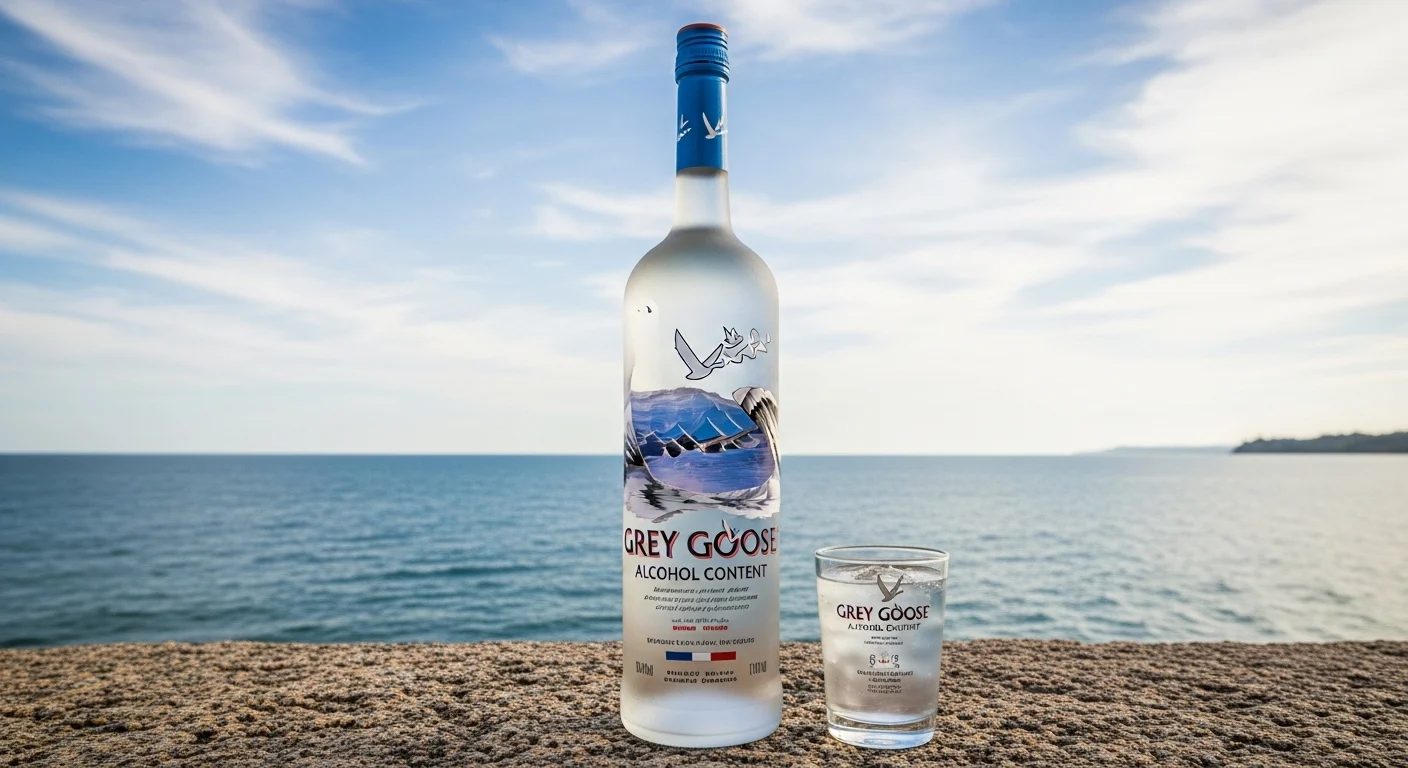
Discover Grey Goose alcohol content (40% ABV/80 proof), why it’s distilled once, and what makes this French vodka command premium prices.
That frost-covered bottle with the flying goose sits at every upscale bar charging $14 per martini. What justifies the premium price when Grey Goose alcohol content matches every budget vodka? After analyzing premium spirits for over 11 years and visiting French distilleries, I’ve studied what separates Grey Goose’s $30-40 bottle from $15 competitors sharing identical alcohol percentage.
Here’s what matters about Grey Goose alcohol content: Grey Goose contains exactly 40% alcohol by volume (ABV), equal to 80 proof – identical to virtually every vodka worldwide. The Grey Goose alcohol content isn’t what makes it premium. Instead, single distillation from French winter wheat, limestone-filtered spring water from Cognac, and cellar master oversight create smooth character despite standard strength.
After years comparing premium and budget vodkas, I’m revealing why the Grey Goose alcohol content of 40% ABV proves strength isn’t everything. Whether you’re evaluating if Grey Goose justifies its price, choosing vodka for cocktails, or curious about premium spirit marketing, understanding what actually distinguishes Grey Goose beyond alcohol percentage reveals truth about luxury vodka.
Grey Goose Alcohol Content: The 40% ABV Standard
Let’s establish facts about Grey Goose alcohol content immediately. Grey Goose Vodka contains 40% alcohol by volume, translating to 80 proof in American measurements. According to Grey Goose’s official FAQ, “GREY GOOSE® Vodka contains 40% alcohol by volume giving it a classification of 80 proof.”
Understanding the Numbers:
At 40% ABV, the Grey Goose alcohol content means 40% is pure ethanol, 60% is water plus trace compounds from wheat and fermentation. This matches Absolut, Smirnoff, Ketel One, Belvedere, and virtually every unflavored vodka.
Grey Goose Variations:
| Product | ABV | Proof | Difference from Original |
|---|---|---|---|
| Grey Goose Original | 40% | 80 | Baseline |
| Grey Goose Flavored | 40% | 80 | Identical alcohol |
| Grey Goose Essences | 30% | 60 | 25% less alcohol |
| Grey Goose Altius | 35% | 70 | 12.5% less alcohol |
The standard Grey Goose alcohol content of 40% ABV represents the legal minimum for vodka in America and global industry standard. Higher proof would burn harshly, defeating Grey Goose’s smoothness positioning. Lower alcohol wouldn’t legally qualify as vodka.
From my premium spirits analysis experience, the Grey Goose alcohol content proves alcohol percentage isn’t premium differentiator – production method, ingredient quality, and brand positioning separate luxury from budget vodkas at identical strength.
What Makes Grey Goose Premium (Hint: Not Alcohol Content)
Given the Grey Goose alcohol content matches $15 vodkas, what justifies $30-40 bottles? The answer lies in production methods distinguishing Grey Goose from competitors.
Single Distillation Philosophy:
Unlike vodkas distilled 5-6 times, “Grey Goose is only ever distilled once, based on the desire to allow the characteristics of the high-quality ingredients to shine through.”
This contrasts industry practice where multiple distillations remove impurities. Grey Goose argues starting with superior ingredients requires fewer distillations. Retailers note “this vodka is distilled only once to preserve the natural flavors, aromas and bold, toffee finish.”
French Winter Wheat:
Grey Goose uses “soft winter wheat, sown in October and harvested in August, which provides it with four additional months of growth in comparison to summer wheat” from Picardy region – France’s breadbasket.
The wheat selection is protected: “In France, wheat is even classified and protected by law, and we only use the highest standard wheat, which is called blé panifiable supérieur.” This premium wheat costs more than generic grain neutral spirits many vodkas purchase pre-made.
Cognac Spring Water:
Water comes from natural spring “150 meters (500 feet) below the blending facility in Cognac, which is lined with limestone, providing calcium-rich spring water.”
The limestone filtration provides mineral character affecting mouthfeel and taste despite Grey Goose alcohol content matching competitors using municipal water.
Cellar Master Oversight:
Grey Goose employs François Thibault, a Maître de Chai (cellar master) trained in Cognac production. His expertise applies cognac craftsmanship to vodka, unusual for spirits emphasizing neutrality.
From Grain to Glass:
Unlike brands purchasing grain neutral spirits, “Grey Goose take a detailed approach to the whole process, being one of the few premium vodka brands that create their own high-quality base spirit and take charge of the whole vodka-making process from grain to glass.”
These factors create character despite identical Grey Goose alcohol content to budget options. Whether that justifies 2-3x price remains subjective.
How Grey Goose Achieves Its Alcohol Percentage
Understanding how Grey Goose reaches 40% ABV reveals production distinguishing premium from mass-market vodka at the same strength.
Step 1: Fermentation
Grey Goose uses enzymes “to break down carbohydrates into fermentable sugars. The fermentation takes place continuously over six cascading tanks, producing a 20-proof beer.”
The cascading tank system creates continuous fermentation unlike batch processes, potentially improving consistency.
Step 2: Five-Step Distillation
Despite claiming “single distillation,” the process includes “five-step process” during one continuous distillation run. This differs from running spirit through stills 5-6 separate times (multi-distillation).
The single-pass five-step distillation concentrates alcohol to 90-95% ABV while theoretically retaining more wheat character than multiple distillation passes would.
Step 3: Water Blending
High-proof distillate is blended with Cognac spring water to precisely 40% ABV. Master distillers calculate exact ratios ensuring every bottle hits target Grey Goose alcohol content consistently across millions of bottles yearly.
Step 4: Filtration and Bottling
After blending to 40% ABV, “water is then filtered to remove impurities” before bottling with cork closures rather than screw caps – another premium positioning element.
The single distillation at Grey Goose alcohol content of 40% ABV differentiates from budget vodkas distilled 5-6 times to remove impurities cheaper ingredients require.
If brewing and fermentation interest you, understanding craft beer and spirit production principles reveals how ingredient quality and process choices create distinct character even at identical alcohol percentages.
Grey Goose vs Budget Vodkas: Same Alcohol, Different Experience
The Grey Goose alcohol content of 40% ABV matches Smirnoff ($15), Svedka ($13), and Skyy ($16). What creates different drinking experiences at identical strength?
Taste Profile Comparison:
Grey Goose delivers “sweet, round palette and a bold, toffee finish” versus budget vodkas’ neutral, sometimes harsh character.
Descriptions emphasize “delicate and floral aroma” and “natural flavors, aromas and bold, toffee finish” – vocabulary rarely applied to budget vodkas despite identical Grey Goose alcohol content.
Smoothness Factor:
Reddit users debate quality: “Grey Goose was created to create a false premium on vodka. It is way too expensive for how it tastes and there are a lot of cheaper vodkas that blow it out of the water.”
However, others report exceptional experiences. One user describes unique bottle tasting “way more that 80 proof, yet it didn’t burn it was super smooth and had these wonderful notes of citrus.”
Blind Taste Test Reality:
Multiple blind tests show many drinkers cannot distinguish Grey Goose from budget vodkas. The Grey Goose alcohol content matches competitors, and neutrality is vodka’s goal. Premium positioning relies partly on brand perception versus objective superiority.
Gluten-Free Certification:
Despite wheat base, Grey Goose is “gluten free vodka for those who have dietary restrictions.” Distillation removes gluten proteins, though some celiacs report reactions to any grain-derived spirits.
The Grey Goose alcohol content being identical to budget options proves price reflects production methods and branding more than intoxication strength or objective quality.
Grey Goose Alcohol Content in Context
Understanding the Grey Goose alcohol content of 40% ABV requires comparison against beer, wine, and other spirits.
Concentration Comparison:
| Beverage | Typical ABV | Equivalent to Grey Goose |
|---|---|---|
| Grey Goose | 40% | 1 shot (1.5 oz) |
| Beer | 5% | 8 beers = 1 Grey Goose shot |
| Wine | 12% | 3.3 glasses = 1 Grey Goose shot |
| Tequila | 40% | Identical alcohol content |
| Whiskey | 40-50% | Same to 25% stronger |
| Everclear | 95% | 2.4x stronger than Grey Goose |
One 1.5 oz Grey Goose shot contains identical alcohol as 12 oz beer (5% ABV) – one standard drink. The Grey Goose alcohol content means consuming concentrated spirits requiring smaller volumes than beer or wine.
Cocktail Considerations:
Grey Goose’s ready-to-serve martini contains “ABV of 35% straight out of the bottle, but stirring it with ice and straining will get it to around 29% and shaking it with ice and straining will take it down to around 26%.”
Dilution from ice reduces alcohol percentage significantly. A home-made martini using 2.5 oz Grey Goose contains nearly 2 standard drinks despite the vodka’s moderate 40% ABV.
The Premium Vodka Marketing Strategy
Grey Goose’s success selling 40% ABV vodka at premium prices reveals spirit industry marketing brilliance.
The Sidney Frank Story:
Founded in 1997, “Sidney Frank founded GREY GOOSE® in the summer of 1997. He sought to develop a luxury vodka and collaborated with cellar master François Thibault.”
Frank deliberately positioned Grey Goose as super-premium before “super-premium vodka” category existed. He priced it higher than competitors, betting consumers would associate high price with high quality.
The Strategy Worked:
Grey Goose became best-selling premium vodka despite identical Grey Goose alcohol content to budget brands. In 2004, Bacardi purchased Grey Goose for $2 billion – validating the luxury positioning strategy.
Taste vs. Perception:
Critics argue Grey Goose is “overpriced rubbish” charging premium for standard vodka. Supporters counter production quality and French craftsmanship justify costs.
The truth: Grey Goose alcohol content matches budget vodkas, but production methods differ. Whether those differences justify 2-3x pricing depends on individual values regarding craft, ingredients, and brand prestige.
Common Questions About Grey Goose Alcohol Content
What is Grey Goose alcohol content?
Grey Goose contains exactly 40% alcohol by volume (ABV), equal to 80 proof. This is the standard alcohol content for virtually all unflavored vodkas globally and the legal minimum for vodka in the United States. Every bottle of Grey Goose Original, regardless of size, contains precisely 40% ABV – identical to Absolut, Smirnoff, and most other vodkas.
Is Grey Goose stronger than other vodkas?
No, Grey Goose has identical alcohol content to most vodkas at 40% ABV (80 proof). Standard vodkas from budget to premium maintain this strength. Grey Goose Essences (30% ABV) and Altius (35% ABV) actually contain less alcohol than standard vodkas. Grey Goose’s premium positioning comes from production methods, not higher alcohol percentage.
Why is Grey Goose distilled only once?
Grey Goose is distilled once to preserve wheat character and natural flavors. The philosophy argues starting with premium French winter wheat and limestone-filtered water requires fewer distillations than budget vodkas using generic ingredients. Multiple distillations create neutrality; single distillation at 40% ABV allows subtle wheat sweetness and toffee notes to remain.
Does Grey Goose alcohol content affect price?
No, alcohol content doesn’t justify Grey Goose’s premium price since it matches budget vodkas. The $30-40 cost reflects French production, single-origin winter wheat, Cognac spring water, cellar master oversight, and luxury brand positioning. You’re paying for production methods and branding, not higher alcohol percentage or objectively superior intoxication.
How many shots are in Grey Goose bottle?
A standard 750ml Grey Goose bottle contains approximately 16-17 shots (1.5 oz each). A 1-liter bottle has about 22 shots, and 1.75-liter handle contains approximately 39 shots. At Grey Goose alcohol content of 40% ABV, each shot represents one standard drink containing 0.6 oz pure alcohol.
Is Grey Goose smooth because of alcohol content?
No, smoothness comes from production methods, not alcohol percentage. Grey Goose’s single distillation from premium wheat, limestone-filtered water, and careful hearts-only selection create smooth character. Many vodkas at identical 40% ABV taste harsher due to inferior ingredients or over-distillation removing all character. Alcohol percentage alone doesn’t determine smoothness.
Can you drink Grey Goose straight at 40% ABV?
Yes, Grey Goose 40% ABV is designed for neat consumption or minimal-ingredient cocktails. The premium positioning emphasizes sipping quality versus mixing-only budget vodkas. Serve chilled or from freezer for optimal smoothness. However, 40% alcohol remains strong regardless of smoothness – always drink responsibly despite pleasant taste.
Is Grey Goose worth the price at standard alcohol content?
This depends on personal values. Objectively, Grey Goose alcohol content matches $15 vodkas, so you’re not paying for higher strength. You’re paying for French production, single-origin wheat, Cognac water, single distillation method, and luxury branding. Blind taste tests show mixed results. If production craft and brand prestige matter, possibly worth it. If seeking best value per alcohol volume, probably not.
The Final Word: Alcohol Content Isn’t Everything
After comprehensive analysis of Grey Goose’s production, marketing, and competitive positioning, the Grey Goose alcohol content of 40% ABV (80 proof) proves strength doesn’t determine premium status. Grey Goose costs 2-3x more than budget vodkas despite identical alcohol percentage, demonstrating luxury spirits compete on production quality, ingredient sourcing, and brand perception rather than intoxication power.
The Grey Goose alcohol content of 40% ABV provides adequate strength for cocktails and shots while maintaining smoothness for sipping neat. The single distillation from French winter wheat and Cognac spring water creates character distinguishing Grey Goose from multi-distilled budget vodkas stripped of all personality despite matching strength.
Understanding that the Grey Goose alcohol content matches virtually every vodka reveals important truth: vodka differentiation happens through production philosophy, ingredient quality, and marketing brilliance rather than alcohol strength. Grey Goose built luxury vodka empire not by exceeding 40% ABV standard but by repositioning what vodka could be through French craftsmanship applied to traditionally neutral spirit category.
Whether Grey Goose justifies premium pricing remains subjective. The Grey Goose alcohol content won’t intoxicate you faster than Smirnoff. The single-distilled French wheat may taste smoother, or brand prestige may create placebo effect. Blind taste tests suggest many drinkers cannot reliably distinguish premium from budget vodkas at identical alcohol percentage.
The next time you order Grey Goose martini or purchase that iconic frosted bottle, understand you’re paying for production story, French terroir, and luxury positioning – not higher alcohol content. At 40% ABV, Grey Goose delivers same intoxication as budget vodkas. The premium lies in how that alcohol was created, not its final percentage.
About the Author
Olivia Barrelton is a premium spirits analyst and luxury beverage consultant with over 11 years of experience evaluating high-end vodkas, whiskeys, and cognacs across global markets. She holds advanced certifications in spirits education and has conducted extensive research comparing premium and budget spirit production methods. Olivia specializes in analyzing whether luxury spirits justify premium pricing versus offering superior marketing over substantive quality differences.
She has visited distilleries across France, Scotland, and America, documenting production processes and interviewing master distillers. When not analyzing spirits or conducting blind taste comparisons, Olivia enjoys wine country travel, culinary pairing experiments, and teaching consumers how to evaluate spirits beyond brand prestige. Connect with her for evidence-based insights on premium spirits, value assessment, and informed purchasing decisions.