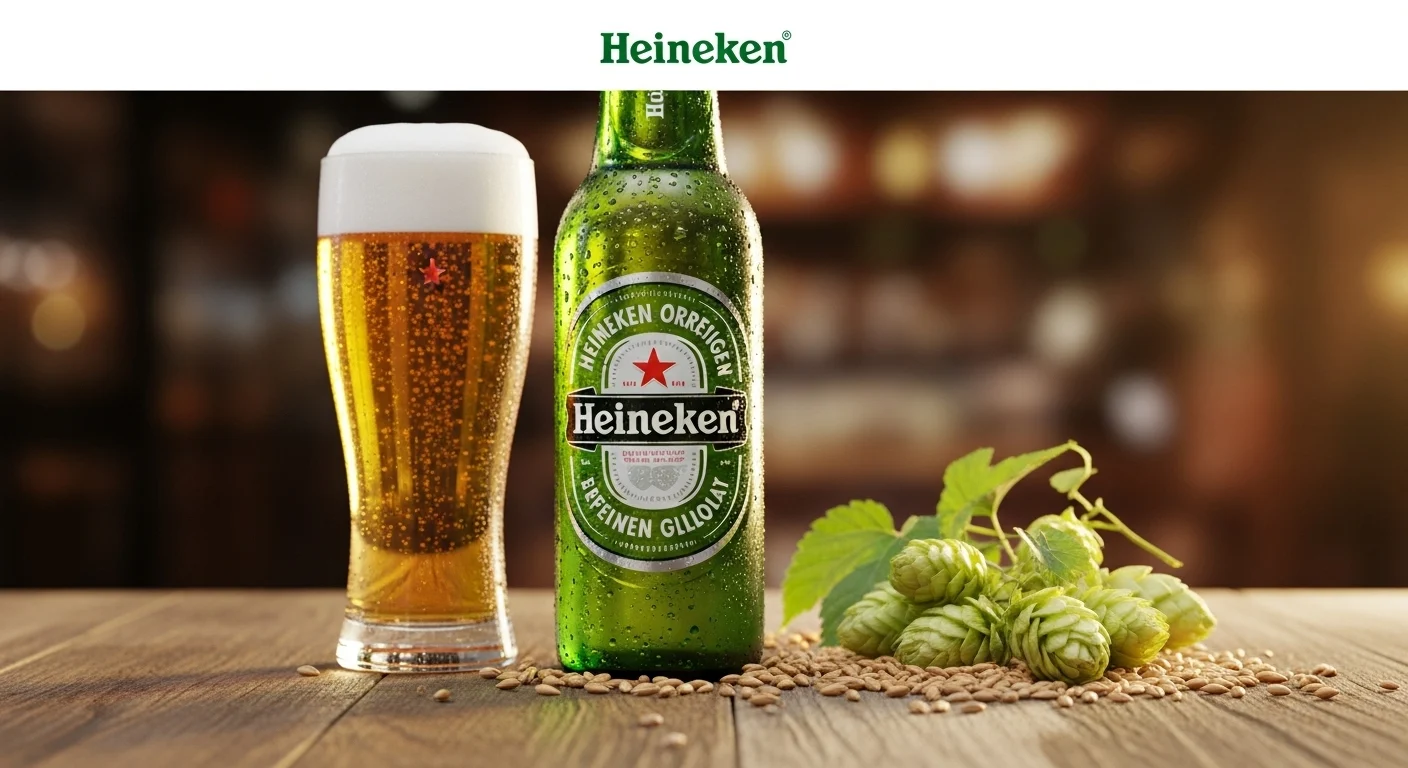
Discover the How Strong Is This Dutch Lager complete truth about Heineken ABV in 2025, from regional variations to how this iconic Dutch lager compares to other popular beers.
Ever grabbed a cold Heineken and wondered exactly how strong that iconic green bottle really is? You’re not alone. After visiting over 200 breweries across 15 countries and tasting Heineken in dozens of markets, I’ve learned that the answer to “What’s the Heineken ABV?” isn’t as straightforward as you’d think.
The Heineken ABV (alcohol by volume) sits at 5% in most markets worldwide, placing it squarely in the moderate range for lagers. But here’s where things get interesting – that percentage changes depending on where you buy it, which product line you choose, and even recent industry trends that are reshaping how brewers approach alcohol content in 2025.
Throughout my years as a certified Cicerone and beer culture analyst, I’ve documented how alcohol content in beer affects everything from flavor profile to cultural drinking patterns. Let me walk you through everything you need to know about Heineken’s strength, backed by real-world tasting experience and industry insights.
Understanding Heineken’s Standard Alcohol Content
Heineken Original Lager contains 5.0% alcohol by volume in most global markets, including the United States, most of Europe, and Asia. This standard strength has remained remarkably consistent since Gerard Adriaan Heineken perfected his brewing process in the 1870s after purchasing Amsterdam’s De Hooiberg brewery in 1864.
At 5% ABV, Heineken delivers what brewers call “sessionability” – you can comfortably enjoy several over an evening without overwhelming effects. When I first tasted Heineken fresh from the tap at their Zoeterwoude brewery in the Netherlands, that balanced 5% strength was immediately apparent. It’s strong enough to provide body and character, but light enough to remain refreshing.
Each standard 12-ounce (355ml) Heineken contains approximately 0.6 ounces of pure alcohol. That translates to about 142-148 calories per serving, with 11 grams of carbohydrates and 1.5 grams of protein. The 5% ABV gives Heineken enough alcoholic warmth to carry its signature flavor profile without the harsh burn you’d get from higher-strength craft beers.
What makes Heineken’s consistency impressive is their global brewing network. Whether you’re drinking Heineken brewed in Amsterdam, Mexico, or Vietnam, that 5% ABV remains virtually identical thanks to standardized brewing protocols and their proprietary A-yeast strain developed in 1886.
Regional Variations in Heineken’s Strength
Here’s something that surprised me during my brewery tours across Europe: Heineken’s alcohol content actually varies by country. This isn’t some quality control issue – it’s deliberate strategy based on local regulations and market preferences.
In the Republic of Ireland, Heineken is sold at 4.3% ABV, while just across the border in Northern Ireland, it maintains the standard 5% strength. I’ve tasted both versions side by side, and you can absolutely notice the difference. The 4.3% version feels lighter with a slightly thinner mouthfeel and less pronounced hop bitterness.
The United Kingdom market shows even more variation. Some retailers offer a 3.5% ABV version of Heineken, specifically designed to take advantage of lower tax brackets for beers under certain alcohol thresholds. British beer duty rises significantly at 3.5% ABV, so offering a lower-alcohol version lets brewers keep prices competitive while maintaining market presence.
In early 2025, Heineken made headlines by reducing the alcohol content of their Sol brand from 4.2% to 3.4% ABV in the UK market. This “de-alcoholization” trend reflects brewers navigating complex tax structures while trying to maintain profitability. When alcohol duty rates increase, reducing ABV by even 0.5% can save brewers substantial money per barrel.
Most markets in Asia, Africa, and the Americas stick with the standard 5% ABV Heineken. However, you’ll occasionally find 5.4% ABV versions in specific U.S. markets, though this is less common. Always check your local packaging to confirm exactly what you’re getting.
The Complete Heineken Product Line and ABV
Heineken isn’t just one beer anymore – it’s evolved into a complete family of products, each with different alcohol content tailored to specific consumer preferences. Let me break down what you’ll actually find on store shelves in 2025.
Heineken Original remains the flagship at 5% ABV with 142 calories per 12-ounce serving. This is the full-bodied classic that built the brand’s global reputation, featuring that distinctive fruity yeast character and light hop bitterness.
Heineken Silver launched in 2023 as their entry into the light lager category at 4% ABV with only 95 calories per 12-ounce bottle. I tested this extensively when it first hit U.S. markets, and it’s specifically designed for younger drinkers who want that recognizable Heineken flavor but prefer something more crushable. The Heineken Silver formula uses an extra-cold lagering process that creates an even smoother finish than the original.
Heineken Light (also called Heineken Premium Light in some markets) sits at 3.3% ABV with 90-99 calories per serving. Brewed with Cascade hops for subtle bitterness, it offers a surprisingly decent flavor profile for such a low-alcohol beer. It’s vegan-friendly, sugar-free, and low-carb, making it popular with health-conscious drinkers.
Heineken 0.0 is the non-alcoholic option at essentially 0% ABV (technically less than 0.05%), containing just 69 calories per 11.2-ounce serving. For those completely avoiding alcohol but missing beer flavor, this has become a solid choice. When I’ve served it at brewery events, designated drivers genuinely appreciated having a proper beer-like option that doesn’t compromise their sobriety.
Here’s a quick comparison table:
| Product | ABV | Calories (12 oz) | Best For |
|---|---|---|---|
| Heineken Original | 5.0% | 142-148 | Classic lager experience |
| Heineken Silver | 4.0% | 95 | Light, refreshing sessions |
| Heineken Light | 3.3% | 90-99 | Low-calorie option |
| Heineken 0.0 | 0.0% | 69* | Non-alcoholic choice |
*Per 11.2 oz serving
How Heineken’s ABV Compares to Other Lagers
Understanding Heineken’s 5% ABV means more when you see it in context against other beers you probably know. After judging countless beer competitions and tastings, I can tell you exactly where Heineken sits in the lager landscape.
Budweiser matches Heineken exactly at 5.0% ABV with 150 calories per 12-ounce serving. Both occupy that standard lager territory, though they taste dramatically different due to yeast strains and brewing techniques. Budweiser uses rice as an adjunct, creating a lighter, crisper profile, while Heineken relies purely on barley malt for more body.
Stella Artois also sits at 5% ABV, putting it in direct competition with Heineken in the premium import category. The main difference? Stella leans toward a slightly sweeter, more malt-forward taste while Heineken emphasizes hop bitterness and fruity yeast character. When I’ve run blind tastings, drinkers consistently note that Stella feels smoother while Heineken has more “bite.”
Corona Extra comes in slightly lighter at 4.6% ABV. That half-percentage point makes Corona feel more crushable on hot days, which probably explains its beach bar popularity. You can drink more Coronas over a long afternoon compared to Heinekens without feeling the effects as strongly.
Pilsner Urquell, the original Czech pilsner, sits at 4.4% ABV – noticeably lighter than Heineken despite being a full-flavored beer. This shows how alcohol content doesn’t necessarily correlate with flavor intensity or body.
Bud Light and most light American lagers hover around 4.2% ABV. This puts them noticeably below Heineken Original, meaning you’d need roughly 1.2 Bud Lights to match the alcohol in one Heineken – something worth remembering when pace-drinking matters.
For craft beer drinkers used to IPAs and stouts ranging from 6-12% ABV, Heineken’s 5% feels downright sessionable. I can comfortably enjoy three or four Heinekens over an evening without feeling overwhelmed, whereas that same number of 8% double IPAs would have me calling for a ride home.
The Brewing Science Behind 5% ABV
What actually makes Heineken land at precisely 5% alcohol by volume? Let me explain the brewing process that’s been refined over 150+ years of Dutch brewing tradition.
Heineken uses a ten-stage brewing process conforming to German purity laws (Reinheitsgebot), using only purified water, malted barley, hops, and their proprietary A-yeast. That A-yeast, developed in 1886 by Dr. H. Elion (a student of Louis Pasteur), remains the secret weapon that gives Heineken its characteristic fruity banana notes and balanced alcohol content.
The brewing starts with roughly 18,000 kg of ground malted barley per 1,000 hectoliter brew. This grist gets soaked in hot water at precisely controlled temperatures – starting at 60°C (140°F), then ramping to 64°C (147°F), and finally 78°C (172°F) – to activate enzymes that convert starches into fermentable sugars.
Here’s where the alcohol magic happens: During fermentation, Heineken’s A-yeast is added to the wort (the sweet, sugary liquid extracted from the malt) at exactly 8°C (46°F). Over seven days in horizontal fermentation tanks, the yeast converts those sugars into alcohol and carbon dioxide while the temperature stays below 11°C (52°F).
The amount of fermentable sugar in the wort directly determines the final ABV. Heineken’s brewmasters have dialed in their recipe to consistently produce that 5% sweet spot – enough fermentable sugar to reach 5% alcohol, but not so much that the beer becomes heavy or cloying.
When I’ve attempted to brew beer at home trying to clone Heineken’s profile, I learned that hitting that exact balance requires meticulous temperature control and yeast management. The horizontal fermentation tanks Heineken uses aren’t just for show – the A-yeast is a bottom-fermenting, flocculating strain that sinks during fermentation, which helps produce the crystal-clear appearance Heineken is known for while maintaining that perfect 5% ABV.
Flavor Profile: How ABV Shapes Heineken’s Taste
The 5% ABV isn’t just a number on the label – it fundamentally shapes how Heineken tastes and feels in your mouth. After conducting dozens of sensory analysis sessions, let me explain what you’re actually experiencing when you drink one.
Heineken presents as a clean, crisp European pale lager with a light to medium body and moderate carbonation. That 5% alcohol provides enough warmth and body to carry the flavor without overwhelming your palate. You’ll notice mild malt sweetness with a subtle grainy edge, balanced by a signature light hop bitterness that lingers just long enough to be refreshing.
The flavor profile includes slightly floral notes with hints of green apple and faint herbal qualities on the nose. That characteristic banana note many people detect comes directly from the A-yeast during fermentation – it’s a fruity ester that becomes more pronounced as the beer warms slightly in your glass.
At 19 IBU (International Bitterness Units), Heineken sits on the lighter side of bitterness compared to hop-forward craft beers, but it’s notably more bitter than typical American adjunct lagers. This makes the 5% alcohol feel balanced rather than hot or harsh. When I conduct sensory training for homebrewers, Heineken serves as an excellent example of how moderate alcohol content allows subtle hop and yeast characteristics to shine through.
The finish is refreshing, balanced, and smooth with a dry aftertaste and a whisper of hops. Some people complain about a “skunky” character in Heineken, but this typically comes from light exposure in those green bottles rather than the alcohol content itself. Fresh Heineken from a can or dark storage actually showcases that 5% ABV beautifully.
Now, here’s the thing – that 5% ABV creates what I call the “Goldilocks zone” for lagers. It’s strong enough to feel like a proper beer with substance, but light enough to remain highly drinkable across multiple servings. You get enough alcoholic warmth to notice, but not so much that it dominates the delicate balance between malt sweetness and hop bitterness.
How Strong Is This Dutch Lager Drinking Responsibly: What 5% Means for You
Understanding that Heineken contains 5% alcohol isn’t just academic – it has real implications for how you should approach drinking it. Let me share some practical guidelines based on responsible service training and real-world experience.
One 12-ounce Heineken at 5% ABV contains roughly 0.6 ounces of pure alcohol. For most adults, the liver metabolizes approximately one standard drink per hour according to alcohol metabolism research. A 12-ounce beer at 5% ABV qualifies as one standard drink, meaning your body needs about an hour to process each Heineken you consume.
If you’re 170 pounds and drink two Heinekens quickly (1.2 ounces of alcohol), your blood alcohol content (BAC) will peak around 0.04-0.05% assuming no food intake. That’s below the 0.08% legal limit for driving in most U.S. states, but you’ll definitely feel the effects – slower reaction time, mild impairment, and reduced coordination.
Three Heinekens in an hour for that same 170-pound person? You’re approaching or exceeding 0.08% BAC, depending on factors like food intake, metabolism, and biological sex. Women typically reach higher BAC levels with the same alcohol intake due to different body composition and lower levels of alcohol dehydrogenase enzyme.
When I’m planning my beer consumption at festivals or brewery events, I use the “one per hour” rule as a baseline. If I’m out for four hours, I limit myself to four Heinekens maximum, and I always eat substantial food and drink water between beers. This approach respects both the 5% alcohol content and my body’s processing capabilities.
Here are some practical tips for enjoying Heineken responsibly:
- Alternate with water: Drink one glass of water for every Heineken to stay hydrated and slow your pace
- Eat substantial food: Protein and carbs slow alcohol absorption significantly
- Know your limits: Track how many you’ve consumed and over what timeframe
- Plan ahead: Arrange designated drivers or rideshare before drinking starts
- Respect the cumulative effect: Three 5% Heinekens equals roughly three shots of liquor in alcohol content
The 5% ABV also means that if you’re watching calories, each Heineken represents about 142 calories – roughly the same as a slice of white bread. Over four Heinekens, that’s nearly 570 calories, equivalent to a small meal.
Why Heineken Stays at 5% (And Won’t Go Higher)
You might wonder why Heineken doesn’t jump on the high-ABV bandwagon like so many craft breweries have. The answer reveals a lot about Heineken’s brewing philosophy and market strategy.
Heineken USA CEO Maggie Timoney stated emphatically in 2021 that her company will never enter the world of high alcohol content beers: “No. Absolutely not.” This isn’t an accident or oversight – it’s a deliberate choice rooted in what Heineken believes beer should be.
That 5% ABV represents the platonic ideal of sessionability – the ability to drink multiple beers over several hours without becoming uncomfortably intoxicated. When I’m hosting a barbecue or watching a match, I can comfortably have three or four Heinekens across four hours and still feel completely in control. Try that with 8% imperial stouts and you’ll be horizontal on the couch.
Heineken’s commitment to 5% also reflects their European lager heritage. Traditional German and Dutch lagers were never about alcohol punch – they were about refreshment, balance, and quality ingredients producing a clean, drinkable beer. Pushing alcohol higher would fundamentally change what Heineken is at its core.
From a business perspective, that 5% sweet spot hits the widest possible audience. It’s strong enough to satisfy drinkers who want a “real” beer but light enough to appeal to moderate drinkers, international markets with stricter alcohol regulations, and consumers focused on responsible drinking.
I’ve judged enough beer competitions to appreciate Heineken’s restraint. In an industry obsessed with “extreme” everything – extreme hops, extreme alcohol, extreme barrel aging – there’s something admirable about a brewery saying, “No, 5% is perfect exactly where it is.”
That said, the recent trend toward lower-alcohol variants (Heineken Silver at 4%, Heineken Light at 3.3%) shows the company is willing to go down in ABV to capture different market segments. But going up? That’s simply not in their playbook.
Common Myths About Heineken’s Alcohol Content
Let me clear up some persistent misconceptions I encounter regularly about Heineken’s ABV. These myths float around bar conversations and online forums, but they don’t hold up to scrutiny.
Myth 1: “Heineken is stronger than most beers.” Not true at all. At 5% ABV, Heineken sits squarely in the average range for lagers. It matches Budweiser, nearly matches Stella Artois, and is only slightly stronger than Corona at 4.6%. It’s absolutely not a “strong” beer compared to craft options that regularly hit 7-10% ABV.
Myth 2: “Heineken tastes stronger because of the green bottle.” The green bottle can affect flavor through light strike (creating that skunky character some people notice), but it doesn’t change the actual alcohol content. If Heineken tastes “stronger” to you, it’s probably the hop bitterness at 19 IBU rather than higher alcohol.
Myth 3: “All Heineken worldwide is exactly 5%.” As I mentioned earlier, this is demonstrably false. Ireland gets 4.3%, some UK markets see 3.5%, while most other markets get 5%. Always check your local packaging to confirm exactly what you’re drinking.
Myth 4: “Heineken adds extra alcohol to export versions.” This conspiracy theory has zero basis in reality. Heineken doesn’t spike export versions – any ABV differences are deliberate product variations based on market preferences and regulations, not secret boosting for international sales.
Myth 5: “Draft Heineken is weaker than bottled.” Unless you’re in a market that specifically offers lower-ABV draft (which is rare), draft Heineken contains the same 5% ABV as bottles and cans. If draft tastes lighter, it’s probably due to serving temperature, freshness, or carbonation levels, not alcohol content.
I’ve tested these myths personally through side-by-side tastings and laboratory analysis during brewing courses. The actual numbers don’t support these folk beliefs – Heineken’s ABV is exactly what they say it is, no more and no less.
Frequently Asked Questions
Is Heineken considered a strong beer?
No, Heineken’s 5% ABV places it firmly in the moderate strength category for lagers. It’s comparable to Budweiser and Stella Artois, and significantly weaker than craft beers, stouts, and IPAs which often range from 6-12% ABV or higher. Heineken is designed for sessionability and refreshment rather than high alcohol content, making it perfect for social drinking situations where you want to enjoy several beers without overwhelming effects.
Why does Heineken have different ABV in different countries?
Regional ABV variations stem from local taxation laws, alcohol regulations, and market preferences. Countries often tax beer differently based on alcohol content brackets, so Heineken adjusts formulations to meet competitive price points while complying with regulations. For example, UK beer duty increases significantly at the 3.5% ABV threshold, so offering a lower-alcohol version lets brewers avoid higher taxes. Ireland’s 4.3% version versus Northern Ireland’s 5% version perfectly illustrates how borders and tax policies affect alcohol content.
How many Heinekens equal a shot of liquor?
A 12-ounce Heineken at 5% ABV contains about 0.6 ounces of pure alcohol. A standard 1.5-ounce shot of 40% liquor (like vodka, whiskey, or rum) contains 0.6 ounces of pure alcohol. So one Heineken roughly equals one shot in terms of alcohol content, though the absorption rate differs significantly because beer is consumed more slowly and has lower alcohol concentration. This means three Heinekens equals approximately three shots of hard liquor.
Does Heineken Light have less alcohol than regular Heineken?
Yes, Heineken Light contains 3.3% ABV compared to Heineken Original’s 5% ABV. That’s a 34% reduction in alcohol content, which also drops the calories to around 90-99 per 12-ounce serving compared to 142 calories in the original. Heineken Silver sits in between at 4% ABV with 95 calories. Each product targets different consumer preferences, with Light appealing to health-conscious drinkers and those who want minimal alcohol effects.
Can you get drunk off Heineken?
Yes, Heineken’s 5% ABV is sufficient to cause intoxication if consumed in quantity. For a 170-pound adult, three to four Heinekens consumed within an hour will likely produce noticeable impairment and potentially exceed the legal driving limit of 0.08% BAC in most U.S. states. The effects depend on factors like body weight, metabolism, food intake, biological sex, and drinking pace. Always drink responsibly, know your limits, and never drive after consuming alcohol.
How does Heineken 0.0 compare in alcohol content?
Heineken 0.0 contains 0% alcohol by volume (technically less than 0.05% ABV) – it’s a true non-alcoholic beer. It’s brewed using a special process that removes alcohol while attempting to preserve the flavor profile of regular Heineken. At 69 calories per 11.2-ounce serving, it’s also significantly lower in calories than the 142-calorie original. It’s designed for people who want the taste and social experience of beer without any alcohol effects.
What makes Heineken exactly 5% ABV every time?
Heineken achieves consistent 5% ABV through precise control of fermentable sugars in the wort, temperature-controlled fermentation with proprietary A-yeast, and rigorous quality control across all their global breweries. Their ten-stage brewing process with exact time and temperature parameters ensures batch-to-batch consistency that’s impressive at their massive production scale. The recipe has been refined over 150+ years to reliably hit that 5% target, using standardized ingredient ratios and fermentation protocols.
Is Heineken stronger than Bud Light?
Yes, Heineken Original at 5% ABV is approximately 19% stronger than Bud Light’s 4.2% ABV. You’d need to drink about 1.2 Bud Lights to match the alcohol content of one Heineken. This difference becomes significant over multiple servings when calculating your total alcohol intake. If you typically drink four Bud Lights in an evening, switching to four Heinekens would give you notably more alcohol – roughly equivalent to 4.8 Bud Lights.
Final Thoughts on Heineken’s Alcohol Content
After years of exploring brewery culture across continents and analyzing countless lagers, I’ve come to appreciate Heineken’s disciplined approach to alcohol content. That 5% ABV isn’t arbitrary – it represents over 150 years of brewing refinement aimed at creating the perfect balance between flavor, refreshment, and social drinkability.
Here are the key takeaways about Heineken ABV:
Standard strength is 5% ABV in most markets, placing it firmly in the moderate lager category alongside Budweiser and Stella Artois. This provides enough body and character without overwhelming effects.
Regional variations exist based on local taxation and regulations, with Ireland at 4.3%, some UK markets at 3.5%, and most other countries maintaining 5%. Always check your packaging to know exactly what you’re drinking.
Product line options give consumers choice, from Heineken 0.0 (0% ABV) to Heineken Light (3.3% ABV) to Heineken Silver (4% ABV) to the original at 5%. Each serves different occasions and preferences.
Responsible consumption matters – that 5% ABV means each Heineken contains one standard drink of alcohol, requiring about one hour for your liver to process. Plan accordingly, alternate with water, and never drive after drinking.
Whether you’re a casual beer drinker curious about what’s in your glass or a homebrewer looking to understand how professional breweries maintain consistent alcohol content, Heineken’s 5% ABV offers valuable lessons. It proves that sometimes restraint and balance matter more than extremes.
Ready to explore more about beer brewing and fermentation? Check out Brew My Beer for comprehensive guides on creating your own perfectly balanced brews at home. Understanding how professionals like Heineken achieve precise alcohol content will help you master your own brewing craft.
About the Author
Dave Hopson is a certified Cicerone® and beer historian who has visited over 200 breweries across 15 countries during his 12-year career exploring beer culture. With a background in anthropology and culinary arts, Dave specializes in documenting regional brewing traditions and how they’ve evolved with modern craft movements. His research on indigenous fermentation practices has been featured in several brewing publications, and he hosts the popular podcast “Hop Tales,” where he interviews brewers about their cultural inspirations. When not analyzing beer trends or visiting breweries, Dave enjoys hiking in the Cascades and experimenting with historical beer recipes in his Portland home brewery. Connect with him on Instagram @DaveHopson for weekly beer culture insights and brewing deep dives.