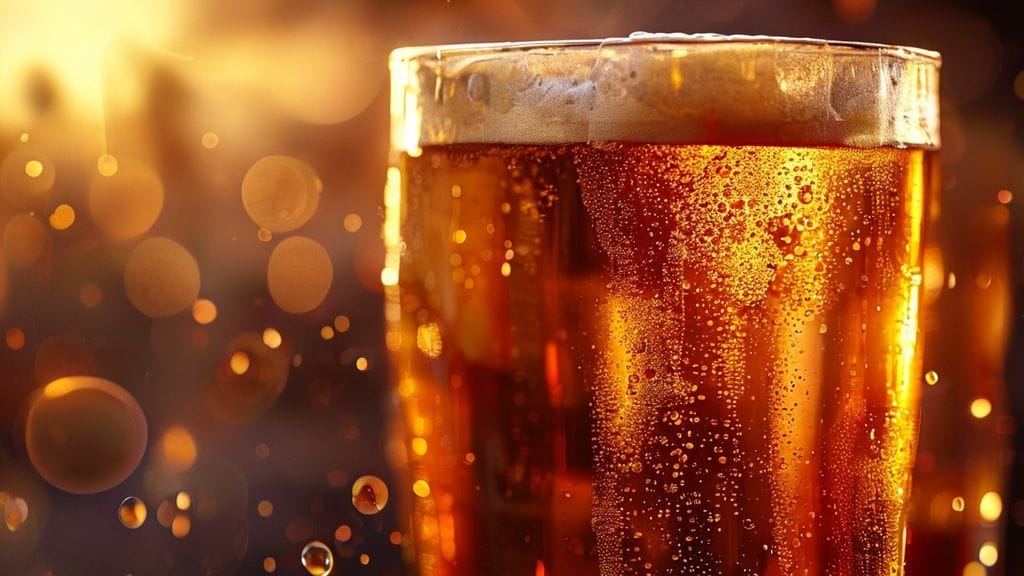
The California Common, historically known as Steam Beer, emerged from the California Gold Rush era as a pragmatic solution to brewing lager-style beer without refrigeration. This unique ale-lager hybrid utilizes a bottom-fermenting yeast fermented at warmer ale temperatures, yielding a distinctive crispness, malty backbone, and mild fruitiness, a testament to ingenious brewing under challenging conditions.
| Metric | Historical Range (Approx.) | Modern Target (BJCP 2021) |
|---|---|---|
| Original Gravity (OG) | 1.048 – 1.056 | 1.048 – 1.054 |
| Final Gravity (FG) | 1.012 – 1.018 | 1.011 – 1.014 |
| Alcohol by Volume (ABV) | 4.5% – 5.5% | 4.5% – 5.5% |
| Bitterness (IBU) | 30 – 45 | 30 – 45 |
| Color (SRM) | 8 – 14 | 10 – 14 |
| Fermentation Temp | 16°C – 21°C (60°F – 70°F) | 16°C – 21°C (60°F – 70°F) |
When I first delved into the history of American brewing, the California Common, or Steam Beer as it was originally known, captured my imagination like no other style. It’s a testament to human ingenuity, a pragmatic solution born from extreme conditions during the Gold Rush era. My initial attempts to truly understand its genesis involved not just reading, but attempting to brew under similar constraints – no refrigeration, just ambient temperatures. I confess, my first few batches were… well, let’s just say they were more “rustic” than “refined.” I made the mistake of trying to force a modern lager yeast into those warmer temperatures without adequate control, resulting in excessive diacetyl and fusel alcohols. It taught me invaluable lessons about yeast selection and temperature management, showing me just how skilled those original brewers had to be.
This isn’t just about a beer; it’s about a pivotal moment in brewing history where the confluence of climate, lack of technology, and a demand for refreshing lager-like beers created something truly unique. Let’s peel back the layers and understand how this iconic style came to be.
Understanding the Numbers Behind the Style: A Manual Calculation Guide
The very essence of California Common lies in the mathematical compromise forced upon its early brewers. Without refrigeration, they couldn’t ferment true lagers at traditional cold temperatures (typically 7-13°C). Yet, they sought the clean profile characteristic of lagers, contrasting sharply with the often-fruity ales of the time. This led to the ingenious use of bottom-fermenting lager yeasts, often stressed, at warmer ale temperatures (16-21°C). The resulting fermentation kinetics dramatically influenced the beer’s final gravity, alcohol content, and ester profile. I’ve often charted potential historical gravity progressions to illustrate this.
Theoretical Historical Gravity Progression (Example)
Imagine a brew day in San Francisco, circa 1880. The brewer mashes his barley, likely a rudimentary two-row pale malt, and boils with locally available hops. Let’s track a theoretical gravity progression:
| Brewing Stage | Specific Gravity Reading | Notes |
|---|---|---|
| Pre-Boil Gravity (Run-off) | 1.040 (adjusted for volume) | A typical reading before boil-off concentration. |
| Original Gravity (OG) | 1.052 | Achieved after a ~15% boil-off concentration. |
| Day 3 (Fermentation Peak) | 1.030 | Vigorous fermentation at 18°C. |
| Day 7 (Primary Fermentation End) | 1.014 | Reached target attenuation. |
| Final Gravity (FG) | 1.012 | After a few more days of conditioning/lagering. |
From these figures, we can calculate the Approximate Alcohol by Volume (ABV) using the standard formula:
ABV = (OG - FG) * 131.25
For our example: (1.052 - 1.012) * 131.25 = 0.040 * 131.25 = 5.25% ABV
This falls perfectly within the historical and modern range, illustrating how careful management of the available yeast and temperatures yielded consistent results, despite the lack of modern control.
Malt Bill for a “Historical Common” Simulation
While precise historical recipes are scarce, my research and brewing experience suggest a simple, robust malt bill. Complexity was a luxury for later brewers. The original grist was likely dominated by:
- **North American 2-Row Pale Malt:** The backbone, providing the fermentable sugars. I’d estimate **90-95%** of the grist. Its lower protein content compared to 6-row would still have been prevalent in Western regions.
- **Caramel/Crystal Malt (approx. 40L-60L):** For color, body, and a hint of malty sweetness. Perhaps **5-10%**. This would have been crucial to achieve that signature amber hue and slightly richer mouthfeel, masking some of the rougher edges from high-temperature lager fermentation.
The original brewers would have sourced whatever barley was locally available, likely producing a malt that was less modified than today’s standards, potentially leading to more extensive mash programs to ensure full starch conversion.
Recreating the Conditions: My Historical Brewing Process
Understanding the history of California Common isn’t just about the ‘what,’ but the ‘how.’ When I simulate these historical conditions, I focus on the elements that made the style unique. This isn’t a modern recipe; it’s an exploration of the pragmatic choices forced upon pioneering brewers.
- **The Mash: Simple & Effective.**
- **Grain Bill:** As discussed, I start with a base of high-quality North American 2-row pale malt (90-95%) and a touch of caramel malt (5-10%, 40-60L) for color and subtle complexity.
- **Mash Temperature:** I aim for a single infusion mash at **68°C (154°F)** for 60 minutes. This balance ensures good fermentability while leaving enough unfermentable dextrins for body, crucial for a beer fermented warm with lager yeast.
- **Water Profile:** Historically, water treatment was minimal. I target a moderately hard water profile, mirroring the mineral content of water sources in the California region.
- **The Boil: Hoppy & Direct.**
- **Hops:** Northern Brewer, or a close equivalent, is quintessential for this style. It delivers that distinctive woody, minty character. The original brewers would have used locally grown Cluster hops or imported varieties. I target a solid **60-minute addition** for 80-90% of the IBU, usually around 30-35 IBUs, with a small 10-minute addition for a touch of aroma. The key is a firm, earthy bitterness.
- **Boil Duration:** A robust 60-minute boil is standard.
- **Fermentation: The Heart of the Style.**
- **Yeast Selection:** This is the most critical element. I use a specific bottom-fermenting lager yeast strain (e.g., Wyeast 2112 California Lager or White Labs WLP810 San Francisco Lager). It’s designed to perform well at elevated temperatures, attenuating without producing excessive off-flavors.
- **Temperature Control (or lack thereof):** The true historical challenge. I ferment in an environment maintained at **18-20°C (64-68°F)**. This warmer range for a lager yeast forces a unique fermentation profile, generating subtle esters and a slightly fruity character that differentiates it from a true cold-fermented lager. Open fermentation in shallow vessels was common, increasing oxygen exposure and facilitating off-gassing, which I can simulate with careful head-space management.
- **Duration:** Primary fermentation typically completes within 5-7 days. I monitor gravity closely until stable, usually around **1.012-1.014 FG**.
- **Conditioning: A Touch of Cold.**
- **Diacetyl Rest (Optional but Recommended):** After primary fermentation, I allow the beer to sit at fermentation temperature for another 2-3 days to ensure complete diacetyl cleanup. This step is vital for clarity and flavor, even if the original brewers couldn’t precisely control it.
- **Cold Conditioning (Lagering):** While not truly ‘lagering’ as understood for traditional lagers, the beer benefits from a period of cold conditioning at **4-7°C (39-45°F)** for 2-4 weeks. This helps to drop out yeast and clarify the beer, smoothing out any rough edges and letting the hop character shine. This simulated “cool storage” was often the coldest part of the original brewing process.
What Can Go Wrong (And How to Fix It)
Even with careful planning, brewing a California Common can present unique challenges, especially when trying to mimic historical conditions. My own experiences have shown me these pitfalls:
- **Excessive Esters/Fusel Alcohols (Too Fruity/Solvent-like):** This is the most common issue if your fermentation temperature creeps too high, especially with a stressed lager yeast. I once pushed my temperature to 22°C (72°F) thinking “warmer is more authentic,” and ended up with something closer to a crude ale than a crisp common.
- **Solution:** Ensure strict temperature control, aiming for the **18-20°C (64-68°F)** range. If you can’t control it precisely, consider a more robust lager yeast that handles temperature swings better, or even a hybrid yeast strain specifically designed for this style. Proper yeast pitching rates are also critical; underpitching exacerbates stress. For more insights on yeast management, check out BrewMyBeer.online.
- **Under-attenuation (Too Sweet/High FG):** If your beer finishes too high (e.g., above 1.016 FG), it could be due to a short mash, insufficient yeast, or a yeast strain that’s simply not vigorous enough at the chosen temperature.
- **Solution:** Double-check your mash temperature; ensure it’s not too high (above 70°C/158°F), which creates more unfermentable sugars. Verify your yeast viability and pitch rate. A yeast starter is almost always a good idea for lager yeasts, even at warmer temps. If already fermented, rousing the yeast or adding a fresh, active dose can sometimes help.
- **Lack of Northern Brewer Hop Character:** If your beer tastes bland or lacks that distinctive woody/minty/eucalyptus note, your hop selection or additions might be off.
- **Solution:** Confirm you’re using genuine Northern Brewer hops or a very close substitute. Adjust your bittering addition to ensure at least **35-40 IBUs**. Consider a small dry hop addition (1-2g/L) of Northern Brewer post-fermentation for 3-5 days to boost aroma without adding much bitterness, a modern twist to enhance authenticity.
- **Diacetyl (Buttery Flavor):** This can arise if the yeast isn’t given enough time or warm enough temperatures to clean up diacetyl precursors.
- **Solution:** Always include a diacetyl rest. After primary fermentation is complete, hold the beer at **18-20°C (64-68°F)** for an additional 2-3 days before beginning any cold conditioning. This gives the yeast time to reabsorb and metabolize diacetyl.
Sensory Analysis: What a True California Common Should Offer
My goal when evaluating a California Common, whether my own brew or a commercial example, is to find the authentic balance of its historical roots. It’s a beer that tells a story through its sensory profile.
-
**Appearance:**
I look for a brilliant clarity, often achieved after extended cold conditioning, showcasing a deep golden to medium amber hue (SRM **10-14**). A thick, rocky, persistent off-white head is a hallmark. Haze indicates poor conditioning or possibly a stuck fermentation, which would not have been ideal for historical brewers needing a stable product.
-
**Aroma:**
The nose should be an inviting blend. I expect a distinct Northern Brewer hop character – woody, earthy, with hints of mint or eucalyptus. This is complemented by a subtle malty sweetness, often described as toasted bread or caramel. Importantly, there should be a faint, clean fruitiness (often pear or berry) from the warm-fermented lager yeast, but it should never be dominant or cloying. No harsh sulfur notes should be present.
-
**Mouthfeel:**
This beer offers a medium body with moderate carbonation. It should feel smooth and crisp on the palate, contributing to its refreshing quality. There’s a slight creaminess from residual dextrins, but it finishes relatively dry. A noticeable astringency or thinness would indicate poor mash conversion or over-attenuation.
-
**Flavor:**
The flavor profile mirrors the aroma, delivering a balanced experience. The initial taste is typically a firm, clean bitterness from the Northern Brewer hops, which quickly transitions into a pronounced malty presence. I look for flavors of toasted malt, biscuity notes, and a subtle caramel sweetness that stops short of cloying. The fruity esters from the yeast provide complexity without overwhelming the malt and hop balance. The finish is crisp and clean, with the hop bitterness lingering pleasantly but not harshly. It’s a beer that, despite its history, feels remarkably modern in its drinkability.
What is the Origin of the Name “Steam Beer”?
The term “Steam Beer” is believed to have several possible origins, all pointing to the unique conditions of its creation. One theory suggests it referred to the visible steam rising from the shallow, open fermenters used in the cool San Francisco air. Another, which I personally lean towards, is the vigorous carbonation and pressure that built up in the kegs when they were tapped, often described as “steaming.” A third, more prosaic explanation points to the steam power used in some of the early breweries. Regardless, it vividly captures the raw, industrial nature of its birth.
How Did a Lager Yeast End Up Being Fermented Warm?
The original brewers in California lacked access to refrigeration technology common in parts of Europe. However, they desired the clean, crisp qualities of lager beers, which were gaining popularity. The solution was to import bottom-fermenting lager yeast and adapt their brewing process. They fermented these yeasts at ambient cellar temperatures in California, which were significantly warmer than traditional lager fermentation temperatures but cooler than typical ale fermentation. The yeast strains that survived and performed well under these “stressful” conditions evolved to produce the characteristic profile of California Common.
What Role Did Open Fermenters Play in the Style’s Development?
Open fermenters, particularly the shallow, wide vessels typical of the era, played a significant role. They allowed for efficient heat dissipation, helping to keep the fermentation temperatures within a manageable range for the lager yeast, despite the warmer ambient conditions. The large surface area also facilitated the release of volatile compounds, including sulfur (which could be a byproduct of stressed lager yeast), contributing to a cleaner, crisper finish than might otherwise be expected from a warm-fermented lager. This was a crucial piece of the puzzle, alongside the unique yeast, in crafting a refreshing beer without modern cooling methods.
Is California Common Still Brewed Historically Today?
While Anchor Brewing Company famously trademarked “Anchor Steam” for their flagship beer, they uphold the tradition as closely as modern brewing practices allow. Many craft breweries and homebrewers, like myself, also produce California Commons. While few replicate the exact historical conditions (e.g., truly open, non-temperature-controlled fermentation), the spirit of the style – a warm-fermented lager yeast, Northern Brewer hops, and a balanced malt profile – is widely respected and replicated. It’s a living piece of brewing history, a style that continues to inspire. If you’re looking to dive deeper into this style or even brew your own, BrewMyBeer.online has resources to guide you.