The India Pale Ale (IPA) originated from British brewers’ efforts in the late 18th and early 19th centuries to send stable, palatable beer to British expatriates in India. It wasn’t a singular invention but an evolution, driven by the need for a brew capable of surviving a six-month sea voyage. High hopping rates and elevated original gravities were crucial for its unique preservative qualities and distinctive character.
| Historical “India Ale” Metrics (Circa 1820s) | Value (Estimated) | Significance |
|---|---|---|
| Original Gravity (OG) | 1.060 – 1.075 SG | Higher sugar content provided more alcohol, a natural preservative. |
| Final Gravity (FG) | 1.010 – 1.018 SG | Indicated a well-attenuated, drier beer, less prone to spoilage. |
| Alcohol By Volume (ABV) | 6.5% – 8.5% | Significantly higher than standard ales, crucial for long-term stability. |
| International Bittering Units (IBU) | 60 – 100+ IBU | Aggressive hopping offered potent antimicrobial properties and a bold flavor. |
| Standard Reference Method (SRM) | 6 – 10 SRM (Light Amber to Copper) | Reflected the pale malt base, a departure from darker porters and stouts. |
| Fermentation Temperature | 18°C – 22°C (64°F – 72°F) | Typical ale fermentation range, encouraging robust yeast activity. |
| Hop Rate (per Imperial Barrel) | 8 – 12 lbs (3.6 – 5.4 kg) | Extremely high for the era, driving the “pale ale” and preservative characteristics. |
The Brewer’s Hook: Unearthing History in the Fermenter
I’ve always been fascinated by the ‘why’ behind a beer style. When I first started digging into the origins of India Pale Ale, I admit, I fell for some of the common myths – the idea that it was a serendipitous discovery or a desperate measure to salvage spoiled beer. My experience tells me that great beer, especially one that changed brewing history, is rarely an accident. It’s the result of meticulous observation, empirical experimentation, and a deep understanding of ingredients and processes, often under challenging circumstances. Early British brewers, much like us today, were problem solvers. Their problem? Getting a drinkable, refreshing beer to distant lands without it turning to vinegar. The solution wasn’t a single stroke of genius but a gradual refinement, a testament to practical brewing science even before we had sophisticated labs. It’s a story that truly resonates with my own brewing philosophy: understand the problem, leverage your ingredients, and refine, refine, refine.
The “Math” Section: Preserving Pints for a Perilous Passage
The creation of the IPA wasn’t simply a matter of throwing more hops into a barrel; it was a calculated response to the challenges of preservation and transit. The fundamental “math” here revolves around two primary vectors for beer stability: alcohol content and hop bitterness/antimicrobial properties. Let’s break down the quantitative reasoning that shaped the early IPAs.
Manual Calculation Guide: The Preservation Index
While not a formal historical term, I use the “Preservation Index” as a conceptual tool to understand the combined effects that made IPAs uniquely stable. It highlights how brewers implicitly understood the synergy between specific gravity, attenuation, and hop rates.
- Alcohol By Volume (ABV) Contribution: Higher initial sugar content (Original Gravity) directly translates to higher alcohol content post-fermentation, assuming good attenuation. Alcohol acts as a solvent for hop compounds and an antimicrobial agent itself.
- Formula:
ABV ≈ (OG - FG) * 131.25 - Example: For an early IPA with OG **1.065** and FG **1.015**:
ABV ≈ (1.065 - 1.015) * 131.25 = 0.050 * 131.25 = 6.56% - My observation: This significant alcohol percentage, often double that of common table beers of the era (which might hover around 3-4% ABV), was the first line of defense against microbial spoilage.
- Hop Bittering Unit (IBU) Contribution: The sheer quantity of hops used was paramount. Hops, particularly alpha acids, provide bitterness and, crucially, antimicrobial properties. These compounds inhibit the growth of spoilage bacteria, especially lactic acid bacteria that can sour beer.
- Historical Hop Rate: Early IPAs often used **8-12 lbs of hops per Imperial Barrel** (approx. 3.6-5.4 kg per 163.6 liters). Let’s use a conservative mid-range figure of 10 lbs/bbl for our example.
- Simplified IBU Estimation (for conceptual understanding, actual calculations are complex):
IBU ≈ (Hop Weight (oz) * Alpha Acid % * Utilization %) / Volume (gallons) * Conversion Factor - My experience: While they didn’t have Spectrophotometers for IBU measurement, brewers understood that more hops meant more bitter and longer-lasting beer. Modern estimations place these early IPAs at **60-100+ IBU**, an intensely bitter beer by any standard. The conversion factor to account for historical hop varieties (often lower alpha acid than modern strains) and extended boil times would still yield very high IBU values, emphasizing the hop-forward nature.
- The “Preservation Index” (Conceptual): This is simply the product of the two key preservative elements, indicating overall stability.
- Formula:
Preservation Index = ABV % * IBU - Example for the 1820s IPA:
Index ≈ 6.56 * 80 (mid-range IBU) = 524.8 - Why this matters: A common mild ale of the time might have an ABV of 3.5% and an IBU of 20, yielding an index of 70. The IPA’s index is roughly 7.5 times higher, starkly illustrating its superior stability. This quantitative leap was the empirical backbone of its success. It underscores how the brewers of the era pushed known boundaries to achieve their goal, creating a new paradigm for beer preservation and flavor. This analytical approach, though less formal in the 19th century, is something I apply in my own brewing whenever I’m designing a recipe for longevity or specific flavor profiles, drawing directly from these historical insights found on BrewMyBeer.online.
Step-by-Step Execution: The Evolution of India Pale Ale
Understanding the origins of IPA isn’t about a single “aha!” moment, but a chronological progression of necessity, experimentation, and refinement. Here’s how I trace its development:
- The Problem: Stable Beer for Distant Lands (Late 18th Century)
British presence in the East, particularly in India, created a demand for beer that could survive the immense journey. The voyage around the Cape of Good Hope was long (4-6 months), hot, and turbulent. Standard British ales, often low in alcohol and lightly hopped, simply didn’t make the trip. They arrived spoiled, sour, or undrinkable. Brewers initially tried sending stronger porters and stouts, but these were heavy and not always refreshing in the tropical climate.
- Early Attempts: The “October Ale” Precedent (Pre-1790s)
Before IPA, British brewers knew how to make long-lasting beer. “October Ales” were strong, highly hopped ales brewed in autumn, aged for extended periods, and intended for special occasions or export. These beers often had an OG in the **1.070-1.090 range** and were heavily hopped. This tradition provided a conceptual framework for a stable, higher-alcohol beer.
- The Hodgson Connection: Bow Brewery’s Innovation (Circa 1790-1820s)
George Hodgson of Bow Brewery, London, is widely credited with perfecting a style specifically for the Indian market. He didn’t invent the concept, but he commercialized and refined it. His “October Ale,” already being shipped, was likely adapted. My research suggests his key contributions included:
- Higher Original Gravity: Pushing the OG to around **1.060-1.075** for increased alcohol content.
- Aggressive Hopping: Utilizing substantial quantities of high-quality hops (Kentish hops were common) – possibly **8-10 lbs per Imperial Barrel** or even more. The hops were added not just for bitterness but crucially for their preservative, antimicrobial properties.
- Extended Conditioning: The beer was often brewed very dry and allowed to condition for several months before shipment, often *on board the ship itself*. This long conditioning period further matured the beer and allowed any initial spoilage organisms to be outcompeted or killed off by the alcohol and hop acids.
- Pale Malt Focus: While not as “pale” as modern IPAs, the use of predominantly pale malt contrasted with the darker porters and stouts, contributing to a lighter body and color, more appealing in hot climates.
This beer, initially referred to as “October Beer” or “Pale Ale for India,” became highly sought after.
- The Shift: Bass & Allsopp Lead the Charge (1820s-1830s)
Hodgson’s success led to competitors. When Hodgson faced issues with credit and distribution, other brewers, notably Bass and Allsopp, stepped in. They reverse-engineered or developed their own “India Ales.” This period is critical because these larger breweries systematized the production, making it a distinct style.
- Bass Pale Ale: Bass & Co. famously branded their version, ensuring consistent quality and widespread distribution. Their recipe was very similar in concept to Hodgson’s: high OG, massive hopping. They were also among the first to dry-hop for aroma upon arrival, something I’ve experimented with extensively in my own brews to revive historical techniques.
- The “Pale Ale” Name Sticks: Over time, the name “India Pale Ale” or simply “Pale Ale” became synonymous with this particular style of strong, hoppy, pale-colored beer designed for export.
- Peak and Decline (Mid-19th to Early 20th Century)
IPA’s popularity soared, becoming a benchmark for quality export ale. However, as refrigeration improved and local brewing industries developed in India and other colonies, the need for an intensely preserved beer diminished. Tastes also shifted towards lighter, less bitter beers. Brewers began to reduce hop rates and gravities, leading to the “English IPA” we recognize today, which is often mellower than its historical ancestor. The style gradually faded from its historical prominence by the mid-20th century.
- The Resurgence (Late 20th Century Onward)
The craft beer movement, particularly starting in the late 20th century, rediscovered IPA, appreciating its bold hop character. Modern IPAs often push hop boundaries far beyond even the original “India Ales,” embracing new hop varieties and techniques like hop bursting and massive dry-hopping, creating a vibrant new chapter for this historic style. However, my passion lies in appreciating the ingenuity of those early brewers who, with far fewer tools, cracked the code.
Troubleshooting: What Can Go Wrong (Historically Speaking)
While IPA was a triumph, its history isn’t without its challenges and common misconceptions. When I dive into historical brewing, I always consider the hurdles the brewers faced.
- Misconception 1: IPA was “invented” for India because normal beer spoiled.
My take: This is an oversimplification. British brewers were already making strong, heavily hopped “October Ales” for domestic aging and select export. The “India Ale” was an *adaptation* and *refinement* of existing knowledge, specifically tailored for the unprecedented rigors of the Indian voyage. It wasn’t a spontaneous invention from scratch but an evolution of a concept already known to ensure preservation.
- Challenge 1: Inconsistent Quality & Spoilage.
My take: Even with high alcohol and hop rates, some batches undoubtedly suffered. Temperature fluctuations on ships (from cold British waters to tropical heat), rough handling, and contamination could still compromise a beer. Early brewers lacked precise temperature control, yeast management, and sterile filtration. Their success rate, while high for the time, wasn’t 100%. I sometimes wonder what percentage of those early shipments actually arrived in peak condition.
- Challenge 2: Hop Availability & Quality.
My take: Hops were a precious commodity. Ensuring a consistent supply of high-quality, high-alpha acid hops (even if lower than modern varieties) for the massive quantities required for IPA was an ongoing logistical challenge. Poor hop harvests or inferior quality could significantly impact the beer’s preservative qualities and flavor profile.
- Misconception 2: IPA was designed to be consumed fresh.
My take: While modern IPAs are often celebrated for their fresh, pungent hop aroma, historical IPAs were *expected* to age. The long journey and the subsequent cellaring in India meant the beer evolved. The harsh bitterness would mellow, and complex sherry-like notes would develop, likely from oxidation and slow esterification. Consuming a freshly brewed 1820s “India Ale” might have been an overwhelmingly bitter and less refined experience than after its journey.
Sensory Analysis: Imagining the First IPAs
Trying to mentally reconstruct the sensory experience of an 1820s India Ale is one of my favorite thought experiments. Based on historical accounts, ingredient profiles, and my own experiments with historical brewing, here’s my best estimation of what those original IPAs were like:
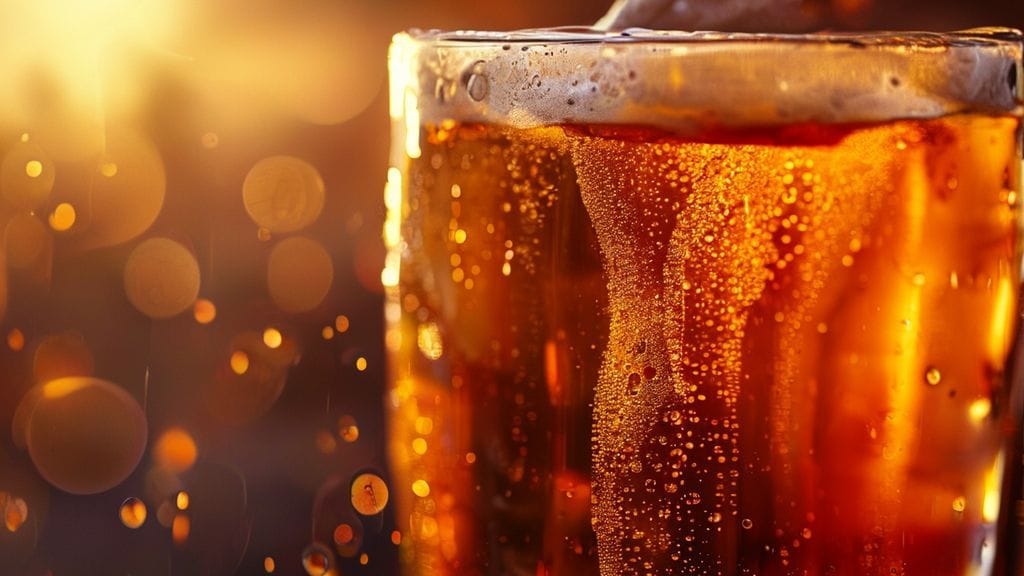
- Appearance: I imagine a brew that pours a brilliant **light copper to deep gold**, perhaps with a slight haze from rudimentary filtration or bottle conditioning. It would have a persistent, rocky, off-white head – a sign of healthy fermentation and good protein structure. The clarity wouldn’t be crystal-clear like some modern lagers, but certainly bright and inviting. My own “historic IPA” recreation pours exactly this way.
- Aroma: This is where it gets fascinating. Initial impressions would likely be dominated by a **deep, earthy, peppery, and somewhat resinous hop character** from traditional British hops like Goldings or Fuggles. There would be an underlying **malty sweetness**, potentially bready or biscuit-like. As the beer aged during its long voyage, I expect prominent **oxidative notes** to develop – think sherry, dried fruit (raisin, fig), and a distinct vinous quality. Esters from the ale yeast would contribute fruity notes, possibly apple or pear, which would blend with the aging profile.
- Mouthfeel: The mouthfeel would be **medium-full bodied**, with a noticeable richness from the higher original gravity. Despite the high bitterness, it wouldn’t feel thin. Carbonation would be moderate, likely naturally conditioned in the bottle or cask, providing a gentle effervescence rather than a sharp bite. There would be a discernible **alcohol warmth** in the finish, appropriate for a beer pushing 7-8% ABV, but it should remain relatively smooth, not hot or boozy.
- Flavor: The taste would be a complex interplay of strong bitterness and evolving malt character. The **hop bitterness would be assertive, bracing, and long-lasting**, hitting the palate upfront and lingering well into the finish. Beneath this bitterness, I’d expect a firm **malty backbone** of toasted bread, subtle caramel, and perhaps a hint of honey. The aging process would introduce those beautiful **sherry, dried fruit, and leathery notes**, balancing the bitterness and adding layers of complexity. The finish would be dry, inviting another sip, yet still leaving a lingering, satisfying bitterness and warmth. It would be a beer designed for robust palates and a long, slow appreciation, unlike the immediate hop-shock of many contemporary IPAs. For me, it’s a taste of history itself.
What distinguishes “India Ale” from “Pale Ale”?
Historically, “India Ale” was a specific type of “Pale Ale” brewed with higher alcohol and hop rates for export to India. “Pale Ale” was a broader category referring to ales brewed predominantly with pale malts. Over time, “IPA” became the common term for this specific export-strength, highly hopped pale ale.
Was IPA truly invented by George Hodgson?
While George Hodgson is often credited, it’s more accurate to say he perfected and popularized the style for the Indian market. The concept of a strong, heavily hopped, aged ale (like “October Ales”) predated his specific “India Ale.” Hodgson successfully scaled and marketed the style, making it widely known, but it was an evolution rather than a singular invention.
Why did the original IPA nearly disappear?
The original strong, heavily hopped IPA began to decline by the early 20th century due to several factors: improved refrigeration and transport made highly preserved beers less essential; local brewing industries developed in India; shifting consumer preferences favored lighter, less bitter beers; and changes in taxation during wartime also impacted stronger beers. The style evolved into the milder “English IPA” before its craft beer resurgence.
Did early IPAs taste like modern IPAs?
No, not entirely. While both are hop-forward, early IPAs used different hop varieties (e.g., British Goldings, Fuggles) which imparted earthy, floral, and spicy notes rather than the tropical, citrus, or dank profiles of many modern American hops. Additionally, the long journey and aging contributed significant oxidative (sherry-like) and malty characteristics, making them far less ‘fresh’ and pungent than today’s IPAs. My deep dives on BrewMyBeer.online often touch on this historical divergence.