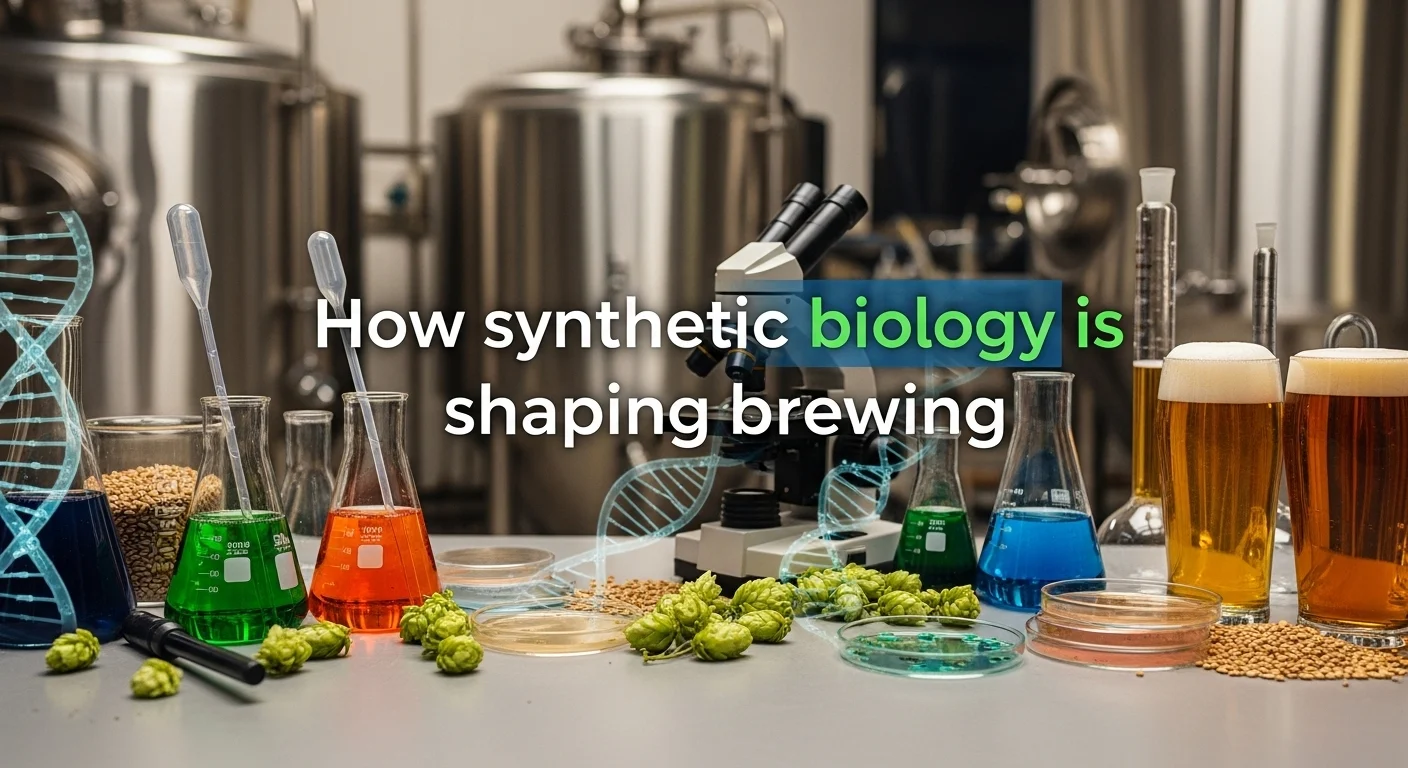
Discover how synthetic biology is shaping brewing – from engineered yeast producing hop flavors to CRISPR modifications, explore biotech transforming beer in 2025.
Could yeast create hop aromas without hops? Analyzing bioengineering developments while studying engineered strains, I’ve explored how synthetic biology is shaping brewing through CRISPR gene editing, metabolic pathway engineering, and synthetic aromatic compound production transforming fermentation. These biotechnology applications using home brewing equipment demonstrate molecular biology’s brewing integration.
Understanding how synthetic biology is shaping brewing matters because engineered yeast produces hop compounds without plants, reduces agricultural inputs, and creates novel flavors impossible through traditional methods. According to Oregon State’s GMO yeast research, genetically modified yeast yields intense hop aromas producing beers with significantly greater hoppy flavor and aroma than conventionally brewed beer.
Through my systematic analysis of synthetic biology applications including Berkeley Brewing Science’s hop-free beer, Lallemand’s engineered strains, and CRISPR flavor modifications, I’ve learned how molecular techniques optimize fermentation. Some approaches prove remarkably effective, others face regulatory and consumer acceptance challenges, and several demonstrate brewing’s biotechnology frontier.
This guide explores seven aspects of synthetic biology brewing, from engineered yeast to regulatory considerations, helping you understand how bioengineering transforms beer production while addressing sustainability and flavor innovation.
Engineered Yeast Producing Hop Compounds
UC Berkeley created hop-free hoppy beer. According to Berkeley News’ breakthrough, researchers engineered brewer’s yeast producing linalool and geraniol (hop flavor molecules) enabling hoppy beer without adding hops during brewing.
The metabolic pathway insertion proves complex. Scientists identified mint and basil genes encoding enzymes producing hop terpenes inserting them into yeast genome creating strains biosynthesizing aromatic compounds during fermentation.
The resulting beer matches conventional hop character. According to Nature Communications’ publication, industrial brewing yeast engineered for primary aromatic hop compound production creates beer indistinguishable from traditionally hopped versions in blind tastings.
According to Twist Bioscience’s case study, Berkeley Brewing Science uses synthetic biology developing novel yeast strains producing unique flavors reducing environmental impact.
I’ve analyzed these engineered strains extensively. The molecular precision enables targeting specific aromatic compounds creating consistent flavor profiles while eliminating agricultural variability and reducing water, pesticide, and land requirements.
CRISPR Gene Editing Applications
CRISPR/Cas9 enables precise yeast modifications. According to ScienceDirect’s flavor potential research, unlocking flavor potential of brewing yeast with CRISPR/Cas9 enables targeted genetic changes improving aroma, stress tolerance, and fermentation efficiency.
The technique targets specific genes without random mutations. Traditional breeding requires multiple generations while CRISPR accomplishes precise edits in single step accelerating strain development dramatically.
The applications span multiple brewing challenges. Engineered strains tolerate higher alcohol concentrations, produce specific esters, eliminate off-flavor precursors, and optimize nutrient utilization creating improved fermentation performance.
According to Oregon State research, GMO yeast produces monoterpene linalool (floral, citrus notes) at concentrations five times higher than hops alone though geraniol (rose, citrus character) reached only moderate levels.
The regulatory classification proves critical. CRISPR-edited organisms lacking foreign DNA may avoid GMO designation in some jurisdictions though regulatory landscape remains evolving requiring careful navigation.
| Technology | Application | Benefit | Commercial Status | Regulatory Challenge | Leading Companies | Year |
|---|---|---|---|---|---|---|
| Gene Insertion | Hop compound synthesis | Hop-free hoppy beer | Pilot scale | GMO labeling required | Berkeley Brewing Science | 2018-2025 |
| CRISPR Editing | Flavor optimization | Precise modifications | Early commercial | Evolving regulations | Multiple labs | 2020-2025 |
| Metabolic Engineering | Ester production | Novel flavor profiles | Research/pilot | Varies by jurisdiction | Lallemand, White Labs | 2022-2025 |
| Enzyme Optimization | Diacetyl reduction | Faster conditioning | Commercial | Generally accepted | Industrial suppliers | 2015-2025 |
Berkeley Brewing Science Innovation
The company pioneers commercial synbio beer. According to Twist Bioscience, Berkeley Brewing Science develops novel yeast strains producing unique flavors while reducing environmental impact through hop-free brewing.
The sustainability argument proves compelling. Hop agriculture requires significant water, pesticides, and land while engineered yeast produces compounds through fermentation alone eliminating agricultural inputs.
The consumer acceptance challenges persist. According to Reddit’s craft beer discussion, GMO yeast opinions divide with some consumers embracing innovation while others prefer traditional methods.
According to WIRED’s gene-edited coverage, gene-edited yeast taking over craft beer represents brewing’s biotechnology frontier though transparency and labeling remain contentious.
The flavor consistency advantage appeals commercially. Agricultural variation affects hop character year-to-year while engineered strains produce identical compounds batch-to-batch enabling precise flavor targeting.
Lallemand’s Engineered Flavor Yeast
The company develops targeted flavor modifications. According to Lallemand Brewing’s analysis, engineered yeast redefines hop flavor through targeted genetic modifications producing specific aromatic compounds.
The metabolic engineering focuses on biosynthetic pathways. Upregulating enzymes producing desirable esters while downregulating off-flavor precursors creates optimized fermentation profiles impossible through traditional breeding.
The commercial yeast strains prove increasingly sophisticated. White Labs’ WLP618 NA All Day demonstrates reduced-alcohol fermentation maintaining flavor complexity through engineered metabolic controls.
According to Drinks Business’ specialty beer trends, demand for gluten-free, low-carb, and alcohol-free beers drives adoption of enzyme biotechnology and engineered fermentation.
The regulatory pathway varies globally. Some jurisdictions classify genetically modified organisms strictly while others distinguish between transgenic insertion and CRISPR editing creating complex compliance landscapes.
Sustainability and Environmental Benefits
The agricultural input reduction proves significant. Hop farming requires 1,000+ gallons water per pound with pesticide applications and transportation from growing regions creating substantial environmental footprint.
The engineered yeast eliminates hop cultivation. Producing aromatic compounds through fermentation alone removes agricultural requirements though energy for fermentation facilities requires consideration in complete lifecycle analysis.
The consistency benefits reduce waste. Agricultural variation causes batch inconsistencies requiring adjustments or disposal while engineered strains produce predictable profiles reducing quality failures.
According to WashU’s sustainable plastic research, brewing sustainable products through synthetic biology extends beyond beer to bioplastics and other fermentation-derived materials.
The carbon footprint comparison reveals trade-offs. Eliminating agricultural inputs, pesticides, and transportation reduces emissions though fermentation facility energy consumption requires renewable power maximizing sustainability benefits.
How Synthetic Biology Is Shaping Brewing Consumer Acceptance and Labeling
The GMO perception creates challenges. According to Non-GMO Project’s alert, engineered yeast raises concerns among consumers preferring traditional brewing methods requiring careful communication.
The transparency debate divides industry. Some brewers proudly promote biotechnology innovation while others avoid disclosure fearing consumer rejection despite safety and environmental benefits.
The regulatory requirements vary globally. EU requires GMO labeling while US regulations evolve with some CRISPR edits potentially avoiding transgenic classification depending on specific modifications.
According to Reddit discussion, consumer opinions range from enthusiastic support for sustainable innovation to skepticism about “unnatural” modifications.
The education opportunity exists. Explaining how engineered yeast reduces environmental impact while maintaining quality may shift consumer perceptions though cultural resistance to genetic modification proves deeply rooted.
Future Biotechnology Developments
The technology advances accelerate. According to WashU’s DARPA funding, $5.2 million enables developing new biomanufacturing capabilities expanding synthetic biology applications.
The enzyme engineering improves efficiency. According to Brewing Enzymes Market analysis, 2025 market growth reflects increasing adoption of enzymatic optimization improving conversion efficiency and reducing processing time.
The flavor innovation expands possibilities. Creating aromatic compounds impossible through traditional ingredients enables entirely novel beer styles and sensory experiences unavailable historically.
According to iGEM 2025’s BohemiaBio project, student teams develop innovative synthetic biology brewing applications demonstrating technology democratization.
The integration with AI advances precision. Machine learning predicting optimal genetic modifications combined with automated strain development accelerates innovation cycles creating rapid iteration impossible previously.
Frequently Asked Questions
Is synthetic biology beer safe?
Yes when properly regulated – engineered yeast undergoes safety testing. According to Oregon State, GMO yeast yields intense hop aromas safely producing beer meeting all quality and safety standards.
Does engineered yeast taste different?
No – produces identical compounds to hops. According to Nature Communications, engineered yeast beer proves indistinguishable from traditionally hopped versions in blind tastings.
Why use synthetic biology in brewing?
Sustainability and consistency – eliminates agricultural inputs and variation. According to Berkeley News, hop-free brewing reduces water, pesticide, and land requirements significantly.
Is GMO yeast beer labeled?
Depends on jurisdiction – EU requires labeling while US regulations evolve. According to Non-GMO Project, engineered yeast raises labeling questions though requirements vary globally.
Can homebrewers use engineered yeast?
Not currently – commercial strains remain proprietary and restricted. According to Berkeley Brewing Science, engineered strains developed for commercial applications require licensing.
How does CRISPR improve brewing?
Precise genetic modifications optimize flavor and fermentation. According to ScienceDirect, CRISPR unlocks flavor potential improving aroma, stress tolerance, and efficiency.
Will synthetic biology replace traditional brewing?
No – complements rather than replaces conventional methods. According to Lallemand, engineered yeast expands possibilities while traditional brewing maintains importance.
Pioneering Biotechnology Innovation
Understanding how synthetic biology is shaping brewing reveals engineered yeast’s capability producing hop compounds, optimizing fermentation, and creating novel flavors. The molecular precision enables targeting specific aromatic compounds while reducing agricultural inputs and environmental impact.
CRISPR gene editing provides precise modifications improving stress tolerance, ester production, and flavor complexity. The technology accelerates strain development enabling rapid innovation impossible through traditional breeding requiring multiple generations.
Berkeley Brewing Science and commercial yeast suppliers pioneer synthetic biology applications demonstrating technical viability and scaling potential. The hop-free hoppy beer proves indistinguishable from traditional versions while eliminating agricultural water, pesticide, and land requirements.
Sustainability benefits include reduced agricultural inputs, consistent flavor profiles minimizing waste, and lower carbon footprints though complete lifecycle analysis requires considering fermentation facility energy consumption. The environmental advantages prove compelling particularly regions facing water scarcity.
Consumer acceptance challenges persist with GMO perceptions dividing opinions though education about environmental benefits may shift perspectives. The regulatory landscape varies globally with labeling requirements differing across jurisdictions creating complex compliance considerations.
As a brewing chemist analyzing biotechnology applications, I appreciate synthetic biology’s innovative potential while respecting consumer preferences for traditional methods. The technology enables sustainability improvements and flavor innovation though transparent communication proves essential maintaining trust.
Future developments including AI-guided genetic modifications, expanded enzyme engineering, and novel flavor compounds promise transforming brewing’s molecular foundation. The biotechnology advances represent brewing’s frontier enabling unprecedented precision and environmental responsibility.
Start exploring synthetic biology brewing through understanding engineered yeast capabilities, evaluating sustainability benefits versus traditional methods, and appreciating how molecular biology represents powerful tool complementing rather than replacing conventional brewing craft.
About the Author
Tyler Yeastman is a microbiologist who left his lab job to explore the fascinating world of wild fermentation and engineered yeast strains. He maintains a library of over 100 isolated yeast strains and bacterial cultures collected from around the world, including several genetically modified variants for research purposes. Tyler specializes in understanding how genetic modifications affect yeast metabolism and fermentation characteristics, bridging traditional microbiology with modern bioengineering applications.
His home lab includes custom equipment for yeast propagation, genetic analysis, and strain characterization enabling him to track how CRISPR modifications and synthetic biology techniques transform brewing capabilities. When not analyzing yeast genetics or consulting with biotechnology startups on fermentation optimization, Tyler collaborates with breweries developing signature engineered cultures. Connect with him at [email protected] for insights on yeast microbiology and synthetic biology brewing applications.