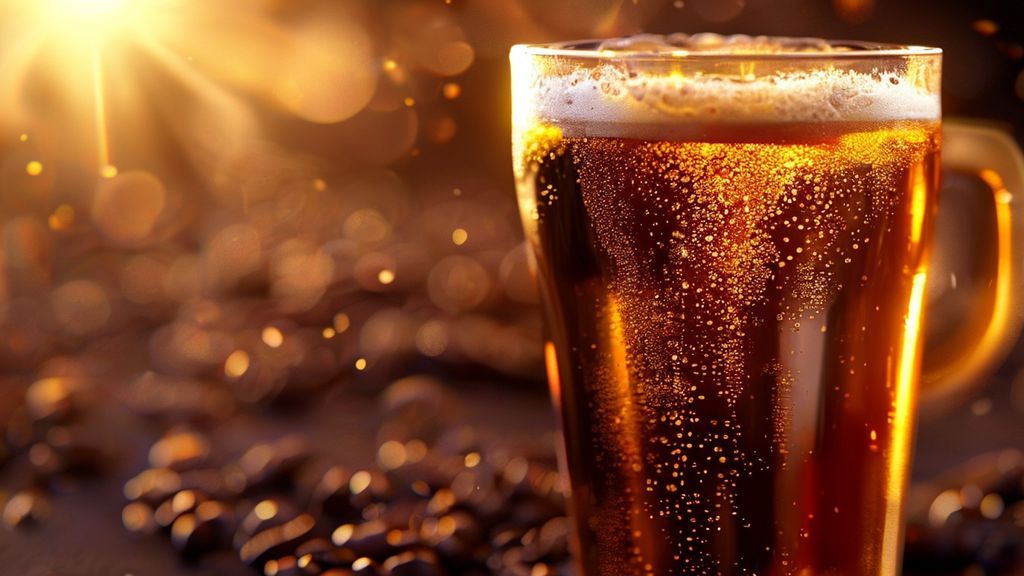
Incorporating coffee into beer fundamentally transforms its profile, offering rich aromatic and flavor complexities. The choice between dry bean steeping and cold brew addition dictates extraction efficiency, flavor clarity, and potential for astringency. My experience shows that while dry beans offer direct, raw character, precise cold brew dosing provides unparalleled control over bitterness and aroma, ensuring a cleaner, more consistent finish.
| Metric | Typical Range/Value for Coffee Stout | Notes |
|---|---|---|
| Original Gravity (OG) | 1.060 – 1.080 | Base beer dependent; higher gravity supports coffee flavors. |
| Final Gravity (FG) | 1.015 – 1.022 | Leaves residual sweetness to balance coffee bitterness. |
| Alcohol By Volume (ABV) | 6.0% – 8.5% | Calculated from OG/FG; robust alcohol complements coffee. |
| Standard Reference Method (SRM) | 30 – 40+ | Typically a dark stout or porter base. |
| Coffee Bean Addition Rate (Dry) | 5-15 g/L (1.3-4.0 oz/Gal) | Whole beans or coarse grind; contact time critical. |
| Dry Bean Contact Time | 24-72 hours | Post-fermentation; taste frequently to prevent over-extraction. |
| Cold Brew Concentrate Ratio (Coffee:Water) | 1:5 to 1:8 (e.g., 200g coffee : 1000ml water) | Coarse grind, 12-18 hours steep at room temp. |
| Cold Brew Addition Rate | 30-100 ml/L (3.8-12.8 oz/Gal) of concentrate | Added at packaging; blend to taste. |
| Coffee Roast Level | Medium to Dark (City to French Roast) | Matching roast notes to beer style is key. |
| Optimum Coffee Extraction Temp | 18-22°C (64-72°F) for cold brew | Minimizes extraction of bitter acids and undesirable phenolics. |
The Brewer’s Hook: My Journey Through the Coffee Maze
When I first started integrating coffee into my brews, I made every mistake in the book. My initial batches were either bland, tasting like stale diner coffee, or aggressively astringent, reminiscent of chewing on unroasted beans. I remember a particular Imperial Stout where I simply dumped a bag of medium-ground coffee directly into secondary fermentation, thinking “more is more.” The result was a phenolic disaster, a thin, sourish brew with a lingering bitterness that clung to the palate like tar. It was a harsh lesson in the delicate balance of coffee chemistry and beer fermentation. Through years of trial and error, meticulously documenting every variable – grind size, roast level, contact time, temperature, and addition method – I’ve refined my approach. Today, I treat coffee not as a simple adjunct, but as a complex ingredient whose nuances demand respect and precise control, much like a prized hop varietal or a specialized yeast strain. My goal here is to share that hard-won knowledge so you don’t repeat my early blunders.
The Math: Calculating Your Coffee Impact
Understanding the quantitative impact of coffee on your beer is critical. It’s not just about tossing beans in; it’s about controlled extraction and precise dosage. I approach this with specific formulas and ratios, ensuring consistency batch after batch.
Dry Bean Addition Rate (Volumetric Extraction)
When adding whole or coarsely ground beans directly to the beer, you are performing a volumetric, ambient-temperature extraction. The goal is to maximize desirable flavor compounds while minimizing bitter, astringent phenolics.
| Parameter | Value/Formula | Notes |
|---|---|---|
| Target Beer Volume (L) | Vbeer | Volume of conditioned beer for coffee addition. |
| Desired Coffee Concentration (g/L) | Ccoffee = 5 – 15 g/L | Starting point; adjust based on bean intensity & desired impact. |
| Total Coffee Beans Required (g) | Total Beans = Vbeer * Ccoffee | Calculate total mass of beans for your batch. |
Example: For a 20-liter batch and a target concentration of 10 g/L, I’d use 20 L * 10 g/L = 200 grams of coffee beans.
Cold Brew Concentrate Preparation & Addition
This method involves a two-stage calculation: first, making the cold brew, and second, dosing it into the beer. This gives me superior control.
| Parameter | Value/Formula | Notes |
|---|---|---|
| Coffee:Water Ratio (g:ml) | RCW = 1:5 to 1:8 | Higher ratio (e.g., 1:5) yields stronger concentrate. |
| Desired Cold Brew Volume (ml) | VCB = 100 – 300 ml (per 20L beer) | Estimate needed concentrate for a specific beer volume. |
| Total Coffee Beans for Cold Brew (g) | Grams Beans = VCB * (1 / RCW) | Example: For 200ml concentrate at 1:5, 200 * (1/5) = 40g beans. |
| Total Water for Cold Brew (ml) | Water (ml) = Grams Beans * RCW | Example: For 40g beans at 1:5, 40 * 5 = 200ml water. |
| Concentrate Addition Rate (ml/L beer) | DoseCB = 30 – 100 ml/L | Start low and blend to taste in a sample. |
Example: I prepare 500ml of 1:6 cold brew (approx. 83g beans, 500ml water). For a 20-liter beer, I might start with a 50 ml/L dose, meaning 20 L * 50 ml/L = 1000 ml (1 liter) of concentrate would be needed if I wanted a very strong coffee presence, but I usually blend to taste with a smaller amount, starting at ~600ml.
Alcohol By Volume (ABV) Calculation
This foundational calculation remains important, especially when a base beer might be modified.
ABV = ((OG - FG) * 131.25)
Where OG is Original Gravity and FG is Final Gravity.
For instance, an Imperial Stout with an OG of 1.075 and an FG of 1.018 would yield ((1.075 – 1.018) * 131.25) = 7.49% ABV. Coffee addition doesn’t significantly impact gravity unless you’re adding extremely large volumes of sugar-containing coffee products (which I don’t recommend).
Step-by-Step Execution: Mastering Coffee Integration
My process for adding coffee has been honed over two decades, focusing on maximizing flavor and minimizing off-notes.
Choosing Your Base Beer & Coffee
- Select a Robust Base: My best results come from dark, malty beers like stouts, porters, brown ales, or even certain Belgian dark strong ales. Their inherent roast and chocolate notes harmonize beautifully with coffee. Avoid overly hoppy or light-bodied beers, as coffee can easily overwhelm them or clash with hop aromatics.
- Match Roast to Beer: This is critical.
- Light/Medium Roast: For brighter, fruity, acidic coffee notes (e.g., Ethiopian Yirgacheffe), I use these in lighter porters or even a specific pale ale to create a unique contrast. They carry more origin character.
- Medium-Dark Roast: My go-to for most stouts and porters. These beans offer chocolate, caramel, and nutty notes without excessive bitterness (e.g., Colombian Supremo, Brazilian Santos).
- Dark Roast: For an assertive, bold coffee presence in a heavy Imperial Stout or Porter. Expect smoky, very dark chocolate, and intense bitterness (e.g., French Roast, Italian Roast). Be very careful with these to avoid overwhelming the beer.
- Freshness is Key: Always use freshly roasted coffee beans, ideally roasted within 2-3 weeks of brewing. Stale coffee leads to stale beer flavors.
Method 1: Dry Bean Addition (Direct Steeping)
- Sanitation: Sanitize everything that will touch the coffee beans – mesh bags, fermenter ports, stir spoons. I often use a hop bag weighted with sanitized marbles to ensure the beans remain submerged.
- Grind Size (Crucial): For dry bean addition, I use a **coarse grind**, similar to French press consistency, or even whole beans. A fine grind dramatically increases surface area, leading to rapid, often undesirable, extraction of bitter compounds and fines. If using whole beans, ensure they are lightly crushed to break the seal and expose the interior.
- Addition Point: I typically add the coffee during **secondary fermentation or conditioning**, after primary fermentation is complete and the beer is mostly attenuated. This prevents vigorous fermentation from stripping volatile coffee aromatics. Ensure the beer is stable and at fermentation-appropriate temperatures, ideally **18-20°C (64-68°F)**.
- Contact Time & Monitoring: This is the most critical step.
- Start with a short contact time, usually **24 hours**.
- After 24 hours, pull a small, sanitized sample (e.g., 50ml) and evaluate it for aroma and flavor.
- Continue tasting every **8-12 hours** thereafter. The goal is to hit the peak coffee flavor before astringency or over-extraction takes hold.
- In my experience, optimal contact time ranges from **24 to 72 hours**. Beyond 72 hours, the risk of vegetal, sour, or overly bitter notes escalates dramatically.
- Once the desired profile is achieved, immediately remove the coffee beans or rack the beer off them.
Method 2: Cold Brew Concentrate Addition
This is my preferred method for precision and control, especially for lighter coffee expressions or when I want to avoid potential oxidation or astringency.
- Cold Brew Preparation:
- Grind: Use a **coarse grind** for cold brew, similar to French press or even coarser.
- Ratio: My preferred ratio is **1:6 (coffee to water by weight)**. For example, 100g coffee to 600ml filtered water.
- Steeping: Combine coffee and **room temperature (18-22°C / 64-72°F)** filtered water in a sanitized container. Stir to ensure all grounds are saturated.
- Time: Steep for **12-18 hours** at room temperature. Longer steeps can increase concentration but also risk over-extraction of undesirable compounds.
- Filtration: After steeping, strain the concentrate first through a coarse mesh strainer, then through a fine filter (e.g., cheesecloth, coffee filter, or even a BrewMyBeer.online coffee sock) to remove all particulate matter. This step is crucial to prevent haziness and potential off-flavors in the beer.
- Storage: Store the cold brew concentrate in a sanitized, airtight container in the refrigerator for up to 1-2 weeks.
- Addition Point: Add the cold brew concentrate at the **packaging stage (kegging or bottling)**. This allows for precise blending.
- Blending & Dosing (The Art of Control):
- Before adding to the entire batch, pull a small, measured sample of your finished beer (e.g., 100ml).
- Using a pipette or syringe, add very small, measured increments of cold brew concentrate to the sample (e.g., 0.5ml at a time). Stir and taste.
- Once you find your ideal ratio (e.g., “1ml of concentrate per 100ml of beer”), scale this up to your full batch volume. If you determined 1ml/100ml, for a 20-liter (20,000ml) batch, you would add 200ml of cold brew concentrate.
- Add the calculated amount of cold brew concentrate to your sanitized keg or bottling bucket, then transfer the beer onto it. Stir gently to ensure even distribution.
Troubleshooting: What Can Go Wrong
Even with precision, coffee additions can be tricky. Here are common issues I’ve encountered and my solutions:
- Astringency/Excessive Bitterness:
- Cause: Over-extraction of tannins and bitter acids. This often happens with fine grinds, too much contact time, or very dark roasts.
- Solution: Reduce contact time significantly for dry beans. Switch to a coarser grind. Consider a lighter roast. For cold brew, shorten steep time or dilute the concentrate. Blending with a plain batch of the same beer can also mitigate.
- Green Pepper/Vegetal Notes:
- Cause: Under-roasted beans or excessive contact time with beans. This is due to the extraction of pyrazine compounds.
- Solution: Ensure you’re using properly roasted, fresh beans. Shorten contact time dramatically. Consider a different bean origin or roast profile.
- Sour/Acrid Flavors:
- Cause: High acidity from overly light roasts, stale beans, or bacterial contamination (rare, but possible with un-sanitized dry beans). Cold brew can also become sour if steeped too long or if the beans are poor quality.
- Solution: Use fresh, medium-roasted beans. Ensure meticulous sanitation. For cold brew, monitor steep time and water quality. Check the pH of your cold brew; a pH below 4.5 can contribute significant sourness.
- Weak/Muted Coffee Flavor:
- Cause: Too little coffee, too short contact time, or a coffee bean that isn’t robust enough for the base beer.
- Solution: Increase coffee quantity. Extend contact time (carefully, tasting often). Try a darker roast or a coffee bean with a more assertive flavor profile. With cold brew, increase the concentrate addition rate.
- Oxidation (Cardboard/Papery Notes):
- Cause: Introducing dry beans (even whole beans) exposes the beer to oxygen, especially if they are not pre-purged with CO2. This can accelerate oxidation of the finished beer.
- Solution: For dry bean addition, transfer beans to a CO2-purged sanitized vessel before adding to the beer. Purge headspace of your fermenter/keg after addition. The cold brew method significantly reduces this risk as it’s added at packaging into a purged vessel.
Sensory Analysis: What a Well-Executed Coffee Beer Tastes Like
A truly exceptional coffee beer, in my experience, is a symphony of harmonious flavors, not a coffee bomb.
- Appearance: Typically a very dark brown to opaque black, often with a rich, tan to dark brown head that persists. Clarity is usually good, especially with cold brew additions, though dry hopping with coffee can introduce a slight haze.
- Aroma: The nose should be a balanced blend of fresh-brewed coffee, often with notes of dark chocolate, roasted malt, caramel, or nutty undertones, depending on the base beer and coffee roast. Specific bean characteristics, such as subtle fruitiness (from lighter roasts) or smokiness (from darker roasts), should be present but not overpowering. There should be no signs of sourness, green pepper, or stale notes.
- Mouthfeel: Full-bodied and smooth, often with a velvety texture from the base stout or porter. Carbonation should be moderate. The coffee should integrate seamlessly, contributing to the perceived body and not thinning it out. A slight tannic dryness from coffee can be present, but it should be pleasant, not astringent or cloying.
- Flavor: The taste mirrors the aroma, with rich coffee notes leading, supported by the underlying malt profile. Expect dark chocolate, roasted malt, and sometimes caramel or toffee. The coffee character might range from bright and fruity to bold and roasty. Bitterness should be firm but integrated, complementing the beer’s hop bitterness and balancing any residual sweetness. A clean finish, where the coffee and beer flavors linger harmoniously, is the hallmark of a well-crafted brew.
FAQs: Your Coffee Brewing Questions Answered
What is the best type of coffee bean to use for brewing?
There isn’t one “best” type; it depends entirely on the desired flavor profile of your beer. I generally gravitate towards **medium to dark roast Arabica beans** because they offer a complex flavor range (chocolate, nutty, caramel) without the harshness often found in Robusta. Single-origin beans allow for precise flavor targeting. Experimentation is key; a Colombian bean offers different notes than an Ethiopian or Brazilian. Always choose fresh, quality beans.
When should I add coffee beans or cold brew to my beer?
My strong recommendation is to add coffee during **secondary fermentation or conditioning** for dry beans, or at **packaging (kegging/bottling)** for cold brew. Adding during the boil can strip delicate coffee aromatics and extract excessive bitterness. Adding during primary fermentation risks scrubbing out coffee volatiles and potential pH drops that could stress the yeast. Post-fermentation additions provide the most control over flavor and aroma integration.
How do I prevent my coffee beer from tasting sour or astringent?
To prevent sourness, ensure you are using **fresh, quality beans** and maintaining **meticulous sanitation** with all equipment. Avoid overly long cold brew steeping times (stick to 12-18 hours). For astringency, the primary culprits are **too fine a grind** and **excessive contact time**. Always use a coarse grind for dry bean additions and for cold brew. Taste frequently (every 8-12 hours for dry beans) and remove the coffee or rack the beer off the beans immediately once the desired flavor is achieved. The cold brew method, with its controlled post-fermentation blending, offers the most reliable way to avoid astringency.
Can I use instant coffee or espresso shots instead of whole beans or cold brew?
While technically possible, I strongly advise against using instant coffee or espresso shots for quality craft beer. Instant coffee is designed for rapid dissolution, and its flavor profile is often thin, harsh, or stale due to processing. Espresso, while flavorful, is hot-extracted, meaning it contains higher levels of bitter compounds and acidity than cold brew, and its immediate addition to beer can introduce harsh, unbalanced notes. For true craft results, the controlled extraction of whole beans or the precise dosing of cold brew concentrate is far superior, ensuring a clean, integrated, and nuanced coffee character in your brew. If you’re looking for more advanced techniques, be sure to check out other articles on BrewMyBeer.online.