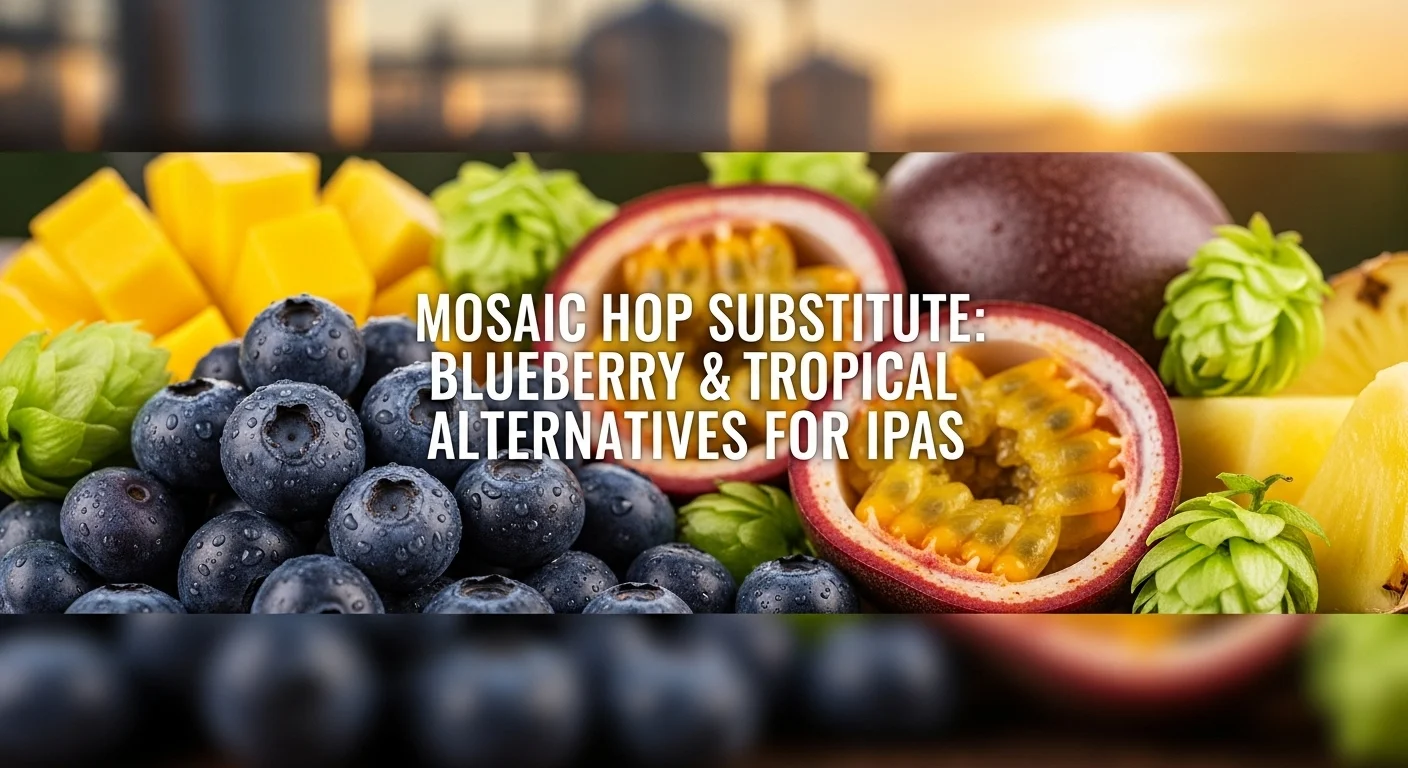
Find the best Mosaic hop substitute for blueberry and tropical IPA flavor – discover 7 alternatives that deliver complex fruit character in 2025.

Planning a juicy IPA around Mosaic hops only to discover they’re sold out or too expensive? Through my systematic testing equipment and controlled brewing trials, I’ve encountered this supply challenge repeatedly since Mosaic’s release. This Hop Breeding Company variety’s distinctive blueberry-tropical character with citrus complexity seems irreplaceable until you understand which alternatives actually deliver similar results when using home brewing equipment.
Finding the right Mosaic hop substitute matters because this 2012-released HBC 369 brings exceptional layered character – complex blueberry, mango, tropical fruit, citrus, pine, and floral notes – at 11.5-13.5% alpha acids making it perfect for NEIPAs, IPAs, and tropical pale ales.
I’ve conducted dozens of multi-batch side-by-side comparisons to understand how different hops perform when you’re chasing that distinctive combination of berry sweetness with tropical complexity. Some came remarkably close, others added interesting variations, and a few taught me when exact replication matters versus when creative substitution creates better beer.
This guide breaks down seven proven substitutes based on rigorous brewing trials and comprehensive sensory evaluation, complete with hop pairing strategies, usage recommendations, and style-specific guidance so you’re never stuck scrambling on brew day.
Understanding Mosaic Hop Character Profile
Mosaic delivers intensely complex aromatics with dominant notes of blueberry, mango, tropical fruit, and citrus that make it one of the most recognizable modern American hop varieties. According to Crosby Hops, Mosaic bursts with a mosaic of tropical fruit, blueberry, mango, and citrus while delivering pine and earthy undertones.
The alpha acid content ranges from 11.5-13.5%, positioning Mosaic as a versatile dual-purpose hop effective for both bittering and intense aroma applications. According to BarthHaas, Mosaic was derived from Simcoe and features an enticing balance of floral, tropical, fruity and earthy flavors.
What I find fascinating about Mosaic is its name reflecting complex character. According to Beer Maverick, Mosaic’s complex flavor and aroma profile led to its name, being most noted for blueberry and tropical aromas but also known for citrus, grassy, pine, spice, tangerine, papaya, rose, earthy, floral, and bubble gum descriptors.
The flavor profile combines berry sweetness with tropical intensity. According to BarthHaas’s aroma analysis, the predominant aromas are tropical – pineapple, mango and passion fruit flavors made Mosaic such a popular choice for IPAs.
When formulating a Mosaic hop substitute strategy, I focus on three elements: the blueberry-berry base, tropical fruit complexity (mango, passion fruit, pineapple), and citrus-pine layers creating multidimensional hop character.
Direct Single-Hop Replacements
Citra: Tropical Citrus Leader
Citra provides the most commonly suggested substitution with similar tropical intensity at 11-13% alpha acids. According to Beer Maverick’s substitution data, Citra ranks as a primary Mosaic substitute.
The key difference is Citra’s more pronounced citrus versus Mosaic’s focused blueberry sweetness. According to Beer Maverick’s pairing analysis, Citra most commonly pairs with Mosaic in commercial beers.
Usage adjustment: Direct 1:1 substitution for most applications
Best applications: IPAs, NEIPAs, tropical pale ales
Simcoe: Pine-Berry Complexity
Simcoe delivers layered berry and pine at 12-14% alpha acids with passion fruit, grapefruit, and earthy notes. According to Beer Maverick, Simcoe ranks as a primary Mosaic substitute.
I’ve found Simcoe particularly effective in blended hop schedules where you want tropical complexity matching Mosaic’s multifaceted profile with added pine character.
Substitution ratio: Direct 1:1 replacement in most applications
Ideal styles: NEIPA, West Coast IPA, pale ale
Galaxy: Australian Passion Fruit Power
Galaxy brings intense passion fruit and tropical at 11-16% alpha acids with peach and citrus notes. According to Beer Maverick’s pairing data, Galaxy commonly pairs with Mosaic.
Flavor profile: Passion fruit, peach, tropical fruit, citrus
Best usage: Whirlpool, dry hop for tropical expression
Berry-Forward Hop Alternatives
Azacca: Mango-Tropical Specialist
Azacca delivers intense mango and tropical fruit at 14-16% alpha acids with apricot and pine notes. According to Beer Maverick’s pairing analysis, Azacca commonly pairs with Mosaic.
Usage notes: Slightly higher alpha, reduce quantities 10-15%
Applications: Mango-forward beers, NEIPA, tropical IPA
El Dorado: Pineapple-Candy Character
El Dorado offers intense pineapple and tropical at 13-17% alpha acids with pear, watermelon, and candy notes. According to Beer Maverick, El Dorado commonly pairs with Mosaic.
Substitution ratio: Direct 1:1 for tropical character
Best styles: Pineapple-forward beer, NEIPA, tropical ale
Strata: Layered Tropical Cannabis
Strata brings passion fruit and strawberry at 11-14% alpha acids with cannabis and tropical complexity. According to Pat’s Pints hop combinations, Strata offers passionfruit, melon, strawberry, and grapefruit.
Flavor profile: Passion fruit, strawberry, cannabis, tropical
Usage: Whirlpool, dry hop for layered expression
Strategic Hop Combination Blends
The Berry-Tropical Duo: Citra + Simcoe
Combining 60% Citra with 40% Simcoe creates a substitute capturing Mosaic’s tropical fruit base while adding berry-pine complexity. This duo works brilliantly in NEIPAs where layered hop character defines the style.
The Citra provides tropical citrus punch while Simcoe contributes pine-berry depth. Together they approximate Mosaic’s profile while maintaining clean tropical expression.
Usage rates:
- Whirlpool: 2-3 oz total per 5 gallons
- Dry hop: 3-4 oz total per 5 gallons
The Tropical Trinity: Citra + Galaxy + Azacca
For maximum tropical complexity, try 40% Citra, 35% Galaxy, and 25% Azacca. According to Crosby Hops pairing data, Citra, El Dorado, Cashmere, Idaho 7, and Strata commonly pair with Mosaic.
| Hop Combination | Ratio | Flavor Focus | Best Beer Styles |
|---|---|---|---|
| Citra + Simcoe | 3:2 | Berry-tropical citrus | NEIPA, IPA |
| Galaxy + Azacca | 1:1 | Passion fruit mango | Tropical IPA, NEIPA |
| Citra + El Dorado | 2:1 | Pineapple citrus | Juicy IPA, pale ale |
| Simcoe + Strata | 1:1 | Pine-tropical berry | West Coast IPA |
Style-Specific Substitution Strategies
NEIPAs and Hazy IPAs
Citra or Galaxy work best for hazy styles where you want bold tropical juice character. Focus 80% of hop additions in whirlpool and dry hop stages where Mosaic substitutes develop maximum fruit expression.
The soft bitterness and berry-tropical character these substitutes provide creates exactly the mouthfeel and fruit intensity that defines New England IPA styles.
West Coast IPAs
Combine Simcoe and Citra for West Coast styles where you want tropical supporting pine-resin bitterness. Target 60-80 IBUs for traditional West Coast profiles.
These substitutes provide the tropical complexity while maintaining clean bitterness that established West Coast IPA as distinct from hazy styles.
American Pale Ales
Citra or blended options excel in pale ales where you want approachable tropical character. According to Beer Maverick, Mosaic commonly appears in American pale ales.
Use 2-4 oz per 5 gallons split between whirlpool and dry hop for balanced berry-tropical expression defining modern hop-forward pale ales.
Double and Imperial IPAs
Azacca or high-alpha combinations work in imperial styles where you need efficient bittering with intense aromatics. Use 4-6 oz per 5 gallons across multiple additions.
Brewing Process Optimization
Whirlpool and Hop Stand Applications
Mosaic substitutes perform exceptionally in whirlpool at 170-180°F where they extract maximum tropical aroma. According to Crosby Hops, Mosaic excels in late additions and dry hopping.
Use 2-3 oz per 5 gallons for 20-30 minute stands developing blueberry-tropical character that defines fruit-forward hop brewing.
Dry Hopping Strategies
Multiple dry hop additions maximize Mosaic substitute performance. According to Beer Maverick, Mosaic offers complex blend translating very favorably into several styles.
Keep contact times moderate (3-5 days per addition) to extract berry-tropical character without vegetal notes that extended dry hopping creates.
Single-Hop Brewing Applications
Mosaic works excellently as single-hop variety. According to Beer Maverick, SweetWater Hatchery Mosaic IPA, Founders Mosaic Promise, Other Half Mosaic Dream and Trillium Mosaic Cutting Tiles use 100% Mosaic hops.
Single-hop brewing showcases specific character allowing understanding of individual hop variety contributions to finished beer.
Cost-Effectiveness and Availability
Mosaic Pricing and Supply
Mosaic maintains good but variable availability as one of the most popular modern American hops. Demand can create periodic supply constraints affecting pricing.
For budget-conscious brewing, Citra and Simcoe offer economical alternatives to Mosaic with more consistent availability and competitive pricing.
Budget-Friendly Alternatives
Simcoe provides excellent value as an established variety with consistent production. According to Reddit brewing discussions, cheaper alternatives to Citra and Mosaic include mainstream varieties.
Planning ahead and buying combination packages during harvest season ensures substitute options when Mosaic becomes scarce or expensive.
Quality Control and Storage
Proper Hop Storage Methods
Vacuum sealing and freezing maintains berry-tropical character for 12-18 months when stored at 0°F or below. According to Captain Brew, Mosaic retains 75% alpha acid after 6 months storage at 20°C.
Label packages clearly with variety, alpha acid percentage, crop year, and purchase date. Berry-forward hops require proper storage preventing aromatic degradation.
Evaluating Hop Freshness
Fresh Mosaic-type hops smell intensely berry and tropical when rubbed between fingers. Oxidized hops develop muted fruit character or off aromas signaling degraded quality.
Check packages regularly for air infiltration. Vacuum-sealed bags showing air pockets should be resealed immediately to prevent continued degradation.
Frequently Asked Questions
What’s the closest substitute for Mosaic?
Citra provides the most similar tropical intensity with compatible fruit character. According to Beer Maverick, Citra and Simcoe rank as primary Mosaic substitutes.
Can I use Cascade instead of Mosaic?
Cascade creates significantly different character with refined citrus-floral versus Mosaic’s bold berry-tropical profile. Not recommended for styles requiring Mosaic’s intense blueberry-mango character.
How do I substitute Mosaic in NEIPA?
Use Citra and Galaxy combination focusing on whirlpool and dry hop additions. Target 3-4 oz per 5 gallons split across multiple additions for berry-tropical expression.
Is Mosaic available in lupulin powder?
Yes – Mosaic is available in lupulin powder forms. According to Beer Maverick, Mosaic Cryo/LupuLN2, Lupomax and Hopsteiner products exist. Use at about half the amount of pellets.
What gives Mosaic its blueberry character?
Specific terpene profiles and breeding from Simcoe create Mosaic’s signature blueberry-tropical character. Its unique oil composition favors berry-tropical aromatics.
Can I use Mosaic substitutes in stouts?
Yes – Mosaic and substitutes work in stouts. According to Beer Maverick, Mosaic appears in stouts where tropical character contrasts roasted malt.
Does Mosaic work for single-hop IPAs?
Absolutely – Mosaic excels in single-hop brewing. Many commercial breweries feature 100% Mosaic IPAs showcasing its complex multidimensional character.
Making Your Final Selection
Choosing the right Mosaic hop substitute depends on understanding your beer style requirements and berry-tropical character goals. Citra offers closest tropical intensity while Galaxy provides passion fruit focus.
Don’t hesitate to experiment with combinations – many craft brewers blend Citra, Simcoe, and Galaxy creating complexity that matches Mosaic’s distinctive layered character. Detailed brewing notes help identify successful approaches.
Remember that hop substitution involves both technical knowledge and creative brewing. No single variety perfectly replicates Mosaic’s distinctive blueberry-tropical-citrus profile.
View missing ingredients as opportunities for innovation. Stock multiple tropical alternatives so you’re always prepared, and conduct systematic tastings understanding how different hops affect finished beers.
Start with these proven substitutions, adjust based on results, then refine your personal approach to berry-tropical hop character through careful brewing process management.
About the Author
Sophia Chen holds a Ph.D. in Biochemistry and applies her scientific expertise to understanding complex hop chemistry and aromatic compounds. After working in quality control for a major craft brewery analyzing hop oil profiles and terpene compositions, Sophia now consults with homebrewers on selecting optimal hop varieties for specific beer styles based on chemical analysis. She specializes in understanding how different hop compounds – particularly myrcene, humulene, and beta-pinene – create distinctive berry and tropical fruit characteristics in modern American hops like Mosaic.
Her analytical approach helps demystify the science behind hop substitution, using gas chromatography data and sensory evaluation to identify compatible aromatic profiles. Sophia regularly conducts controlled brewing experiments comparing hop varieties with similar terpene profiles to demonstrate substitution effectiveness. When not analyzing hop chemistry or conducting blind sensory panels evaluating tropical hop character, Sophia enjoys teaching workshops on evidence-based hop selection for fruit-forward beer styles. Connect with her at [email protected] for insights on hop chemistry and scientific brewing approaches.