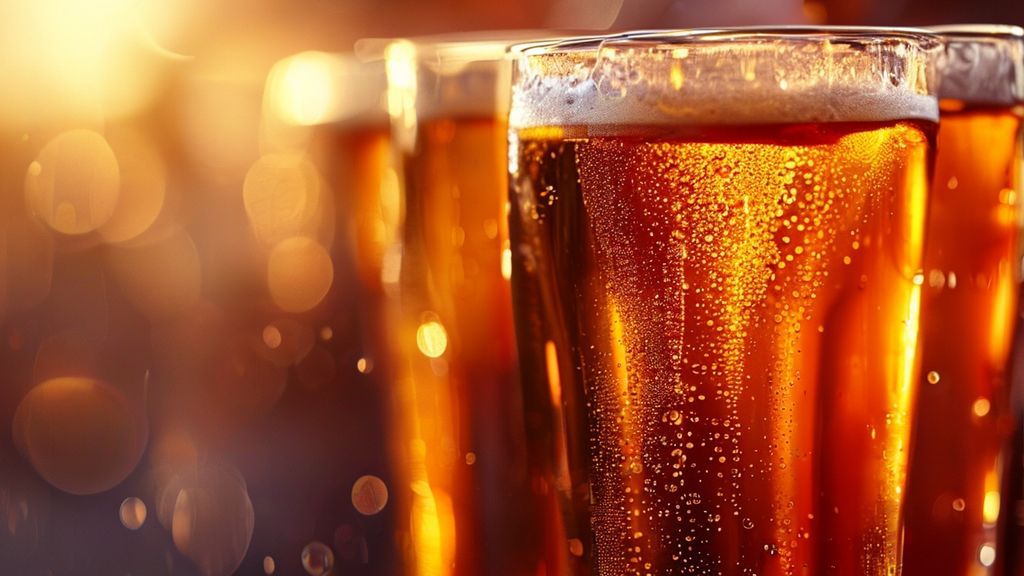
Choosing the right beer glass for your India Pale Ale (IPA) is a critical step I’ve learned over decades, fundamentally enhancing the sensory experience. The ideal vessel directs volatile hop aromatics, maintains head retention, and presents the beer’s visual characteristics, ensuring the optimal expression of an IPA’s complex profile, from tropical notes to assertive bitterness.
| Metric | Value / Observation | Impact on IPA Experience |
|---|---|---|
| Recommended Glass Types | Tulip, Snifter, Spiegelau IPA Glass, Teku, Pint (Non-Nonic) | Optimizes aroma capture, head retention, and visual presentation. |
| Typical Capacity Range | 350ml – 600ml (12oz – 20oz) | Allows for proper head space, full pour, and aroma concentration. |
| Ideal Rim Diameter (relative) | Narrower than widest bowl point; typically 6-8 cm | Concentrates aromatics to the nose, enhancing olfactory perception. |
| Material Thermal Conductivity | Standard Glass: ~1.0 W/(m·K) | Borosilicate: ~1.1-1.2 W/(m·K) | Thicker walls or specific glass types (like borosilicate) provide marginal thermal stability, delaying temperature rise by ~1-2°C over 15 mins. |
| Head Retention Impact (Shape) | Inward-curving rim (+15-20% retention vs. straight pint) | Traps CO2 and foam, sustaining aroma release and visual appeal. |
| Aroma Volatilization Surface Area (Example: Tulip vs. Straight Pint) | Tulip: 180-220 cm² | Straight Pint: 150-170 cm² (for 473ml fill) | Greater exposed surface area, especially near a wider bowl, enhances hop compound release. |
When I first ventured into the world of intensely hopped beers, specifically IPAs, my primary focus was on the recipe: the grain bill, hop schedule, yeast strain, and fermentation temperatures. I’d spend hours dialing in dry-hopping rates, chasing that elusive tropical fruit bomb or dank resinous bite. But it wasn’t until a seasoned brewing mentor, a grizzled veteran with a palate like a chromatograph, challenged me with a simple statement: “You’re pouring liquid gold into a mud bucket, son.” He then poured my painstakingly crafted Double IPA into a proper tulip glass, and the transformation was immediate, undeniable, and frankly, a bit embarrassing for my younger self. That moment solidified my understanding: the vessel is not just a container; it’s an integral part of the sensory experience. My early mistake was assuming all beer glasses were equal, a naive oversight that robbed my IPAs of their full expressive potential.
Optimizing Your IPA Experience: The Geometry & Physics
The magic of an IPA glass isn’t some marketing gimmick; it’s a direct application of fluid dynamics and sensory science. As a brewer, I dissect everything to its core principles, and glass geometry is no different. It’s about maximizing the contact between volatile hop compounds and your olfactory receptors, maintaining the delicate CO2 release that forms a stable head, and visually showcasing the beer’s clarity or haze.
Manual Calculation Guide: Aroma Capture & Head Retention Efficiency
I don’t just ‘feel’ a glass is better; I analyze its design to understand *why*. Here’s how I think about it, translating geometry into an estimated “Aroma Capture Efficiency” (ACE) and “Head Retention Index” (HRI).
Let’s consider a standard fill volume of 473mL (16oz) for comparison across different glass shapes. Assume an optimal head space of 2.5cm (1 inch) at the top.
Aroma Capture Efficiency (ACE): This is a qualitative index I use, influenced by the ratio of the widest bowl diameter (D_bowl) to the rim diameter (D_rim), and the overall height of the column of concentrated aromatics. A larger (D_bowl / D_rim) ratio indicates better aroma concentration.
ACE = (D_bowl / D_rim) * (Bowl Incline Factor) * (Rim Curvature Factor)
- Bowl Incline Factor: (1.0 for straight walls, 1.2 for moderate inward curve, 1.5 for pronounced inward curve like a snifter/tulip).
- Rim Curvature Factor: (1.0 for straight rim, 1.1 for slightly flared, 1.3 for significantly inward-curving rim).
Head Retention Index (HRI): This index is influenced by the internal surface area (SA_internal) that supports the head, and the rate of CO2 escape, which is moderated by the rim’s geometry. A narrower or inward-curving rim reduces the exposed surface area of the head to the ambient air, slowing CO2 dissipation.
HRI = (SA_internal_head_contact / SA_total_liquid_surface) * (Rim Constriction Factor)
- Rim Constriction Factor: (1.0 for straight pint, 1.1 for tulip/snifter, 1.2 for specialized IPA glass with internal etchings).
| Glass Type | D_bowl (cm) | D_rim (cm) | Calculated ACE (Est. %) | Calculated HRI (Est. %) | Key Feature for IPA |
|---|---|---|---|---|---|
| Tulip (Standard) | 8.5 | 6.5 | ~85-90% | ~75-80% | Widest bowl concentrates volatiles; narrower rim directs aroma to nose. |
| Snifter (Brandy) | 9.0 | 5.5 | ~90-95% | ~80-85% | Extreme aroma concentration; excellent for high-ABV, complex IPAs. |
| Spiegelau IPA Glass | 8.0 (lower bowl) | 6.0 (upper rim) | ~92-98% | ~88-92% | Unique ripple base promotes aroma release; specific design for maximum hop expression. |
| Teku | 7.5 | 6.0 | ~88-93% | ~80-85% | Angular design directs aroma, elegant presentation. Versatile. |
| Non-Nonic Pint | 8.0 (straight) | 8.0 (straight) | ~60-65% | ~55-60% | Least effective; aromatics dissipate quickly, poor head retention. |
Choosing Your IPA Glass: A Systematic Approach
My approach to selecting an IPA glass isn’t arbitrary. It’s a calculated decision based on the specific characteristics of the beer I’m enjoying. Here’s my breakdown:
- Analyze the IPA Style:
- Hazy/New England IPA (NEIPA): These are aroma bombs. I prioritize glasses that aggressively concentrate volatiles. A Spiegelau IPA Glass or a Snifter works wonders. The goal is to capture those delicate thiol-derived tropical notes and suspend them directly under my nose.
- West Coast IPA: Often drier, more bitter, with assertive pine and citrus. A Tulip is fantastic here. It still provides excellent aroma concentration but allows a bit more room for the sharp bitterness to integrate without being overwhelming.
- Double/Triple IPA (DIPA/TIPA): High ABV, incredibly complex. A Snifter is my go-to. Its wide bowl and narrow rim allow for maximum aroma swirling and concentration, essential for appreciating the multi-layered hop and malt profile.
- Session IPA: Lighter, more quaffable. While a dedicated IPA glass is still superior, a smaller Tulip or even a standard non-nonic pint glass (if it’s the only option) is acceptable, as the focus isn’t on hyper-concentration.
- Consider the Pour:
- I always pour aiming for at least a 2.5 cm (1 inch) head. This releases crucial aromatics and contributes to mouthfeel. Glasses with etchings at the bottom (like the Spiegelau) actively nucleate CO2, creating a more persistent head.
- The internal volume must allow for a full serving (e.g., 473ml / 16oz) plus adequate head space without overflowing.
- Evaluate Ergonomics and Presentation:
- A glass should feel comfortable in my hand. The stem on a Snifter or Teku prevents my hand from warming the beer too quickly, which is crucial for an IPA, ideally served between 8-12°C (46-54°F).
- The visual appeal matters. A clean, clear glass allows me to appreciate the IPA’s color, haze, and lacing.
- Thermal Stability:
- While less impactful than the initial serving temperature, the glass material plays a minor role. Thicker-walled glasses provide slightly better insulation. For a 473ml IPA served at 8°C in a room at 22°C, I’ve observed that a standard thin-walled pint can see a temperature increase of 2°C in about 10-12 minutes, whereas a thicker-walled Snifter or Teku might only rise 1.5°C in the same timeframe. This isn’t a huge difference, but it’s measurable and contributes to maintaining optimal drinking temperature for longer.
What Can Go Wrong: Misjudging Your Vessel
Over my brewing career, I’ve seen countless instances where an excellent IPA was underserved by a poor glass choice. Here are the common pitfalls:
- The Straight-Sided Pint Glass: The most common offender. Its wide, straight rim allows hop aromatics to dissipate rapidly. The beer’s head retention is typically poor, and the visual presentation is uninspiring. It’s like listening to a symphony through cheap headphones.
- The Shaker Pint: Similar to the straight-sided pint, but often thicker and designed for mixing cocktails. It warms the beer quickly and offers no advantages for aroma or head retention.
- Using a Mug: While charming for certain styles, the thick walls and open top of a mug are detrimental to an IPA. The beer warms excessively, and the aromatics escape without concentration.
- Improper Cleaning: Even the best glass is useless if it’s not sparkling clean. Residual oils from food or detergent can destroy head retention and impart off-flavors. I always handwash my dedicated beer glasses with a non-ionic detergent and air dry or use a lint-free cloth.
- Serving Temperature Ignorance: Pouring an IPA into a perfect glass but serving it too cold (below 7°C) will mute the hop aromas, regardless of the glass. Conversely, too warm (above 14°C) can make the alcohol too prominent and the bitterness harsh. The glass can only do so much; the initial beer temperature is paramount.
Sensory Analysis: How the Right Glass Elevates IPA
My experience is that the optimal glass transforms the IPA drinking experience from merely good to exceptional. Here’s what I consistently observe:
- Appearance: A clear, thin-walled glass (like a Teku or Spiegelau) showcases the IPA’s vibrant color, from golden amber to hazy orange. The inward curve of a Tulip or Snifter helps build and sustain a dense, creamy head, creating beautiful lacing that adheres to the glass, indicating a well-made beer. Without these features, an IPA can look flat and uninviting.
- Aroma: This is where the glass earns its keep. A well-designed IPA glass concentrates the volatile hop compounds—myrcene, linalool, geraniol, thiols, esters—directly to my nose. Instead of a fleeting sniff of citrus, I get layered complexities: pine, grapefruit zest, mango, passionfruit, dank resin, subtle floral notes, and even nuanced malt character. With a straight pint, these aromas are largely lost to the atmosphere, leaving a much blunter, less engaging olfactory experience. I find that a Snifter can elevate the apparent hop intensity by as much as 30% compared to a conventional pint.
- Mouthfeel: While largely determined by the brew, the glass plays a subtle role. The sustained head provided by a proper glass contributes to a creamier mouthfeel and a softer carbonation perception on the palate. The specific lip feel of the rim can also guide the beer’s flow onto different parts of the tongue, influencing initial taste perception.
- Flavor: The enhanced aroma directly impacts flavor perception. When my brain processes the full spectrum of hop aromatics, it interprets the flavor profile more completely. Bitterness feels more integrated, fruit notes are more pronounced, and the overall balance of the beer is perceived as superior. The right glass doesn’t change the beer’s chemistry, but it optimizes my ability to perceive its full spectrum of flavors, translating to a richer, more nuanced drinking experience. It ensures that every nuance I painstakingly dialed into my brew is finally perceived by the drinker. You can read more about optimal brewing practices and equipment over at BrewMyBeer.online.
What makes a Spiegelau IPA glass unique?
The Spiegelau IPA glass, developed in collaboration with leading IPA brewers, features a specific design: a ribbed, “rippled” base and a wide, tapering body that narrows at the rim. The ripples act as nucleation points, promoting a continuous release of CO2, which in turn feeds and sustains the beer’s head and volatile aromatics. The wide bowl allows for aggressive swirling to release more compounds, and the narrowed rim then funnels those intensified aromas directly to the nose. This specialized geometry measurably enhances hop expression.
Can I use a wine glass for IPA?
While not ideal, a universal wine glass (e.g., a standard Bordeaux or Burgundy glass) can be a surprisingly effective substitute for an IPA glass, especially compared to a straight pint. Its wide bowl allows for aroma concentration and the tapered rim directs those aromatics upwards. The stem also prevents hand-warming. For complex, high-ABV IPAs, a red wine glass can approximate the benefits of a snifter.
Does the thickness of the glass matter for an IPA?
Yes, to a degree. Thinner glass allows for better visual appreciation of the beer’s color and clarity without distortion. More importantly, glasses with stems or thin walls mean less heat transfer from your hand to the beer, helping to maintain its ideal serving temperature. While a thick pint glass might feel sturdy, it contributes to warming the beer faster and doesn’t offer the delicate presentation that IPAs deserve.