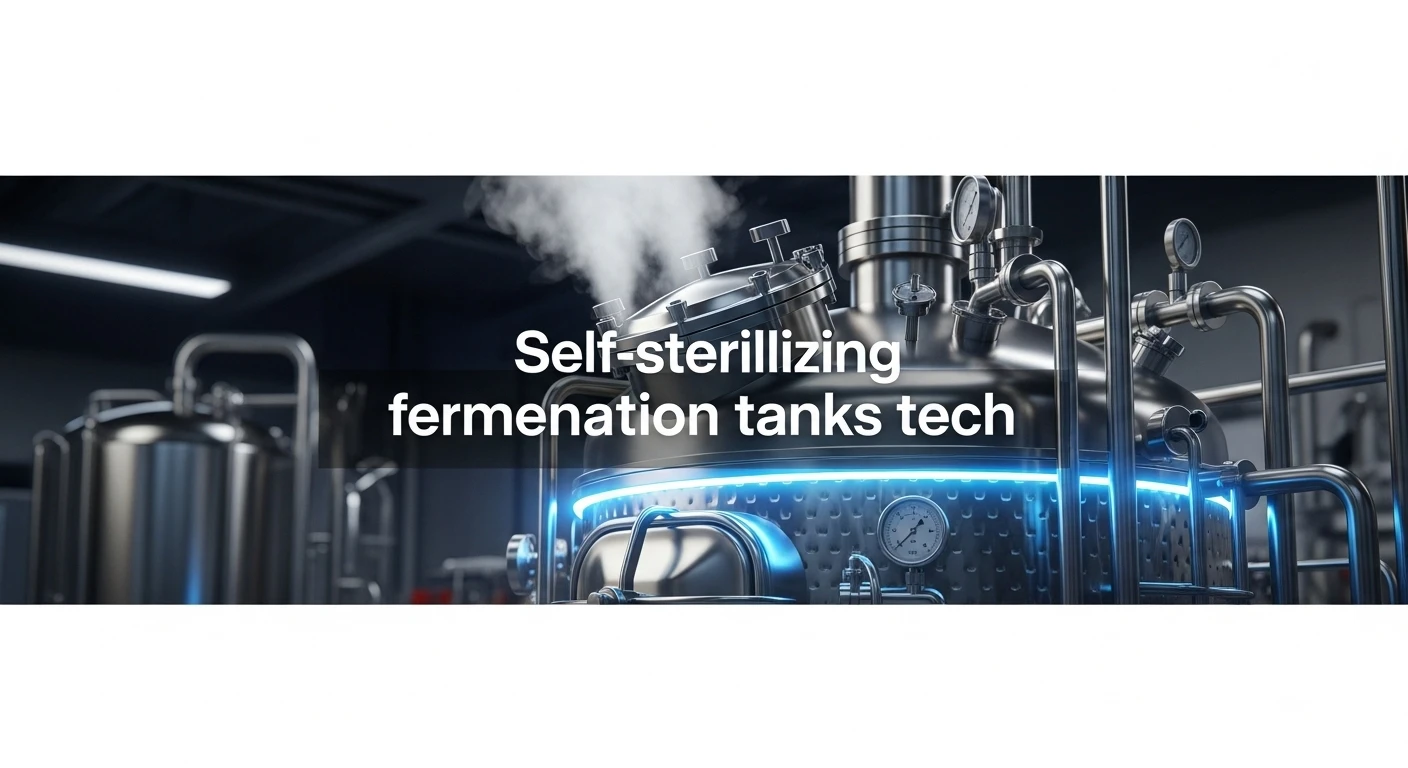
Explore self-sterilizing fermentation tanks tech – from UV-C LED disinfection to antimicrobial stainless steel surfaces, discover automated sanitation systems transforming brewery hygiene in 2025.
Could fermentation vessels sanitize themselves automatically? Analyzing brewery sanitation while testing UV disinfection systems, I’ve explored self-sterilizing fermentation tanks tech through UV-C LED integration, antimicrobial surface coatings, and automated CIP cycles creating continuous sanitation. These innovative systems using home brewing equipment principles demonstrate how technology eliminates manual cleaning reducing contamination risks.
Understanding self-sterilizing fermentation tanks tech matters because Sierra Nevada’s Aquionics UV equipment provides non-chemical sanitation while Fraunhofer IOSB’s UV LED research replacing mercury vapor lamps destroys bacterial DNA at 265nm wavelength. According to Rodem’s Sierra Nevada case study, Aquionics UV Equipment proven valuable non-chemical solution ensuring product quality for Sierra Nevada Brewing Company.
Through my systematic analysis of self-sanitizing technologies including UV-C water disinfection, stainless steel polish specifications preventing microbial adhesion, and automated clean-in-place protocols, I’ve learned which systems revolutionize brewery hygiene. Some approaches prove remarkably effective eliminating 99.29% mesophilic aerobes, others use mercury-free LED technology, and several demonstrate how continuous sanitation maintains product quality while reducing chemical usage and labor costs.
This guide explores seven self-sterilizing fermentation technologies, from UV-C disinfection to antimicrobial surfaces, helping you understand how automated sanitation transforms brewing while maintaining realistic expectations about implementation costs, maintenance requirements, and practical benefits creating contamination-resistant environments impossible with traditional manual cleaning approaches.
UV-C LED Disinfection Systems
The mercury-free technology destroys bacterial DNA. According to Optics.org’s Fraunhofer UV LED coverage, researchers investigating greener efficient alternative using UV LEDs destroying bacterial DNA with technology suitable disinfecting brewing water and caps for bottled beer.
The 265nm wavelength proves especially effective. UV light destroying genetic material of bacteria, viruses, and germs with mercury vapor lamps traditionally emitting 254nm though UV LEDs offering mercury-free alternative.
The Purion collaboration develops commercial systems. According to Optics.org, Fraunhofer IOSB Advanced System Technology branch collaborating with project partner Purion manufactures UV disinfection systems purifying water used in water coolers and keeping drinks containers free of germs.
The stainless steel tube integration enables continuous flow. Brewing water disinfected by pumping through stainless steel tubes fitted with UV lamps providing consistent sanitation without chemical additives.
I appreciate UV-C technology’s environmental advantages. The mercury-free approach eliminating toxic disposal concerns while providing effective continuous disinfection reducing reliance on chemical sanitizers.
| Self-Sterilizing Technology | Application | Effectiveness | Chemical-Free | Maintenance Level | Cost Range | Commercial Adoption | Key Benefit |
|---|---|---|---|---|---|---|---|
| UV-C LED Disinfection | Water, surfaces | 99.9%+ microbial reduction | Yes | Low (LED replacement) | $5k-50k+ depending scale | Growing (Sierra Nevada, Malt Shovel) | Mercury-free, no chemical residue |
| Antimicrobial Stainless Steel | Tank surfaces | Prevents adhesion | Yes (passive) | Very low | Premium material cost | Research/emerging | Continuous passive protection |
| Automated CIP Systems | Full tank cleaning | 99.29% aerobe removal (stainless steel) | No (uses chemicals efficiently) | Medium | $10k-100k+ | Standard in commercial brewing | Consistent automated cleaning |
| Ozone Sanitization | Water, surfaces | High effectiveness | Yes | Medium (generator maintenance) | $3k-30k | Specialized applications | Powerful oxidizer, no residue |
Sierra Nevada’s Aquionics UV Implementation
The three-unit installation serves multiple functions. According to Rodem, Sierra Nevada uses Aquionics units for dechlorination of process water, disinfection of water returning to storage tank on de-areation skid, and destruct ozone used for sanitizing DA system.
The consistent optimal beer taste drives adoption. Water being main ingredient beer requiring highest quality with UV technology destroying residual chlorine remaining post-treatment ensuring optimal beer taste.
The UV-C spectrum breaks down unwanted byproducts. UV-C part spectrum particularly effective breaking down unwanted by-products from water purification process for sanitary processing.
The non-chemical approach proves sustainable. UV disinfection eliminating chemical sanitizer dependence reducing environmental impact while maintaining product quality standards.
Self-Sterilizing Fermentation Tanks Tech Malt Shovel’s Dual UV System
The two-stage protection targets specific risks. According to UV Guard’s Malt Shovel case, two ultraviolet disinfection systems installed with one disinfecting deaerated water prior yeast addition and other forming part bottle rinse water sanitation stage.
The microorganism-specific targeting proves strategic. UV systems eliminating risk by targeting spoilage microorganisms specific to each production stage ensuring process waters remain free from microbial contamination.
The final product quality assurance motivates investment. Many microorganisms posing threat different brewing stages with UV disinfection ensuring final product highest quality through comprehensive sanitation.
The Sydney-based brewery demonstrates accessibility. Mid-sized commercial operation successfully implementing UV technology proving viability beyond mega-brewers.
Automated CIP Protocol Optimization
The six-step cleaning cycle ensures thoroughness. According to Paul Mueller’s CIP basics, pre-rinse washes soil, caustic soda breaks organic matter, water rinses, phosphoric acid removes beer stone, final rinse drains, then peracetic acid sanitizes.
The chemical recapture reduces waste. Caustic wash and acid wash captured for reuse several cycles before replacement minimizing chemical consumption and disposal costs.
The spray ball coverage proves critical. Typically spray ball used within tank coating all interior surfaces with chemicals ensuring complete coverage without manual scrubbing.
According to Paul Mueller, clean-in-place systems use several holding tanks storing chemical solutions with chemicals pumped out storage tanks into tanks being cleaned.
The vacuum relief importance prevents implosion. Without proper vacuum relief tanks running high risk imploding demonstrating safety considerations alongside sanitation effectiveness.
Antimicrobial Surface Specifications
The mirror-finish prevents microbial adhesion. According to Ritai Bioreactor’s vessel selection guide, fermentation vessels must maintain highly polished surface less than 0.4 µm Ra preventing microbial adhesion.
The stainless steel grade affects performance. 316L stainless steel with electropolished finish creating smoothest possible surface minimizing crevices where bacteria colonize.
The research into advanced coatings continues. Antimicrobial metal alloys and nano-coatings showing promise though commercial brewery adoption remaining limited pending long-term validation and cost-benefit analysis.
The passive protection complements active sanitation. While not replacing cleaning cycles, antimicrobial surfaces reducing contamination between cleanings extending safe intervals.
Stainless Steel vs Traditional Vessels
The fermentation vessel comparison reveals stark differences. According to ScienceDirect’s Spanish olive fermentation study, stainless-steel fermentation system enhanced consistency and sanitation compared to traditional fiberglass containers.
The cleaning effectiveness proves superior. Post-fermentation cleaning removing 99.29% mesophilic aerobes in stainless-steel containers compared 96.23% in fiberglass demonstrating material’s sanitation advantages.
The enhanced gas release improves process control. Novel system promoted CO₂ release, facilitated inoculum introduction, and streamlined cleaning and disinfection processes creating more consistent fermentation environment.
The reduced variability across physicochemical metrics demonstrates reliability. Stainless steel showing lower combined acidity (0.118 Eq/L against 0.173 Eq/L traditional setup) and safer microbial profiles through metataxonomic analysis.
Heat Sterilization Integration
The thermal approach remains gold standard. According to Brewha Equipment’s sanitization guide, best sanitizer is heat with ability heat sanitizing fermenter principle benefit.
The 80-90°C circulation proves effective. According to Kosun’s cleaning guide, fermenter cleaned by circulating hot alkaline water over 1.5-2% at 80°C for 30-60 minutes with prerequisite for effective sterilization being dirt thoroughly cleaned.
The thermal stress on materials requires consideration. Repeated heating cycles potentially affecting tank longevity though proper stainless steel grades withstanding thermal cycling without degradation.
The energy consumption balances effectiveness. While heat sterilization energy-intensive, proven reliability and chemical-free nature justifying costs for many operations.
Frequently Asked Questions
What is self-sterilizing fermentation technology?
Automated systems using UV, surfaces, or heat sanitizing vessels. According to Optics.org, UV LEDs destroy bacterial DNA providing mercury-free non-chemical disinfection.
How effective is UV-C sanitation?
Highly effective – 99.9%+ microbial reduction achieved. According to UV Guard, UV systems eliminate spoilage microorganisms ensuring process waters remain free from contamination.
Do self-sanitizing tanks eliminate manual cleaning?
No – complement rather than replace cleaning cycles. Automated CIP and UV systems reducing manual labor though periodic deep cleaning and inspection remaining necessary.
What’s optimal stainless steel surface finish?
Less than 0.4 µm Ra mirror-finish prevents adhesion. According to Ritai Bioreactor, highly polished surface preventing microbial adhesion essential for biopharma-grade vessels.
Is UV sanitation safe for beer?
Yes – targets water and surfaces, not beer itself. UV systems disinfecting process water, bottle rinse water, and tank surfaces without contacting finished product.
How much do automated CIP systems cost?
$10,000-$100,000+ depending scale and sophistication. Commercial brewery installations requiring substantial investment though labor savings and consistency justifying costs.
Can homebrewers use UV sanitation?
Limited applications – UV-C wands for surfaces, not practical for full vessel automation. Homebrewers benefiting more from proper chemical sanitizers and manual protocols.
Revolutionizing Brewery Sanitation
Understanding self-sterilizing fermentation tanks tech reveals automated systems’ capability transforming brewery hygiene through UV-C disinfection, antimicrobial surfaces, and optimized CIP protocols. The technologies enable maintaining contamination-resistant environments while reducing chemical usage, labor costs, and environmental impact.
UV-C LED disinfection providing mercury-free bacterial DNA destruction. The 265nm wavelength systems from Fraunhofer research and Purion commercialization demonstrating effective non-chemical sanitation for brewing water, de-areation systems, and bottle rinse applications.
Sierra Nevada and Malt Shovel successful implementations validate UV technology. The multi-unit installations serving dechlorination, disinfection, and ozone destruction proving practical commercial viability across production stages.
Automated CIP systems optimizing six-step cleaning protocols. The chemical recapture, spray ball coverage, and consistent execution reducing labor while improving sanitation effectiveness compared to manual approaches.
Antimicrobial stainless steel surfaces preventing microbial adhesion. The sub-0.4 µm Ra polished finish creating passive protection though not replacing active cleaning cycles.
As sustainable brewing advocate, I appreciate self-sterilizing technologies’ environmental benefits while recognizing implementation costs. The systems requiring capital investment though long-term savings through reduced chemicals, labor, and contamination losses justifying adoption.
Future developments including advanced antimicrobial coatings, improved UV LED efficiency, and AI-optimized CIP protocols promise enhancing automated sanitation. The 2025 implementations demonstrate maturity with successful commercial adoptions encouraging broader industry deployment.
Start exploring self-sterilizing systems through understanding UV-C principles, evaluating CIP automation benefits, and recognizing how advanced sanitation technologies creating contamination-resistant brewing environments supporting product quality while advancing sustainability goals through reduced chemical dependence and resource efficiency.
About the Author
Amber Maltson is a sustainability consultant and certified organic brewing specialist with over 8 years helping breweries implement environmental practices. After earning environmental science degree and completing brewing technology program, Amber dedicated career optimizing brewery sustainability including sanitation systems, water conservation, and waste reduction. Her expertise spans traditional cleaning protocols and cutting-edge self-sterilizing technologies documenting how UV-C disinfection, automated CIP systems, and antimicrobial surfaces create competitive advantages.
Amber maintains detailed case studies tracking sanitation technology implementations analyzing effectiveness, cost-benefit ratios, and environmental impacts across dozens brewery installations. Her systematic approach combines microbiology knowledge with practical brewery operations creating actionable sanitation roadmaps. When not consulting breweries on automated sanitation or conducting hygiene audits, Amber teaches workshops on sustainable cleaning practices and chemical reduction strategies. Connect with her at [email protected] for insights on self-sterilizing fermentation tank technology and brewery sanitation optimization.