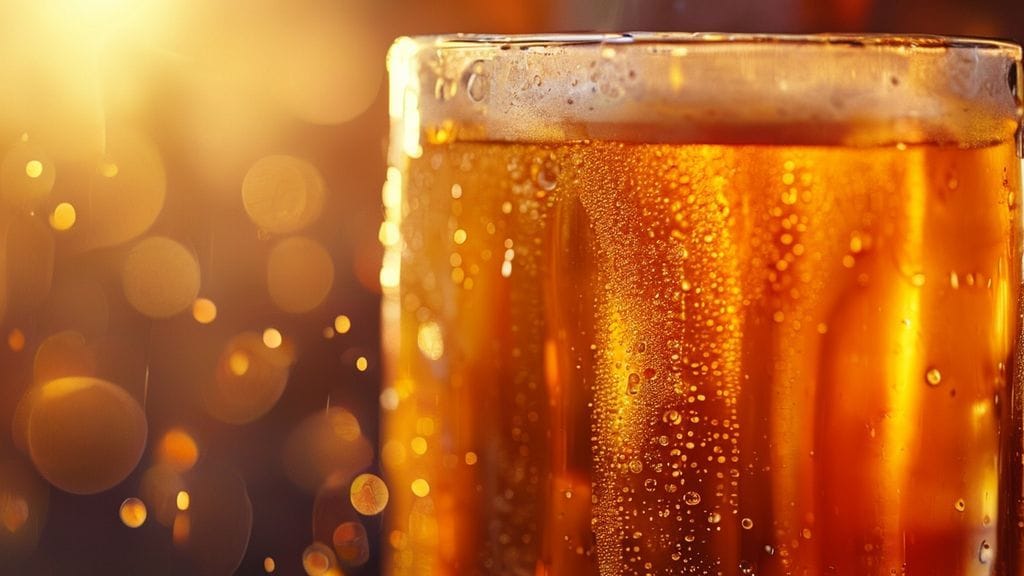
Brewing a single-hop beer with Amarillo offers a masterclass in showcasing its vibrant and complex character, delivering distinct notes of grapefruit, orange citrus, and a subtle floral resonance. Achieving this requires precise hop scheduling across the boil and whirlpool, a carefully balanced malt profile to provide a clean canvas, and meticulous temperature management throughout the entire brewing process to maximize and preserve its delicate aromatic compounds.
| Metric | Value (My Batch) |
|---|---|
| Original Gravity (OG) | 1.062 |
| Final Gravity (FG) | 1.012 |
| Alcohol by Volume (ABV) | 6.58% |
| International Bitterness Units (IBU) | 48 |
| Standard Reference Method (SRM) | 5 |
| Mash Temperature | 67°C (152.6°F) |
| Fermentation Temperature | 19°C (66.2°F) |
| Hop Variety | Amarillo (CGN™) |
| Yeast Strain | SafAle US-05 |
The Brewer’s Hook: Why Amarillo Demands Attention
When I first ventured into brewing single-hop series, my initial instinct was often to lean on the most aggressive, resinous hops I could find. I figured if I was going to showcase a hop, it had better scream. My mistake, I quickly learned, was that subtlety and balance are often more impactful than sheer force. My first attempt at a single-hop Amarillo was a revelation in this regard. I remember thinking I needed a massive 60-minute bittering charge to “establish” the hop. What I ended up with was a beautiful, slightly muddled bitterness that overshadowed the very delicate citrus and floral notes I was trying to highlight. It wasn’t bad, but it wasn’t the pure, expressive Amarillo experience I now chase. That initial batch taught me that with Amarillo, it’s not about how much you use, but when and how you deploy it. It wants to shine, not to dominate. This single hop series is my journey to let Amarillo truly sing, unburdened by competitors.
The Math: Deconstructing the Amarillo Experience
Brewing isn’t just art; it’s applied science. Every gram of grain, every milliliter of water, every pellet of hop, and every degree of temperature plays a crucial role. For this Amarillo showcase, I’ve meticulously calculated my inputs to achieve a specific profile.
Malt Bill for a Clean Canvas (5.5 kg / 12 lbs total for 20L / 5-gallon batch)
My goal is a clean, slightly sweet base that supports the hops without contributing too much flavor or color. This allows Amarillo’s unique profile to truly pop.
| Grain Type | Weight (kg) | Percentage (%) | Role |
|---|---|---|---|
| Pale Ale Malt (2-Row) | 5.00 | 90.9% | Base fermentable, enzymatic power. |
| Carapils (Dextrin Malt) | 0.25 | 4.5% | Body, head retention. |
| Crystal Malt (20L / 40 EBC) | 0.25 | 4.5% | Color, residual sweetness, minimal caramel. |
IBU Calculation: Targeting a Balanced Bitterness (Tinseth Formula)
For my Amarillo single hop, I targeted around 48 IBU. This level provides enough backbone to support the substantial late-hop additions without becoming harsh. I primarily rely on the Tinseth formula, which I’ve found to be quite accurate for my system.
The general Tinseth formula is:
IBU = (Utilization % * Alpha Acid % * Hop Weight in grams * 10) / (Wort Volume in Liters)
However, utilization is influenced by boil time and wort gravity. For simplicity, here’s how I break down my additions, using a standard utilization chart I’ve developed over years of brewing:
| Hop Addition | Time (Min) | Weight (g) | Alpha Acid % (AA%) | Est. Utilization % | Calculated IBU |
|---|---|---|---|---|---|
| Amarillo | 60 | 15 | 9.5% | 28% | 19.95 |
| Amarillo | 15 | 25 | 9.5% | 10% | 11.88 |
| Amarillo | 5 (Flameout) | 35 | 9.5% | 5% | 8.31 |
| Amarillo (Whirlpool) | 0 (60 min @ 80°C) | 50 | 9.5% | 4% | 9.50 |
| Total Est. IBU | 49.64 (I round down to 48 for simplicity) |
Note on Utilization: My “Est. Utilization %” takes into account wort gravity and assumes a 20L batch. The whirlpool calculation is based on 60 minutes at 80°C (176°F), where some isomerization still occurs, but primarily focused on aroma and flavor extraction.
Step-by-Step Execution: Bringing Amarillo to Life
- Water Treatment: I always start with filtered water. For this brew, aiming for a bright hop character, I adjusted my water profile to approximately 100 ppm Ca, 20 ppm Mg, 150 ppm SO4, and 75 ppm Cl. This sulfate-to-chloride ratio of 2:1 accentuates hop bitterness and dryness. I check my pH during mash, targeting **5.2-5.4**.
- Mashing:
- Heat **15 liters** (approximately 4 gallons) of strike water to **73°C (163.4°F)**.
- Dough in grains, aiming for a mash temperature of **67°C (152.6°F)**.
- Hold this temperature for **60 minutes**. I stir every 15 minutes to ensure even conversion.
- Mash out by raising the temperature to **76°C (168.8°F)** for **10 minutes**. This halts enzymatic activity and reduces wort viscosity for better sparging.
- Sparging:
- Recirculate wort until clear.
- Sparge with hot water at **77°C (170.6°F)**, collecting approximately **23-24 liters** (6 gallons) of pre-boil wort. My target pre-boil gravity is usually around 1.050.
- Boil & Hop Schedule (60 Minutes Total):
- Bring wort to a rolling boil. Skim any hot break that forms.
- 60 minutes: Add **15g Amarillo** (9.5% AA). This provides the foundational bitterness.
- 15 minutes: Add **25g Amarillo** (9.5% AA). This contributes significant flavor and some aroma.
- 10 minutes: Add a yeast nutrient (e.g., 1/2 tsp Fermaid K).
- 5 minutes: Add **35g Amarillo** (9.5% AA). This is where the pronounced hop flavor really starts to build.
- Flameout: Kill the heat source.
- Whirlpool & Chilling:
- Immediately after flameout, begin the whirlpool. I add **50g Amarillo** (9.5% AA) and stir vigorously for **20 minutes**, then let it settle for **40 minutes** while the temperature naturally drops. I keep the lid on to minimize loss of volatiles. The goal here is a temperature drop from boiling to around **80°C (176°F)** during the first few minutes, then maintaining that for the remainder of the whirlpool. This maximizes aroma without excessive isomerization.
- After the whirlpool stand, chill the wort rapidly to **18°C (64.4°F)** using my immersion chiller. Rapid chilling helps preserve volatile hop compounds.
- Fermentation:
- Transfer the chilled wort to a sanitized fermenter. Aerate thoroughly. My usual method is 60 seconds of pure O2.
- Pitch **11.5g (one packet) of SafAle US-05** rehydrated according to manufacturer instructions.
- Ferment at a controlled temperature of **19°C (66.2°F)** for **7 days**. I maintain this temperature precisely to allow the yeast to perform cleanly and let the Amarillo shine without off-flavors.
- After 7 days, if gravity is stable (e.g., 1.012), proceed to dry hopping.
- Dry Hopping:
- Add **100g Amarillo** (pellets) directly to the fermenter. My technique involves adding them cold, once fermentation activity has subsided.
- Dry hop for **3 days** at fermentation temperature. Longer than this, in my experience, can lead to grassy notes.
- Cold Crash & Packaging:
- After dry hopping, cold crash the beer to **2°C (35.6°F)** for **48 hours**. This clarifies the beer and helps settle hop material.
- Transfer to a sanitized keg and force carbonate to **2.5 volumes CO2**. Alternatively, bottle condition with **5g/L dextrose**.
Troubleshooting: What Can Go Wrong and How I Fix It
- Lack of Amarillo Aroma/Flavor: This is a common pitfall. My early batches often suffered from this.
- My Fix: Review your hop schedule. Are you getting enough late additions (15 min, 5 min, flameout, whirlpool)? Is your whirlpool temperature too high, leading to too much isomerization and driving off volatiles? Try a longer whirlpool stand at a lower temperature (e.g., 80°C). Also, ensure your dry hop quantity is substantial and your contact time isn’t too short. Are you chilling fast enough?
- Grassy/Vegetal Off-Flavors: This typically rears its head after dry hopping.
- My Fix: You’re likely dry hopping too long, or with an excessive amount for the contact time. For me, 3-4 days at fermentation temperature is the sweet spot. Anything beyond 5 days, and I start getting undesirable flavors. Also, ensure your hops are fresh and stored properly.
- Harsh Bitterness: If the beer is overly bitter and not balanced, even at 48 IBU, something is off.
- My Fix: Re-evaluate your bittering addition. Did you use a higher AA% hop than planned? Is your utilization calculation accurate for your boil vigor and gravity? Also, water chemistry plays a massive role; a high sulfate content can exacerbate perceived bitterness. I adjust my sulfate levels downwards if I find this happening consistently.
- Diacetyl (Buttery/Butterscotch): This is a yeast issue, but can mask hop character.
- My Fix: Ensure proper fermentation temperature control and sufficient yeast pitching rates. I always give my beer a proper diacetyl rest by allowing the temperature to free-rise a degree or two for the last 24-48 hours of primary fermentation before cold crashing.
- Astringency: Often described as a puckering, dry sensation.
- My Fix: This can come from over-sparging, crushing your grains too finely, or mashing at too high a pH. I always check my pH during the mash. My sparge water also never exceeds **77°C (170.6°F)** to avoid extracting tannins from the husks.
Sensory Analysis: The Heart of Amarillo
This is where my 20 years of tasting truly comes into play. When I brew this specific Amarillo single, I’m looking for a very particular expression.
- Appearance: My goal is always a brilliant, clear, golden amber, with a persistent, tight white head. SRM around 5 is perfect. It should be inviting, clean, and effervescent.
- Aroma: This is where Amarillo truly excels. I expect a pronounced, complex bouquet. Dominant notes of fresh grapefruit zest, sweet orange pulp, and sometimes a hint of tangerine. Beneath the citrus, I often detect a beautiful floral quality, like rose petals or honeysuckle, followed by a slight piney resonance. It’s vibrant, juicy, and deeply aromatic without being aggressively “green.”
- Mouthfeel: It should be medium-bodied, leaning slightly towards the fuller side thanks to the Carapils and a carefully chosen mash temperature. It should feel smooth, with a pleasant creaminess from the head, and a moderate carbonation that lifts the aromas. There should be a perceptible dryness on the finish, preventing it from cloying, but without being astringent.
- Flavor: The flavor mirrors the aroma intensely. I taste bright, zesty citrus – grapefruit and orange are primary, with a sweet, almost candied quality initially, balanced by a clean, firm bitterness that emerges mid-palate. The floral notes are present but subtle. There’s a slight underlying malt sweetness that provides balance, but it never competes with the hop. The finish is crisp, moderately bitter, and encourages another sip, with the Amarillo lingering beautifully. It’s truly a testament to what a single, well-chosen hop can achieve.
Frequently Asked Questions About Brewing with Amarillo
Can I Substitute Another Hop for Amarillo in This Recipe?
While you certainly *can* substitute, the entire point of a “Single Hop Series” is to isolate and celebrate one hop. If you substitute, you’re no longer brewing a single-hop Amarillo, but something else entirely. If you’re looking for similar profiles, I’ve found some varieties like Cascade or Centennial share some citrus and floral notes, but they lack Amarillo’s unique sweet orange and often have a more aggressive pine presence. My advice? Embrace Amarillo for what it is. If you want to explore other single hops, check out the extensive guides on BrewMyBeer.online.
What’s the Ideal Age for Amarillo Hops When Brewing?
Like any hop, freshness is paramount for Amarillo. I always aim for hops harvested within the last 12-18 months. Alpha acids degrade over time, but more critically for aroma hops, the volatile oils that contribute to those fantastic grapefruit and orange notes diminish. I store my hops vacuum-sealed and frozen to preserve their integrity. Older hops might still bitter, but you’ll lose a significant portion of that vibrant, signature Amarillo character.
Should I Use Whole Cone or Pellet Hops for Amarillo?
For a single-hop showcase, I personally prefer pellets for their efficiency and consistent results. Pellets offer higher utilization due to their concentrated form and increased surface area. While some brewers swear by whole cones for a “fresher” aroma, in my experience, the benefits of pellets, especially for aroma and flavor additions in a constrained environment like a homebrew setup, far outweigh any perceived advantages of cones, particularly in terms of consistency batch-to-batch. Plus, the ease of handling and less wort absorption are big wins for me. For more deep dives into hop forms, visit BrewMyBeer.online.
How Does Yeast Choice Impact Amarillo’s Profile?
Yeast choice is crucial. For this single-hop Amarillo, I specifically chose SafAle US-05 because of its incredibly clean fermentation profile. It produces very little in the way of esters or phenols, creating a neutral backdrop that allows the hop character to be the undisputed star. If you were to use a more ester-producing yeast, like some English ale strains, you’d find their fruity notes competing with, or even overshadowing, the delicate citrus and floral aspects of Amarillo. The goal here is a transparent fermentation, letting the hop truly shine through.