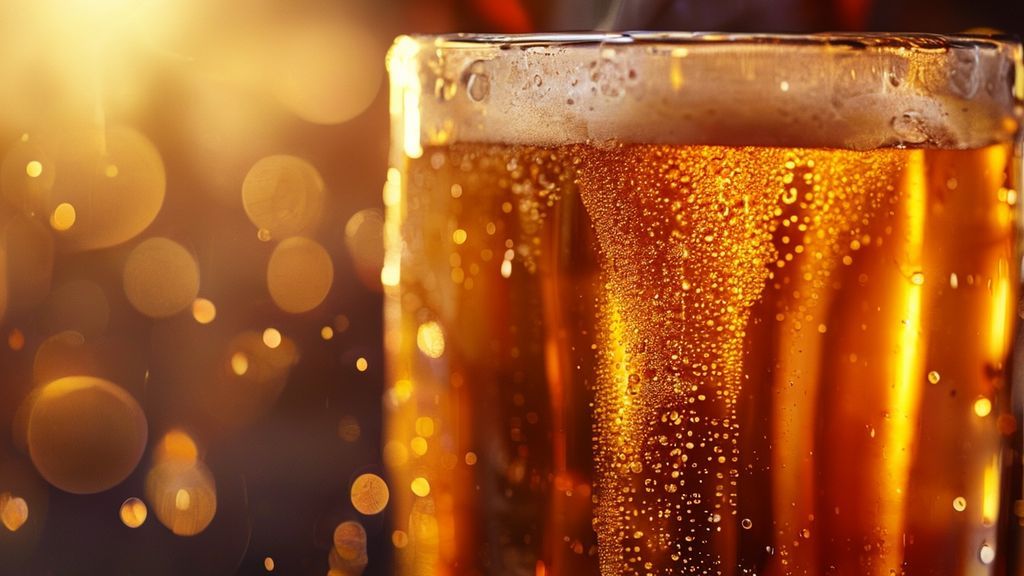
Brewing a Single Hop Series beer with Cascade is a fantastic way to understand its iconic grapefruit, pine, and floral character. My experience shows that by carefully managing mash temperature for fermentability, precise hop additions for desired bitterness and aroma, and strict fermentation control, you can produce a vibrant, clean ale that perfectly showcases this foundational American hop.
| Metric | Target Value |
|---|---|
| Batch Volume | 20 Liters (5.28 US Gallons) |
| Original Gravity (OG) | 1.055 |
| Final Gravity (FG) | 1.012 |
| Calculated ABV | 5.6% |
| International Bitterness Units (IBU) | 40 |
| Standard Reference Method (SRM) | 6 |
| Brew House Efficiency | 75% |
| Mash Temperature | 66°C (151°F) |
| Fermentation Temperature | 19°C (66°F) |
| Yeast Type | American Ale (e.g., US-05, WLP001) |
The Heartbeat of Hops: My Journey with Cascade
There are very few hops that define an entire brewing movement, and Cascade is unequivocally one of them. For me, Cascade isn’t just a hop; it’s a foundational element of my brewing education. When I first started brewing, I was chasing the exotic, the high alpha-acid monsters, often overlooking the nuanced brilliance of this true classic. My early single-hop experiments with Cascade taught me a critical lesson: complexity doesn’t always come from a blend; sometimes, it’s about deep understanding and meticulous handling of a single, exceptional ingredient. I initially under-hopped it, fearing it might be too “simple.” I was wrong. It was a mistake that forced me to re-evaluate my approach, compelling me to truly listen to what a hop wants to express.
This article details my proven method for brewing a Single Hop Series ale using only Cascade. My goal here is not just to give you a recipe, but to hand you the blueprint for understanding how this magnificent hop interacts with every stage of the brewing process, from the mash tun to your glass. We’re going to get technical, we’re going to dive into the data, and we’re going to achieve a singular, vibrant expression of Cascade.
The Brewing Math: From Grain to Glass Transparency
Success in brewing, particularly with a single hop focus, hinges on precision. This means understanding the underlying math. I’ve found that calculating your inputs meticulously drastically reduces variability and allows you to truly isolate the hop’s character. Here’s how I approach the numbers for this Cascade-focused ale.
Grain Bill Breakdown (for 20L / 5.28 Gal Batch)
To support Cascade without overpowering it, I opt for a simple, fermentable grist with just enough body and color. My typical approach involves a base pale malt and a touch of crystal for subtle sweetness and color depth.
| Ingredient | Weight (kg) | Percentage (%) | Role |
|---|---|---|---|
| Pale Malt (e.g., Maris Otter, 2-Row) | 4.5 kg | 90% | Primary fermentable sugars, light malty backbone. |
| Caramalt / Crystal 20L (39 EBC) | 0.5 kg | 10% | Adds subtle caramel notes, body, and golden hue. |
| TOTAL | 5.0 kg | 100% |
Hop Schedule & IBU Calculation
My aim for this Single Hop Cascade is a firm bitterness that supports the hop aroma and flavor, not overwhelms it. I typically target an IBU in the low 40s. Here’s my standard hop schedule for a 20L batch with Cascade at an average Alpha Acid (AA) of 7.0%, assuming 75% brew house efficiency. I utilize a simplified IBU formula for quick calculation: IBU = (Weight_oz * AA% * Utilization_factor * 7490) / Volume_gallons or for metric IBU = (Weight_g * AA% * Utilization_factor * 10) / Volume_L. For my calculations, I rely on known utilization factors based on boil time and target gravity.
| Hop Addition | Weight (g) | Boil Time (min) | Approx. Utilization Factor (20L, 1.055 OG) | IBU Contribution (approx.) | Primary Role |
|---|---|---|---|---|---|
| Cascade (7.0% AA) | 25g | 60 | 0.25 (25%) | 21.8 | Primary Bitterness |
| Cascade (7.0% AA) | 20g | 15 | 0.15 (15%) | 10.9 | Flavor & Aroma |
| Cascade (7.0% AA) | 15g | 5 | 0.08 (8%) | 4.4 | Aroma |
| Cascade (7.0% AA) | 30g | 0 (Flameout/Whirlpool) | 0.05 (5% for 20 min steep) | 5.5 | Intense Aroma & Flavor |
| Cascade (7.0% AA) | 60g | Dry Hop (5 days) | 0 | 0.0 | Overwhelming Aroma |
| TOTAL | 150g | ~42.6 IBU |
Water Profile & Mash pH
Water chemistry is non-negotiable for hop-forward beers. My target profile for a vibrant hop character, specifically with Cascade, leans towards a balanced profile with a slightly elevated sulfate-to-chloride ratio (SO4:Cl). This accentuates bitterness and dryness without making the beer harsh. For a typical 20L batch, assuming a relatively neutral starting water, I adjust to approximate the following:
- Calcium (Ca): 60 ppm
- Magnesium (Mg): 10 ppm
- Sodium (Na): 15 ppm
- Sulfate (SO4): 100 ppm
- Chloride (Cl): 50 ppm
My target mash pH is **5.2 – 5.4** at mash temperature. I achieve this using lactic acid or phosphoric acid additions, monitored with a calibrated pH meter. Achieving this pH is crucial for optimal enzyme activity during the mash, which directly impacts sugar conversion and ultimately, fermentation efficiency and clarity.
Step-by-Step Execution: Bringing the Cascade Vision to Life
Here’s my detailed process for brewing this single-hop Cascade ale. Precision at each step is paramount.
- Water Treatment: Start by measuring your brewing water volume (typically 28-30 liters pre-boil for a 20L finished batch, accounting for grain absorption and boil-off). Add your chosen brewing salts (e.g., Gypsum, Calcium Chloride) to achieve the target water profile. Heat the water to **71°C (160°F)** for dough-in.
- Milling: Mill your grain bill (5.0 kg total). I ensure my mill gap is set to produce a coarse crush with minimal flour, typically around **1.0-1.1 mm (0.040-0.043 inches)**. This maximizes extraction while preventing a stuck sparge.
- Mashing: Dough-in your milled grains, aiming for a mash temperature of exactly **66°C (151°F)**. My typical liquor-to-grist ratio is 3.0 L/kg. Hold this temperature for **60 minutes**. Monitor mash pH and adjust if necessary to stay within the 5.2-5.4 range. I often perform an iodine test after 60 minutes to confirm starch conversion.
- Mash Out: Raise the mash temperature to **77°C (170°F)** and hold for **10 minutes**. This denatures enzymes, locks in your sugar profile, and reduces wort viscosity for easier lautering.
- Lautering & Sparging: Recirculate the wort until it runs clear, typically **15-20 minutes**. Then, begin collecting your wort. Sparge with water heated to **77°C (170°F)**. Collect approximately **23-24 liters** of wort pre-boil, targeting an original gravity slightly above 1.055 to account for boil concentration.
- Boil: Bring the wort to a vigorous, rolling boil for **60 minutes**.
- 60 min: Add **25g Cascade (7.0% AA)**.
- 15 min: Add **20g Cascade (7.0% AA)**.
- 5 min: Add **15g Cascade (7.0% AA)**.
- 0 min (Flameout): Turn off the heat and immediately add **30g Cascade (7.0% AA)**. Stir gently for **20 minutes** for a whirlpool effect.
- Chilling: Rapidly chill the wort to **18°C (64°F)** using an immersion chiller or plate chiller. My goal is to get it to pitching temperature in under 20 minutes to minimize DMS formation and hot-side aeration.
- Fermentation:
- Pitching: Transfer the chilled wort to a sanitized fermenter. Aerate thoroughly (I use pure O2 for **60 seconds** at 1 LPM). Pitch a healthy, active yeast starter or rehydrated dry yeast (e.g., one packet of US-05, approximately **11g / 200 billion cells**).
- Temperature Control: Maintain fermentation temperature at a constant **19°C (66°F)** for the first 3-5 days. Allow it to free-rise to **21°C (70°F)** for a diacetyl rest for 2-3 days after visible fermentation subsides.
- Gravity Readings: Take daily gravity readings once fermentation appears complete. When gravity is stable for 3 consecutive days, typically around **1.012**, primary fermentation is done.
- Dry Hopping: Once fermentation is complete and gravity is stable, add **60g of Cascade** hops directly to the fermenter. My preference is to use a hop bag weighted down with sanitized marbles to ensure full saturation and easy removal. Dry hop for **5 days** at **18°C (64°F)**. I’ve found extending past 7 days risks grassy flavors.
- Cold Crash & Packaging: After dry hopping, cold crash the beer to **0-2°C (32-35°F)** for **48-72 hours**. This helps settle yeast and hop matter, improving clarity. Transfer the clear beer to a keg or bottles, minimizing oxygen exposure. Force carbonate in a keg to **2.5 volumes of CO2** or prime bottles with **120g dextrose** for a 20L batch.
Troubleshooting: What Can Go Wrong and How I Fix It
Even with the most meticulous planning, brewing can throw curveballs. Here are common issues I’ve encountered with single-hop Cascade beers and my go-to solutions.
- Problem: Too Bitter, Harsh Edge.
- My Diagnosis: Often, this is due to incorrect IBU calculations, over-boiling bittering hops, or poor water chemistry (excessive sulfate without balanced chloride).
- My Fix: Re-evaluate your IBU calculations and actual hop alpha acid percentages. If water chemistry is off, consider brewing salts for future batches; for the current batch, blending with a less bitter, lighter beer can mitigate. I also learned that some commercial Cascade batches can have slightly higher cohumulone, which can contribute to a harsher bitterness, so knowing your hop supplier and lot is key.
- Problem: Lackluster Hop Aroma/Flavor.
- My Diagnosis: Insufficient late-boil additions, inadequate dry hopping, or significant hop oil loss during vigorous fermentation.
- My Fix: Increase flameout and dry hop additions. I’ve personally found that pushing dry hop levels with Cascade to 3-5 g/L is where the magic happens for aroma. Ensure fermentation isn’t too vigorous, as aggressive CO2 scrubbing can strip aromatics. Fermenting slightly cooler initially helps retain these volatile compounds. Consider experimenting with BrewMyBeer.online‘s guidelines on dip hopping for advanced aroma retention.
- Problem: Grassy or Vegetal Off-Flavors.
- My Diagnosis: Almost always from over-dry hopping (too much hop material) or excessively long dry hop contact time, especially at warmer temperatures.
- My Fix: Reduce dry hop contact time to a maximum of 5-7 days. If still an issue, lower dry hop temperatures or reduce the quantity slightly. I stick to 3g/L for most dry-hopped ales to avoid this.
- Problem: Hazy Beer (when aiming for clarity).
- My Diagnosis: Can be chill haze (protein-polyphenol complexes), yeast in suspension, or hop particulate.
- My Fix: Ensure a good protein rest in the mash (if using highly modified malts, a single infusion is usually fine). Rapid chilling minimizes chill haze. A good cold crash at **0-2°C** for several days with fining agents like gelatin (1/2 tsp dissolved in 120ml hot water, added to fermenter) is my most effective method for clear beers.
Sensory Analysis: The Essence of Cascade
After all the precision and hard work, this is where the beer truly comes alive. My experience with a well-executed single-hop Cascade brew reveals a consistent and delightful profile:
- Appearance: It pours a brilliant, clear golden to light amber color (SRM 6), typically with a persistent, creamy white head. The clarity, especially after a good cold crash, truly allows the color to shine.
- Aroma: This is where Cascade truly speaks. Expect a vibrant, unmistakable bouquet of medium-high citrus, predominantly grapefruit and orange peel. Underlying notes of pine and delicate floral characteristics, sometimes a hint of spiciness, are always present. It’s clean, bright, and intensely refreshing.
- Mouthfeel: The beer typically presents with a medium-light body, not thin but certainly not heavy. Carbonation is moderate to medium, providing a pleasant crispness that cleanses the palate. The finish is dry, inviting another sip, with no cloying sweetness.
- Flavor: The flavor mirrors the aroma, with a leading wave of zesty grapefruit and citrus zest. A balanced, firm bitterness anchors the hop character, preventing it from becoming overly fruity or sweet. Piney and herbal notes often follow, especially if the dry hopping was generous. The subtle malt background is just enough to provide balance without interfering, letting Cascade sing its solo.
Frequently Asked Questions About Brewing with Cascade
What beer styles are best suited for a single-hop Cascade series?
I’ve found Cascade truly shines in styles where its bright, assertive character can take center stage. American Pale Ales, American Amber Ales, and even certain American Wheat beers are excellent choices. I’ve also had success adapting it to a “SMaSH” (Single Malt and Single Hop) recipe using 2-row pale malt to truly isolate its profile. It’s a bit too bold for delicate European lagers, in my opinion, but it’s fantastic for anything leaning towards a classic American hop profile.
What’s the optimal Alpha Acid (AA) percentage for Cascade when selecting hops?
Cascade typically ranges from 4.5% to 7.0% AA. For a single-hop beer, I usually aim for the mid-to-high end of this range, around **6.0-7.0% AA**. This allows me to achieve my target bitterness and flavor contributions with slightly less hop material, which can help with clarity and reduce vegetal notes. However, even lower AA Cascade can work, just be prepared to adjust your hop weights accordingly to hit your IBU target.
How can I maximize the grapefruit and citrus notes from Cascade?
To really push those iconic grapefruit and citrus notes, I focus on two key areas: late boil additions and dry hopping. A significant portion of your Cascade should go in at flameout (0 minutes) and as a dry hop addition. I’ve found a whirlpool steep of **20-30 minutes** at **80°C (176°F)** with a good amount of Cascade, followed by a substantial dry hop of **3-5 grams/liter** for **3-5 days** at **18°C (64°F)**, truly accentuates these characteristics. Remember to minimize oxygen exposure during dry hopping and packaging to preserve these delicate aromas.
Is there a specific yeast strain you recommend for a single-hop Cascade brew?
Absolutely. For a single-hop Cascade ale, I always gravitate towards clean-fermenting American ale strains. My go-to choices are SafAle US-05 or White Labs WLP001 (California Ale Yeast). These strains are known for their neutral flavor profiles, allowing the hop to be the star of the show. They ferment cleanly, leaving very little yeast character, which is exactly what you want when you’re trying to highlight a specific hop. Pitching a healthy amount and maintaining a consistent fermentation temperature of **18-19°C (64-66°F)** is critical for letting Cascade’s true character shine through, providing valuable information for any brewer, new or veteran, seeking to refine their approach, available at BrewMyBeer.online.