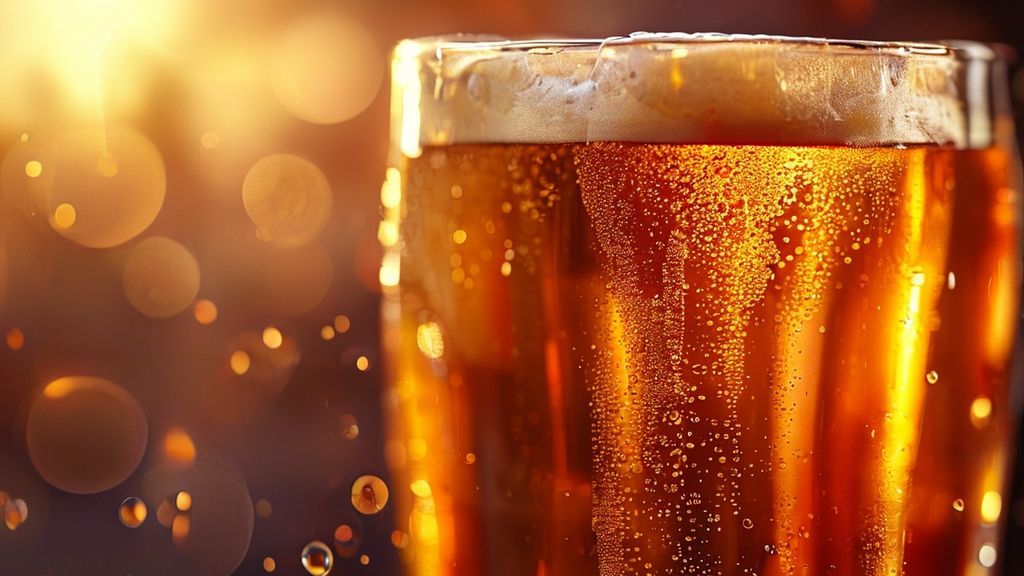
The American Pale Ale (APA) is a cornerstone of modern craft brewing, defined by its vibrant hop aroma and flavor, balanced by a clean, supporting malt profile. Achieving its characteristic citrusy, piney, or floral notes requires precise hop timing and selection, coupled with a well-attenuating American ale yeast and a controlled fermentation environment to showcase these volatile compounds.
| Metric | Target Value | Notes |
|---|---|---|
| Original Gravity (OG) | 1.050 – 1.055 | Typical range for a balanced APA |
| Final Gravity (FG) | 1.010 – 1.014 | Dry finish, good attenuation |
| Alcohol by Volume (ABV) | 5.0% – 5.8% | Calculated from OG/FG |
| International Bitterness Units (IBU) | 30 – 45 | Noticeable hop bitterness, not harsh |
| Standard Reference Method (SRM) | 5 – 10 | Pale gold to light amber |
| Mash Temperature | 65.0°C – 67.0°C (149-152°F) | Ensures fermentable sugars and some body |
| Fermentation Temperature | 18.0°C – 20.0°C (64-68°F) | Clean ester profile, hop expression |
| Carbonation Volume | 2.2 – 2.6 volumes CO2 | Medium carbonation, refreshing |
When I first ventured into brewing American Pale Ales almost two decades ago, I made the classic mistake of underestimating the impact of water chemistry and hop selection. My early batches, while pleasant enough, lacked that definitive punch of citrus and pine, often finishing a bit flabby or with a muted hop character. I’d simply dump in whatever “American” hops I had on hand and call it a day, neglecting the critical role of alpha acid percentages, cohumulone levels, and specific hop varietal synergies. It took years of meticulous record-keeping, countless side-by-side experiments, and a deep dive into the specifics of isomerization kinetics and biotransformation to truly unlock the potential of this style. What I learned is that brewing an outstanding APA isn’t just about throwing hops at it; it’s about strategic additions and understanding the science behind each ingredient.
The Math Behind Your Masterpiece: APA Recipe Formulation
Crafting a balanced American Pale Ale starts long before you even fire up the kettle. It begins with precise calculations for your grist, hop schedule, and water profile. I’ve refined my approach over hundreds of batches, finding that adherence to these mathematical principles consistently yields superior results.
Grain Bill Breakdown (Target 20L / 5 US Gallons Final Volume)
| Ingredient | Weight (kg) | Percentage (%) | Notes |
|---|---|---|---|
| 2-Row Pale Malt | 4.50 kg | 88.2% | Foundation, fermentable sugars |
| Crystal Malt (Caramel 40L) | 0.40 kg | 7.8% | Color, subtle caramel sweetness, body |
| Munich Malt I | 0.20 kg | 3.9% | Adds depth, malt complexity, toasty notes |
| Total Malt Bill | 5.10 kg | 100% |
Hop Bitterness Calculation (IBU Estimation)
I rely on the Rager formula for practical IBU estimation, although many brewers use Tinseth. The key is consistency in your chosen method. For a 35 IBU target in 20L (5 gal) at 1.050 OG:
Rager IBU Formula:
IBUs = (Weight (oz) * %Alpha * Util%) / (Volume (gal) * Gravity_Factor)
Where: Util% = 18.11 + 13.86 * tanh((Boil Time (min) – 31.32) / 18.27)
Gravity_Factor = 1.000 + (OG – 1.050)/2
For example, if I’m using 28g (1 oz) of Magnum (14% AA) for 60 minutes in 20L (~5.28 gal) wort at 1.050 OG, the estimated bitterness contribution is:
- Boil Time = 60 min
- Util% = 18.11 + 13.86 * tanh((60 – 31.32) / 18.27) ≈ 28.5%
- Gravity_Factor = 1.000 + (1.050 – 1.050)/2 = 1.000
- IBU Contribution = (1 oz * 14% * 28.5%) / (5.28 gal * 1.000) ≈ 0.75 / 5.28 ≈ 14.2 IBUs
This shows why multiple hop additions are critical to hit a target IBU and layer hop character.
Water Profile Adjustments
For my APA, I target a clean, bright water profile that accentuates hops without harshness. I start with reverse osmosis (RO) water and build from there. My target ion concentrations for a 20L batch are:
| Ion | Target PPM | Typical Addition (per 20L) |
|---|---|---|
| Calcium (Ca²⁺) | 90-100 | 2g CaCl₂, 4g Gypsum |
| Magnesium (Mg²⁺) | 10-15 | (From malt) |
| Sulfate (SO₄²⁻) | 200-250 | 4g Gypsum |
| Chloride (Cl⁻) | 50-70 | 2g CaCl₂ |
| Bicarbonate (HCO₃⁻) | < 50 | (RO water) |
Aim for a mash pH between 5.2 and 5.4 at mash temperature (corrected for room temp to 5.0-5.2). This optimizes enzyme activity and ensures a clean run-off.
Step-by-Step Execution: Brewing My Signature APA
Here’s the detailed process I follow for a consistently excellent American Pale Ale, building on years of refinement and meticulous process control. This is the heart of what I share with the community at BrewMyBeer.online.
- Water Treatment: Begin with 25 liters (approx. 6.6 US gallons) of RO water. Add your calculated mineral additions (e.g., 2g CaCl₂, 4g Gypsum) and 5ml Lactic Acid (88%) to achieve your target mash pH. Heat to a strike temperature of 72°C (162°F) to hit the desired mash temp.
- Mash: Dough in your grist (5.10 kg total) and stabilize at a mash temperature of 66°C (151°F) for 60 minutes. This single infusion mash promotes adequate fermentability while leaving enough dextrins for body. Maintain temperature consistency throughout the hour.
- Mash Out: Raise mash temperature to 77°C (170°F) for 10 minutes to halt enzymatic activity and reduce wort viscosity for sparging efficiency.
- Recirculation & Sparge: Recirculate for 15-20 minutes until the wort runs clear. Then, sparge slowly with hot water at 77°C (170°F) until you collect 26 liters (approx. 6.8 US gallons) of pre-boil wort. Aim for a pre-boil gravity of around 1.042.
- Boil: Bring the wort to a vigorous boil. The total boil time will be 60 minutes.
- 60 minutes: Add 20g Magnum (14% AA) for bittering.
- 15 minutes: Add 20g Cascade (7% AA) and 20g Centennial (10% AA) for flavor. Add 1 tsp Irish Moss or other kettle finings.
- 5 minutes: Add 30g Cascade (7% AA) and 30g Centennial (10% AA) for late aroma.
- Flameout/Whirlpool (0 minutes): Turn off the heat. Add 50g Citra (12% AA) and 50g Mosaic (12.5% AA). Stir gently for 20 minutes while the wort cools. This whirlpool addition is crucial for maximizing hop aroma and flavor compounds without extracting excessive bitterness.
- Chilling: Chill the wort rapidly to 19°C (66°F) using an immersion or plate chiller. Rapid chilling helps prevent DMS formation and creates a good cold break.
- Transfer & Aerate: Transfer the chilled wort to your sanitized fermenter. Aerate thoroughly – either by shaking the fermenter vigorously for several minutes or by using an oxygen stone for 60 seconds at 1 LPM. My experience shows that proper oxygenation is critical for healthy yeast growth and attenuation.
- Yeast Pitching: Pitch a healthy, active yeast starter or rehydrated dry yeast. For this APA, I recommend Wyeast 1056 (American Ale) or SafAle US-05. Pitch 2 sachets of dry yeast or a 2L starter for 20L of wort. Target pitching temperature is 18.5°C (65°F).
- Fermentation: Ferment at a stable temperature of 19°C (66°F) for 7-10 days. Allow fermentation to complete fully. After 5 days, I often raise the temperature by 1-2°C to encourage full attenuation and diacetyl rest.
- Dry Hopping: Once fermentation shows signs of slowing (around day 5-7, when specific gravity has dropped significantly), perform a “biotransformation dry hop.” Add 100g Citra and 50g Mosaic directly to the fermenter. Allow to steep for 3-4 days. Alternatively, for a more intense late hop character, add dry hops after fermentation is complete, for 3 days at 18°C. I’ve found the early dry hop leads to a more integrated hop flavor.
- Cold Crash: After dry hopping, cold crash the fermenter to 1°C (34°F) for 2-3 days. This will help settle yeast and hop particulates, improving clarity.
- Packaging: Rack the clear beer carefully to a sanitized keg or prime and bottle. Target carbonation is 2.4 volumes CO2. For kegging, set your regulator to 10-12 PSI (0.7-0.8 bar) at 2°C (36°F) and allow 5-7 days to carbonate. For bottling, use 120g of dextrose (corn sugar) for 20L of beer, dissolved in boiling water, cooled, and mixed thoroughly before bottling. Condition bottles for at least 2 weeks at 20°C (68°F).
Troubleshooting: What Can Go Wrong and How I Fix It
Brewing is a science, but sometimes the variables conspire against you. Over my career, I’ve encountered almost every possible hiccup. Here’s how I typically approach common APA issues:
- Muted Hop Aroma/Flavor: This is a common one, especially for beginners. My first check is always hop freshness and storage. If hops are old or poorly stored, volatile compounds degrade. Secondly, re-evaluate your late and whirlpool hop additions. Are you adding enough? Are you chilling too fast before whirlpool, stripping off aroma? Try a longer whirlpool (20-30 min) at 80°C (176°F) or below to extract aromatics without too much bitterness. I’ve also found that adjusting my water profile to increase the sulfate:chloride ratio (e.g., 2.5:1 to 3:1) can make a significant difference in hop perception.
- Diacetyl (Buttery/Butterscotch Flavor): Often a sign of either an unhealthy fermentation or premature cold crashing. My fix: ensure proper yeast pitching rates, adequate oxygenation, and sufficient time at fermentation temperature (including a 1-2°C temperature bump towards the end) for the yeast to clean up diacetyl precursors. If I detect it post-fermentation, I’ll sometimes raise the beer temperature back to 20°C (68°F) for a few days to encourage yeast activity and cleanup, if viable yeast are still present.
- Grassy/Vegetal Off-Flavor: Usually related to dry hopping practices. Over-dry hopping, especially with leaf hops, or leaving dry hops in contact with the beer for too long (e.g., over 5-7 days) can lead to this. My solution is to limit dry hop contact time and, if using pellets, ensure they are fresh and correctly stored. Reducing the dry hop amount slightly if the issue persists is also an option.
- Stuck Fermentation/Too High FG: My initial checks are always temperature control and pitching rate. Was the yeast healthy? Was the temperature stable? Did I mash too high, creating too many unfermentable sugars? If it’s truly stuck (no gravity change for 3+ days), I’ll try gently rousing the yeast, raising the temperature by a few degrees, or in rare cases, pitching a second dose of fresh, active yeast. Checking mash pH is also crucial; an overly high pH can impair enzyme function.
- Lack of Clarity (Haze): APAs aren’t typically hazy, though modern preferences vary. If you’re aiming for clear, ensure a good cold crash, use fining agents like Irish Moss or whirlfloc in the boil, and consider gelatin fining in the fermenter post-fermentation. My rule of thumb is 1/2 tsp Irish Moss for 20L at 15 minutes left in the boil, followed by a thorough cold crash. Filtration is an option for commercial brewers, but for homebrewing, careful cold crashing and fining usually suffice.
Sensory Analysis: What an Outstanding APA Should Deliver
After perfecting this recipe over the years, I can tell you exactly what I look for in a truly exceptional American Pale Ale. It’s a symphony of balanced characteristics, a testament to thoughtful brewing.
- Appearance: My ideal APA pours a brilliant, clear golden to light amber color (SRM 5-10). It should boast a persistent, dense white head with fine bubbles, leaving intricate lacing on the glass as you drink. Slight haze from heavy dry hopping is acceptable, but not cloudy.
- Aroma: This is where the APA truly shines. Expect a prominent, fresh hop aroma dominated by citrus (grapefruit, orange, lemon), pine, and often floral or tropical fruit notes, depending on hop selection (Citra, Mosaic, Cascade, Centennial are my staples). It should be clean, free of harsh alcohol or yeast esters. There should be a subtle, clean malt background, perhaps a hint of bready or caramel sweetness, but never overpowering the hops.
- Mouthfeel: It should feel medium-light to medium-bodied, with a crisp, refreshing carbonation (2.2-2.6 volumes CO2). A touch of creaminess from the malt is welcome, but it finishes dry and never cloying. There should be no astringency or harshness from hops or excessive tannins.
- Flavor: The flavor mirrors the aroma, with a strong hop presence that is both bittering and flavorful. Expect a clean, moderate to high hop bitterness that provides balance but doesn’t linger harshly. Hop flavors of grapefruit, orange peel, pine, and sometimes passionfruit or berry should be upfront. The malt character provides a subtle backbone of bready, biscuity, or light caramel notes, preventing the beer from being one-dimensional. The finish is dry, inviting another sip.
Frequently Asked Questions About American Pale Ale
How important is yeast choice for an APA?
Extremely important. I’ve experimented with dozens of strains, and I’ve found that a clean fermenting, attenuative American ale yeast like Wyeast 1056 or SafAle US-05 is paramount. These strains produce a neutral ester profile, allowing the hop character to dominate. Other strains might produce too many fruity esters that clash with or mask the hop profile. My personal preference leans slightly towards US-05 for its consistent performance and reliable flocculation, but 1056 is a close second for its slightly fruitier, but still clean, character that can complement certain hop combinations. Consistent yeast health, proper pitching rates, and temperature control are non-negotiable for achieving the desired clean fermentation.
Can I use different hop varieties for an APA, and what are some good combinations?
Absolutely, hop variety is where you truly personalize your APA! While Cascade and Centennial are classic for their citrus and pine, I’ve had fantastic results with combinations like Citra, Mosaic, and Simcoe for a more tropical and stone fruit forward profile. Amarillo, Ahtanum, and Columbus also make excellent choices. The key is to understand their individual contributions and how they interact. For instance, pairing a high alpha acid hop for bittering (e.g., Magnum, Warrior) with a blend of pungent aroma/flavor hops (e.g., a 2:1 ratio of Citra to Mosaic) for late and dry hopping usually works wonders. Don’t be afraid to experiment, but always start with small, controlled batches. You can find more detailed hop pairing suggestions on BrewMyBeer.online.
What’s the optimal dry hopping strategy for maximum aroma without vegetal notes?
This is a perpetual debate among brewers, and my strategy has evolved significantly. I’ve found the “biotransformation dry hop” during active fermentation (typically day 3-5, after the krausen has started to fall but before gravity stabilizes) yields a more integrated, complex hop aroma and reduces vegetal notes compared to post-fermentation dry hopping. My preferred method is 3-4 days of contact time, often followed by a brief cold crash. Using hop pellets over whole cones can also reduce vegetal character due to their increased surface area and lower chlorophyll content. Aggressively removing yeast and hop debris after dry hopping, either through cold crashing or careful racking, is also crucial. I generally target 5-8g/L (1.3-2 oz/gal) for a solid aroma without overdoing it for a standard APA.