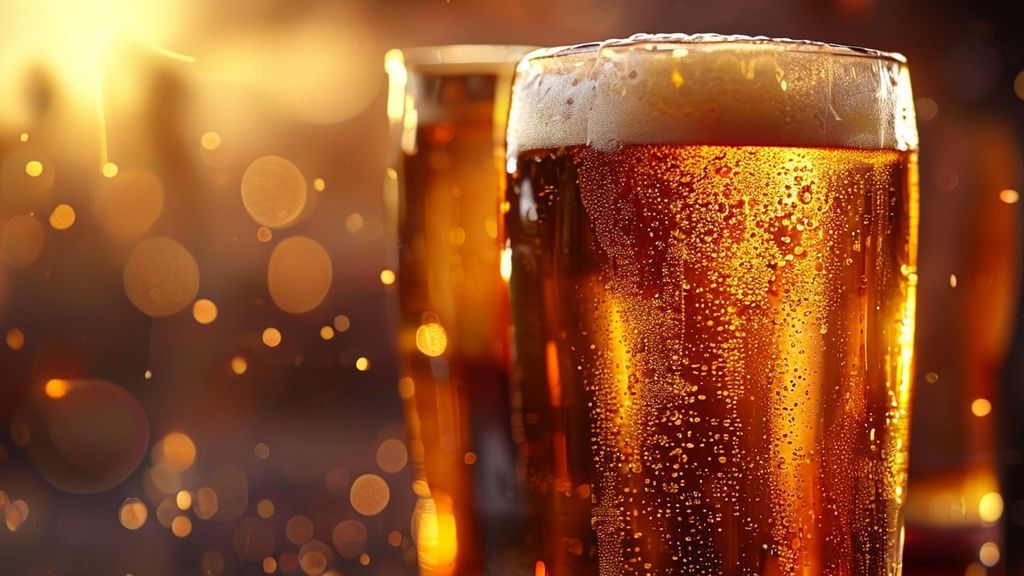
Brewing an authentic Bohemian Pilsner demands unwavering precision in water chemistry, a traditional triple decoction mash, and meticulous lagering. I find that targeting an Original Gravity (OG) of 1.052, with Saaz hops providing 40 IBU, and fermenting slowly at 10°C, yields that iconic crisp, spicy, and bready character with brilliant clarity.
| Metric | Target Range | My Typical Result |
|---|---|---|
| Original Gravity (OG) | 1.048 – 1.056 | 1.052 |
| Final Gravity (FG) | 1.010 – 1.014 | 1.012 |
| Alcohol By Volume (ABV) | 4.5% – 5.5% | 5.2% |
| International Bitterness Units (IBU) | 35 – 45 | 40 |
| Standard Reference Method (SRM) | 3 – 5 | 4 |
| Mash Temperature Regime | Multi-step/Decoction | Protein Rest: 50°C, Saccharification Rests: 62°C & 72°C |
| Fermentation Temperature | 9°C – 12°C | 10°C |
| Carbonation (Volumes of CO2) | 2.4 – 2.8 | 2.6 |
The Brewer’s Hook: Chasing Clarity and Complexity
When I first set out to brew a Bohemian Pilsner, I made the classic mistake of underestimating the subtle power of a simple recipe. “It’s just Pilsner malt and Saaz hops,” I thought, “how hard can it be?” My first batch was good, sure, but it lacked that unmistakable depth, that bready richness, and that brilliant, almost diamond-like clarity. It took me several more attempts, poring over historical texts and experimenting with every variable, to truly understand that crafting this beer isn’t about exotic ingredients, but about meticulous process control and respect for tradition. It taught me patience and the profound impact of water chemistry. That journey shaped me into the brewer I am today, pushing me to refine every single step, from the initial mash to the final lagering period.
The Math Behind My Bohemian Pilsner Recipe
Achieving consistency and quality in a Bohemian Pilsner requires precise calculations. I rely on these formulas and targets for every batch to ensure my results are predictable and repeatable. This isn’t guesswork; it’s science applied to tradition.
Grain Bill and Extract Potential
My go-to grain bill for a 20-liter batch (assuming 75% brewhouse efficiency) focuses heavily on quality Pilsner malt. This simplicity demands that every component shines.
| Grain Type | Quantity (kg) | Percentage (%) | Predicted Extract (L°/kg) |
|---|---|---|---|
| Weyermann Pilsner Malt | 4.8 kg | 96% | 305 |
| Acidulated Malt | 0.2 kg | 4% | 280 |
| Total | 5.0 kg | 100% | N/A |
To calculate predicted OG: (Total Grain Weight * Average Predicted Extract * Brewhouse Efficiency) / Batch Volume in Liters.
For my batch: (5.0 kg * 304 L°/kg * 0.75) / 20 L = 57 L°. Add this to 1000 to get an OG of 1.057. Adjusting grain slightly for a target 1.052.
Hop Schedule and IBU Calculation
I use the Rager formula for IBU calculation, which I find reliable for homebrewing. All my hops are premium Saaz with an alpha acid rating typically between 3.0-4.5%.
| Hop Addition | Quantity (g) | Alpha Acid % (Typical) | Boil Time (min) | IBU Contribution (Approx.) |
|---|---|---|---|---|
| Bittering (Saaz) | 40g | 3.5% | 90 | 30 |
| Flavor (Saaz) | 25g | 3.5% | 20 | 7 |
| Aroma (Saaz) | 25g | 3.5% | 5 | 3 |
| Total IBU | N/A | N/A | N/A | ~40 |
IBU = (Hop Weight (g) * Alpha Acid % * Utilization %) / (Volume (L) * Gravity Adjustment Factor) * 10. Utilization varies with boil time and wort gravity. I use software for precise calculations, but these are my targets.
Water Profile Targets
Authentic Bohemian Pilsners are brewed with soft water. My target profile, starting with RO water, helps me achieve the right balance for malt expression and hop bitterness. I always start with reverse osmosis (RO) water to have a blank slate.
| Mineral | Target (ppm) | My Addition for 25L (g) |
|---|---|---|
| Calcium (Ca) | 40-60 | 1.5g CaCl₂ + 1.0g CaSO₄ |
| Magnesium (Mg) | 5-10 | 0.5g MgSO₄ |
| Sodium (Na) | 5-15 | None (if already present in base water) |
| Sulfate (SO₄) | 50-70 | 1.0g CaSO₄ + 0.5g MgSO₄ |
| Chloride (Cl) | 60-80 | 1.5g CaCl₂ |
| Bicarbonate (HCO₃) | 0-20 | None (aim for residual alkalinity near 0) |
Mash pH target: **5.2 – 5.4** at mash temperature. I use lactic acid if needed to dial this in precisely, typically adding **2-3 mL** during mash-in with RO water and the prescribed minerals.
Step-by-Step Execution: My Proven Process
Brewing a Bohemian Pilsner is a commitment. It’s a journey through multiple temperature rests, a rolling boil, and a long, patient lagering. Here’s how I do it for a 20-liter batch.
1. Water Treatment & Mash-In (The Foundation)
- Start with **25 liters** of RO water in your mash tun. Adjust with minerals as per my target water profile above. Add **2 mL** of 88% Lactic Acid.
- Heat your strike water to **55°C**.
- Carefully dough in your **5.0 kg** of milled malt, stirring thoroughly to prevent dough balls. Target a mash thickness of **3 L/kg**.
- Check your mash pH after 10 minutes. Adjust with more lactic acid if needed to reach **5.2**.
2. The Triple Decoction Mash (The Heartbeat of the Beer)
This is where the magic happens. A triple decoction builds layers of malt complexity and ensures full starch conversion.
- Step 1: Protein Rest (50°C for 20 minutes)
- Hold the entire mash at **50°C** for **20 minutes**. This aids in protein breakdown, head retention, and clarity.
- After the rest, pull approximately **1/3** of the mash (the thickest part, focusing on grain) into a separate vessel. This will be your first decoction.
- Step 2: First Decoction & Saccharification Rest 1 (62°C)
- Slowly heat the pulled decoction mash. Stir constantly to prevent scorching.
- Bring it to a boil for **10-15 minutes**. This caramelizes some sugars and intensifies malt flavor.
- Return the boiling decoction mash to the main mash. Stir thoroughly. This should raise the main mash temperature to **62°C**.
- Hold the main mash at **62°C** for **40 minutes**. This is the first saccharification rest, primarily for beta-amylase activity, producing fermentable sugars.
- Pull approximately **1/3** of the mash again for your second decoction.
- Step 3: Second Decoction & Saccharification Rest 2 (72°C)
- Repeat the heating and boiling process with the second decoction for **10-15 minutes**.
- Return the boiling decoction to the main mash, stirring. This should raise the main mash temperature to **72°C**.
- Hold the main mash at **72°C** for **30 minutes**. This is the second saccharification rest, activating alpha-amylase for more complex, unfermentable sugars, contributing to body.
- Pull the final **1/3** of the mash for your third decoction.
- Step 4: Third Decoction & Mash Out (78°C)
- Boil the third decoction for **10-15 minutes**.
- Return it to the main mash, bringing the temperature up to **78°C**.
- Hold at **78°C** for **10 minutes**. This is your mash-out, halting enzymatic activity and reducing wort viscosity for easier lautering.
3. Lautering & Sparging (Extracting the Goodness)
- Recirculate the wort until it runs clear, typically **10-15 minutes**.
- Slowly run off the wort into your boil kettle. My flow rate usually targets **1-1.5 liters per minute**.
- Begin sparging with pre-heated water at **78°C**. I collect approximately **23-25 liters** of pre-boil wort. Do not let the grain bed run dry.
4. The Boil (Sterilization & Hop Additions)
- Bring your wort to a rolling boil. Skim off any hot break that forms during the initial boil.
- Boil for a total of **90 minutes**. This lengthy boil helps drive off DMS precursors.
- At **90 minutes**, add **40g** of Saaz hops for bittering.
- At **20 minutes**, add **25g** of Saaz hops for flavor.
- At **5 minutes**, add **25g** of Saaz hops for aroma.
- At **10 minutes** before flameout, add a wort chiller.
- At flameout, I often do a 10-minute whirlpool to further enhance hop aroma before chilling.
5. Chilling & Fermentation (The Transformation)
- Rapidly chill the wort to **10°C**. Speed is critical to avoid DMS formation and cold-side oxidation.
- Transfer the chilled wort to a sanitized fermenter. Aerate thoroughly – I typically use an oxygen stone for **60 seconds** at 1 LPM.
- Pitch a healthy yeast starter of 34/70 or a traditional Czech Pilsner strain. I aim for a pitching rate of **1.5 million cells/mL/°P**, which for this OG is about **300 billion cells**. This often means making a 2-liter starter.
- Ferment at a controlled temperature of **10°C**. Primary fermentation usually lasts **7-10 days**.
- Once gravity stabilizes around **1.018 – 1.020**, raise the temperature to **16°C** for a **3-day** diacetyl rest. This ensures complete diacetyl reabsorption.
- After the diacetyl rest, crash cool to **0-2°C**.
6. Lagering & Packaging (The Refinement)
- Lager the beer at **0-2°C** for a minimum of **4-6 weeks**. Patience here is paramount for clarity and flavor mellowing. I’ve often extended this to 8 weeks for exceptional results.
- Rack the beer off the yeast cake to a sanitized serving keg.
- Carbonate to **2.6 volumes of CO2** at serving temperature. This usually takes about **7-10 days** at cold temperatures.
- For bottling, prime with **6-7 grams of dextrose per liter** and allow **2-3 weeks** at room temperature for carbonation, followed by at least another week or two in the fridge for conditioning.
Remember, consistency in temperature control and sanitation are non-negotiable for producing world-class lagers. Visit BrewMyBeer.online for more in-depth guides on temperature control strategies.
Troubleshooting: What Can Go Wrong
Even with meticulous planning, brewing can throw curveballs. Here’s what I’ve encountered with Bohemian Pilsners:
- Hazy Beer (Post-Fermentation): If your Pilsner isn’t brilliantly clear after lagering, it’s often due to insufficient lagering time, poor cold crashing, or protein haze from inadequate protein rest or too much protein in the malt. I also check my water chemistry; excessive calcium or protein can sometimes contribute. I extend lagering, or if it’s a persistent issue, consider using a fining agent like gelatin after fermentation.
- Diacetyl Bomb: A buttery or butterscotch off-flavor is the bane of any lager brewer. This typically indicates an incomplete diacetyl rest. My solution: always perform a forced diacetyl test before crashing. If it’s present, extend the diacetyl rest at **16°C** for another 2-3 days. Underpitching yeast can also lead to this.
- Grassy/Vegetal Off-Flavors: This can come from old hops or oxidation during transfer. Always use fresh hops, stored properly. Minimize splashing during all transfers, especially cold-side.
- Sour/Tart Notes: Unless intentional, this suggests a bacterial infection. Rigorous sanitation is the only cure. Every surface, every tube, every piece of equipment that touches cold wort or beer must be impeccably sanitized.
- Thin Body/Dry Finish: If the beer feels thin, it might be due to a too-long protein rest (over-attenuation) or a too-low saccharification temperature. I ensure my 72°C rest is sufficient to create dextrins for body.
- DMS (Dimethyl Sulfide) Off-Flavor: A cooked corn or vegetable aroma/flavor. For Pilsners, this is a particular concern due to the light Pilsner malt. My long **90-minute boil** and rapid chilling are designed to prevent this. If I taste DMS, it usually means I didn’t boil hard enough, boiled for too short a time, or chilled too slowly.
Sensory Analysis: The Reward of Patience
After weeks of careful brewing and lagering, the moment of truth arrives. A well-executed Bohemian Pilsner is a sensory masterpiece.
- Appearance: Pouring it into a proper Pilsner glass, I look for a brilliant, clear, radiant golden hue. It should have a robust, dense, and creamy white head that persists and leaves beautiful lacing as I drink. Any hint of haze, and I know I have room for improvement.
- Aroma: The first whiff should be an inviting symphony. I detect the unmistakable spicy, floral, and slightly herbal notes from generous Saaz hops. Underlying this is a delicate bready, cracker-like malt aroma, sometimes with a subtle honeyed sweetness. A very faint sulfur note, often described as “matchstick” or “flinty,” can be present from healthy lager yeast and is considered authentic, but it should never be overpowering.
- Mouthfeel: It should feel medium-light to medium-bodied, exquisitely smooth, and have a lively, spritzy carbonation that cleanses the palate. The finish is crisp and dry, inviting another sip. There should be no cloying sweetness or harsh astringency.
- Flavor: The flavor mirrors the aroma, delivering a balanced blend of bready, slightly sweet Pilsner malt complexity and a pronounced, yet refined, hop bitterness. The Saaz character truly shines, offering spicy and floral notes that linger pleasantly. The overall impression is clean, refreshing, and profoundly satisfying. It finishes dry, often with a lingering bitterness that encourages the next sip. This is what I strive for every time I brew this classic, and why I created BrewMyBeer.online to share these insights.
What is the primary benefit of a triple decoction mash for Bohemian Pilsner?
The triple decoction mash is fundamental to a traditional Bohemian Pilsner primarily because it enhances malt complexity and creates a rich, bready flavor profile that is difficult to achieve with a single infusion. The process involves removing a portion of the mash, boiling it, and returning it, which caramelizes sugars, extracts more robust malt flavors, and breaks down starches more effectively, leading to higher extract efficiency and a fuller body while still achieving a dry finish. It also promotes the Maillard reactions responsible for browning and depth of color, contributing to the beer’s characteristic golden hue and head retention.
What’s the ideal lagering time for an authentic Bohemian Pilsner?
For an authentic Bohemian Pilsner, I recommend a minimum lagering time of **4-6 weeks** at temperatures between **0-2°C**. While some brewers may push it to 8 weeks or even longer, this period allows sufficient time for the yeast to drop out, the beer to fully clarify, and importantly, for harsh flavors to mellow and subtle malt and hop characteristics to integrate. Patience during lagering is critical for achieving the characteristic crispness, smoothness, and refined flavor profile that defines the style.
Can I brew a Bohemian Pilsner with a single infusion mash, and what are the trade-offs?
Yes, you can technically brew a “Pilsner-style” beer with a single infusion mash, but it will not achieve the same depth and authenticity as one brewed with a traditional decoction. The primary trade-off is the loss of the complex malt character and unique mouthfeel that the decoction process imparts. A single infusion mash, typically held around **65-68°C**, will still convert starches to fermentable sugars, but it won’t generate the Maillard reactions or the specific enzymatic activity that a multi-step decoction mash does. The result will likely be a lighter-bodied, less malty, and potentially less brilliant beer, lacking the traditional bready, rich character that defines a true Bohemian Pilsner.