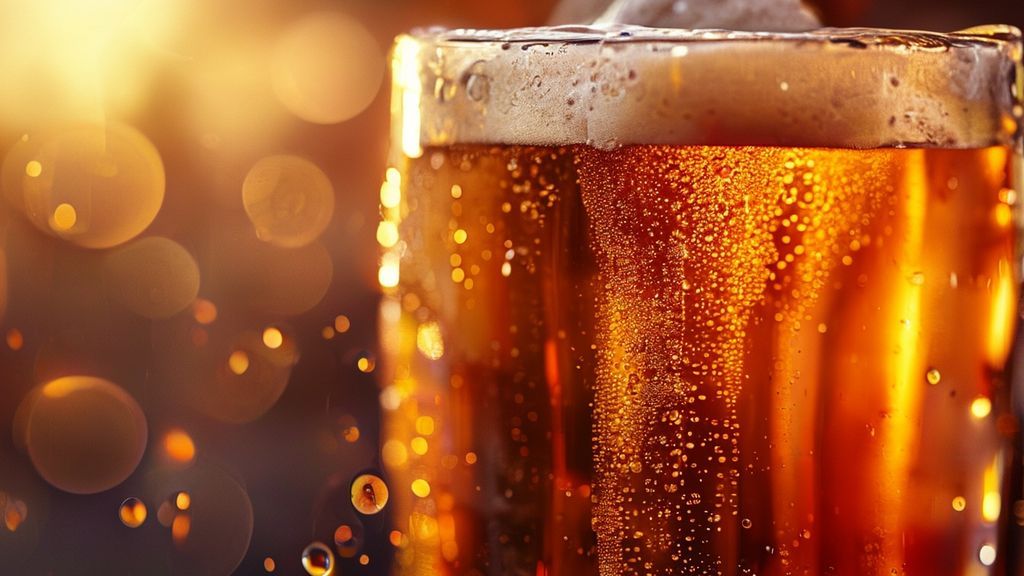
The Dortmunder Export, a formidable yet elegantly balanced pale lager, originated in Dortmund, Germany, as a beer robust enough for export. It showcases a firm hop bitterness, a rich malty backbone often featuring bready and biscuity notes, and a characteristic mineral dryness from its historical high-sulfate water profile. My method focuses on precise temperature control and tailored water chemistry to achieve its signature crispness and clean finish.
| Metric | Target Range (My Brews) | My Current Recipe Target |
|---|---|---|
| Original Gravity (OG) | 1.048 – 1.056 | 1.054 |
| Final Gravity (FG) | 1.010 – 1.015 | 1.012 |
| Alcohol by Volume (ABV) | 4.8% – 6.0% | 5.5% |
| Bitterness (IBU) | 23 – 30 | 28 |
| Color (SRM) | 4 – 7 | 5.5 |
| Fermentation Temperature | 10°C – 13°C (50°F – 55°F) | 11°C (52°F) |
| Carbonation | 2.5 – 2.7 volumes CO2 | 2.6 volumes CO2 |
The Brewer’s Hook: Chasing Dortmund’s Soul
When I first ventured into brewing Dortmunder Export, I made the classic mistake of focusing solely on the malt and hops, treating it like any other pale lager. My early batches were good, don’t get me wrong, but they lacked that distinctive crispness, that underlying mineral complexity that makes a true Export stand apart. It took me several attempts, meticulously studying historical water profiles and adjusting my approach, to truly capture the soul of Dortmund in a glass. I learned that this style isn’t just about German ingredients; it’s about harmonizing those ingredients with a specific mineral character, a firm bitterness, and impeccable fermentation control. My journey taught me that water chemistry isn’t just an option for advanced brewers; it’s fundamental for historical styles like this one. It’s a critical component for achieving that dry, yet full-bodied profile without a cloying finish.
The Math: Engineering Your Export
Crafting a Dortmunder Export is a precise act of balancing malt, hops, and water. Here’s how I break down the numbers to hit my targets, often referencing my detailed guides on BrewMyBeer.online for deeper dives into specific calculations.
Grain Bill Calculation (for a 19L / 5-gallon batch)
My typical grain bill emphasizes high-quality German Pilsner malt, with a touch of Vienna or Munich malt for a subtle complexity without impacting color significantly.
| Grain Type | Weight (kg) | Weight (lb) | Percentage (%) | Notes |
|---|---|---|---|---|
| German Pilsner Malt | 4.5 kg | 9.9 lb | 90% | Provides fermentable sugars, light color, subtle bready notes. |
| German Vienna Malt | 0.5 kg | 1.1 lb | 10% | Adds depth, biscuity character, and a touch of color. |
| Total | 5.0 kg | 11.0 lb | 100% |
Hop Schedule & IBU Calculation (Target: 28 IBU)
I aim for a balanced bitterness, firm but not harsh, using classic German noble hops. The formula for IBU is complex, involving hop alpha acid percentage, utilization, and wort gravity. My process often involves a simple estimation for homebrew scale:
IBU ≈ (Hop Weight [g] * Alpha Acid [%] * Utilization Factor) / (Boil Volume [L] * Gravity Factor)
While software does this for me, understanding the variables is key. For this recipe, I target a ~0.55-0.60 BU:GU ratio for balance.
| Hop Variety | Alpha Acid (%) | Amount (g) | Boil Time (min) | Contribution (approx. IBU) |
|---|---|---|---|---|
| Hallertau Magnum | 12% | 18 g | 60 min | ~24 IBU |
| Hallertauer Mittelfrüh | 4% | 28 g | 15 min | ~4 IBU |
| Tettnanger | 4.5% | 28 g | 0 min (Whirlpool) | ~1 IBU (aroma/flavor) |
| Total Estimated IBU | ~29 IBU |
Water Chemistry Adjustments (Targeting Dortmund Profile)
This is crucial. Dortmund water is known for its high sulfate content, which accentuates hop bitterness and gives a crisp, dry finish. I typically start with reverse osmosis (RO) water to have a blank slate, then build the profile.
- Calcium: 100-150 ppm (promotes yeast health, protein coagulation, mash pH stability)
- Magnesium: 10-20 ppm (enzyme function, yeast nutrient)
- Sulfate: 150-250 ppm (enhances hop bitterness, dry finish)
- Chloride: 50-70 ppm (enhances malt sweetness, body)
- Bicarbonate: <50 ppm (minimal; keeps mash pH low)
- Mash pH Target: 5.2 – 5.4 at mash temperature.
For a 19L batch with RO water, I’d typically add:
- Gypsum (Calcium Sulfate): 5-7 grams (provides Ca and SO4)
- Calcium Chloride: 1-2 grams (provides Ca and Cl)
- Epsom Salt (Magnesium Sulfate): 1-2 grams (provides Mg and SO4)
Always test your mash pH and adjust with lactic acid if needed to hit the 5.2-5.4 range. My experience shows that hitting this mash pH is vital for optimal enzyme activity and a clean, crisp final product.
Step-by-Step Execution: My Dortmunder Export Method
- Mill the Grains: Achieve a consistent crush that leaves husks largely intact. This ensures good lautering.
- Strike Water & Water Chemistry: Heat **20 Liters (5.3 US Gallons)** of brewing water to **71°C (160°F)**. Add your calculated water salts (Gypsum, Calcium Chloride, Epsom Salt) and stir thoroughly.
- Mash In: Slowly add the milled grains to the strike water, stirring continuously to prevent dough balls. Aim for a mash temperature of **65°C (149°F)**. My target mash thickness is about **3 L/kg (1.4 qt/lb)**.
- Saccharification Rest: Maintain **65°C (149°F)** for **60 minutes**. This temperature favors beta-amylase activity, producing a highly fermentable wort for a crisp, dry finish. Check your mash pH after 10-15 minutes; adjust if it falls outside 5.2-5.4.
- Mash Out: Raise mash temperature to **76°C (170°F)** for **10 minutes**. This halts enzyme activity and reduces wort viscosity for better sparging.
- Recirculate & Lauter: Slowly recirculate wort until it runs clear. Then, slowly open your valve to begin collecting wort. Aim for a collection rate of about **1 L/minute (0.26 gal/min)** to ensure good bed compaction and extract efficiency.
- Sparge: Begin sparging with water heated to **77°C (171°F)**. Collect a total of **23-24 Liters (6.0-6.3 US Gallons)** of pre-boil wort. Monitor specific gravity; I stop sparging when runnings drop below **1.010 SG** to avoid tannin extraction.
- The Boil: Bring wort to a rolling boil for **90 minutes**.
- At **60 minutes** before flameout: Add **18g Hallertau Magnum** (12% AA) for bittering.
- At **15 minutes** before flameout: Add **28g Hallertauer Mittelfrüh** (4% AA) for flavor.
- At **0 minutes** (Flameout/Whirlpool): Add **28g Tettnanger** (4.5% AA) for aroma. Whirlpool for **20 minutes** at **80°C (176°F)** to enhance hop aroma and clarity.
- Chilling: Rapidly chill the wort to **10°C (50°F)**. Use an immersion chiller or plate chiller. Quick chilling helps prevent DMS formation and creates a good cold break.
- Aeration & Pitching: Aerate the wort thoroughly with pure oxygen or filtered air for 60 seconds. Pitch **2 packets (22g) of a clean German Lager yeast** (e.g., Saflager W-34/70, Wyeast 2124, White Labs WLP830) rehydrated per manufacturer’s instructions. Ensure a high pitch rate: roughly **1 million cells/mL/°P**.
- Fermentation: Ferment at a cool **11°C (52°F)** for **7-10 days**. Maintain consistent temperature.
- Diacetyl Rest: After active fermentation subsides (around 1.018-1.020 SG), raise temperature to **16°C (61°F)** for **2-3 days**. This allows the yeast to clean up any diacetyl precursors.
- Crash Cool: Reduce temperature to **0-2°C (32-36°F)** for **24-48 hours** to drop yeast and proteins.
- Lagering: Transfer to a clean keg or secondary fermenter and lager at **-1°C to 1°C (30-34°F)** for **4-6 weeks**. This is crucial for flavor maturation, smoothing harsh edges, and achieving brilliant clarity.
- Carbonation: Force carbonate to **2.6 volumes CO2** at 2°C, which is typically around 12-13 PSI.
- Packaging: Bottle or keg. Always ensure sanitation is paramount during packaging to prevent contamination.
Troubleshooting: What Can Go Wrong and My Fixes
Even with careful planning, brewing a Dortmunder Export can present challenges. Here are a few I’ve encountered and how I learned to tackle them:
- Hazy Beer: If your Export isn’t brilliantly clear after lagering, it’s often a chill haze issue or insufficient lagering time.
- My Fix: Extend lagering by an extra 2-3 weeks at near-freezing temperatures. Consider using fining agents like Biofine Clear or gelatin during the last week of lagering. Ensure your cold break was strong during chilling.
- Diacetyl (Buttery/Butterscotch Flavor): This is a classic lager off-flavor. It often indicates insufficient diacetyl rest.
- My Fix: My initial mistake was rushing the diacetyl rest. Now, I always measure gravity before raising the temperature. Ensure fermentation is 70-80% complete before raising to **16°C (61°F)** and hold for a full 2-3 days. If it’s already in the bottle/keg, sometimes extended warm conditioning (weeks at room temp) can help, but it’s best to prevent it.
- Thin Body, Lack of Malt Presence: If your beer tastes watery or lacks the characteristic bready notes.
- My Fix: Review your mash temperature. Mashing too low (below **65°C / 149°F**) can lead to over-attenuation. Also, ensure your grain bill includes enough Vienna or Munich malt (my 10% is a good starting point). Water chemistry also plays a role; too much sulfate and not enough chloride can strip body.
- Harsh or Astringent Bitterness: This can ruin an otherwise great lager.
- My Fix: Over-sparging is a common culprit. I now stop sparging when my runnings hit **1.010 SG**. Also, check your mash pH; a high mash pH (above 5.5) can extract tannins. Using too many high-alpha acid hops or hops with poor quality can also contribute.
Sensory Analysis: Decoding the Dortmunder Export
When I pour a properly brewed Dortmunder Export, I expect a specific experience. It’s a testament to precision and patience.
- Appearance: I look for brilliant, crystalline clarity. The color should be a radiant deep gold, inviting and almost shimmering. It should support a dense, white, rocky head with excellent retention, leaving intricate lacing down the glass. This is the visual signature of a well-crafted lager.
- Aroma: My first sniff usually reveals a sophisticated interplay. I pick up a clean, bready-to-biscuity malt aroma from the Pilsner and Vienna malts, balanced by a distinct noble hop character – often floral, spicy, or slightly herbaceous. There should be no noticeable fruity esters or diacetyl. A faint, clean sulfur note is acceptable and can even enhance the perception of crispness.
- Mouthfeel: This is where the Dortmund water profile truly shines. I expect a medium-bodied beer that feels substantial but never heavy. It has a high carbonation level (my target **2.6 volumes CO2**) which contributes to a refreshing, effervescent prickle on the tongue. The finish is remarkably dry and crisp, with a pronounced mineral character that leaves my palate refreshed and ready for the next sip. No stickiness, no cloying sweetness.
- Flavor: The flavor mirrors the aroma but with amplified impact. I taste a solid malt foundation – sweet, but not sugary, often with notes of fresh bread crust or subtle toasted biscuit. This is quickly met by a firm, assertive hop bitterness that lasts through the palate but remains clean, never harsh. The noble hop flavor is present but not dominant, providing spicy or floral nuances. The mineral dryness is key here, contributing significantly to its drinkability and unique character. It’s a beer that satisfies with its strength yet refreshes with its precision.
What’s the ideal serving temperature for Dortmunder Export?
I find the optimal serving temperature for a Dortmunder Export is between **7°C and 10°C (45°F and 50°F)**. Serving it too cold can mute the subtle malt complexity and noble hop aromatics, while serving it too warm can make the bitterness seem harsher and reduce its refreshing crispness. This range allows the full spectrum of its balanced flavors and aromas to express themselves beautifully.
Can I brew Dortmunder Export with an ale yeast?
While you *can* technically ferment any wort with ale yeast, the resulting beer would not be a Dortmunder Export. The defining characteristics of this style, particularly its clean fermentation profile, crispness, and lack of esters, are largely thanks to a quality lager yeast fermented at cold temperatures. Using ale yeast would produce a beer with fruity esters and a different mouthfeel, fundamentally changing its style and profile. My advice: stick to a clean German lager yeast for authenticity. For more detailed yeast selection, check out my articles on BrewMyBeer.online.
How important is lagering for this style?
Lagering is absolutely critical for Dortmunder Export. My experience has shown that a minimum of **4-6 weeks** at near-freezing temperatures is necessary. This extended cold conditioning is not just for clarity; it’s essential for the yeast to clean up any remaining off-flavors (like diacetyl or acetaldehyde), to smooth out any rough edges, and to allow the malt and hop flavors to meld into a cohesive, elegant profile. Rushing this step will result in a beer that lacks the polished, refined character this style demands.