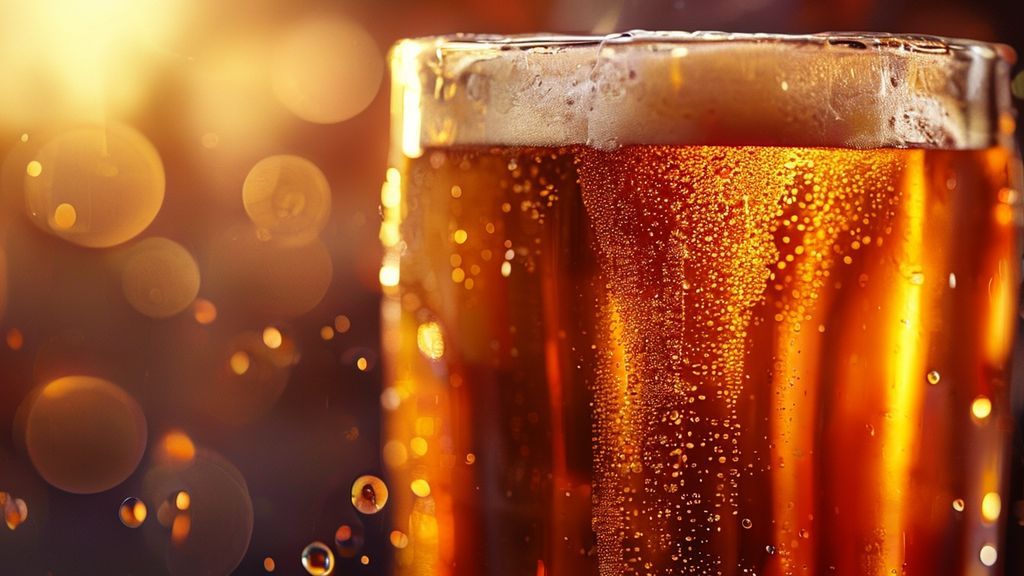
The English India Pale Ale (IPA) is a testament to brewing balance, showcasing a nuanced interplay between biscuity malt sweetness, pronounced earthy and floral hop character from traditional varietals like Fuggles and Goldings, and a distinctive ester profile from classic English ale yeast. My approach focuses on precision in water chemistry, mash temperatures, and hop timing to achieve its signature amber hue, moderate bitterness, and surprisingly drinkable finish.
| Metric | Target Value | My Typical Range |
|---|---|---|
| Original Gravity (OG) | 1.050 – 1.075 | 1.058 – 1.065 |
| Final Gravity (FG) | 1.010 – 1.018 | 1.012 – 1.016 |
| Alcohol by Volume (ABV) | 5.0% – 7.5% | 5.8% – 6.5% |
| International Bitterness Units (IBU) | 40 – 60 | 45 – 55 |
| Standard Reference Method (SRM) | 6 – 14 | 8 – 12 |
| Mash Temperature | 65°C – 68°C (149°F – 154°F) | **66.5°C (151.7°F)** |
| Fermentation Temperature | 18°C – 21°C (64°F – 70°F) | **19°C (66°F)** |
When I first ventured into brewing an English IPA two decades ago, I made a classic beginner’s mistake: I treated it like an American IPA, over-hopping late in the boil with modern, citrus-forward varieties and ignoring the critical role of water chemistry. The result was a beer that was harsh, lacked depth, and was profoundly unbalanced, a far cry from the nuanced, drinkable ale I envisioned. My journey with this style has been one of rigorous iteration, understanding that true English IPA elegance comes from restraint, specific hop varietals, and meticulous control over the mash and fermentation. It’s not about big, bold hop bombs; it’s about a delicate dance between malt, traditional hops, and a characterful yeast. Through years of refining my process, I’ve developed a deep appreciation for the historical roots and precise execution required to truly capture its essence, creating a brew that is both assertive and approachable.
The Math Behind My English IPA
Precision is paramount in brewing, and for my English IPA, I rely on a combination of calculated estimations and measured adjustments. This section breaks down the mathematical foundation for achieving the desired profile.
Grain Bill Composition (By Weight)
I find this blend provides the ideal balance of fermentable sugars, body, and a foundational biscuity character.
| Malt Type | Percentage (%) | My Rationale |
|---|---|---|
| English Pale Ale Malt (e.g., Maris Otter) | 88% – 92% | The backbone. Provides complex maltiness, bready/biscuity notes. Critical for character. |
| Crystal Malt (40-60L) | 6% – 10% | Contributes amber color, residual sweetness, and caramel/toffee notes, enhancing balance. |
| CaraPils/Dextrine Malt | 2% – 3% | For body and head retention without adding significant sweetness. My personal touch. |
Bitterness Calculation (IBU Estimation)
While software does the heavy lifting now, I understand the underlying formula. My goal is a firm, but not aggressive, bitterness. The standard formula I consider, simplified for practical purposes, focuses on Alpha Acid Units (AAUs) and utilization.
IBU = (Hop Alpha Acid % * Hop Weight in grams * Utilization %) / (Boil Volume in Liters * 10)
My target IBU is **45-55**. For a 20-liter batch, this often translates to:
- Bittering Addition (60 min): ~30g of Challenger (7.5% AA) provides ~35 IBU (approx. 30% utilization).
- Flavor Addition (20 min): ~15g of Goldings (5.0% AA) provides ~10 IBU (approx. 15% utilization).
- Aroma Addition (5 min): ~15g of Fuggles (4.5% AA) provides ~2 IBU (approx. 5% utilization) but significant aroma.
These values are empirical from my own system and serve as a baseline. I always adjust based on hop freshness and measured alpha acid content.
Alcohol by Volume (ABV) Formula
This is a straightforward calculation once your gravities are taken. I use the following formula:
ABV = (OG - FG) * 131.25
For example, if my OG is 1.060 and my FG is 1.012:
ABV = (1.060 - 1.012) * 131.25 = 0.048 * 131.25 = 6.3%
This formula is reliable for typical ale fermentations and provides the accurate alcohol content for my brew sheet.
Water Chemistry Target Profile (ppm)
For an English IPA, building a water profile that mimics the brewing centers of England, particularly Burton-on-Trent, is key to enhancing hop bitterness and character. I aim for these ranges:
| Mineral | Target Range (ppm) | Impact |
|---|---|---|
| Calcium (Ca²⁺) | 100 – 150 | Enzyme function, yeast flocculation, clarity. |
| Sulfate (SO₄²⁻) | 250 – 350 | Accentuates hop bitterness, dry finish. |
| Chloride (Cl⁻) | 50 – 100 | Enhances malt sweetness and body. Maintain SO₄:Cl ratio above 3:1. |
| Magnesium (Mg²⁺) | 10 – 20 | Yeast nutrient, flavor. |
My typical additions to Reverse Osmosis (RO) water for a 20L batch include **10g Gypsum (CaSO₄)** and **2g Calcium Chloride (CaCl₂)** to achieve my target profile, adjusting slightly based on the base water analysis.
Step-by-Step Execution: My English IPA Process
Brewing this style requires a methodical approach, focusing on control at every stage. Here’s my detailed process:
-
Malt Preparation:
- I start by crushing my selected malts (English Pale Ale, Crystal, CaraPils) to a fine-medium grind. My goal is to maximize surface area for enzymatic conversion without creating a stuck sparge.
- Ensure the grain is fresh. I’ve seen stale malt lead to muted flavors.
-
Water Treatment:
- I begin with filtered tap water or RO water. If using RO, I build my profile from scratch.
- Add **10g Gypsum** and **2g Calcium Chloride** to my strike water to achieve the target Ca²⁺, SO₄²⁻, and Cl⁻ levels.
- Adjust mash pH to **5.2 – 5.4** using lactic acid if needed, after grain addition. This is critical for enzyme activity and hop expression.
-
Mashing:
- Heat strike water to **71°C (160°F)** to hit a mash-in temperature of **66.5°C (151.7°F)**. I monitor this meticulously; a degree off can alter fermentability.
- Maintain the mash at **66.5°C** for **60 minutes**. This temperature promotes a good balance of alpha and beta amylase activity, yielding both fermentable sugars and sufficient dextrins for body.
- After 60 minutes, perform a starch conversion test with iodine. Once clear, raise the mash temperature to **76°C (169°F)** for a 10-minute mash-out. This halts enzymatic activity and reduces wort viscosity.
-
Lautering & Sparge:
- Recirculate wort gently until it runs clear, typically 15-20 minutes.
- Sparge with water heated to **77°C (170°F)**. I prefer a slow sparge, aiming for a **60-90 minute runoff** to maximize efficiency and prevent tannin extraction.
- Monitor pre-boil gravity. For a 20L batch, I’m usually aiming for around 1.050-1.052 pre-boil.
-
Boil:
- Bring the collected wort to a vigorous, rolling boil for a total of **90 minutes**. This longer boil helps concentrate the wort and allows for better hop isomerization.
- Hop Schedule:
- 60 minutes: **30g Challenger** (7.5% AA). This establishes the foundational bitterness.
- 20 minutes: **15g Goldings** (5.0% AA). For mid-boil flavor contribution.
- 5 minutes: **15g Fuggles** (4.5% AA). For late aroma and a subtle spicy/floral note.
- 10 minutes: Add a whirlfloc tablet or other kettle fining agent to aid clarity.
-
Chilling & Aeration:
- Rapidly chill the wort to **18°C (64°F)** using an immersion chiller. Speed here minimizes DMS formation and hop degradation.
- Once chilled, transfer to a sanitized fermenter, aerating well during transfer. I typically use an oxygen stone with pure O₂ for 60 seconds, or vigorously shake the fermenter if not using pure O₂. Proper oxygenation is vital for healthy yeast propagation.
-
Fermentation:
- Pitch a healthy, active English Ale yeast (e.g., Wyeast 1968, White Labs WLP002, or Fermentis SafAle S-04). I usually prepare a **2L starter** for a 20L batch with an OG of 1.060.
- Ferment at a controlled temperature of **19°C (66°F)** for the first 3-5 days. This temperature promotes the desired ester profile without excessive fusel alcohols.
- Allow the temperature to free rise to **20°C (68°F)** for the remainder of primary fermentation (7-10 days total) to ensure full attenuation and diacetyl cleanup.
- Monitor gravity until it stabilizes over two consecutive days. My typical FG is **1.012-1.016**.
-
Conditioning & Packaging:
- Once fermentation is complete, cold crash the beer to **2°C (36°F)** for 3-5 days. This helps to drop yeast and other particulate, improving clarity.
- Add finings like gelatin or BioFine Clear during cold crashing for optimal clarity.
- Transfer to a sanitized keg or bottles. If bottling, prime with dextrose for a target carbonation of **2.0-2.2 volumes of CO₂**. For a 20L batch, that’s typically **120-135g of corn sugar**.
- Condition in the bottle for at least **2-3 weeks at 18-20°C (64-68°F)** for proper carbonation and flavor maturation. Kegged beer can be force carbonated and enjoyed sooner, but benefits from a week or two of cold conditioning.
Troubleshooting: What Can Go Wrong and How I Fix It
Even with 20 years of experience, brewing isn’t always perfect. Here are common issues I’ve encountered with English IPAs and my solutions:
-
Excessive Diacetyl (Buttery/Butterscotch Flavor):
- My Mistake: Fermenting too cold initially, or rushing the fermentation.
- My Fix: Ensure proper yeast pitching rates and allow a diacetyl rest. I let the fermentation temperature free rise by **1-2°C** towards the end of primary, typically around day 5-7, and hold it there for 2-3 days. This gives the yeast time to reabsorb and metabolize diacetyl. If it’s already in the bottle, time can sometimes help, but it’s best prevented in the fermenter.
-
Harsh Bitterness / Astringency:
- My Mistake: Over-sparging, especially above 77°C or below 1.010 gravity runoff. Or, using too many late boil hops that are not traditional English varieties, which can contribute an unpleasant vegetal note rather than classic aroma.
- My Fix: Control sparge temperature and stop sparging when the gravity drops too low. For hops, I stick strictly to classic English varieties and manage my IBU calculations carefully, avoiding excessive late additions for this style. Re-evaluate your water profile; high mash pH and excessive sulfate can also contribute.
-
Insufficient Clarity:
- My Mistake: Not cold crashing long enough, insufficient finings, or rushing packaging.
- My Fix: I always cold crash for at least **3 days at 2°C (36°F)** and use kettle finings (Whirlfloc) in the boil, followed by a post-fermentation fining agent like gelatin or BioFine Clear during cold crashing. Proper yeast selection (flocculant strains) also helps.
-
Muted Hop Aroma/Flavor:
- My Mistake: Using old hops, not enough late-boil additions (for English varieties), or poor storage of hops.
- My Fix: Always use fresh hops, stored cold and vacuum-sealed. While English IPAs aren’t hop-aroma bombs like their American cousins, a small charge of Goldings or Fuggles at 5-10 minutes can enhance that characteristic earthy/floral note. I sometimes even consider a very small (5-10g) hop stand addition for 15 minutes at **80°C (176°F)**, though this must be done carefully to avoid vegetal notes.
-
Lack of Body / Thin Mouthfeel:
- My Mistake: Mashing too low (below 65°C), resulting in too many fermentable sugars and a super dry finish.
- My Fix: Maintain mash temperature rigorously at **66-67°C (151-153°F)**. My inclusion of CaraPils/Dextrine malt at 2-3% also helps boost unfermentable dextrins for body without increasing sweetness. Ensuring a healthy yeast pitch prevents over-attenuation.
Sensory Analysis: Experiencing My English IPA
When I pour a properly brewed English IPA, I expect a specific sensory journey. It’s a rewarding experience that validates the meticulous effort:
Appearance
My English IPA pours a beautiful, clear **deep gold to brilliant amber** with occasional flashes of copper. It should never be hazy unless intentionally left unfined, which I generally avoid for this style. A robust, creamy, and persistent off-white head forms, leaving attractive lacing on the glass as it recedes. This visual appeal sets the stage for the complexity to follow.
Aroma
The aroma is a sophisticated blend of malt and hops, with a distinct yeast contribution. I first detect a rich, **biscuity, bready malt character**, often with subtle notes of toffee or light caramel from the crystal malts. This is beautifully complemented by a moderate, traditional English hop aroma – think **earthy, herbaceous, sometimes floral, and a hint of spice** from Fuggles and Goldings. There’s also a noticeable, but not overwhelming, **fruity ester profile** (apple, pear, stone fruit) from the English ale yeast, adding complexity without being cloying. No harsh alcohol or solvent notes should be present.
Mouthfeel
This is where balance truly shines. The mouthfeel is **medium-bodied**, never thin, but also not syrupy. It carries a pleasant, moderate carbonation that enhances drinkability without being prickly. I aim for a relatively smooth texture, leading to a moderately dry finish. There’s a slight warmth from the alcohol, but it should integrate seamlessly into the beer’s body, providing a subtle roundness without being hot. A slight lingering bitterness can be detected but should not be sharp or astringent.
Flavor
The flavor directly follows the aroma, delivering a harmonious and complex profile. The initial taste is a firm, yet elegant **bitterness** that is balanced by the underlying **malty sweetness**. I get those distinct **biscuity and bread crust** notes, often with hints of caramel or light toffee. The hop flavor is prominent but traditional – **earthy, woody, subtly floral, and occasionally a whisper of blackcurrant or mint** depending on the specific hop blend. The yeast contributes further fruitiness, marrying well with the malt and hops. The finish is medium-dry, leaving a lingering pleasant bitterness and a desire for the next sip. No off-flavors, no cloying sweetness, just a clean, well-integrated profile. For more brewing insights and advanced techniques, be sure to visit BrewMyBeer.online.
Frequently Asked Questions About English IPA
What is the primary difference between an English IPA and an American IPA?
The most significant difference lies in their hop character and balance. English IPAs emphasize traditional English hop varieties (Fuggles, Goldings, Challenger) which contribute earthy, floral, and sometimes spicy or woody notes, along with a more prominent malt backbone and a distinct fruity ester profile from English ale yeasts. My experience shows they aim for balance, where bitterness is firm but supports the malt. American IPAs, conversely, are typically dominated by American hops (Citra, Mosaic, Centennial) yielding bright citrus, pine, and resinous flavors, often with a much higher perceived bitterness and a cleaner fermentation profile, putting hops front and center. I see them as cousins, not twins; one is about subtle elegance, the other about bold aggression.
Can I dry hop an English IPA?
Yes, absolutely, but I approach it with a specific mindset. While traditional English IPAs were not historically dry-hopped to the extent of modern American IPAs, I find that a judicious dry hop addition with classic English hops (e.g., Fuggles, Goldings) can enhance the aroma without altering the style’s core character. I typically add **1-2g/L (0.13-0.26 oz/gallon)** during the last 3-5 days of fermentation or in secondary conditioning. The goal isn’t an explosion of aroma, but a gentle lift of those earthy, floral notes, making the hop presence more pronounced on the nose. Overdoing it can shift the balance too far towards a modern interpretation.
Which yeast strains are best for brewing an English IPA?
For an authentic English IPA, the yeast choice is crucial for developing the characteristic ester profile and flocculation. My go-to strains are those known for their fruity esters and good flocculation. I’ve had great success with **Wyeast 1968 (London ESB Ale)** and **White Labs WLP002 (English Ale Yeast)**. Both contribute noticeable fruity notes (apple, pear, stone fruit) and provide excellent clarity. For dry yeast, **Fermentis SafAle S-04** is a reliable option, offering a similar ester profile and strong performance. The key is to ferment them within their recommended temperature range, ideally around **18-20°C (64-68°F)**, to achieve the desired balance of esters without off-flavors. More details on yeast selection can be found at BrewMyBeer.online.
How long should I condition my English IPA for optimal flavor?
While some beers can be rushed, an English IPA truly benefits from conditioning. After primary fermentation and cold crashing, I recommend a minimum of **2-3 weeks of cold conditioning** (0-4°C / 32-39°F) in a keg or bottle. This period allows the flavors to meld, bitterness to soften, and any yeast particulate to settle, leading to a cleaner, smoother, and more refined beer. If bottling, factor in an additional 2-3 weeks at cellar temperature (18-20°C) for natural carbonation. While it might be tempting to drink it sooner, I’ve consistently found that patient conditioning significantly elevates the complexity and drinkability of the final product.