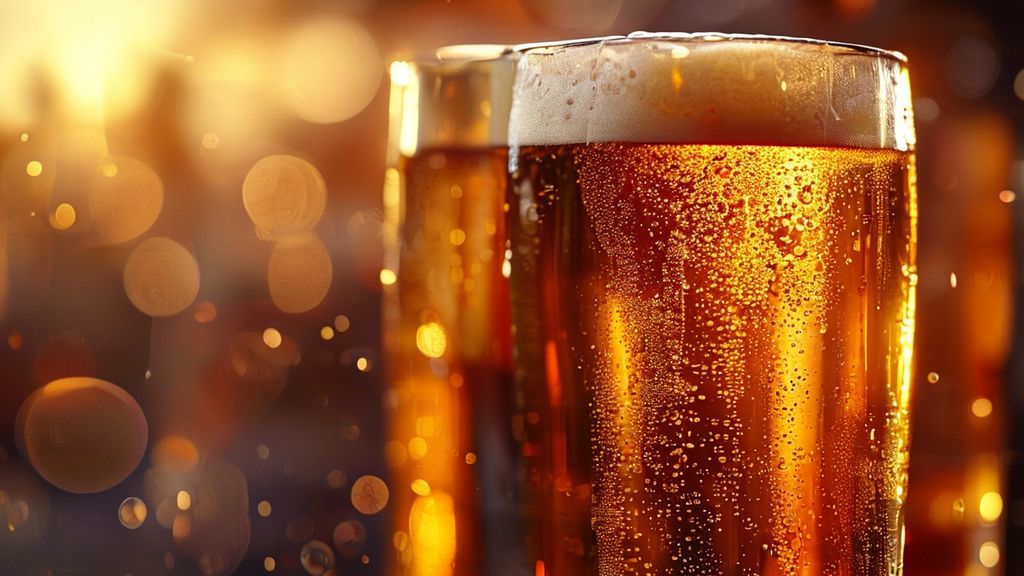
Brewing a true German Pilsner is a testament to precision and patience, yielding a beer defined by its brilliant clarity, crisp bitterness, floral noble hop aroma, and exquisitely clean finish. Achieving this iconic lager demands meticulous control over mash temperatures, cold fermentation with a robust lager yeast, and an extended lagering period. It’s a journey I’ve refined over two decades, focusing on water chemistry, hop selection, and process consistency.
| Metric | Target Value |
|---|---|
| Original Gravity (OG) | 1.046 – 1.052 |
| Final Gravity (FG) | 1.008 – 1.012 |
| Alcohol by Volume (ABV) | 4.4% – 5.2% |
| Bitterness (IBU) | 35 – 45 |
| Color (SRM) | 2 – 4 |
| Mash Temperature | 65°C – 67°C (149°F – 153°F) |
| Primary Fermentation Temp | 10°C – 13°C (50°F – 55°F) |
| Diacetyl Rest Temp | 18°C (65°F) for 2-3 days |
| Lagering Temperature | 0°C – 2°C (32°F – 35°F) |
| Carbonation | 2.5 – 2.8 volumes CO2 |
The Brewer’s Hook: My Pilsner Revelation
When I first ventured into brewing German Pilsners over two decades ago, I harbored a common misconception: “It’s just a lager, how hard can it be?” Oh, how wrong I was. My initial batches were often cloudy, lacked the characteristic crispness, and sometimes even carried a faint diacetyl butterscotch note that screamed “not a Pilsner!” I remember one particular batch where I rushed the lagering process, eager to taste my creation. The result was thin, harsh, and utterly disappointing. That failure taught me that brewing this style isn’t just about ingredients; it’s about meticulous process control, patience, and an almost obsessive attention to detail. It forced me to dive deep into water chemistry, mash schedules, and fermentation kinetics. It was only by embracing the true rigor of traditional German brewing practices that I began to understand the elegance hidden within this seemingly simple beer. This isn’t just a recipe; it’s a philosophy I’ve honed through years of trial and error.
The Math: Decoding Your German Pilsner
Brewing a German Pilsner is a masterclass in balance, and that balance starts with precise calculations. I’ve found that breaking down the numbers before brewing saves a lot of heartache. Here’s how I approach the core calculations for my German Pilsner, ensuring I hit my targets every time.
Grain Bill Calculation (5 Gallon/19 Liter Batch)
The soul of a German Pilsner is its malt, predominantly high-quality Pilsner malt. I typically aim for a single-infusion mash, maximizing fermentability while retaining enough body. Here’s my typical grain bill structure:
| Malt Type | Percentage (%) | Weight (kg) | Weight (lb) |
|---|---|---|---|
| German Pilsner Malt | 95% | 4.50 kg | 9.9 lbs |
| Carafoam/Carapils Malt | 5% | 0.25 kg | 0.55 lbs |
| Total Grains | 100% | 4.75 kg | 10.45 lbs |
Note: This target grain bill should yield an OG around 1.050 with an average mash efficiency of 75%. Adjust total grain weight based on your system’s specific efficiency.
IBU Calculation (Simplified)
Bitterness is crucial in a German Pilsner, provided by noble hops. I aim for a firm, clean bitterness that balances the malt without being harsh. The simplified formula I use for quick estimates (actual IBU calculation is complex, but this helps with hop schedules):
IBU = (Hop Alpha Acid % / 100) * (Weight of Hops in grams * Utilization %) * (74.89 / Volume in Liters)
For a 19-liter batch (5 gallons), using Hallertau Mittelfrüh with 4.5% Alpha Acids:
- Bittering (60 min): I use ~30g (1.0 oz) Hallertau Mittelfrüh. With an estimated utilization of 30% for 60 min, this yields approx. 17.7 IBU.
- Flavor (15 min): I add ~20g (0.7 oz) Hallertau Mittelfrüh. With an estimated utilization of 10% for 15 min, this yields approx. 4.7 IBU.
- Aroma (5 min): I add ~25g (0.9 oz) Hallertau Mittelfrüh. With an estimated utilization of 5% for 5 min, this yields approx. 2.9 IBU.
- Dry Hop (3 days post-fermentation): I add ~50g (1.75 oz) Hallertau Mittelfrüh for a pronounced noble hop aroma without added bitterness.
My typical target for the total boil IBUs is between 35-45. I adjust hop amounts and timings to hit this specific range, often increasing the 60-minute addition if my alpha acid content is lower than expected. For a fuller hop character, I usually push towards the higher end of the IBU range.
Water Profile Adjustment
Water chemistry is often overlooked but is absolutely critical for a clean, crisp German Pilsner. I build my water profile from distilled or reverse osmosis (RO) water to ensure a blank slate. My target profile focuses on low minerality, especially sulfates, to let the hops shine cleanly.
| Mineral | Target Range (ppm) |
|---|---|
| Calcium (Ca²⁺) | 50 – 75 |
| Magnesium (Mg²⁺) | 5 – 10 |
| Sodium (Na⁺) | 5 – 15 |
| Sulfate (SO₄²⁻) | 20 – 40 |
| Chloride (Cl⁻) | 40 – 70 |
| Bicarbonate (HCO₃⁻) | <50 (adjust for mash pH) |
To achieve this, I typically add:
- Calcium Chloride (CaCl₂): ~0.5g/L (1.9g/gallon) to boost Ca²⁺ and Cl⁻.
- Gypsum (CaSO₄): ~0.1g/L (0.4g/gallon) to hit Ca²⁺ and SO₄²⁻ targets without overdoing the sulfate.
- Lactic Acid (88%): Used to adjust mash pH to my target range of 5.2-5.4 at mash temperature. This is crucial for enzyme activity and overall beer clarity and flavor. I usually start with 0.5-1 mL per 5 liters of mash water and measure.
Step-by-Step Execution: Brewing Your Masterpiece
This is where the rubber meets the road. My process for German Pilsner is rigorous, refined over years to ensure consistency and quality. I’ve found that cutting corners here inevitably compromises the final product.
1. Water Treatment & Strike Temp Calculation
Start with your treated water. I always ensure my brewing salts are fully dissolved and my pH is calibrated. Calculate your strike water temperature precisely. For a target mash temperature of **66°C (151°F)** with a grain temperature of 20°C (68°F) and a typical ratio of 3 liters of water per kilogram of grain (1.4 quarts/lb), my strike temperature is usually around **75°C (167°F)**. I use a brewing calculator for this every single time, as slight variations make a difference.
2. Mash (Single Infusion)
- Dough-in: Add your crushed grains to the strike water. Stir thoroughly to eliminate any dough balls. Ensure a consistent temperature.
- Mash Rest: Hold the mash precisely at **66°C (151°F)** for **60 minutes**. This temperature range promotes both alpha and beta-amylase activity, ensuring good fermentability and body.
- Mash Out: Raise the mash temperature to **77°C (170°F)** for **10 minutes**. This halts enzyme activity and reduces wort viscosity, making sparging more efficient.
3. Sparge
I employ a fly sparge technique for maximum efficiency and clarity, but a batch sparge also works well. The key is to keep the water temperature at **77°C (170°F)** throughout and avoid disturbing the grain bed too much.
- Recirculation: Slowly drain the first runnings back over the grain bed until the wort runs clear. This usually takes 10-15 minutes.
- Collection: Begin collecting your wort into the boil kettle. Aim to collect enough pre-boil wort to account for boil-off and achieve your target post-boil volume (e.g., 23-24 liters/6 gallons pre-boil for 19 liters/5 gallons post-boil).
4. Boil (90 Minutes)
A 90-minute boil is non-negotiable for a Pilsner to drive off DMS precursors from the Pilsner malt and ensure protein coagulation.
- 60 Minutes: Add your bittering hops (e.g., **30g Hallertau Mittelfrüh @ 4.5% AA**).
- 15 Minutes: Add your flavor hops (e.g., **20g Hallertau Mittelfrüh**). I also add a yeast nutrient (e.g., 1/2 tsp Wyeast Beer Nutrient Blend) and Irish Moss or Whirlfloc tablet here for improved clarity and yeast health.
- 5 Minutes: Add your aroma hops (e.g., **25g Hallertau Mittelfrüh**).
- Flameout: Turn off the heat. If you’re doing a whirlpool, do it now for 10-15 minutes to settle trub.
5. Chilling & Pitching
Rapid chilling is vital to minimize chill haze and prevent unwanted infections. I aim for a pitching temperature of **10°C (50°F)**.
- Chill: Use an immersion chiller or plate chiller to bring the wort down quickly.
- Sanitize: Thoroughly sanitize your fermenter and all equipment that will contact the wort post-boil.
- Transfer & Aerate: Transfer the chilled wort to your fermenter. Aggressively aerate the wort to provide ample oxygen for healthy yeast growth. I typically use an oxygen stone for **60 seconds** at 1 LPM.
- Pitch Yeast: Pitch a healthy, active lager yeast strain (e.g., Wyeast 2007 Pilsen Lager or White Labs WLP830 German Lager). I always prepare a starter 2-3 days prior to ensure a sufficient cell count (around 1.5-2 million cells/mL/°P) to prevent underpitching, which can lead to diacetyl.
6. Fermentation & Diacetyl Rest
This is where the magic happens, but it needs strict temperature control.
- Primary Fermentation: Ferment at a cool **10°C – 13°C (50°F – 55°F)** for 7-10 days, or until fermentation activity noticeably slows and gravity drops to within a few points of your target FG.
- Diacetyl Rest: Once fermentation is nearing completion (usually around 1.015-1.020 SG), slowly raise the temperature to **18°C (65°F)** and hold for 2-3 days. This allows the yeast to reabsorb any diacetyl and its precursors, ensuring a clean, crisp finish.
- Crash Cool: After the diacetyl rest, slowly drop the temperature to **0°C – 2°C (32°F – 35°F)** over 24-48 hours. This helps precipitate yeast and other haze-forming compounds.
7. Lagering (The Patience Phase)
This is the secret weapon of any great lager. Do not rush this step. I cannot stress this enough; my early failures always involved impatience here.
- Lagering Period: Transfer the beer to a secondary fermenter or serving keg (if force carbonating) and lager at **0°C – 2°C (32°F – 35°F)** for a minimum of **4-6 weeks**. I often go for 8 weeks if I have the space. This long cold rest mellows harsh flavors, rounds out the beer, and promotes incredible clarity.
8. Carbonation & Packaging
Finalize your Pilsner by carbonating to the correct level.
- Force Carbonation: If using a keg, carbonate at **12-14 PSI (0.8-1.0 BAR)** at **2°C (35°F)** for 7-10 days to achieve **2.5-2.8 volumes of CO2**.
- Bottle Conditioning: If bottling, calculate your priming sugar (dextrose) based on your desired carbonation level and remaining CO2 in the beer. For 2.6 volumes CO2, I typically use around **120-130g (4.2-4.6 oz)** of dextrose for 19 liters (5 gallons). Condition at **18-20°C (64-68°F)** for 2-3 weeks, then refrigerate.
Troubleshooting: What Can Go Wrong and How I’ve Fixed It
Even with decades of experience, brewing isn’t without its challenges. Here are the most common issues I’ve encountered with German Pilsners and my tried-and-true solutions:
1. Diacetyl (Buttery/Butterscotch Flavor)
- Cause: Underpitching yeast, insufficient oxygen at pitching, or skipping/shortening the diacetyl rest. Yeast produces diacetyl as a byproduct, which it usually reabsorbs later.
- My Fix: Always use a properly sized yeast starter (aim for 1.5-2 million cells/mL/°P). Ensure thorough aeration of the wort before pitching. Most critically, never skip the diacetyl rest. If I detect diacetyl during sensory checks, I’ll extend the diacetyl rest by another 2-3 days at **18°C (65°F)**.
2. DMS (Cooked Corn/Cabbage Aroma)
- Cause: Insufficient boil vigor or duration, especially with Pilsner malt which has higher levels of DMS precursors (SMM). Not chilling rapidly enough can also contribute.
- My Fix: A **90-minute vigorous boil** is non-negotiable. Ensure there’s a strong rolling boil to effectively volatilize DMS. Rapidly chilling the wort post-boil also helps lock in clean flavors and prevent DMS formation from lingering heat.
3. Haze (Lack of Clarity)
- Cause: Poor protein coagulation during boil, inadequate cold crashing, insufficient lagering time, or improper sparging techniques.
- My Fix: I always use a fining agent like Irish Moss or Whirlfloc in the last 15 minutes of the boil. Ensure a strong boil for good hot break. Rapidly chill to trigger a strong cold break. Crash cool to **0°C – 2°C (32°F – 35°F)** for a few days before lagering, then commit to a minimum of **6 weeks of lagering**. Some brewers also use gelatin finings in the keg for extra polish, which I’ve done successfully.
4. Harsh Bitterness
- Cause: Using too many high-alpha acid hops, late additions of bittering hops, or poor water chemistry (high sulfates).
- My Fix: Stick to noble German hop varieties like Hallertau Mittelfrüh, Tettnanger, or Spalt. Ensure your water profile has low sulfates (under 50 ppm). I measure my hop alpha acids carefully and adjust quantities to keep the IBU in the 35-45 range, primarily from 60-minute additions.
5. Under-attenuation / Fermentation Stall
- Cause: Underpitching yeast, insufficient wort aeration, nutrient deficiency, or temperature fluctuations.
- My Fix: Always pitch a robust yeast starter. Aerate the wort thoroughly. Ensure a consistent fermentation temperature. If a stall occurs, I’ve had success rousing the yeast gently (if in a carboy) or slightly increasing the temperature by 1-2°C to coax out a few more gravity points. Always ensure proper yeast nutrient addition at 15 minutes left in the boil. You can find more detailed solutions on BrewMyBeer.online.
Sensory Analysis: The German Pilsner Experience
After all that meticulous work, the reward is a truly magnificent beer. Here’s what my perfect German Pilsner looks, smells, and tastes like:
- Appearance: It pours with an utterly brilliant, crystal-clear, pale straw to light gold hue (SRM 2-4). It’s incredibly effervescent, supporting a towering, dense, and rocky white head that lingers with excellent lacing down the glass.
- Aroma: The first whiff is a clean, fresh, and slightly spicy floral bouquet from the noble hops, often reminiscent of fresh-cut hay or green tea. This is beautifully complemented by a subtle, clean bready or cracker-like malt aroma, without any sweetness. Esters and diacetyl are completely absent, signifying a perfectly executed lager fermentation.
- Mouthfeel: It’s light-bodied yet remarkably crisp and refreshing. The carbonation is lively, enhancing the overall drinkability. It leaves the palate feeling clean and dry, without any cloying stickiness or harshness.
- Flavor: The initial taste delivers a prominent, firm, yet elegant hop bitterness that is clean and never overwhelming. This bitterness is perfectly balanced by the subtle, delicate bready notes of the Pilsner malt. There’s a delicate floral hop flavor that mirrors the aroma. The finish is exceptionally dry and crisp, with a lingering, pleasant bitterness that invites another sip. It should be utterly free of any off-flavors, a true testament to its lager origins.
FAQs: Your German Pilsner Questions Answered
What is the ideal yeast strain for a German Pilsner?
For me, the ideal yeast strain is one that ferments clean, attenuates well, and flocculates efficiently at cold temperatures. I’ve had consistent success with Wyeast 2007 Pilsen Lager and White Labs WLP830 German Lager. Both strains produce a very traditional profile with minimal esters, allowing the malt and hop character to shine. Whichever you choose, always make a properly sized yeast starter to ensure a healthy and robust fermentation, especially for a lager.
How long should I lager a German Pilsner?
I cannot stress this enough: patience is key. While some sources might suggest 2-3 weeks, my experience dictates a minimum of **4-6 weeks** at **0°C – 2°C (32°F – 35°F)** is necessary for a truly exceptional German Pilsner. For prize-winning clarity and ultimate smoothness, I often extend this to **8 weeks**. The extended cold maturation allows harsh flavors to mellow, yeast and proteins to settle out completely, and the beer to develop its characteristic crispness and polish.
Can I use dry yeast for a German Pilsner?
Absolutely, advancements in dry yeast have made it a viable option. Fermentis Saflager W-34/70 is an excellent choice for German Pilsners. I’ve used it myself with great results. The key is to pitch enough rehydrated yeast. For a typical 5-gallon batch with an OG of 1.050, I would recommend pitching at least **two 11.5g packets** of rehydrated dry lager yeast to ensure an adequate cell count and prevent off-flavors from underpitching. Rehydrate correctly at **25°C (77°F)** for 30 minutes before pitching.
What makes German Pilsner different from Bohemian Pilsner?
While both are iconic Pilsners, the key differences lie in their hop character and malt profile. German Pilsners emphasize a drier, crisper finish with a more pronounced, often sharper, hop bitterness, typically from German noble hops like Hallertau Mittelfrüh, Tettnanger, or Spalt. They are often brewed with 100% German Pilsner malt. Bohemian Pilsners (like Czech Pilsner) tend to have a slightly softer bitterness, a richer, more rounded malt character (often from floor-malted Bohemian Pilsner malt), and a distinctive spicy/floral aroma and flavor from copious amounts of Saaz hops. German Pilsners aim for lean elegance; Bohemian Pilsners for a richer, more complex assertiveness.