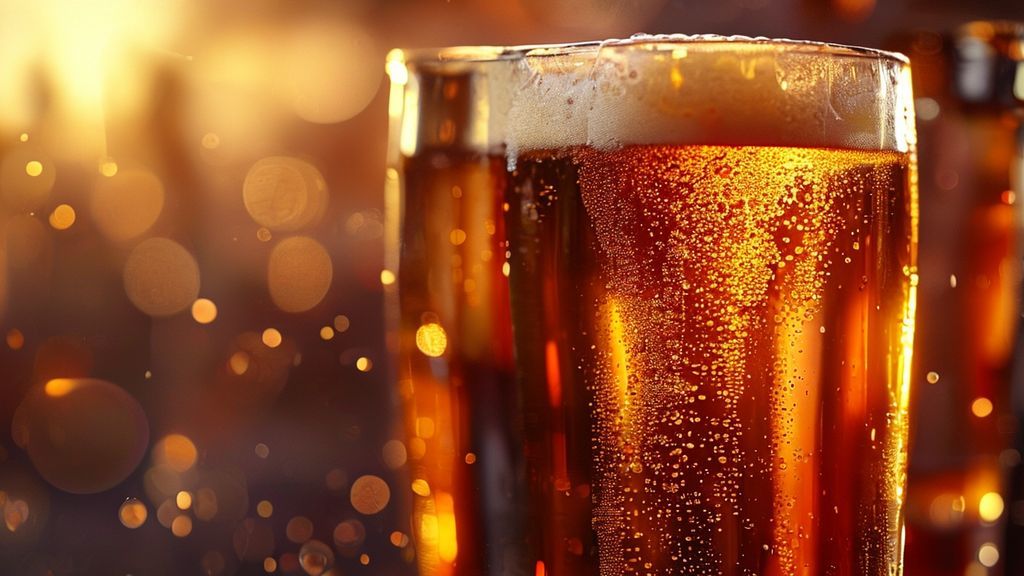
Oud Bruin, often called a Flemish Brown Ale, is a complex, malt-forward sour beer originating from the Flanders region. I craft it through a meticulous process involving a rich, multi-grain grist, initial fermentation with a clean ale yeast, followed by extensive aging with a mixed culture of Brettanomyces, Lactobacillus, and Pediococcus. The result is a deep, reddish-brown ale exhibiting balanced lactic and acetic sourness alongside notes of dark fruit, caramel, and a vinous complexity, achieved through careful blending of young and aged beers.
| Metric | Target Range (My Brews) |
|---|---|
| Original Gravity (OG) | 1.058 – 1.072 |
| Final Gravity (FG) | 1.008 – 1.016 |
| Alcohol By Volume (ABV) | 6.5% – 8.0% |
| International Bitterness Units (IBU) | 18 – 25 |
| Standard Reference Method (SRM) | 18 – 25 |
| Primary Fermentation Temp | 19°C – 21°C |
| Secondary (Sour) Fermentation Temp | 18°C – 24°C |
| Aging Duration (Minimum) | 6 months (longer for complexity) |
| Target pH (Post-Sour) | 3.3 – 3.6 |
The Brewer’s Hook: Embracing the Slow Art of Oud Bruin
For twenty years, I’ve chased the sublime. While many brewers are seduced by the immediate gratification of a crisp lager or a hazy IPA, my true passion lies in the patient alchemy of sour ales. My journey with Oud Bruin began over a decade ago, and I’ll admit, my first few attempts were… educational. I distinctly remember a batch where I rushed the aging, eager to taste the “sour” I’d read so much about. What I got was a thin, underdeveloped beer with a one-dimensional tartness that lacked the depth and vinous complexity that defines a true Oud Bruin. It was a stark lesson in patience and the nuanced interaction of microbes over time. That mistake taught me that brewing this style isn’t just about throwing cultures into a fermenter; it’s about orchestrating a slow, deliberate evolution, a dance between malt, yeast, and bacteria, culminating in a balanced masterpiece. My commitment to understanding every variable, every pH shift, every subtle flavor evolution, has been instrumental in crafting the robust, multi-layered Oud Bruins I brew today.
The Math Behind the Malt: Crafting Your Oud Bruin Grists & Blends
Precision is paramount in brewing Oud Bruin. The balance of malt, sourness, and residual sweetness is a tightrope walk, and I’ve found that understanding the math behind each component is critical. Here, I break down the grain bill for a typical 20-liter (5-gallon) batch and then offer a calculation method for blending to achieve your target acidity.
Grain Bill Composition (Example)
My preferred grain bill emphasizes a rich, complex malt profile to stand up to the eventual souring. I aim for high dextrin content to provide body and residual sugars for the souring microbes. Here’s a breakdown:
| Malt Type | Percentage (%) | Typical Contribution |
|---|---|---|
| Pilsner Malt | 40% | Base fermentable sugars, light color. |
| Munich Malt (Light) | 25% | Rich malty, slightly bready backbone. |
| Vienna Malt | 15% | Additional malty character, light toast. |
| Caramunich III (or equivalent) | 8% | Caramel, dried fruit, body, color. |
| Special B | 6% | Dark fruit (raisin, fig), plummy, rich color. |
| Carafa Special II (or dehusked black malt) | 3% | Color adjustment, subtle roast, no harshness. |
| Acidulated Malt | 3% | Mash pH adjustment, contributes lactic acid. |
Blending for Acidity: The Pearson Square for pH
Achieving the perfect sourness in Oud Bruin often requires blending a well-soured, aged beer with a younger, less sour or even clean beer. I find the Pearson Square method invaluable for calculating blending ratios based on target pH. This assumes you have measured the pH of your aged (sour) and young (clean) beers.
Let’s say:
- Sour Beer pH (A) = 3.2
- Young Beer pH (B) = 4.5
- Target Blended pH (C) = 3.5
The calculation works like this:
- Draw a square. Put your target pH (C) in the center.
- Place Sour Beer pH (A) at the top left, and Young Beer pH (B) at the bottom left.
- Subtract diagonally:
- |(C – B)| = |(3.5 – 4.5)| = 1.0 (This is the “parts” of Sour Beer needed)
- |(C – A)| = |(3.5 – 3.2)| = 0.3 (This is the “parts” of Young Beer needed)
- The ratio is 1.0 parts Sour Beer to 0.3 parts Young Beer.
- To get percentages:
- Total parts = 1.0 + 0.3 = 1.3
- % Sour Beer = (1.0 / 1.3) * 100% = 76.9%
- % Young Beer = (0.3 / 1.3) * 100% = 23.1%
So, to achieve a pH of 3.5, I would blend approximately 77% of my aged sour beer with 23% of my young, cleaner beer. I always perform small bench blends first to verify my calculations and taste for optimal balance. This methodical approach saves me from potentially ruining a large batch of aged beer.
Step-by-Step Execution: Brewing Your Oud Bruin
Brewing Oud Bruin is a marathon, not a sprint. This process outlines my approach, focusing on the critical control points for success.
Malt Milling & Water Chemistry:
- Mill your grains to a medium-fine crush. I aim for minimal flour but enough to ensure good conversion efficiency.
- Prepare your brewing liquor. For a 20-liter batch, I typically start with **25 liters** of strike water, adjusting to hit my target mash pH of **5.2 – 5.4**. My water profile emphasizes balanced calcium and sulfates, typically around **70 ppm Calcium** and **50 ppm Sulfate** for mouthfeel and enzymatic activity.
Mashing:
- Dough in at **66°C (151°F)** for a primary rest, holding for **60 minutes**. This temperature promotes good beta-amylase activity for fermentable sugars, but still leaves enough complex carbohydrates for the souring microbes.
- After the initial rest, I raise the temperature to **72°C (162°F)** for a **15-minute** mash-out, stabilizing enzymatic activity and preparing for lautering.
Lautering & Sparge:
- Recirculate until the runnings are clear.
- Sparge slowly, maintaining a grain bed temperature of **77°C (170°F)**. My goal is to collect **23-24 liters** of wort with a pre-boil gravity of approximately **1.050**.
The Boil:
- Bring to a rolling boil. My total boil time is **90 minutes**.
- At **60 minutes** before flameout, add your bittering hops. For my 20L batch, this is typically **30g of East Kent Goldings** (approx. 5% AA) for an IBU of around 20.
- At **10 minutes** before flameout, I might add **10g of Saaz** for a subtle spicy noble hop character that won’t interfere with the sour profile.
- At **Flameout**, I add a wort chiller and begin chilling immediately.
Chilling & Primary Fermentation:
- Chill the wort rapidly to **19°C (66°F)**. This quick chill minimizes DMS formation and hop isomerization.
- Transfer the chilled wort to a sanitized primary fermenter.
- Pitch a healthy starter of a clean Belgian Ale yeast (e.g., WLP550, Wyeast 1762). I typically pitch **1.5 million cells/ml/°P** for optimal fermentation.
- Ferment at a controlled temperature of **19-21°C (66-70°F)** for **7-10 days**, or until primary fermentation is complete and gravity has stabilized (typically around 1.018-1.022).
Secondary Fermentation & Souring (The Magic Happens):
- Once primary fermentation is complete, transfer the beer to a secondary fermenter, ideally a glass carboy or stainless steel vessel, to minimize oxygen ingress during the long aging process. I’ve had great success with glass for this.
- Pitch your souring culture. My standard blend includes:
- Brettanomyces clausenii or bruxellensis: (e.g., WLP650, Wyeast 5112) for farmhouse funk, ester production, and super attenuation.
- Lactobacillus blend: (e.g., WLP672, Wyeast 5335) for clean lactic sourness.
- Pediococcus damnosus: (e.g., WLP670) for more intense sourness and potential buttery notes that can mellow over time.
- Add **100g of medium-toast French oak cubes** (pre-soaked in hot water to remove harsh tannins) per 20 liters. Oak contributes vinous complexity and provides a surface for microbes to adhere.
- Age the beer at ambient cellar temperatures, typically **18-24°C (64-75°F)**, for a minimum of **6 months**. I often age batches for **12-24 months** to develop full complexity and sourness.
- Regularly monitor pH and gravity. The pH will slowly drop (my target is **3.3-3.6**), and gravity will continue to attenuate, sometimes dropping as low as **1.006** over extended periods.
Blending:
- This is the true art of Oud Bruin. Once your aged beer has reached its desired sourness and character, I often blend it with a portion of a younger, less sour or even freshly brewed batch (fermented cleanly with Saccharomyces) to achieve balance. Refer to the Pearson Square math above for precision.
- Perform bench trials first! Sample small amounts of aged and young beer, blending at different ratios until you find your ideal profile.
Packaging:
- Bottle or keg your blended Oud Bruin. I prefer bottling with a small addition of fresh priming sugar (around **6-7 g/L** dextrose) and a little fresh Brettanomyces to ensure proper carbonation and further complexity development in the bottle.
- Bottle condition for at least **2-4 weeks** at cellar temperatures before enjoying. These beers continue to evolve in the bottle for years.
Troubleshooting: What Can Go Wrong with Oud Bruin
Given the long aging and mixed fermentation involved, brewing Oud Bruin presents unique challenges. I’ve encountered most of them:
Too Much Acetic Acid (Vinegar):
This is a common issue. While a slight acetic edge adds complexity, too much makes the beer taste like salad dressing. This usually indicates excessive oxygen exposure during the souring phase, which promotes Acetobacter activity. My solution? Ensure your secondary fermenter has an extremely tight seal, use proper airlocks (S-locks or three-piece are fine, but ensure they don’t dry out), and minimize transfers during aging. I also keep my cellar temps below **25°C** as higher temps can accelerate Acetobacter.
Not Sour Enough:
If your beer isn’t developing the desired acidity after several months, it could be a few things. First, check your culture viability – was it fresh and active? Second, ensure adequate residual sugars for the lactic acid bacteria to consume. If your OG was too low or primary fermentation too attenuative, they might run out of food. Lastly, patience. Some Pediococcus strains are notoriously slow. I sometimes add a small addition of dextrose (around **10g/L**) during secondary fermentation to “feed” the microbes if I suspect low fermentables. Consistent temperature around **20-22°C** also helps.
Phenolic Off-Flavors (Band-Aid/Clove):
While some Belgian yeasts produce desirable phenolic notes, strong band-aid or medicinal flavors are usually a sign of wild yeast contamination (like certain Brettanomyces strains if not properly controlled, or non-target wild yeasts). Scrupulous sanitation is your best defense. I also ensure my primary Belgian ale yeast is a proven, clean strain for this style. When introducing souring cultures, I use dedicated equipment that never touches my clean beers.
Oxidation During Aging/Transfer:
Extended aging, especially in non-hermetic vessels, can lead to oxidation, presenting as cardboard or sherry-like notes. My biggest lesson here was to invest in better fermenters (glass or stainless steel) with minimal head-space in secondary. When transferring for blending or packaging, I use CO2 purging extensively. Visit BrewMyBeer.online for more tips on oxygen mitigation!
Inconsistent Flavor Development:
Every batch of sour beer will be unique, but extreme batch-to-batch variation can be frustrating. I combat this by maintaining detailed brewing logs, replicating my processes as closely as possible, and, critically, maintaining a consistent house souring culture. I often “harvest” a portion of a healthy souring batch to inoculate the next, ensuring some continuity in the microbial blend.
Sensory Analysis: The Heart of an Exceptional Oud Bruin
When I pour a properly aged and blended Oud Bruin, I’m looking for a sensory experience that tells the story of its long journey. Here’s what I expect from my best batches:
Appearance:
I aim for a deep, rich reddish-brown, often with garnet highlights when held to the light. It should be relatively clear, though some slight haze from yeast or protein isn’t uncommon. A persistent, creamy, off-white to tan head, typically low to moderate in height, is a hallmark. It should linger, leaving lacing on the glass as it recedes.
Aroma:
The aroma is complex and inviting. I first detect prominent notes of dark fruit – think raisins, plums, and dried cherries – layered with caramel, toffee, and a hint of nutty malt. A gentle vinous character, reminiscent of balsamic vinegar, is present, alongside a delicate lactic acidity that brightens the bouquet. Subtler notes of leather, damp earth, or a mild “horse blanket” funk from Brettanomyces contribute to its farmhouse charm without dominating. I never want harsh, overpowering acetic notes; balance is key.
Mouthfeel:
The mouthfeel should be medium-full, offering a pleasant richness and body that stands up to the acidity. Carbonation is typically moderate, creating a gentle effervescence that lifts the flavors without being overly spritzy. The acidity should be smooth and integrated, providing a cleansing finish without being puckering or sharp. A slight warming from the alcohol content (6.5-8.0% ABV) is expected, contributing to a sense of maturity and depth.
Flavor:
On the palate, Oud Bruin delivers a symphony of flavors. The rich malty foundation comes through with notes of toasted bread, caramel, and toffee, immediately followed by the distinct dark fruit character of dried figs, dates, and black currants. The sourness enters gracefully, a clean lactic tartness that plays off the malt sweetness, often intertwined with a subtle acetic zing that evokes red wine or aged balsamic. Hints of oak, leather, and a very mild earthy funk from the Brettanomyces add layers of complexity. The finish is dry, cleansing, and lingering, with the tartness slowly fading, leaving behind echoes of malt and fruit. The balance between sweet, sour, and malty is what I continuously strive for, ensuring no single element overwhelms the others. For more advanced techniques, explore the resources at BrewMyBeer.online.
Frequently Asked Questions About Oud Bruin
What is the primary difference between an Oud Bruin and a Flanders Red Ale?
While both are sour Flemish ales, the key distinctions lie in their production and resulting flavor profile. Flanders Red Ales (like Rodenbach Grand Cru) are typically fermented with a primary ale yeast and then aged extensively in large oak foudres with a mixed culture, leading to a prominent acetic (vinegar-like) sourness and distinct red fruit character, often with a slight cherry or berry profile. Oud Bruins, on the other hand, often start with a richer, darker malt bill, are typically fermented with a cleaner Belgian ale yeast, then aged in smaller vessels (like carboys or barrels) with a mixed culture, resulting in a more lactic-dominant sourness balanced by deeper caramel, dark fruit, and nutty malt flavors, with less emphasis on acetic notes.
Can I use fruit in my Oud Bruin?
Absolutely, and I often do! While traditional Oud Bruins are fantastic on their own, they provide an excellent canvas for fruit. Dark, tart fruits like sour cherries, plums, raspberries, or even figs complement the beer’s existing flavor profile beautifully. I typically add cleaned, often frozen and thawed, fruit to the secondary fermenter during the souring phase (usually after 3-6 months) at a rate of **100-200 grams per liter (approx. 0.8-1.6 lbs/gallon)**. This allows the microbes to ferment the fruit sugars, integrating the fruit character into the beer’s sourness and complexity without creating a cloyingly sweet “fruit beer.”
How long should I age an Oud Bruin before it’s ready to drink?
Patience is the most crucial ingredient for Oud Bruin. I typically recommend a minimum of **6 months** of secondary fermentation and souring. However, my best batches have aged for **12-24 months**, and sometimes even longer. The longer aging allows for the full development of sourness, complex esters from Brettanomyces, and the integration of oak character. Monitoring pH and tasting small samples over time is essential. The beer will continue to evolve in the bottle for years, so don’t be afraid to cellar some for a truly nuanced experience.
Is blending essential for Oud Bruin, or can I bottle a single, aged batch?
While you *can* bottle a single, aged batch, blending is arguably the hallmark of an exceptional Oud Bruin. Blending allows me to achieve a consistent, balanced profile by combining different aged batches, or a portion of an aged sour beer with a younger, cleaner, malt-forward beer. This process helps to temper excessive sourness, add complexity, adjust mouthfeel, and ensure a harmonious final product that is more than the sum of its parts. It allows me to dial in the perfect balance of acidity, malt character, and residual sweetness, which is very difficult to achieve with a single, unblended batch.