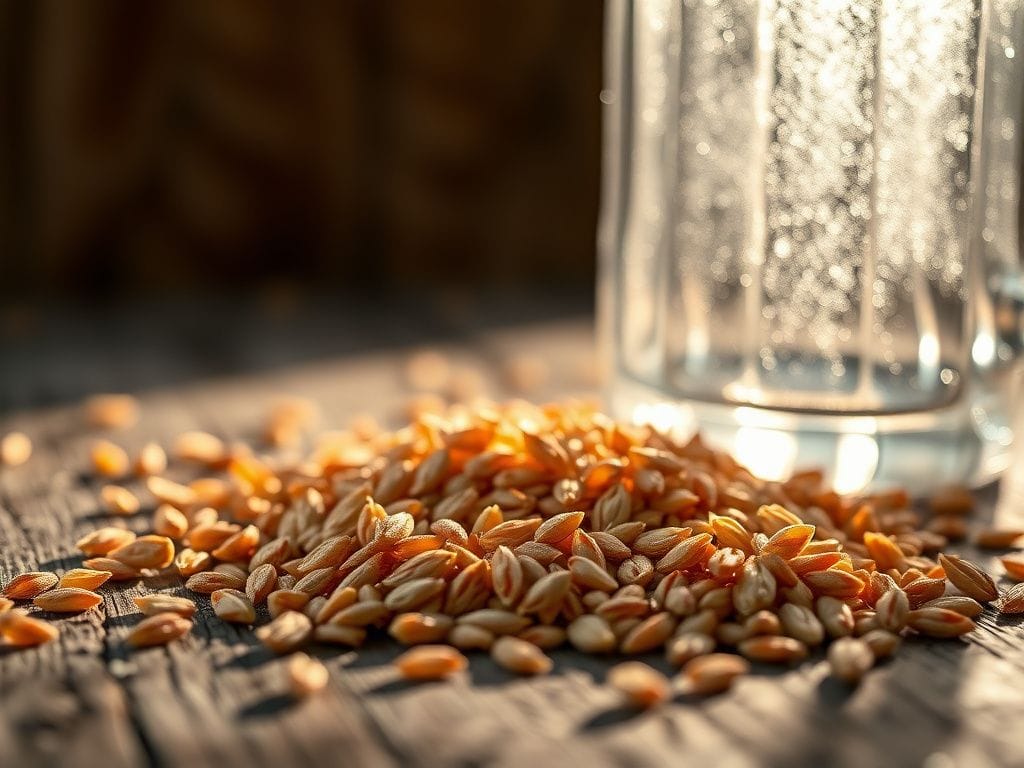
Embark on all-grain brewing with Brew in a Bag (BIAB), a simplified, efficient method ideal for newcomers. This technique streamlines the traditional mash and sparge into a single kettle, minimizing equipment and complexity. Achieve professional-quality wort using precise grain management and temperature control, making advanced brewing accessible. Master your craft.
Essential BIAB Hardware Overview
| Component | Description | Specifications | Critical Parameter | Failure Mode |
|---|---|---|---|---|
| Brew Kettle | Primary vessel for mashing, boiling, and sometimes chilling. Must accommodate total volume plus headspace. | Stainless Steel or High-Grade Aluminum. 7-15 gallon capacity for 5-gallon batches. Tri-clamp fittings preferred. | Volume capacity, Thermal conductivity, Cleanability, Valve integrity. | Boil-overs, Scorching, Leaks, Pitting/Corrosion. |
| Mash Bag | Food-grade, high-temperature resistant mesh bag used to contain grains during the mash. | Polyester, Nylon, or Stainless Mesh. 200-400 micron weave. Drawstring or elastic rim. | Mesh integrity, Heat resistance, Chemical inertness, Pore size (milling). | Bag tear, Particle escape (cloudy wort), Off-flavors from non-food-grade material. |
| Heat Source | Provides energy for strike water heating, mashing, and vigorous boiling. | Propane burner (e.g., 60,000-100,000 BTU/hr), Induction plate, Electric heating element (e.g., 3500-5500W). | BTU output/Wattage, Stable temperature control, Safety features. | Inconsistent mash temps, Insufficient boil vigor, Fire hazard, Element burnout. |
| Hydrometer & Test Jar | Measures the specific gravity of wort/beer to determine sugar content and fermentation progress. | Triple-scale hydrometer (Specific Gravity, Brix, Potential Alcohol). Calibrated at 20°C (68°F). | Accuracy, Calibration, Temperature correction for readings. | Inaccurate gravity readings (misjudged attenuation/alcohol), Breakage, Contamination of sample. |
| Fermentation Vessel | Airtight container for primary and secondary fermentation. | Food-grade plastic bucket, Glass carboy, Stainless steel fermenter. 6.5-7 gallon capacity for 5-gallon batches. | Sanitation, Airtight seal, Material inertness, Ease of transfer/sampling. | Contamination, Oxidation, Blow-off tube clogging, Leaks. |
Critical BIAB Calculations
1. Strike Water Volume (Gallons)
This calculation determines the initial water volume required for mashing, accounting for grain absorption and evaporation during heat-up. Accurate volume is critical for hitting target mash consistency and pre-boil gravity.
VSW = VTarget + (GWeight × GAbsorption) + VBoilOff_Mash
VSW = Strike Water Volume (gallons)
VTarget = Desired total pre-boil volume (gallons)
GWeight = Total Grain Weight (lbs)
GAbsorption = Grain absorption rate (typically 0.1-0.125 gal/lb, use 0.125 gal/lb for conservative estimate)
VBoilOff_Mash = Volume lost to evaporation during mash heat-up and mash duration (e.g., 0.25-0.5 gal, adjust for kettle size and lid use).
Example: For 10 lbs grain, targeting 6.5 gal pre-boil, with 0.125 gal/lb absorption and 0.25 gal mash boil-off.
VSW = 6.5 + (10 * 0.125) + 0.25 = 6.5 + 1.25 + 0.25 = 8.0 gallons
2. Strike Water Temperature (°F)
To achieve your target mash temperature (TMash), the strike water must be heated above TMash to compensate for the thermal mass of the cooler grains.
TSW = (0.2 / R) × (TMash – TGrain) + TMash
TSW = Strike Water Temperature (°F)
R = Water-to-Grain Ratio (quarts per pound or liters per kilogram). For BIAB, calculate as VSW (qt) / GWeight (lbs).
TMash = Target Mash Temperature (°F)
TGrain = Initial Grain Temperature (°F, typically room temperature, 65-70°F)
Example: Target Mash Temp 152°F, Grain Temp 68°F, R = 3.2 qt/lb (8.0 gal * 4 qt/gal / 10 lbs).
TSW = (0.2 / 3.2) * (152 – 68) + 152 = 0.0625 * 84 + 152 = 5.25 + 152 = 157.25°F
3. Estimated Original Gravity (EOG)
Predicting your wort’s sugar content based on the fermentable contribution of your grain bill and your assumed mash efficiency. This guides recipe formulation and process adjustments.
EOG = 1 + (SUM(Grain_PPG * Grain_Weight_lbs) * Efficiency) / VPreBoil
Grain_PPG = Points per Gallon for each fermentable (e.g., Pale Malt = 37 PPG)
Grain_Weight_lbs = Weight of each grain in pounds
Efficiency = Expected Mash Efficiency (e.g., 70-75% for BIAB, or your historical average as a decimal)
VPreBoil = Pre-boil Volume (gallons)
Example: 10 lbs Pale Malt (37 PPG), 75% efficiency, 6.5 gal pre-boil.
EOG = 1 + ( (37 * 10) * 0.75 ) / 6.5 = 1 + ( 370 * 0.75 ) / 6.5 = 1 + 277.5 / 6.5 = 1 + 42.69 = 1.043
4. Mash Efficiency
A retrospective measure of how effectively fermentable sugars were extracted from the grain during mashing. Crucial for understanding and improving your process consistency.
Efficiency (%) = ( (Measured_OG – 1) * VPostBoil ) / ( SUM(Grain_PPG * Grain_Weight_lbs) )
Measured_OG = Actual Original Gravity read from hydrometer (temp-corrected).
VPostBoil = Actual Post-Boil Volume (gallons).
Introduction: Demystifying All-Grain BIAB
The transition to all-grain brewing marks a significant advancement for any homebrewer, offering unparalleled control over the final product’s flavor, aroma, and mouthfeel. Traditionally, this process involved a multi-vessel system with a separate mash tun and hot liquor tank, followed by a laborious sparging routine. Enter Brew in a Bag (BIAB) – a revolutionary method that condenses these complex steps into a single kettle, democratizing all-grain brewing for even the most space-constrained or time-conscious enthusiasts. BIAB stands as a testament to innovation, simplifying the mechanical aspects of all-grain without compromising the technical rigor required for quality wort production.
Why choose BIAB? Its primary allure lies in its simplicity and minimal equipment footprint. For beginners, the psychological barrier of multi-stage brewing is eliminated, allowing direct focus on critical parameters like temperature control, water chemistry, and hop additions. Cost of entry is drastically reduced; a single large kettle, a high-quality mash bag, and a heat source often suffice. This streamlined approach makes BIAB an ideal gateway to understanding the nuanced interplay of malt, water, and enzymes that defines all-grain brewing, setting a solid foundation for future process optimizations or transitions to more elaborate systems.
The evolution of BIAB from traditional methods is rooted in a desire for efficiency and accessibility. By containing the grain in a specialized bag directly within the boil kettle, brewers can mash, lautering, and boil in the same vessel. This eliminates the need for sparging, which is a key differentiator from traditional systems. While initial concerns revolved around efficiency, advancements in grain milling techniques and mash bag materials have proven BIAB capable of achieving comparable results to multi-vessel setups, often exceeding 70-75% efficiency.
Core Equipment: Precision Tools for the Brewmaster
Successful BIAB brewing relies on specific, high-quality equipment designed to facilitate the single-vessel process.
Brew Kettle: The Heart of the Operation
Your brew kettle is the central piece of equipment. For a standard 5-gallon batch, a kettle with at least 7-gallon capacity is recommended to prevent boil-overs, with 10-15 gallons being ideal, especially if considering larger batches or a full-volume mash. Stainless steel is the preferred material due to its durability, ease of cleaning, and chemical inertness. Features like an integrated thermometer and a ball valve for easy wort transfer are highly advantageous. A thick-bottomed kettle helps prevent scorching.
Mash Bag: The Enabler
The mash bag is paramount. It must be food-grade, high-temperature resistant (polyester or nylon are common), and durable enough to support a significant weight of saturated grain. A fine mesh (200-400 micron) is crucial to contain grain particles while allowing efficient liquid flow. Ensure the bag is large enough to line your kettle without excess stretching and has a secure drawstring or elastic rim. Double-stitching and reinforced handles enhance longevity.
Heat Source: Powering the Process
Consistent heat application is vital. A powerful propane burner (e.g., 60,000-100,000 BTU/hr) provides rapid heating but requires outdoor use. Electric brewing systems, utilizing high-wattage immersion elements (3500-5500W) or induction plates, offer precise indoor temperature control but require dedicated circuits and can be a higher initial investment.
Temperature Control: Maintaining Mash Integrity
Accurate temperature measurement is non-negotiable. A high-quality digital thermometer is essential for strike water and mash temperature monitoring. For mash insulation, reflective insulation jackets, heavy blankets, or even an insulated cooler lid can help maintain a stable mash temperature. Some advanced BIAB setups incorporate PID controllers with electric elements for automated temperature stability.
Grain Mill: Optimizing Extraction
While pre-milled grain is an option, owning a grain mill grants precise control over your crush. For BIAB, a finer crush is generally preferred compared to traditional three-vessel systems. The absence of a traditional lauter tun means a fine crush won’t cause a stuck sparge. Instead, it increases the grain’s surface area, improving enzyme access to starches and thus enhancing mash efficiency. Aim for a crush that breaks the kernel into multiple pieces but leaves most of the husks relatively intact.
Lifting Mechanism: Handling the Load
A full mash bag can weigh 30-60+ pounds. A robust lifting mechanism is highly recommended. Simple solutions include a sturdy pulley system attached to a ceiling joist or a dedicated brew stand with an integrated hoist. For smaller batches, pure strength might suffice, but safety and back strain are critical considerations.
Fermentation & Measurement: Post-Boil Control
A calibrated hydrometer and test jar are indispensable for measuring specific gravity at various stages: pre-boil, original gravity (OG), and final gravity (FG). A refractometer offers quick measurements but requires temperature correction and cannot be used reliably post-fermentation due to alcohol interference. Your fermentation vessel (food-grade plastic bucket, glass carboy, or stainless conical) must be meticulously cleaned and sanitized. Airlocks and rubber stoppers ensure an anaerobic fermentation environment.
Ingredient Selection: The Blueprint of Flavor
The quality and selection of your ingredients fundamentally dictate the character of your beer.
Malt: The Backbone
Malt provides the fermentable sugars, color, and much of the beer’s body and flavor profile. Base Malts like 2-row, Pale Malt, Vienna, and Munich form the bulk of your grain bill (60-100%). Their Diastatic Power (the enzyme potential to convert starches to sugars) is critical. Higher diastatic power means more effective conversion. For specialized recipes or enhanced malt character, explore BrewMyBeer.online‘s extensive malt selection.
Specialty Malts, such as Caramel (Crystal), Roasted Barley, and Chocolate Malt, are used in smaller percentages (2-20%) to impart specific colors, complex flavors (caramel, toffee, coffee, chocolate), and improve mouthfeel and head retention. They contribute mostly non-fermentable sugars and dextrins.
Adjuncts like flaked oats, wheat, or rice provide body, haze, and head retention, or lighten the body. Ensure all malts are fresh and stored in airtight, cool, dark conditions to prevent staling and insect infestation.
Hops: Bitterness, Aroma, Preservation
Hops contribute bitterness (from alpha acids), aroma, flavor, and act as a natural preservative. The timing of hop additions is critical: Bittering hops (high alpha acid) are added early in the boil (60 minutes or more) for maximum isomerization. Flavor hops are added mid-boil (15-30 minutes), and Aroma hops late in the boil (5-10 minutes) or during whirlpool/dry hopping for volatile aromatic compounds. Hops come in pellet or whole cone form; pellets are more common and generally provide better utilization. Store hops in a freezer, preferably vacuum-sealed, to preserve their delicate compounds.
Yeast: The Fermentation Engine
Yeast transforms wort into beer. Choosing the correct strain (e.g., ale yeast for faster, warmer fermentation; lager yeast for slower, cooler fermentation) is crucial for stylistic accuracy. Yeast characteristics include attenuation (how much sugar it consumes), flocculation (how well it settles), and specific flavor contributions (esters, phenols). Dry yeast is convenient and has a long shelf life, while liquid yeast offers a wider variety of strains but often requires a starter to ensure adequate cell counts for pitching. Proper yeast pitching rates and oxygenation of the wort are vital for a healthy, complete fermentation and to avoid off-flavors.
Water: The Unsung Hero
Water constitutes 90-95% of beer and is often overlooked by beginners. Your source water (tap, RO, distilled) will significantly impact mash pH and beer flavor. Understanding your local water profile through a water report is the first step. Brewers can then make mineral additions (e.g., Gypsum for hop bitterness, Calcium Chloride for maltiness, Epsom Salt for dryness) to replicate classic water profiles (e.g., Burton for IPAs, Dublin for stouts) or fine-tune their mash pH. Adjusting mash pH, typically to a range of 5.2-5.6, optimizes enzyme activity for efficient sugar conversion and helps create a balanced flavor profile in the final beer. Precise water chemistry is an advanced topic, but even basic adjustments can yield significant improvements. More detailed resources can be found on Homebrewers Association guides.
The BIAB Process: A Step-by-Step Protocol
Mastering BIAB involves meticulous attention to each stage, ensuring a controlled and efficient transformation of grain to wort.
1. Recipe Formulation & Water Calculations
Begin with a well-researched recipe. Utilize brewing software (e.g., BeerSmith, Brewfather) to calculate your grain bill, hop additions, and yeast requirements. Critically, perform your strike water volume and temperature calculations (refer to the “Critical BIAB Calculations” box). These are paramount for hitting your target mash parameters. If necessary, plan your water treatment additions (e.g., salts, acids) at this stage, adding them to your strike water before heating.
2. Grain Preparation & Crush
If milling your own grain, a finer crush is recommended for BIAB. This exposes more surface area for enzymatic activity, compensating for the lack of a traditional sparge and contributing to higher efficiency. The goal is to shatter the endosperm while largely preserving the husks, which still aid in filtering. Ensure your mill gap is set appropriately for your system. If using pre-milled grain, ensure it’s specifically milled for BIAB or verify it’s a relatively fine crush.
3. Heating Strike Water & Dough-In
Heat your calculated strike water volume to the precise strike temperature. This is a critical point; under- or over-shooting will result in a mash temperature deviation. Once achieved, carefully place your mash bag into the kettle, ensuring it lines the kettle walls and the top is secured (e.g., with clamps, or by tying the drawstring around the kettle rim). Gradually add the crushed grains to the hot water, stirring continuously to prevent the formation of dry “dough balls.” Use a whisk or paddle. Once all grains are added, take an immediate, thorough mash temperature reading and adjust if necessary by adding a small amount of hot or cold water, or applying minimal heat. Your target mash temperature is now paramount.
4. Mashing: Enzyme Activity & Sugar Conversion
Maintain your target mash temperature (e.g., 150-158°F for 60-90 minutes) throughout the mash period. This temperature range is critical for specific enzyme activity: lower temperatures (148-152°F) favor beta-amylase, producing more fermentable sugars (drier beer); higher temperatures (154-158°F) favor alpha-amylase, producing more complex, non-fermentable sugars (fuller body). Insulate your kettle with a jacket, blankets, or even sleeping bags to minimize heat loss. Occasional stirring (every 15-20 minutes) can help maintain an even temperature and improve enzyme contact with starches. An iodine test (optional) can be performed near the end of the mash to confirm starch conversion: a drop of wort on a white plate with a drop of iodine should remain amber/yellow, not turn dark blue/black.
5. Mash Out (Optional but Recommended)
Towards the end of the mash, consider a “mash out” step. This involves raising the mash temperature to 168-170°F for 10-15 minutes. Mash out serves two primary purposes: it halts enzymatic activity, “locking in” your sugar profile, and it reduces wort viscosity, facilitating better drainage from the grain bag and preventing continued starch conversion during the boil. This can be achieved by applying direct heat to the kettle while stirring or by adding a calculated volume of boiling water.
6. Lifting the Bag & Draining
Once the mash is complete, carefully lift the mash bag out of the kettle. This is where your lifting mechanism proves invaluable. Allow the wort to drain by gravity back into the kettle. Support the bag above the kettle, perhaps on a sturdy grate or colander, to allow it to drip. The “Squeeze or No Squeeze” debate is prevalent in BIAB. Traditionally, squeezing the bag was discouraged due to fears of extracting harsh tannins from grain husks. However, with the finer crush used in BIAB and proper mash pH, a gentle squeeze is widely accepted and recommended to maximize efficiency without significant risk of astringency. Avoid aggressive, twisting squeezes. Simply compress the bag evenly until the majority of the liquid is extracted.
7. The Boil: Sterilization & Hop Additions
Bring the collected wort to a vigorous, rolling boil for a minimum of 60 minutes. This achieves several crucial objectives: it sterilizes the wort, denatures unwanted proteins (forming the “hot break”), isomerizes hop alpha acids for bitterness, evaporates undesirable volatile compounds (e.g., DMS), and concentrates sugars to reach your target OG. Observe the formation of the hot break – a coagulation of proteins that clarifies the wort. Follow your hop schedule precisely: bittering hops at 60 minutes, flavor hops at 15-30 minutes, aroma hops at 5-10 minutes. Consider kettle finings (e.g., Irish Moss, Whirlfloc) in the last 10-15 minutes of the boil to aid in protein coagulation and promote clearer beer. Monitor your boil-off rate to ensure you hit your target post-boil volume and gravity. A pre-boil gravity reading can be taken and adjusted for temperature to compare against your EOG calculation.
8. Chilling: Rapid Temperature Reduction
Rapidly chilling your wort from boiling to pitching temperature (typically 60-70°F for ales, lower for lagers) is essential. Fast chilling minimizes the formation of Dimethyl Sulfide (DMS), a cooked corn off-flavor, and reduces “chill haze” by precipitating proteins and tannins. Common methods include immersion chillers (coils placed in the hot wort with cold water running through), plate chillers, or counter-flow chillers. Ensure all chilling equipment is meticulously sanitized before contact with the cooled wort. Failure to chill rapidly is a common source of off-flavors and haze.
9. Fermentation Preparation & Pitching
Sanitation is paramount. Every piece of equipment that will contact the cooled wort, from your fermenter and airlock to hydrometer and transfer hoses, must be thoroughly cleaned and sanitized. Transfer the chilled wort from the kettle to your sanitized fermenter. This is the stage to oxygenate your wort, which is vital for healthy yeast cell growth and fermentation. This can be done by vigorously shaking the fermenter, using an aeration stone with an oxygen tank, or even splashing during transfer. Once oxygenated, pitch your yeast. If using dry yeast, ensure it’s rehydrated according to manufacturer instructions. If liquid, ensure you’ve pitched an appropriate cell count, possibly via a yeast starter. Seal the fermenter with an airlock. Take your original gravity (OG) reading at this point; compare it to your EOG and note it for future reference and for referencing BJCP Style Guidelines.
10. Fermentation: The Transformation
Maintain a consistent fermentation temperature. This is arguably the single most important factor for yeast health and flavor profile. High temperatures can lead to fusel alcohols and excessive esters, while low temperatures can cause sluggish fermentation or incomplete attenuation. Use a fermentation chamber, swamp cooler, or even simply a temperature-stable closet. Monitor airlock activity (though visible activity isn’t a direct indicator of fermentation status). Primary fermentation typically lasts 7-14 days. Resist the urge to open your fermenter frequently. Take gravity readings towards the end of primary fermentation to determine if the yeast has reached a stable final gravity (FG), indicating completion. Consider BrewMyBeer.online‘s resources for fermentation temperature guidance. Consult Brewers Association resources for comprehensive guides on fermentation best practices.
Common BIAB Pitfalls & Troubleshooting
Even with a simplified system, issues can arise. Understanding common pitfalls and their remedies is key to consistent brewing.
Low Efficiency: If your actual OG consistently falls below your EOG, review your process. A finer grain crush significantly boosts BIAB efficiency. Ensure accurate mash temperature maintenance and extend mash time if needed. Adjusting mash pH to the ideal 5.2-5.6 range can optimize enzyme activity. Performing a mash-out also aids extract efficiency. Verify your hydrometer calibration and temperature correction. If using a large water-to-grain ratio, ensure proper stirring to prevent localized temperature drops or stratification.
Stuck Mash: While less common in BIAB due to the bag containing the grain, an excessively fine crush combined with high adjunct percentages (e.g., flaked oats, wheat) can lead to a viscous mash that drains slowly. If encountering this, gently stir the mash to break up any compacted grain bed. Ensuring adequate water-to-grain ratio helps maintain fluidity. Should the bag become difficult to lift, ensure you have sufficient support for slow, controlled draining.
Off-Flavors: This is often a result of fermentation issues or sanitation failures. Contamination (sour, phenolic, medicinal flavors) is almost always due to improper sanitation. Re-evaluate your cleaning and sanitizing protocols. High fermentation temperatures lead to excessive esters (fruity, solventy), fusel alcohols (boozy, harsh), and diacetyl (butterscotch, buttery). Use temperature control measures. Oxidation (cardboard, papery stale flavors) occurs when hot or cooled wort is exposed to oxygen. Minimize splashing post-chilling and during transfers to the fermenter, and certainly during packaging.
Inconsistent Temperatures: Fluctuations in mash temperature directly impact enzyme activity and sugar profile. Invest in a reliable digital thermometer. Better insulation around your kettle (mash jacket, blankets) will help. For electric systems, a PID controller provides superior stability. If using direct flame, apply heat judiciously and stir continuously to avoid scorching.
Advanced BIAB Techniques & Optimization
Once comfortable with the basics, advanced techniques can further enhance your BIAB experience and beer quality.
Recirculating Mash (RIMS/HERMS Hybrid): Some BIAB brewers integrate a pump to recirculate wort through a heat exchanger or simply back over the grain bed during the mash. This can provide clearer wort, maintain a more stable mash temperature, and slightly improve efficiency by ensuring more thorough extraction. While adding complexity, it moves BIAB closer to traditional RIMS/HERMS systems in terms of control and performance.
Sparging in BIAB: Although BIAB is designed as a no-sparge method, a “mini-sparge” or “dunk sparge” can be performed for a marginal efficiency boost. After the initial gravity drain, the bag can be dunked into a small volume of hot water (168-170°F) in a separate vessel for a few minutes, then drained again. This washes off residual sugars. Keep the volume small to avoid diluting your wort excessively and extending boil times.
pH Meter Use: Moving beyond pH strips, a calibrated digital pH meter provides precise readings of your mash pH. Fine-tuning mash pH (typically 5.2-5.6 at mash temperature) optimizes enzyme performance, leading to better sugar conversion, clearer wort, and a more desirable flavor profile in the finished beer. This requires a deeper understanding of water chemistry and mineral additions.
Drying Hops/Fruit in Bag: The mash bag can be utilized for containing other additions. For example, if adding fruit, spices, or fresh hops to the mash or whirlpool, placing them in a separate hop bag within the main mash bag (or directly in the main bag during boil) can simplify removal and prevent clogging.
Brewing Software Integration: Utilize brewing software extensively for every batch. These programs help calculate volumes, temperatures, efficiencies, and adjust for individual equipment profiles. Consistent input and analysis of actual vs. predicted results are invaluable for continuous process improvement.
Conclusion: Your All-Grain Journey Begins
The Brew in a Bag method stands as a powerful testament to the evolution of homebrewing, offering a robust and accessible pathway into the rewarding world of all-grain beer production. By consolidating the mashing and lautering process into a single kettle, BIAB empowers brewers to exert full control over their ingredient selection and mash parameters, directly influencing the final product’s character. While simplified in equipment, BIAB demands precision in execution, particularly concerning temperature control, water chemistry, and sanitation. Each brew is an opportunity for iterative learning and refinement.
Embrace the process, meticulously document your results, and leverage the insights gained from each batch to fine-tune your technique. The satisfaction of crafting exceptional beer from raw ingredients is unparalleled. For further recipes, equipment reviews, and an extensive knowledge base, always consult reliable resources such as BrewMyBeer.online. Your all-grain journey is just beginning; enjoy the science, the craft, and the delicious rewards.