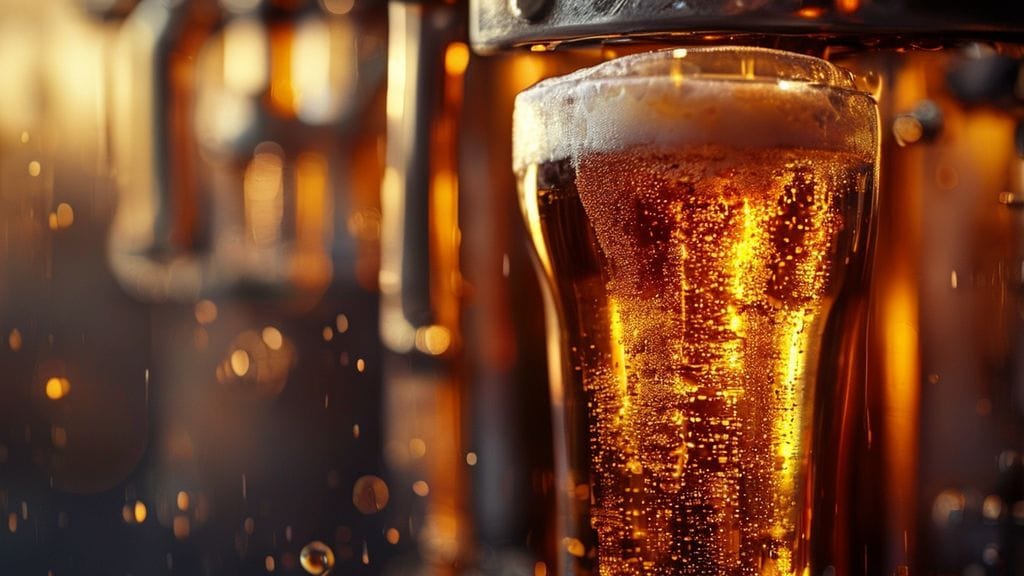
Kegerator temperature swings compromise beer quality and can lead to excessive foaming or off-flavors. The key to stable dispensing lies in addressing airflow, insulation integrity, condenser cleanliness, ambient conditions, and accurate temperature probe placement. Often, recalibrating the internal thermostat or employing an external digital controller with a precise probe is necessary to achieve and maintain optimal serving temperatures, ensuring consistent carbonation and flavor profile.
| Metric | Optimal Target | Acceptable Delta | Worst-Case Observed |
|---|---|---|---|
| Target Serving Temperature (Lager/Ale) | 2°C – 7°C (36°F – 45°F) | ± 0.5°C (± 1°F) | ± 4°C (± 7°F) |
| Kegerator Ambient Operating Temp | 18°C – 24°C (65°F – 75°F) | N/A (External Factor) | > 32°C (90°F) |
| Typical Compressor Cycle Time | 15-30 mins ON, 30-60 mins OFF | N/A | > 60 mins ON, < 15 mins OFF |
| Internal Fan Runtime (if equipped) | Continuous or synchronized with compressor | N/A | Intermittent/Non-existent |
The Unseen Enemy: Taming Kegerator Temperature Swings
When I first started dabbling in homebrewing and eventually scaled up to a dedicated kegerator, I thought the hard part was over once the beer was carbonated and chilled. Oh, how naive I was! My early days were plagued by temperature instability – beer that was perfectly poured one minute, then an uncontrollable foamy mess the next. I’d see condensation on the tap, then feel the keg sweating. My initial mistake was assuming “cold” was good enough. I quickly learned that consistency, not just coldness, is the true hallmark of a professional draft system. I’ve spent countless hours debugging these systems, from basic chest freezer conversions to advanced commercial units, and I’ve seen every potential pitfall. Let me share my battle-tested approach to achieving rock-solid temperature control.
The Math Behind Stable Temperatures
Understanding the physics of heat transfer is crucial to diagnosing and fixing kegerator temperature swings. It’s not just about a thermostat; it’s about thermal mass, insulation efficiency, and compressor duty cycles.
Thermal Mass and Specific Heat Capacity (Cp)
The beer itself, along with the stainless steel keg, represents a significant thermal mass. This is both a blessing and a curse. It buffers against rapid temperature changes but also means it takes a substantial amount of energy to change its temperature.
The energy required (Q) to change the temperature of the beer and keg can be calculated by:
Q = m * Cp * ΔT
Q= Heat energy (Joules)m= Mass of beer + keg (kg)Cp= Specific heat capacity (J/kg·K). For beer, it’s approximately 4100 J/kg·K (similar to water). For stainless steel, around 500 J/kg·K.ΔT= Change in temperature (Kelvin or °C)
My experience: A typical 19-liter (5-gallon) keg of beer (approx. 20 kg mass) needs about 82,000 Joules to drop by 1°C. This calculation highlights why consistent cooling, rather than intermittent bursts, is more effective. Frequent opening of the kegerator door, even for a moment, introduces warmer air, and the entire thermal mass has to absorb that heat.
Heat Transfer Through Insulation (U-value)
Insulation performance is critical. Heat energy naturally flows from warmer areas to colder areas. The rate of heat transfer (Q/t) through the kegerator walls and door is defined by:
Q/t = U * A * ΔTambient
Q/t= Rate of heat transfer (Watts)U= Overall heat transfer coefficient (W/m²·K). This is inversely related to insulation thickness and quality. Lower U-value means better insulation.A= Surface area of the kegerator enclosure (m²)ΔTambient= Temperature difference between the ambient room and the kegerator interior (Kelvin or °C)
My experience: I’ve seen homebrewers place their kegerators in garages where ambient temperatures fluctuate from **10°C to 35°C (50°F to 95°F)** across seasons. A rise in ΔTambient from **15°C to 25°C** (e.g., a **20°C** internal, **35°C** ambient vs. **20°C** internal, **20°C** ambient) can increase the heat load by 67%. This dramatically increases compressor run time and makes temperature stability harder to maintain. Adding external insulation or relocating the unit can often reduce this significantly.
Compressor Duty Cycle & PID Concepts
A compressor cycles ON and OFF to maintain temperature. The “duty cycle” is the percentage of time it’s running. An optimal duty cycle is typically between 30% and 50%. If it’s running >70% of the time, your system is struggling.
Basic thermostats often operate on a simple ON/OFF hysteresis control, meaning they turn on at temperature X and off at temperature Y. This inherently creates swings. Advanced external controllers often use Proportional-Integral-Derivative (PID) algorithms to minimize these swings.
- **Proportional (P):** Reacts to the current error (deviation from setpoint).
- **Integral (I):** Accounts for past errors, helping eliminate steady-state offset.
- **Derivative (D):** Anticipates future errors based on the rate of change, reducing overshoot.
My experience: While most kegerator controllers aren’t full PID, understanding the principle helps. A good external controller with a precise probe minimizes the ΔT before the compressor cycles, effectively reducing the amplitude of temperature swings to less than **0.5°C (1°F)**.
Step-by-Step Execution: Troubleshooting and Stabilization
When I face a new kegerator temperature issue, I follow a systematic diagnostic and repair process. It’s about eliminating variables.
- Verify the Thermostat Setting & Calibration:
- First, check your setpoint. It seems obvious, but I’ve seen brewers overlook it.
- Place a calibrated thermometer (e.g., a digital probe in a glass of water) inside the kegerator, ideally near the center keg. Monitor for 24 hours. Compare its readings to your kegerator’s internal display. My rule of thumb: If the internal display is off by more than **1.5°C (3°F)**, recalibration or an external controller is needed.
- Clean the Condenser Coils:
- This is a common culprit. Dust, pet hair, and grime build up on the condenser coils (usually at the back or bottom front of the unit), forming an insulating layer that traps heat.
- Action: Unplug the unit. Use a stiff brush and a vacuum cleaner with a brush attachment to meticulously clean the coils. I usually do this every **6-12 months**, depending on the environment. This alone can improve efficiency by **10-15%**.
- Inspect Door Gaskets/Seals:
- Even a tiny gap can allow warm, humid air to leak in, leading to excessive frost buildup and increased compressor run time.
- Action: Perform the “paper test.” Close the door on a piece of paper. If you can pull the paper out easily, the seal is compromised. Check for cracks, tears, or hardening. I’ve often revitalized older seals with a thin layer of petroleum jelly, but sometimes replacement is necessary.
- Evaluate Internal Air Circulation:
- Most chest freezer conversions and even some commercial units struggle with air stratification. Cold air sinks, creating temperature differentials.
- Action: Install a small internal circulation fan (e.g., a small computer fan, **80-120mm**, running on **12V DC** via an adapter). Position it to gently circulate air, not blast directly at the kegs. I set mine to run continuously or whenever the compressor is active. This can reduce internal temperature variance from **3-4°C (5-7°F)** down to less than **1°C (2°F)**.
- Optimize Temperature Probe Placement:
- If using an external controller, the probe’s placement is paramount. Don’t let it hang freely in the air.
- Action: Submerge the probe in a thermal mass – a small bottle of water or glycerin. This provides a more accurate reading of the beer’s actual temperature, preventing the compressor from short-cycling due to air temperature fluctuations.
- Address Ambient Environment:
- A kegerator struggling in a **35°C (95°F)** garage will never be as stable or efficient as one in a **20°C (68°F)** basement.
- Action: If relocation isn’t an option, consider adding external insulation to the kegerator’s exterior, especially older units. My go-to is rigid foam insulation panels, sealed with foil tape. This significantly reduces the
ΔTambientheat load.
- Consider an External Temperature Controller:
- For maximum precision, an external digital temperature controller (e.g., an Inkbird or similar) is a game-changer. These bypass the often-inaccurate internal thermostat.
- Action: Plug the kegerator into the controller, and place the controller’s probe in a thermal mass inside the unit. Set your desired temperature and hysteresis (e.g., **0.5°C / 1°F** differential). This level of control provides unparalleled stability. I swear by these for critical lagers and delicate ales. For more tips on setting these up, visit BrewMyBeer.online.
- Check for Refrigerant Leaks/Compressor Health:
- If your unit runs constantly but never gets truly cold, or if there’s an odd smell, you might have a refrigerant leak or a failing compressor.
- Action: This typically requires professional HVAC service. This is beyond the scope of home troubleshooting but is a critical point of failure.
What Can Go Wrong (Troubleshooting Summary)
Here’s a quick rundown of common issues that cause those frustrating temperature swings:
- Insufficient Airflow: Blocked condenser coils, no internal circulation fan, or fans blocked by kegs. The compressor overheats or cold spots develop.
- Compromised Insulation: Leaky door seals, poor original insulation, or external heat sources impacting the unit’s exterior. Leads to constant heat ingress.
- Faulty Temperature Sensor/Thermostat: Inaccurate readings lead to erratic compressor cycling – either short-cycling (turning off too soon) or over-cooling/over-warming.
- Overloaded System: Too many warm kegs introduced at once, or ambient temperatures are too high for the unit’s cooling capacity.
- Refrigerant System Issues: Low refrigerant, a clog, or a failing compressor. The unit simply cannot cool effectively or consistently.
- Probe Placement: If using an external controller, an exposed probe will read air temperature, not liquid temperature, leading to short cycling.
Impact of Temperature Swings on Beer Quality (My Sensory Analysis)
From a brewer’s perspective, temperature stability in the kegerator isn’t just a technical spec; it directly impacts the sensory experience of my hard-earned beer. I’ve tasted the consequences firsthand.
Appearance
- Excessive Foaming: The most obvious sign. As beer warms, CO2 solubility decreases, causing it to “break out” of solution and foam aggressively at the tap. This leads to wasted beer and a poor pour.
- Haze Formation: For cold-conditioned beers, warming can lead to chill haze as proteins and polyphenols become soluble at warmer temperatures, then precipitate again when cooled, creating a cloudy appearance.
Aroma
- Volatile Compound Loss: Rapid temperature changes can cause increased CO2 breakout, which strips away delicate hop and fermentation aromas. My crisp lagers and aromatic IPAs become muted.
- Oxidation Acceleration: While not a direct cause, warmer temperatures accelerate oxidation reactions. If any oxygen has been introduced during transfer or through a faulty seal, temperature swings will make the beer stale faster, leading to papery or sherry-like notes.
Mouthfeel
- Inconsistent Carbonation: Fluctuating temperatures mean fluctuating CO2 solubility. This leads to beer that feels flat one minute and overly fizzy the next, destroying the intended mouthfeel. A precisely carbonated beer requires a stable temperature.
- Body Perceptions: Warmer beer can sometimes feel heavier or thicker, while overly cold beer can mask subtle complexities, making it feel thin.
Flavor
- Off-Flavors from CO2 Imbalance: Over-carbonation or rapid CO2 breakout can create a sharp, carbonic bite. Under-carbonation makes beer seem dull or lifeless.
- Diacetyl/Acetaldehyde Development: While less common *in* the kegerator, if beer was kegged prematurely and then subjected to warming, residual yeast activity can be re-stimulated, leading to butterscotch (diacetyl) or green apple (acetaldehyde) flavors. A stable, cold environment ensures these compounds remain below their flavor threshold.
- Muted Flavors: Just like with aroma, temperature swings can dull the intended flavor profile, especially for delicate styles. I brew to precise standards, and I want my beer to taste exactly as I designed it, from the first pint to the last.
Frequently Asked Questions
How often should I clean my kegerator condenser coils?
I make it a habit to clean my condenser coils at least **every 6 months**, or quarterly if the kegerator is in a dusty environment (like a workshop or garage). Neglecting this simple task is one of the quickest ways to reduce efficiency and cause temperature instability.
Can ambient room temperature really affect my kegerator that much?
Absolutely. As I detailed in the math section, a high ambient temperature drastically increases the heat load (ΔTambient) on your kegerator. If your unit is in a **30°C (86°F)** room, it’s working significantly harder than one in a **20°C (68°F)** room. This leads to longer compressor run times, higher energy consumption, and greater difficulty maintaining a consistent internal temperature. Poor ambient conditions are a major contributor to temperature swings and premature compressor wear.
What’s the ideal serving temperature range for most beers?
While specific styles vary, my general recommendation for optimal serving is between **2°C and 7°C (36°F and 45°F)**. Lagers typically shine at the lower end (2-4°C / 36-39°F), while many ales are best enjoyed slightly warmer (5-7°C / 41-45°F) to allow their full aroma and flavor profile to emerge. Maintaining a range of **± 0.5°C (± 1°F)** around your target within this range is what I aim for, as it ensures consistent carbonation and flavor. For more specific beer style temperature recommendations, check out our guides at BrewMyBeer.online.
When should I consider an external temperature controller for my kegerator?
I recommend an external temperature controller in several scenarios: if your kegerator’s built-in thermostat is demonstrably inaccurate (off by more than **1.5°C / 3°F**), if you’re using a chest freezer conversion that lacks precise temperature control, or if you simply demand the highest level of temperature stability for your beer. They offer superior accuracy, finer temperature differential settings (hysteresis), and often a more reliable probe, leading to tighter temperature control and less stress on your compressor.