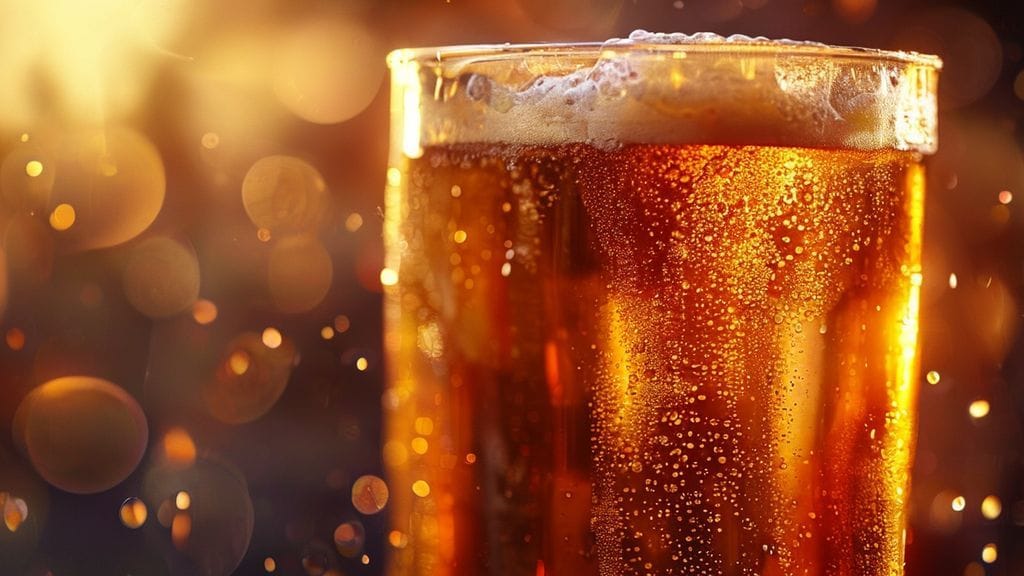
The “Shake and Bake” carbonation method rapidly force carbonates kegged beer by employing elevated CO2 pressure and aggressive agitation. This advanced technique achieves full carbonation, typically between 2.2 and 3.0 volumes, within hours rather than days, making it ideal for brewers seeking quick turnaround times and precise CO2 saturation levels, provided precise temperature and pressure controls are maintained.
| Metric | Value (Example for a Pale Ale) |
|---|---|
| Initial Beer Temperature | 2°C (35.6°F) |
| Target CO2 Volumes | 2.45 volumes CO2 |
| Initial Carbonation Pressure | 275 kPa (40 PSI) |
| Active Shaking Time | ~60-90 minutes (intermittent) |
| Resting/Settling Time | 12-24 hours |
| Serving Pressure (Target Equilibrium) | 75-90 kPa (11-13 PSI) @ 2°C |
| Keg Size (Standard) | 19 Litres (5 US Gallons) |
The Brewer’s Hook: Mastering Instant Fizz
I remember those early brewing days, waiting a week, sometimes two, for my naturally carbonated beers to reach that perfect fizz. It was an exercise in patience, often ending in disappointment when a batch was either flat or a geyser. I knew there had to be a better, faster, and more controlled way, especially as my batch sizes grew and I ventured into kegging. That’s when I started experimenting with force carbonation. While the “set it and forget it” method at serving pressure certainly works, I quickly realized its limitations when I needed a beer carbonated *now*. My pursuit of speed and precision led me down a rabbit hole of pressure, temperature, and agitation – eventually culminating in what I’ve affectionately dubbed the “Shake and Bake” method. It’s not for the faint of heart, but when executed correctly, it delivers perfectly carbonated beer in a fraction of the time, consistently. It’s a technique I now rely on for every new batch I put on tap.
The Math Behind the Fizz: CO2 Solubility Dynamics
Understanding the physics of gas dissolution is paramount to mastering the Shake and Bake method. It’s not just about turning a knob; it’s about forcing CO2 into solution. The core principle revolves around Henry’s Law, which states that the amount of dissolved gas in a liquid is directly proportional to the partial pressure of that gas above the liquid. However, for practical brewing, we simplify this into a relationship between temperature, pressure, and desired CO2 volumes.
My approach leverages three key variables:
- **Temperature (T):** CO2 dissolves more readily in colder liquids. The lower the temperature, the more CO2 the beer can hold at a given pressure. I consistently carbonate at **2°C (35.6°F)** to maximize solubility.
- **Pressure (P):** Higher external CO2 pressure drives more gas into the beer. For rapid carbonation, I use an elevated initial pressure, significantly higher than the eventual equilibrium serving pressure.
- **Agitation (A):** Shaking or rolling the keg increases the surface area contact between the CO2 gas and the beer, accelerating the dissolution process dramatically. Without agitation, even high pressure takes days.
Manual Calculation Guide: Determining Target Pressure and CO2 Needs
While CO2 solubility charts are invaluable, understanding the underlying math helps you adapt. For a desired CO2 volume at a specific temperature, you can approximate the equilibrium pressure.
Let’s assume a desired **2.5 volumes of CO2** for a Pale Ale, carbonated at **2°C (35.6°F)**.
The standard formula for calculating approximate equilibrium pressure (P in PSI) given desired CO2 volumes (V) and temperature (T in °F) is complex due to the non-linear relationship. However, using a simplified model or referencing empirical data:
* At **2°C (35.6°F)**, to achieve **2.5 volumes CO2**, the equilibrium pressure required would be approximately **85 kPa (12.3 PSI)**. This is your target *serving* pressure once carbonated.
* For the “Shake and Bake” method, we intentionally over-pressurize to accelerate the process. I typically initiate carbonation at **275 kPa (40 PSI)**. This much higher differential pressure quickly forces CO2 into the beer.
**Why 40 PSI?**
At 2°C, 40 PSI *could* theoretically lead to ~4.0 volumes of CO2 at equilibrium. However, the short, aggressive agitation period, followed by depressurization and settling, prevents this over-carbonation, allowing for rapid attainment of the target 2.5 volumes without excessive saturation. It’s a controlled over-saturation for speed.
**CO2 Consumption Calculation:**
For a 19-litre (5 US Gallon) keg aiming for 2.5 volumes, how much CO2 do we *actually* dissolve?
* 1 litre of beer at 1 atmosphere and 0°C contains 1 volume CO2 (by definition).
* For 2.5 volumes in 19 litres, that’s 19 L * 2.5 volumes = 47.5 litres of CO2 at standard temperature and pressure (STP).
* However, your CO2 tank dispenses gas under pressure. A standard 2.3kg (5 lb) CO2 tank contains roughly 1270 litres (45 cubic feet) of gas at STP. So, you’re only using a small fraction of your tank for carbonation. The extra CO2 is mostly driving the gas into solution and filling the head space.
This calculation helps reinforce that the process is about efficient gas transfer, not just a static pressure application. For more advanced tools and calculators, I always recommend checking out the resources available on BrewMyBeer.online.
Step-by-Step Execution: The Shake and Bake Method
This method is precise. Follow these steps carefully to avoid over or under-carbonation.
Chill the Beer to Target Temperature
Ensure your beer is as cold as possible. I transfer my beer into a sanitised keg and place it in my fermentation chamber or kegerator for at least **24 hours** at **2°C (35.6°F)**. This is non-negotiable for effective and consistent carbonation. Colder liquid dissolves CO2 far more efficiently.
Connect the CO2 Line
Attach your CO2 regulator to the gas-in post of your keg. Ensure all connections are secure and leak-free. I always do a quick leak check with star san solution.
Set Initial Pressure
Set your CO2 regulator to a high pressure. For my typical 19-litre kegs, I start at **275 kPa (40 PSI)**. This high pressure creates a steep concentration gradient, forcing CO2 into the beer rapidly.
Begin the “Shake” Phase
This is where the “shake” comes in. Disconnect the gas line from the keg (or keep it attached if you prefer, but be careful not to damage anything).
I then lay the keg on its side. For a 19-litre keg, I roll it back and forth on the floor or a sturdy bench for **30-45 seconds**, ensuring the beer sloshes vigorously inside, creating maximum surface area exposure to the CO2 in the headspace.
Rest and Re-pressurise (Repeat Cycle)
After the initial shake, stand the keg upright and reconnect the gas line (if disconnected). Allow the beer to rest for **5-10 minutes**. During this time, the CO2 in the headspace will continue to dissolve into the beer, and the regulator will top up the headspace pressure back to **275 kPa (40 PSI)**. You’ll hear the gas flowing for a few seconds.
Repeat steps 4 and 5 for a total of **60-90 minutes of active shaking/resting cycles**. My rule of thumb is about 6-8 cycles for most beers targeting 2.4-2.6 volumes.
Vent and Settle (The “Bake” Phase)
Once you’ve completed the shaking cycles, disconnect the CO2 line from the keg. Now, completely vent the headspace pressure from the keg by pulling the pressure relief valve. Do this slowly to avoid excessive foaming. Venting is crucial to remove the high residual pressure that would otherwise lead to over-carbonation or excessive foaming when pouring.
Reconnect the CO2 line and set your regulator to your desired serving pressure. For 2.45 volumes at 2°C, I’d set it to approximately **85 kPa (12.3 PSI)**. This is the “bake” or settling phase.
Allow the keg to sit undisturbed at serving pressure for at least **12-24 hours** in the cold. This allows the CO2 to fully equilibrate within the beer, resulting in a stable, consistent carbonation and helping any residual yeast or hop particles to settle.
Test and Adjust
After the settling period, dispense a small sample. If it’s over-carbonated, vent the headspace again and let it sit for a few more hours at serving pressure. If under-carbonated, you can either briefly increase pressure (e.g., to 140 kPa / 20 PSI) for an hour or two, or do another mini “shake and bake” cycle (but be careful, a little goes a long way here). My experience shows that with consistent temperature and timing, this method is remarkably repeatable.
Troubleshooting: What Can Go Wrong?
Even with the best intentions, things can sometimes go awry. Here’s a breakdown of common issues I’ve encountered and my solutions:
Issue: Under-Carbonated Beer (Flat or low fizz)
My Solution: First, check for leaks. A slow leak will prevent proper carbonation. If no leaks, it usually means insufficient shaking, too low initial pressure, or the beer wasn’t cold enough. Re-chill if necessary, then perform an additional 2-3 shaking cycles at **275 kPa (40 PSI)**. If it’s only slightly under-carbonated, simply increase your serving pressure by 7-14 kPa (1-2 PSI) for 24 hours.
Issue: Over-Carbonated Beer (Gushes, excessive head, sharp carbonic bite)
My Solution: This is easier to fix than under-carbonation. Disconnect the CO2, pull the pressure relief valve completely open for 20-30 seconds to vent all headspace pressure, then close it. Wait 1-2 hours for the CO2 in the beer to re-equilibrate with the reduced headspace pressure. Repeat this process every few hours until the carbonation level is satisfactory. For extremely over-carbonated beer, I’ve had to vent and wait for 24 hours.
Issue: Excessive Foaming During Pour
My Solution: This can be due to over-carbonation (see above), but often it’s a serving issue. Ensure your lines are clean and properly chilled, and your serving pressure isn’t too high for your line length. I always aim for a balanced system. If the beer is carbonated correctly but still foams, try extending your beer line by an extra meter or two.
Issue: Off-Flavors (Astringency, metallic taste)
My Solution: This is rare with proper technique, but vigorous, prolonged shaking can sometimes “bruise” the beer, especially if it’s laden with hop particulates or yeast. Ensure you’re only shaking for the recommended duration and allowing adequate settling time. Sometimes, it can be a symptom of a dirty keg or beer line; make sure your sanitation is impeccable.
Sensory Analysis: The Perfect Fizz Profile
When I get the Shake and Bake method right, the results are audibly and visually distinct.
- Appearance: The first thing I notice is a pristine clarity, especially after the 12-24 hour settling period. The carbonation presents as a consistent stream of very fine, delicate bubbles rising to the surface, forming a stable, creamy head. This head retention is excellent, leaving intricate lacing on the glass as I drink. There’s no aggressive, large bubbling that you sometimes see with improperly carbonated beer.
- Aroma: The controlled release of CO2 significantly enhances the aromatics. Volatile hop compounds and delicate esters are lifted cleanly from the beer, presenting a more vibrant and nuanced bouquet. There’s no carbonic bite masking these notes, just a crisp, clean delivery of the beer’s true character.
- Mouthfeel: This is where the method truly shines. The mouthfeel is crisp, effervescent, and bright, without being harsh or prickly. It has a champagne-like quality for higher carbonation levels or a refreshing spritz for lower volumes. The fine bubbles contribute to a perceived creaminess, and the beer feels lively and invigorating on the palate. There’s a clean finish, devoid of any lingering carbonic sensation.
- Flavor: The precise carbonation elevates the flavor profile. It brightens hop bitterness and accentuates malt sweetness or tartness depending on the style. Flavors are well-integrated and pronounced, without the dulling effect of under-carbonation or the overpowering acidity of over-carbonation. The beer’s true balance is evident.
FAQ: Common Questions from Fellow Brewers
Is the “Shake and Bake” method safe for my kegs?
Yes, when performed correctly with a properly maintained keg and regulator, it is safe. Kegs are designed to withstand pressures far exceeding **275 kPa (40 PSI)**. The key is to ensure your pressure relief valve is functional and to always vent excess pressure before disconnecting lines or opening the keg. Never exceed the rated pressure of your equipment.
Can I use this method for all beer styles?
Absolutely. I’ve successfully used it for everything from delicate Pilsners to robust Stouts and highly hopped IPAs. The only adjustment is your target CO2 volume. A Stout might be best at 2.0-2.2 volumes, while a German Wheat beer could be 3.0-3.5 volumes. Adjust your serving pressure accordingly based on the temperature/volume charts, but the initial **275 kPa (40 PSI)** and agitation phase remains consistent for rapid dissolution.
What if I don’t have a dedicated kegerator to maintain 2°C?
Maintaining a consistent cold temperature is critical. If you don’t have a kegerator, a chest freezer with a temperature controller is an excellent investment. Short of that, you can use large ice baths, but monitoring and maintaining the temperature at **2°C (35.6°F)** will be significantly more challenging and less consistent, impacting your carbonation results. Precision is key. I’ve found that investing in proper temperature control equipment dramatically improved my brewing consistency, and you can find many great options and advice on BrewMyBeer.online.
Will shaking the keg cause off-flavors or oxidation?
Oxidation is a concern, but if your kegging process is oxygen-free (purging with CO2 multiple times before transferring beer), the shaking itself won’t introduce oxygen. As for off-flavors, excessive or overly aggressive shaking of beer with heavy yeast sediment or large amounts of hop particulate *can* sometimes lead to “bruised” flavors or haze. This is why I recommend the settling period and moderate, consistent rolling rather than violent agitation. The goal is to increase surface area contact, not to churn the beer into a frothy mess.