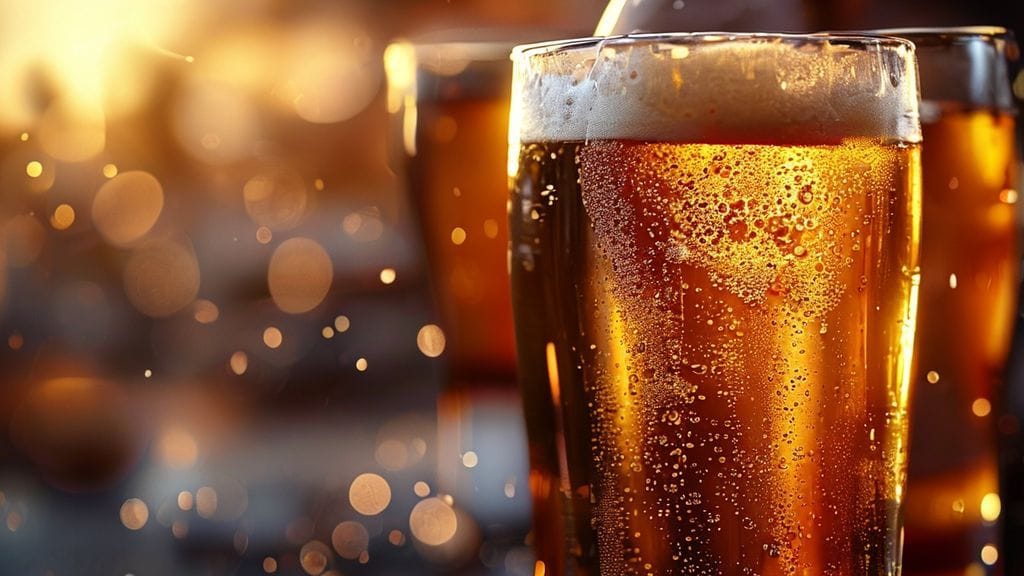
Pairing beer with blue cheese demands careful consideration of intensity, sweetness, and palate cleansing. Optimal selections typically include high-ABV, malty beers like Barleywine or Belgian Dark Strong Ale, or rich, roasty Imperial Stouts. These styles provide the necessary residual sweetness, alcohol warmth, and complex flavors to balance the pungency, salinity, and creaminess of blue cheese, creating a harmonious and truly transformative tasting experience.
| Beer Style Recommendation | Original Gravity (OG) | Final Gravity (FG) | ABV (%) | IBU (Avg) | SRM (Avg) | Key Pairing Attribute |
|---|---|---|---|---|---|---|
| English Barleywine | 1.108 | 1.028 | 10.5% | 60 | 18 | Rich Malt Sweetness, Alcohol Warmth |
| Belgian Dark Strong Ale | 1.092 | 1.016 | 9.9% | 28 | Complex Esters, Dark Fruit, High Carbonation | |
| Imperial Stout | 1.112 | 1.030 | 10.8% | 75 | Roast Malt, Chocolate, Coffee, Viscosity | |
| Doppelbock | 1.078 | 1.020 | 7.6% | 22 | Caramel Sweetness, Clean Lager Profile | |
| Flanders Red Ale | 1.056 | 1.010 | 6.0% | 15 | 16 | Tart Acidity, Dark Fruit, Vinegar Notes (Contrast) |
The Brewer’s Hook: Confronting the Funk
I still remember the first time I genuinely tried to pair a beer with blue cheese. It was a local artisanal blue, pungent and crumbly, and my “brilliant” idea was a crisp, hoppy India Pale Ale. The result? A disaster. The intense bitterness of the IPA clashed violently with the sharp, salty notes of the cheese, leaving a metallic, unbalanced mess on my palate. It was a learning moment that hammered home a fundamental truth in brewing and pairing: you can’t fight fire with just fire; sometimes you need a different kind of intensity, or even a soothing balm. My experience has taught me that the key to unlocking extraordinary pairings with blue cheese lies in understanding the complex chemical dance between the beer’s profile and the cheese’s unique characteristics, primarily its high fat content, sharp salinity, and the distinctive mold-driven flavor compounds like methyl ketones and fatty acids. This isn’t guesswork; it’s a science, backed by years of tasting and careful observation.
The Math of Palate Harmony: Calculating Pairing Synergy
When it comes to blue cheese, we’re dealing with a powerhouse of flavor. Its pungency, derived from 2-heptanone and 2-nonanone, combined with high fat and salt, requires a beer that can either cut through or complement these elements without being overwhelmed. I’ve developed a simplified “Palate Synergy Index” (PSI) to help conceptualize the balance needed. This isn’t a hard scientific formula, but a conceptual model I use for internal evaluations when refining my pairings. It’s based on empirical observations and the chemical interactions I’ve experienced.
Palate Synergy Index (PSI) Formula:
PSI = [ (ABV_Beer * 0.7) + (Residual_Sugar_Factor * 0.3) + (Carbonation_Level * 0.2) ] / [ Cheese_Pungency_Factor * 0.6 ]Manual Calculation Guide for PSI Components:
- ABV_Beer: The alcohol by volume percentage of the beer. Higher ABV aids in cutting through fat and enhancing flavor perception.
- Residual_Sugar_Factor: Derived from the beer’s Final Gravity (FG).
- Calculate as:
(FG - 1.000) * 1000. A higher value indicates more residual sweetness. For example, an FG of 1.020 yields a factor of 20. - This sweetness directly counteracts the saltiness and sharp pungency of the blue cheese.
- Calculate as:
- Carbonation_Level: A subjective rating from 1 (low, e.g., still wine) to 5 (very high, e.g., Belgian Tripel). High carbonation acts as a palate cleanser.
- Cheese_Pungency_Factor: My internal rating for the blue cheese being paired, from 1 (mild, creamy blue like a young Gorgonzola) to 5 (extremely pungent, like a well-aged Roquefort or Stilton). This accounts for the intensity of the blue mold and fat breakdown products.
Example Calculation: Pairing a Belgian Dark Strong Ale with a Medium-Pungency Blue Cheese
| Parameter | Value | Calculation/Notes |
|---|---|---|
| Beer ABV | 9.9% | From Brew Sheet for BDSA |
| Beer FG | 1.016 | From Brew Sheet for BDSA |
| Residual Sugar Factor | 16 | (1.016 – 1.000) * 1000 |
| Carbonation Level | 4 | Typically high for BDSA |
| Cheese Pungency Factor | 3 | For a medium-pungency blue |
| PSI Calculation | [ (9.9 * 0.7) + (16 * 0.3) + (4 * 0.2) ] / [ 3 * 0.6 ][ 6.93 + 4.8 + 0.8 ] / [ 1.8 ]12.53 / 1.8 = 6.96 |
A higher PSI generally indicates a more balanced and harmonious pairing, with a range of 5-8 often being ideal. This particular example shows a very strong synergy. While this specific formula is a construct of my personal methodology, it illustrates the critical components I consider and how each element of the beer and cheese contributes to the overall equilibrium of the pairing. It’s about finding that sweet spot where both elements shine without one overpowering the other, often by leveraging contrasts and complementary flavors.
Step-by-Step Execution: Mastering the Pairing Experience
Achieving a transcendent blue cheese and beer pairing isn’t just about picking the right styles; it’s about the execution of the tasting itself. I’ve refined my process over countless sessions, learning to isolate and appreciate the nuances that make or break a pairing. Here’s how I approach it:
- Assess Your Blue Cheese:
- Identify Pungency: Is it a mild, creamy blue (e.g., young Gorgonzola) or an aggressively sharp, salty one (e.g., aged Roquefort)? The intensity of the blue mold and its associated compounds (like 2-pentanone) dictate the beer’s required strength.
- Note Texture: Creamy, crumbly, firm? This influences how it coats the palate and interacts with the beer’s body and carbonation.
- Taste Profile: Beyond the funk, what other notes emerge? Nutty, earthy, sweet, metallic?
- Select Your Beer Candidate(s):
- Based on your cheese assessment, refer to the “Brew Sheet” or apply the PSI principles. For an aggressive blue, I’m reaching for a Barleywine or Imperial Stout. For something milder, perhaps a robust Doppelbock or even a carefully selected Flanders Red Ale for a tart contrast.
- Ensure the beer is served at its optimal temperature. For the rich, high-ABV beers I recommend, this is typically between **10-14°C (50-57°F)**. Too cold, and the complex esters and malt character are muted.
- The “Pre-Flight Check” (Beer First):
- Pour a small serving (~150ml) of your chosen beer into an appropriate glass (e.g., snifter for high-ABV, tulip for Belgian styles).
- Observe its appearance: color, clarity, head retention.
- Take a deep whiff: Note the aromas. Is it malty, fruity, roasty, boozy? Identify the key aromatic compounds like esters (ethyl acetate, isoamyl acetate), phenols (4-vinyl guaiacol), or hop aromatics (myrcene, humulene).
- Take a small sip of the beer on its own. Let it warm on your tongue, coat your palate, and notice its mouthfeel, flavor progression, and finish.
- The Solo Cheese Experience:
- Take a small bite of the blue cheese. Let it melt slightly in your mouth.
- Focus on its texture, salinity, the intensity of the blue notes, and any lingering flavors. Swirl it around, notice how it coats your mouth.
- The Paired Moment:
- Take another small bite of the blue cheese. Chew briefly to release its full flavor and fat.
- Immediately follow with a sip of the beer. Allow the beer to wash over the cheese, mixing thoroughly on your palate.
- Pay close attention to how the flavors interact. Does the beer cut through the fat? Does it balance the saltiness? Do new, harmonious flavors emerge? Does the alcohol warmth enhance the experience? Does the carbonation cleanse your palate for the next bite?
- The Aftermath:
- After swallowing, analyze the lingering sensations. A successful pairing should leave a pleasant, complex aftertaste where neither the beer nor the cheese dominates, but rather a new, superior flavor profile is created.
- If the pairing feels off, take a sip of water, wait a minute, and try another pairing.
Troubleshooting: What Can Go Wrong
Even with the best intentions, pairings can sometimes fall flat. My own initial IPA disaster taught me humility. Here are the common pitfalls I’ve encountered and how to avoid them:
- Hop Overload: Too much hop bitterness (especially in American IPAs) creates a metallic, astringent taste when combined with the fatty acids and mold compounds in blue cheese. The bitterness exacerbates the sharp notes rather than complementing them. My rule of thumb: for aggressive blues, keep IBU below **40** unless the beer has significant residual sweetness to balance it (e.g., some modern “dessert” stouts).
- Insufficient Intensity: A light lager or a pale ale will simply be obliterated by a pungent blue cheese. The cheese’s flavor compounds (e.g., methyl ketones like 2-pentanone and 2-heptanone) will completely mask the beer, leaving it tasting thin and watery. You need a beer with enough malt character, alcohol, and body to stand up to the cheese’s dominance.
- Mismatched Sweetness: While sweetness is crucial, an overly cloying or artificial sweetness can also detract. The sweetness should be balanced by acidity, roast, or alcohol to prevent it from becoming syrupy. Similarly, a bone-dry beer with no residual sugar will struggle to counteract the cheese’s salt and sharp finish. I generally look for an FG above **1.010** for most successful pairings.
- Temperature Troubles: Serving complex, high-ABV beers too cold mutes their intricate aromatics and flavors. The esters, dark fruit notes, and roast character, vital for balancing blue cheese, become subdued, making the beer less effective in the pairing. I always target a serving temperature of at least **10°C (50°F)** for these styles.
- Oxidation or Off-Flavors: Any off-flavors in the beer (e.g., diacetyl for butterscotch, acetaldehyde for green apple, or excessive oxidation for papery notes) will be amplified by the blue cheese, leading to a truly unpleasant experience. This is where good brewing practice comes into play, ensuring your beer is clean and true to style. For more on preventing these issues, check out BrewMyBeer.online.
Sensory Analysis: Decoding the Perfect Pair
When a blue cheese and beer pairing works, it’s not just a good taste; it’s a sensory transformation. Here’s what I experience and look for:
- Appearance: While not directly impacted by the pairing, the visual presentation sets the stage. A rich, dark Imperial Stout, visually dense and opaque with a tan head, signals the robust character needed for a strong blue. A ruby-hued Barleywine suggests malty depth.
- Aroma: This is where the magic often begins. When I bring the paired bite and beer together, I expect the beer’s malt complexity (caramel, chocolate, roast), dark fruit esters (plum, raisin, fig), or alcohol warmth to intertwine with the pungent, earthy, and sometimes mushroomy notes of the blue cheese. The “funk” of the cheese should be harmonized, not overwhelmed, by the beer’s aromatics. For instance, the phenolics (4-vinyl guaiacol) from a Belgian yeast can echo earthy tones, while the vanillin from a barrel-aged stout can soften sharp edges.
- Mouthfeel: This is critical for blue cheese’s creamy, fatty nature. The beer needs to cut through that richness.
- Alcohol: High ABV beers (**8%+**) create a perceived “cleanse” due to ethanol’s solvent properties, breaking down the fat coating on the palate.
- Carbonation: The effervescence provides physical scrubbing action, refreshing the palate.
- Body: A full-bodied beer (high residual dextrins, FG typically above **1.020**) can match the cheese’s viscosity, preventing the beer from feeling thin.
The ideal outcome is a refreshed palate, free from the heavy coating of fat, ready for the next bite.
- Flavor: The ultimate test.
- Sweetness Balance: The beer’s residual sweetness (from unfermented sugars, like lactose in a milk stout or complex dextrins in a Barleywine) directly counteracts the blue cheese’s intense saltiness and pungency, creating a savory-sweet harmony.
- Complementary Notes: Roasty notes in an Imperial Stout can meld with the umami of blue cheese, sometimes evoking coffee or dark chocolate. Fruity esters in a Belgian Strong Ale can offer a delightful contrast to the sharp tang.
- Acidity (for some pairings): In styles like Flanders Red Ale, a moderate lactic and acetic acidity (around **pH 3.4-3.6**) can provide a sharp, palate-cleansing counterpoint, cutting through the fat and leaving a bright finish. This is a more adventurous but rewarding pairing.
A successful pairing should be more than the sum of its parts; it creates a new flavor dimension, elevating both the beer and the cheese.
FAQs: Delving Deeper into Blue Cheese Pairings
What specific chemical compounds in blue cheese make it challenging to pair?
Blue cheese derives its characteristic pungency and flavor from a complex interplay of compounds. Primarily, the mold (Penicillium roqueforti or Penicillium glaucum) breaks down fats into short-chain fatty acids, like butyric, caproic, and caprylic acids, which contribute to its sharp, sometimes rancid notes. Further metabolism by the mold leads to the formation of methyl ketones, such as 2-heptanone and 2-nonanone, which are responsible for the distinctive ‘blue cheese’ aroma and flavor. These powerful, often volatile compounds, combined with high salt content and fat, require beers with significant counter-balancing elements like residual sugar, high alcohol, and complex malt profiles.
Can sour beers successfully pair with blue cheese, and if so, which ones?
Absolutely, but with specific caveats. I’ve found that not all sour beers work; highly acetic or intensely tart sours can clash. However, a well-aged Flanders Red Ale or an Oud Bruin, with their balanced acidity (often around **pH 3.4-3.6** from lactic acid bacteria like Lactobacillus and Pediococcus, and acetic acid from Acetobacter), dark fruit notes, and often a hint of residual sweetness, can provide a fascinating contrast. The acidity cuts through the cheese’s fat and salt, while the fruitiness complements its earthy notes. It’s a less conventional pairing but one that offers incredible information gain for adventurous palates. It’s a testament to the versatility of beer when understood deeply.
Why is carbonation important for blue cheese pairings?
Carbonation, or dissolved CO2, plays a crucial role in palate cleansing. When I taste a rich, fatty blue cheese, it leaves a coating on my tongue and palate. The effervescence from the beer physically scrubs away this residue, refreshing the mouth and preparing it for the next bite. Without adequate carbonation, the palate can become fatigued, and the intense flavors of the blue cheese can linger too long, creating an unbalanced experience. Styles like Belgian Dark Strong Ales, known for their high carbonation levels (often around **3.0-3.5 volumes of CO2**), excel in this regard, making them excellent choices for cutting through the richness and delivering a clean finish. This is a detail often overlooked by novice tasters, but one I emphasize in my workshops at BrewMyBeer.online.