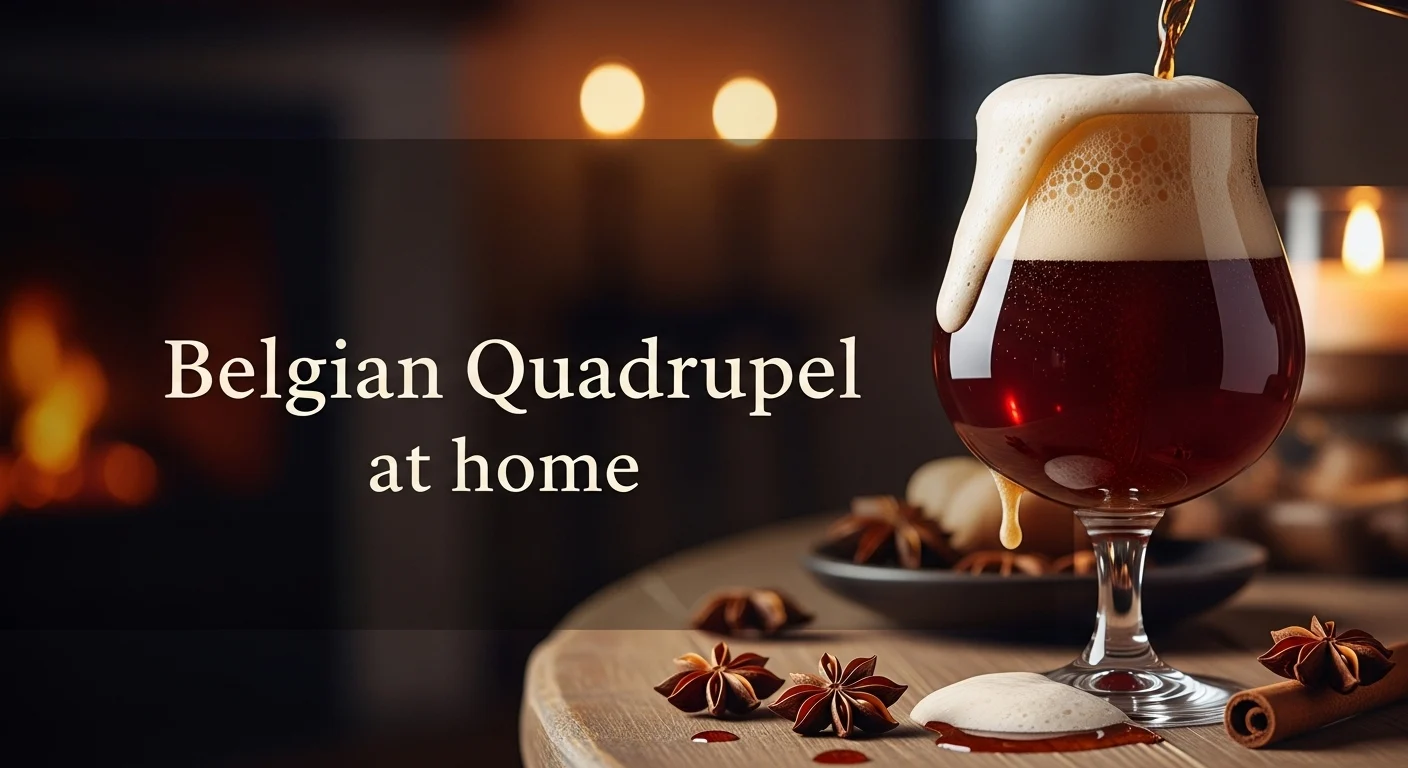
Master brewing Belgian Quadrupel at home with authentic techniques, proper sugar integration, specialized yeast management, and extended aging for creating complex strong Belgian ales.
Belgian Quadrupel at home represents the pinnacle of monastic brewing achievement, requiring mastery of complex fermentation techniques, sophisticated sugar integration, and patient aging protocols to create the distinctive dark amber appearance, rich fruit-and-spice complexity, and deceptive alcohol warmth that defines this strongest expression of Belgian brewing artistry. After brewing numerous Belgian Quadrupel at home recipes over the past twelve years and studying traditional Trappist methods from legendary abbeys, I can confidently state that mastering this style demands understanding the intricate balance between premium Belgian malts, strategic candi sugar additions, and controlled high-temperature fermentation that creates beers ranging from 9-12% ABV while maintaining the remarkable drinkability and spiritual depth that separates exceptional Quads from ordinary strong ales.
My Belgian Quadrupel at home journey began with failed attempts that either produced harsh, alcoholic monsters lacking complexity or sweet, cloying beers that missed the essential dry finish defining authentic Trappist character. The transformation occurred when I discovered that proper grain bill architecture and systematic sugar integration create the foundation while controlled fermentation progression and extended aging develop the profound complexity that makes Quadrupels both powerful and contemplative through proven monastic brewing techniques.
This comprehensive guide to Belgian Quadrupel at home explores every aspect of advanced Belgian brewing including complex grain bill formulations, specialized sugar techniques, intensive yeast management, and extended conditioning protocols that produce the signature dark amber appearance, fig-and-raisin aromatics, and warming alcohol integration defining Belgium’s most revered beer contribution. From understanding the style’s abbey origins to mastering modern brewing applications, this guide provides complete knowledge for creating outstanding Quadrupels that honor monastic brewing heritage.
Whether you’re advancing into strong beer production or seeking to master Belgian brewing traditions, learning Belgian Quadrupel at home provides essential skills while creating profound beers that demonstrate both technical mastery and spiritual appreciation through systematic approach and proven methods.
Understanding Traditional Belgian Quadrupel Character
Authentic Belgian Quadrupel displays deep amber to dark brown coloration with exceptional complexity ranging from 1.092-1.120 original gravity while achieving 9.0-12.0% alcohol content through sophisticated grain bills enhanced by dark candi sugar that creates the signature fig, raisin, and date aromatics with warming alcohol integration defining monastic brewing excellence.
Rich Dark Amber Appearance
Traditional Quadrupel exhibits deep amber to mahogany hues ranging from 12-25 SRM with excellent clarity and persistent tan foam while showcasing proper sugar integration and extended conditioning that creates visual elegance essential for monastic presentation.
Complex Fruit and Spice Integration
Dark candi sugar and Belgian yeast create distinctive aromatics including fig, raisin, date, plum, and brown sugar notes while esters and phenols contribute clove, pepper, and bread-like complexity through specialized fermentation management.
Full Body with Deceptive Drinkability
Substantial mouthfeel supports complex flavor integration while proper attenuation and alcohol balance create surprising drinkability despite high strength through systematic brewing technique and ingredient selection.
Warming Alcohol Integration
High alcohol content provides gentle warmth without harshness while careful fermentation management prevents fusel development and creates smooth integration that enhances rather than dominates flavor perception.
Monastic Contemplative Character
Exceptional complexity rewards patient appreciation while layered flavors develop and integrate over extended aging periods that create profound drinking experiences worthy of monastic tradition.
For comprehensive Belgian Quadrupel brewing techniques and advanced monastic methods, explore the traditional abbey brewing resources at BrewMyBeer’s Belgian ale section, where Trappist brewing wisdom meets modern homebrewing precision.
Essential Belgian Quadrupel Ingredients
Authentic Belgian Quadrupel at home requires premium ingredient combinations including quality Belgian malts, traditional candi sugars, noble hops, and specialized abbey yeast strains that create distinctive character through ingredient authenticity and monastic brewing heritage.
Premium Belgian Pilsner Malt Foundation
Floor-malted Belgian Pilsner comprises 60-70% of grain bills providing essential clean grain character while contributing subtle honey-like sweetness and proper enzymatic foundation that supports complex specialty malt integration.
Munich Malt Complexity Enhancement
German Munich malt adds 20-25% rich, toasted character while providing enhanced color and malt depth that creates traditional Belgian strong ale complexity without overwhelming delicate balance.
Specialty Belgian Malt Integration
Special B malt contributes 3-5% distinctive raisin character while Aromatic malt enhances bread-like complexity and CaraMunich provides caramel sweetness through careful proportion control.
Dark Belgian Candi Sugar
Authentic dark candi sugar comprises 15-20% of fermentables while contributing fig, raisin, and molasses notes essential for traditional Quadrupel character through proper dissolution and timing techniques.
Noble Hop Restraint
Traditional varieties including Hallertau and East Kent Goldings provide gentle, earthy bitterness while maintaining restraint that allows malt and yeast character complete dominance.
Abbey Yeast Selection
Specialized strains including Wyeast 1214 and White Labs WLP530 produce authentic monastic character while developing complex esters and phenols through high-temperature fermentation protocols.
Belgian Water Profile
Soft to moderately hard water supports traditional brewing while balanced mineral content enhances enzymatic activity without harsh interference through proper chemistry management.
| Ingredient Component | Percentage Range | Character Contribution | Quality Requirements | Monastic Authenticity |
|---|---|---|---|---|
| Belgian Pilsner Malt | 60-70% | Clean foundation | Floor-malted quality | Traditional base |
| Munich Malt | 20-25% | Toasted complexity | German quality | Essential depth |
| Special B Malt | 3-5% | Raisin character | Belgian specialty | Signature flavor |
| Dark Candi Sugar | 15-20% | Fruit complexity | Authentic Belgian | Traditional requirement |
| Noble Hops | 20-35 IBU | Gentle balance | European varieties | Monastic restraint |
Complete Traditional Quadrupel Recipe
This authentic Belgian Quadrupel at home recipe produces 5 gallons of traditional abbey-style strong ale with proper complexity, exceptional strength, and monastic character through carefully selected ingredients and proven Belgian brewing techniques.
All-Grain Recipe Specifications
Target original gravity 1.103, final gravity 1.015, 30 IBU, 25 SRM, and 10.0% ABV while creating authentic Quadrupel character through traditional ingredient ratios and systematic Belgian brewing methods.
Complex Belgian Grain Bill
Premium ingredients include 11 lbs Floor-Malted Pilsner, 4 lbs Munich malt, 12 oz Special B, and 8 oz Aromatic malt while providing proper foundation, complexity, and authentic monastic character development.
Traditional Sugar Integration
2 lbs dark Belgian candi sugar added at 15 minutes provides essential fruit character while contributing to proper attenuation and alcohol development through systematic timing and dissolution.
Noble Hop Schedule
Hop program includes 3 oz Hallertauer Mittelfrueh at 60 minutes and 0.5 oz at 3 minutes while creating balanced bitterness and subtle floral character through traditional German hop integration.
Abbey Yeast Selection
Belgian Abbey yeast Wyeast 1214 provides authentic character while ensuring proper fermentation performance and developing complex monastic flavor profiles through specialized strain selection.
Advanced Belgian Mashing Techniques
Sophisticated Belgian Quadrupel at home mashing employs systematic protocols that optimize complex grain bill extraction while developing proper body and fermentability through temperature control and enzyme management.
Extended Single Infusion Protocol
Mash at 148°F for 75 minutes ensuring maximum fermentability while promoting beta amylase activity that creates highly attenuable wort essential for dry finish despite high alcohol content.
Temperature Precision Management
Maintain consistent mash temperature throughout conversion while avoiding fluctuations that might affect enzyme activity or extraction efficiency from premium Belgian malts.
Extended Mash Duration Benefits
Long conversion period maximizes extract from complex grain bills while ensuring complete starch breakdown and optimal sugar development for high-gravity brewing applications.
Mash-Out Temperature Control
Raise temperature to 168°F for improved lautering while stopping enzymatic activity and enhancing runoff efficiency through proper temperature progression and timing.
pH Management Strategy
Target mash pH around 5.2-5.4 for optimal extraction while ensuring proper enzyme activity and flavor development throughout complex grain bill processing.
Specialized Sugar Integration Techniques
Strategic candi sugar utilization creates authentic Belgian Quadrupel at home character while proper timing, dissolution, and variety selection develop the complex fruit notes defining traditional monastic brewing excellence.
Dark Candi Sugar Selection
Authentic Belgian dark candi sugar provides traditional character while contributing fig, raisin, and molasses notes essential for Quadrupel complexity through proper variety selection and quality assessment.
Late Boil Addition Strategy
Add sugar during final 15 minutes of boil while ensuring complete dissolution and sterilization without excessive caramelization that might affect intended flavor development.
Sugar Dissolution Optimization
Break sugar into smaller pieces for rapid dissolution while preventing settling and ensuring uniform distribution throughout wort for consistent fermentation performance.
Alternative Sugar Options
Dark brown sugar provides acceptable substitute when candi unavailable while maintaining similar flavor contributions through comparable processing and Maillard development.
Fermentation Impact Assessment
Monitor sugar integration effects on yeast performance while understanding how additional fermentables affect attenuation patterns and final gravity achievement.
Extended Belgian Boiling Protocols
Traditional Belgian Quadrupel at home boiling requires extended duration and systematic processing that develops proper color integration and ensures complete hop utilization through thermal management.
Extended 90-120 Minute Boil
Long boils enhance color development and Maillard reactions while creating proper concentration and flavor complexity essential for traditional Belgian strong ale character development.
Progressive Hop Addition Strategy
Staggered additions throughout boil create refined bitterness while showcasing noble hop character without overwhelming complex malt and sugar integration.
Sugar Addition Timing Coordination
Coordinate sugar additions with hop schedule while ensuring proper dissolution and preventing excessive caramelization through systematic timing management.
Kettle Finings and Clarification
Whirlfloc tablets improve clarity and protein removal while supporting clean final beer presentation essential for monastic brewing standards.
Cooling and Transfer Optimization
Rapid cooling preserves hop character and prevents oxidation while maintaining wort quality for challenging high-gravity fermentation applications.
Advanced Belgian Fermentation Management
Sophisticated Belgian Quadrupel at home fermentation requires precise environmental control while managing high-gravity worts and developing complex yeast character through systematic temperature progression and yeast health management.
Temperature Progression Strategy
Begin fermentation at 64°F rising to 72°F over 7 days while controlled temperature increase promotes ester development and complete attenuation through systematic environmental management.
High Yeast Cell Count Requirements
Large yeast starters ensure adequate cell populations while high-gravity conditions require substantial viable yeast for healthy fermentation and complete sugar conversion.
Extended Primary Fermentation
Allow 2-3 weeks primary fermentation monitoring gravity while ensuring complete yeast activity and proper attenuation before conditioning phases.
Yeast Health and Nutrition
Provide adequate nutrients for challenging fermentation conditions while high alcohol and sugar concentrations stress yeast requiring enhanced nutritional support.
Final Gravity Assessment
Monitor attenuation targeting 1.015-1.024 final gravity while understanding that residual sugars contribute to mouthfeel and balance in traditional Quadrupel character.
Extended Aging and Conditioning
Traditional Belgian Quadrupel at home conditioning develops exceptional character through extended aging that creates smooth alcohol integration and complex flavor development defining monastic brewing excellence.
Minimum Aging Requirements
Age 6-12 months for proper character development while understanding that exceptional Quadrupels continue improving with extended storage through systematic flavor integration.
Temperature Control During Aging
Maintain consistent cellar temperature throughout conditioning while avoiding fluctuations that might disturb development or affect delicate balance integration.
Flavor Integration Process
Complex chemical processes develop during extended aging while harsh edges soften and flavors integrate to create the smooth, complex character defining mature Quadrupel quality.
Clarity Development Benefits
Extended aging improves appearance and reduces sediment while natural settling eliminates particulate matter and creates brilliant presentation through patient conditioning.
Vintage Considerations
Different aging periods create unique character expressions while systematic evaluation guides optimal consumption timing and cellar management for premium quality development.
Water Chemistry for Belgian Quadrupels
Proper water chemistry supports Belgian Quadrupel at home development while traditional Belgian water profiles enhance malt extraction and yeast performance through balanced mineral content and systematic chemistry management.
Belgian Water Profile Emulation
Soft to moderately hard water enhances traditional character while supporting optimal enzyme activity and yeast health that create authentic monastic brewing conditions.
Calcium Requirements
Adequate calcium supports yeast health and protein precipitation while providing essential minerals for challenging high-gravity fermentation without excessive mineral interference.
pH Management Throughout Brewing
Systematic pH control optimizes extraction and fermentation while maintaining proper conditions for complex grain bills and yeast performance.
Mineral Balance Optimization
Balanced sulfate and chloride ratios support character development while enhancing both malt sweetness and hop balance through systematic chemistry management.
Treatment Restraint
Avoid excessive water modification while maintaining clean mineral profile that allows complex ingredient interactions complete expression without harsh interference.
Advanced Quadrupel Variations
Creative Belgian Quadrupel at home development explores enhancement opportunities while maintaining traditional foundations through complementary ingredient additions and specialized aging techniques.
Barrel Aging Applications
Oak aging adds complexity to traditional Quadrupel while bourbon or cognac barrels contribute vanilla, caramel, and tannin notes that enhance monastic character through traditional aging methods.
Fruit Integration Techniques
Dates, figs, and raisins complement natural character while fresh or dried fruits enhance traditional flavors without overwhelming complex base beer foundations.
Spice Enhancement Options
Traditional monastery spices including cardamom and coriander create unique variations while maintaining authentic monastic brewing tradition through historical ingredient usage.
Alternative Sugar Explorations
Maple syrup, honey, and molasses create unique profiles while maintaining traditional character through careful integration and proportion control.
Vintage Blending Techniques
Combine different aged batches for complexity while creating unique expressions that showcase brewing skill and patience through systematic blending approaches.
Quality Control and Evaluation
Systematic quality management ensures exceptional Belgian Quadrupel at home while understanding traditional standards and evaluation criteria guides optimization and character development.
Sensory Evaluation Standards
Complex aromatics indicate proper yeast and sugar integration while fig, raisin, and spice balance demonstrates successful fermentation management and ingredient harmony.
Alcohol Integration Assessment
Smooth warmth without harsh alcohol character indicates proper fermentation temperature control while excessive heat suggests processing problems requiring technique adjustment.
Aging Progression Monitoring
Systematic evaluation tracks character development while understanding optimal consumption timing guides cellar management and quality assessment protocols.
Balance Evaluation Criteria
Proper integration between sweetness, alcohol, and complexity while avoiding cloying or harsh character that might compromise authentic monastic brewing excellence.
Commercial Benchmark Comparison
Authentic abbey examples provide quality standards while Rochefort 10, Westvleteren 12, and St. Bernardus 12 demonstrate traditional character and brewing excellence.
Troubleshooting Quadrupel Production
Common Belgian Quadrupel at home challenges require systematic solutions while addressing problems including fermentation difficulties, balance issues, and aging problems that affect quality and authenticity.
Stuck Fermentation Issues
High gravity stress requires enhanced yeast management through adequate cell counts, nutrition, and temperature control while ensuring complete sugar conversion.
Excessive Sweetness Problems
Poor attenuation creates cloying character requiring improved yeast health and fermentation management while achieving proper dryness essential for balance.
Harsh Alcohol Character
Fusel alcohol development indicates temperature problems requiring better fermentation control and yeast management while maintaining clean character development.
Poor Complexity Integration
Inadequate aging affects character development requiring extended conditioning and proper storage conditions while allowing complex flavors complete integration.
Balance and Drinkability Issues
Recipe or process problems affect overall quality requiring systematic evaluation and adjustment while maintaining authentic monastic character and exceptional drinkability.
Conclusion and Brewing Mastery
Mastering Belgian Quadrupel at home requires dedication to traditional techniques and ingredient quality while systematic sugar integration, controlled fermentation, and patient aging create exceptional examples that honor monastic brewing heritage.
Begin with premium Belgian ingredients and proven methods while building understanding of complex yeast management and high-gravity brewing that enables authentic character development through traditional techniques.
Master fermentation temperature control and aging protocols while developing patience for extended conditioning that allows exceptional complexity development through proven monastic methods.
Practice systematic evaluation and recipe refinement while understanding that exceptional Quadrupels reward attention to detail and spiritual appreciation through traditional brewing artistry.
Remember that Belgian Quadrupel at home represents brewing mastery while creating profound, contemplative beers that demonstrate both technical excellence and cultural appreciation through systematic technique application.
The investment in understanding Belgian brewing provides lasting education while creating exceptional strong ales that honor Belgium’s most significant contribution to world brewing heritage and monastic tradition.
Choose premium ingredients and proven techniques while maintaining respect for monastic tradition that created this sublime style through centuries of abbey brewing refinement and spiritual dedication.
About the Author
Tyler Yeastman specializes in fermentation microbiology and yeast behavior, bringing over 12 years of experience in both commercial brewing and laboratory research to his analysis of complex high-gravity fermentation systems. His expertise in microbial ecology and controlled fermentation makes him particularly knowledgeable about the precise environmental controls required for successful Belgian Quadrupel production, especially managing yeast health in challenging high-alcohol brewing conditions with complex sugar profiles.
Tyler has extensively studied Belgian brewing traditions through research collaborations with Trappist abbeys where he documented traditional fermentation methods and yeast management protocols used in monastic brewing. His scientific approach to understanding fermentation helps brewers appreciate the remarkable biological complexity involved in managing high-gravity worts while developing the complex ester and phenol profiles that define authentic abbey ales. Tyler maintains a comprehensive fermentation laboratory where he studies Belgian yeast strains and sugar fermentation patterns, contributing to several research publications on strong ale production and Belgian brewing microbiology.
His systematic approach to yeast management and high-gravity fermentation makes him particularly skilled at troubleshooting the unique challenges presented by Quadrupel brewing and extended aging requirements. When not analyzing fermentation data or researching Belgian brewing techniques, Tyler enjoys exploring how traditional monastic brewing wisdom can be enhanced through modern microbiological understanding while preserving the spiritual depth and complexity that makes Belgian Quadrupel such a remarkable expression of both brewing artistry and contemplative tradition. Contact Tyler at [email protected] or explore his comprehensive fermentation guides and Belgian brewing resources at brewmybeer.online.