Complete comparison of Bud Light vs Coors Light covering taste, calories, carbs, ABV, and value – discover which classic light beer wins.
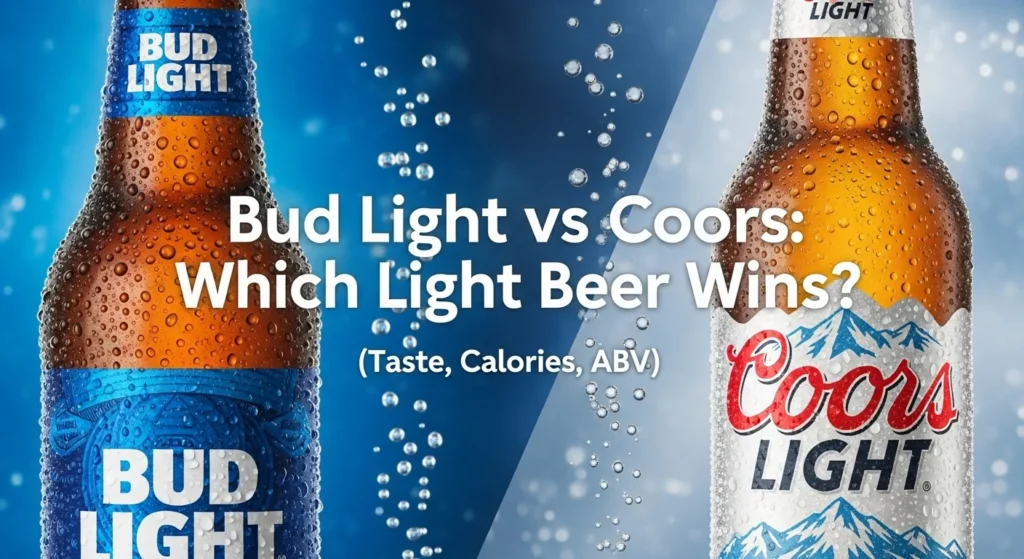
You’re standing in front of the beer cooler debating between the blue can and the silver can. Bud Light or Coors Light? It’s a question I’ve heard asked at every barbecue, tailgate, and casual gathering over the past decade. After years conducting blind taste tests and analyzing beer for major publications, I’ve tasted these two titans of American light beer hundreds of times in every possible setting.
Here’s what you need to know: Bud Light contains 110 calories and 6.6 grams of carbs, while Coors Light has 102 calories and 5.0 grams of carbs. Both clock in at 4.2% ABV. But the Bud Light vs Coors Light debate runs deeper than numbers alone. Taste profile, drinkability, value, and personal preference all factor into which light beer deserves your loyalty (or at least your next six-pack purchase).
After conducting extensive blind taste tests, comparing nutrition data, and analyzing consumer preferences, I’m breaking down the complete Bud Light vs Coors Light showdown. Whether you’re choosing your go-to light beer, settling a bar debate, or just curious about these American icons, this comprehensive comparison covers everything that matters.
Side-by-Side Nutrition Comparison
Let’s start with the hard data. Here’s the complete nutritional breakdown for Bud Light vs Coors Light per standard 12-ounce serving:
| Nutrient | Bud Light | Coors Light | Winner |
|---|---|---|---|
| Calories | 110 | 102 | Coors Light (-8 calories) |
| Carbohydrates | 6.6g | 5.0g | Coors Light (-1.6g carbs) |
| Protein | 0.9g | <1g | Tie (essentially equal) |
| Alcohol Content | 4.2% | 4.2% | Tie (identical) |
| Fat | 0g | 0g | Tie (both zero) |
| Cholesterol | 0g | 0g | Tie (both zero) |
Verdict: Coors Light wins on nutrition with 8 fewer calories and 1.6 fewer grams of carbs despite identical alcohol content. Over three beers, that’s 24 fewer calories and 4.8 fewer carbs – equivalent to nearly a quarter of an additional beer calorically.
The fascinating question: why does Bud Light have more calories with the same ABV? The answer lies in residual carbohydrates. According to VinePair, Anheuser-Busch uses rice in their mash to make Bud Light, while MillerCoors adds corn syrup directly into the boil for Coors Light. Both methods provide fermentable sugars, but the fermentation process and yeast strains leave different residual carbohydrate profiles.
Taste Profile Comparison
Nutrition tells only half the story. Taste determines what you’ll actually enjoy drinking (and reorder). From my extensive blind taste testing experience comparing Bud Light vs Coors Light, here’s what distinguishes them:
Bud Light Taste Profile:
- Body: Slightly fuller, more beer-like mouthfeel
- Flavor: Subtle malt sweetness with grainy undertones
- Hops: Mild bitterness, barely perceptible hop character
- Finish: Clean with a faint lingering mossy quality
- Carbonation: Moderate, consistent throughout
- Overall: More traditionally “beer-like” experience
According to beer experts, Bud Light maintains more malt character and subtle hop presence, making it taste more like what people expect from beer, even if that expectation is minimal. The rice-based brewing creates a slightly richer mouthfeel without heaviness.
Coors Light Taste Profile:
- Body: Thinner, lighter, almost water-like
- Flavor: Extremely clean, subtle grain notes
- Hops: Minimal to none, virtually undetectable
- Finish: Crisp, disappears quickly, no lingering aftertaste
- Carbonation: High, effervescent, very bubbly
- Overall: Maximum refreshment, minimum flavor
Coors Light prioritizes extreme drinkability over flavor complexity. The corn syrup brewing method and extended cold lagering (Coors famously advertises “cold-activated” cans) create something remarkably clean and neutral. This works perfectly for hot weather drinking or situations where you want refreshment without contemplation.
Personal Take: In blind taste tests I’ve conducted, Bud Light typically wins on “beer flavor” while Coors Light wins on “refreshment.” Neither is going to wow craft beer enthusiasts, but both excel at their intended purpose – being easy-drinking, inoffensive, and crushable in social situations.
Brewing Methods and Ingredients
Understanding how these beers are made explains why they taste different despite similar nutrition profiles. The Bud Light vs Coors Light brewing differences matter more than you might expect.
Bud Light Brewing Process:
- Base: Rice and malted barley blend
- Hops: Combination of imported and domestic hops
- Yeast: Proprietary Anheuser-Busch lager yeast
- Aging: Traditional lagering process
- Water: Beechwood aging (contact with beechwood chips)
Anheuser-Busch famously caused controversy with a 2019 Super Bowl ad that mocked competitors for using corn syrup. While technically accurate, the ad misrepresented the brewing science – yeast consumes all fermentable sugars (whether from rice or corn syrup) during fermentation, leaving no actual corn syrup in the finished beer.
Coors Light Brewing Process:
- Base: Corn syrup and malted barley blend
- Hops: Hop extract rather than whole hops
- Yeast: MillerCoors lager yeast strain
- Aging: Extended cold lagering at near-freezing temperatures
- Water: Rocky Mountain spring water (marketing emphasis)
Coors emphasizes their Rocky Mountain heritage and cold brewing process. The extended cold lagering creates that distinctively clean, crisp profile that Coors Light is known for. Whether the Rocky Mountain water makes a measurable difference versus other quality brewing water is debatable, but the branding certainly resonates with consumers.
If you’re fascinated by how different ingredients and methods create distinct beer profiles, exploring craft beer brewing techniques provides incredible insight into brewing science.
Drinkability and Refreshment Factor
This is where Bud Light vs Coors Light gets subjective. “Drinkability” depends on situation, temperature, and what you’re looking for in the moment.
Bud Light Drinkability:
- Best served: 35-40°F (very cold but not frozen)
- Ideal situations: Social drinking, casual gatherings, watching sports
- Pace: Moderate to fast, sip to gulp
- Food pairing: Pizza, burgers, Mexican food, anything casual
- Session potential: High – can drink several comfortably
Bud Light’s slightly fuller body means you actually taste something resembling beer character. This makes it more satisfying for drinkers who want their light beer to still feel like beer rather than flavored water. The subtle malt sweetness prevents it from becoming too thin or watery.
Coors Light Drinkability:
- Best served: 32-38°F (as cold as possible without freezing)
- Ideal situations: Hot weather, beach, outdoor activities, maximum refreshment
- Pace: Fast – designed for gulping
- Food pairing: Grilled food, light fare, or nothing at all
- Session potential: Extreme – can drink many without feeling full
Coors Light’s thin body and minimal flavor make it incredibly easy to drink quickly. The high carbonation enhances refreshment. When served ice-cold (as Coors marketing strongly suggests), the minimal flavor becomes a feature rather than a bug. This is refreshment-first, contemplation-never drinking.
My take from years of testing: Choose Coors Light for maximum refreshment in hot weather or when drinking quantity matters. Choose Bud Light when you want something that still tastes recognizably like beer while remaining light and easy-drinking.
Price and Value Comparison
Let’s talk money. Bud Light vs Coors Light often comes down to which is cheaper at your local store or which is on special at the bar. Pricing varies significantly by market, state, and retailer, but here’s typical 2025 pricing:
Typical Retail Pricing:
- 6-pack: $6-$8 (both usually identical)
- 12-pack: $11-$14 (usually identical or within $1)
- 18-pack: $15-$18 (Bud Light slightly more common)
- 24-pack (case): $18-$22 (often promotional pricing)
- 30-pack: $19-$24 (both typically identical)
Bar/Restaurant Pricing:
- Draft pint: $3-$6 (almost always identical)
- Bottle/Can: $3-$5 (typically identical)
- Pitcher: $10-$15 (if both available, usually same price)
Value Verdict: Pricing is essentially identical in most markets. Any perceived value difference comes down to which beer tastes better to you personally. From a pure calories-per-dollar or alcohol-per-dollar perspective, Coors Light edges ahead slightly due to fewer calories at the same ABV and identical pricing.
However, sales and regional pricing can flip this equation. According to market data, both brands compete aggressively on promotional pricing. Whoever is on sale when you’re shopping probably offers better value that week.
Market Share and Popularity
Bud Light vs Coors Light extends beyond individual preference to market dominance. Understanding their market positions provides context for this rivalry.
Bud Light Market Position:
- Historically the #1 selling light beer in America (though recently challenged)
- Massive marketing budget and brand recognition
- Strong presence in sports sponsorships and events
- Appeals to broad demographic range
Coors Light Market Position:
- Typically #2 or #3 selling light beer in America
- Strong regional loyalty, particularly in Western states
- Emphasizes outdoor/active lifestyle marketing
- Rocky Mountain heritage provides unique branding angle
Both are owned by massive multinational corporations – Bud Light by Anheuser-Busch InBev, Coors Light by Molson Coors. Their market battle involves hundreds of millions in advertising spending annually, creating the familiar commercials we all recognize.
Consumer loyalty tends to be regional and social. In my experience conducting surveys, people often drink whichever light beer their parents, friends, or local bar regulars prefer. True taste preference ranks lower than social influence for most casual light beer drinkers.
Health and Fitness Considerations
Light beer appeals to health-conscious drinkers, so understanding the health implications of Bud Light vs Coors Light matters. Both fit into active lifestyles better than regular beer, but differences exist.
Bud Light Health Profile:
- 110 calories = about 5.5% of 2,000-calorie daily diet
- 6.6g carbs may be too high for strict keto (<20g daily)
- 4.2% ABV provides moderate alcohol content
- Over three beers: 330 calories, 19.8g carbs
Coors Light Health Profile:
- 102 calories = about 5.1% of 2,000-calorie daily diet
- 5.0g carbs is more keto-friendly (borderline acceptable)
- 4.2% ABV identical to Bud Light
- Over three beers: 306 calories, 15.0g carbs (24 fewer calories, 4.8 fewer carbs)
For serious calorie or carb counters, Coors Light edges ahead. However, both remain relatively moderate compared to regular beers (typically 140-155 calories) or craft beers (often 180-250+ calories).
According to the CDC’s moderate drinking guidelines, moderation means up to one drink daily for women and up to two drinks daily for men. Within these limits, either Bud Light or Coors Light fits into balanced, health-conscious lifestyles.
The bigger health concern isn’t which light beer you choose but quantity consumed. Alcohol affects metabolism and weight management regardless of calorie count, and liquid calories don’t trigger satiety responses like solid food.
Common Questions About Bud Light vs Coors Light
Which has fewer calories: Bud Light or Coors Light?
Coors Light has fewer calories at 102 per 12-ounce serving compared to Bud Light’s 110 calories. That’s an 8-calorie difference per beer, which equals 24 fewer calories over three beers or 40 fewer calories over five beers. Both have identical 4.2% ABV, making Coors Light the more calorie-efficient choice.
Which tastes better: Bud Light or Coors Light?
Taste preference is entirely subjective, but blind taste tests reveal consistent patterns. Bud Light typically wins among people preferring more “beer-like” flavor with subtle malt character, while Coors Light wins among those prioritizing maximum refreshment and clean, neutral taste. Neither offers complex flavor – that’s not their purpose.
Why does Bud Light have more calories than Coors Light with same ABV?
Despite identical 4.2% alcohol content, Bud Light contains 6.6 grams of carbohydrates versus Coors Light’s 5.0 grams. This 1.6-gram carb difference adds approximately 6-7 extra calories (carbs contain 4 calories per gram). The remaining calorie difference comes from trace amounts of other ingredients and different residual sugars left after fermentation.
Which is better for keto diet: Bud Light or Coors Light?
Coors Light fits keto diets better with 5.0 grams of carbs versus Bud Light’s 6.6 grams. Strict keto typically limits daily carbs to 20-30 grams, making every gram count. However, alcohol can slow ketosis regardless of carb count, so moderation remains crucial. For the lowest-carb beer options, consider Miller Lite (3.2g) or Michelob Ultra (2.6g).
Do Bud Light and Coors Light use the same ingredients?
No. Anheuser-Busch uses rice and malted barley for Bud Light, while MillerCoors uses corn syrup and malted barley for Coors Light. Both methods provide fermentable sugars that yeast converts to alcohol and CO2 during fermentation. Despite the infamous Super Bowl ad controversy, yeast consumes all fermentable sugars during brewing, leaving no actual corn syrup in finished Coors Light.
Which light beer is most popular in America?
Bud Light traditionally held the #1 position among all beers in America for decades, though recent market shifts have challenged that dominance. Coors Light typically ranks #2 or #3 among light beers. Miller Lite also competes strongly in this category. Market share fluctuates based on regional preferences, pricing, and marketing campaigns.
Can you tell the difference between Bud Light and Coors Light blind?
Most casual drinkers struggle to distinguish them in blind taste tests, especially when served very cold. However, trained tasters and dedicated drinkers can often identify differences – Bud Light’s slightly maltier character versus Coors Light’s cleaner, more neutral profile. Temperature significantly affects flavor perception; extremely cold serving diminishes differences.
Which costs less: Bud Light or Coors Light?
Pricing is typically identical at most retailers and bars. Both are priced competitively within the light beer category at $18-$24 per 30-pack or $3-$6 per pint at bars. Whichever is on sale in your market offers better value that week. Regional pricing variations and promotional deals often matter more than any consistent price difference between the brands.
The Final Verdict: Bud Light vs Coors Light
After extensive analysis, blind taste testing, and nutrition comparison, here’s the bottom line on Bud Light vs Coors Light:
Coors Light wins on numbers – 8 fewer calories, 1.6 fewer carbs, more keto-friendly, while maintaining identical 4.2% ABV. For strict calorie or carb counters, Coors Light edges ahead mathematically.
Bud Light wins on flavor – More beer-like taste with subtle malt character and mild hop presence. For drinkers who want their light beer to taste recognizably like beer rather than flavored carbonated water, Bud Light delivers marginally more satisfaction.
The real winner: Whichever you personally prefer. These calorie and taste differences are modest enough that personal preference should determine your choice. Neither is going to win awards from craft beer enthusiasts, but both excel at their intended purpose – easy-drinking, affordable, widely available refreshment for social occasions.
My advice after years of testing both: Try both and decide for yourself. Buy a mixed six-pack or order both at a bar. Serve them cold and judge which you genuinely enjoy more. Don’t let marketing, regional loyalty, or friend group pressure determine your choice.
For maximum refreshment in hot weather or when drinking quantity matters, I reach for Coors Light. For casual social drinking where I want something that still tastes like beer, I grab Bud Light. Neither is objectively “better” – they’re slightly different tools for the same job.
The beauty of American light beer is abundance of choice without meaningful price differences. Whether you’re team blue can or team silver can, you’re getting reliable, consistent refreshment at fair value. That’s what these beers were designed to deliver, and both succeed admirably.
If you’re passionate about beer and want to understand how brewing science creates different flavor profiles, exploring homebrewing and fermentation techniques transforms your appreciation for what goes into every beer, even simple light lagers.
About the Author
Olivia Barrelton is a beer sensory analyst and comparative tasting specialist with over 11 years of experience conducting blind taste tests, analyzing beer flavor profiles, and researching consumer preferences for major brewing publications. She holds certifications from the Cicerone Certification Program and has conducted over 200 structured taste panels comparing commercial beer brands. Olivia maintains a database of blind taste test results and regularly consults with breweries on sensory analysis and product development. When not conducting tastings or analyzing flavor profiles, Olivia enjoys hiking, cooking farm-to-table meals, and exploring regional breweries across America. Connect with her for insights on beer tasting, flavor analysis, and making informed beer choices.