Last updated:
Buying hops in India is more complicated than purchasing any other homebrewing ingredient because hops are uniquely sensitive to storage temperature, alpha and beta acid degradation accelerates dramatically above 0°C, and the cold chain from hop farms in New Zealand, Germany, or the US to an Indian homebrew shop is where most Indian hop quality problems originate. I’ve received hops from multiple Indian suppliers and learned to evaluate freshness before purchase rather than trusting the bag date alone.
Hop freshness and the cold chain problem in India
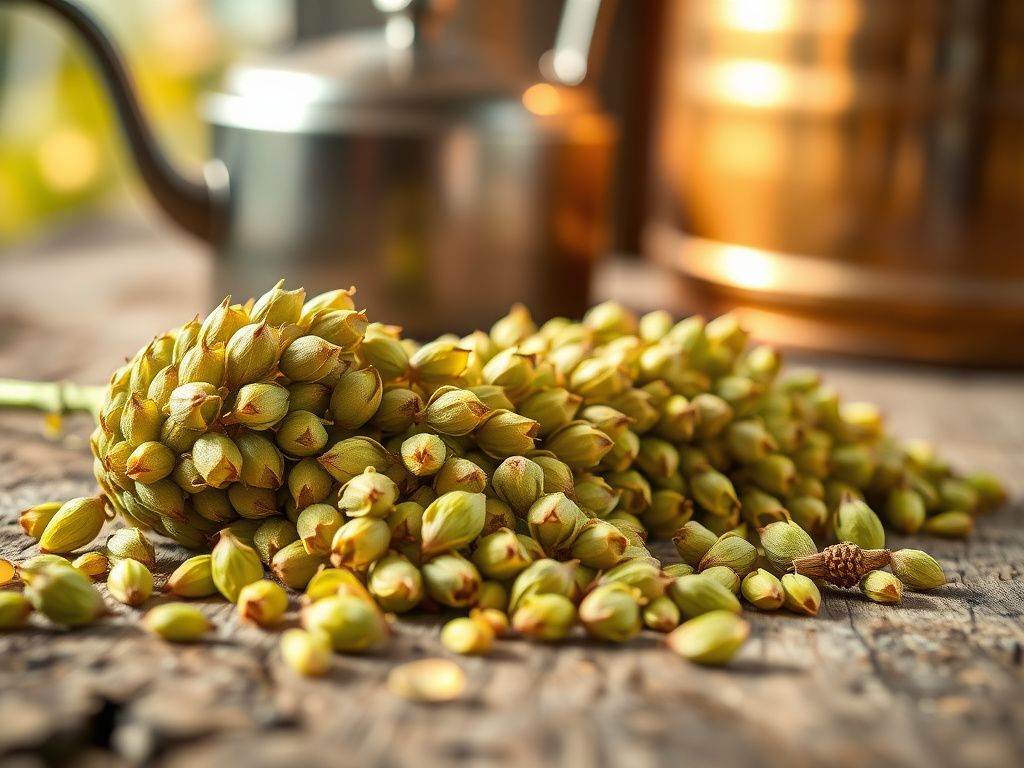
Why cold chain matters for hops: Hops contain alpha acids (cohumulone, humulone, adhumulone) that isomerize during the boil to produce bitterness, and aromatic oils (myrcene, linalool, geraniol, farnesene) responsible for hop flavor and aroma. Both degrade with heat, oxygen, and light exposure. At 0°C in sealed nitrogen-flushed packaging, hops retain 95%+ of their alpha acids for 2+ years. At 20°C (room temperature), the same hops lose 20–30% of alpha acids within 6 months. At 35°C (unrefrigerated storage in an Indian summer), degradation is dramatic, alpha acid loss of 30–50% within 3–4 months, and aromatic oils oxidize to produce a cheesy, catty, or onion-like character instead of fresh floral or citrus aroma. The Hop Storage Index (HSI) measures this oxidation, hops with HSI above 0.30 are considered stale; fresh hops should measure below 0.25. Smell test: fresh hops smell resinous, grassy, citrusy, or floral depending on variety. Stale hops smell like aged cheese, catfood, garlic, or wet paper. If opening a vacuum-sealed bag produces a strong cheesy smell rather than the expected varietal aroma, the hops have experienced warm storage at some point in the supply chain. The Indian import and storage chain: Hops arrive in India from major producing regions (New Zealand, Germany, US Pacific Northwest, Czech Republic, UK) typically via air freight or sea freight. Air freight-imported hops that move from cold storage at origin → refrigerated air cargo → Indian customs clearance → refrigerated storage at the importer → refrigerated shipping to the shop represent best-case cold chain. The breaks in the chain occur at: customs clearance (unrefrigerated warehouses for days to weeks); final-mile delivery (standard courier without temperature control); homebrew shop storage (many small shops lack dedicated refrigeration for hop inventory). What to look for when buying hops in India: Packaging date and best-by date on the bag, domestic packaged pellets should show harvest year and packaging date. Vacuum seal integrity, the bag should feel hard/firm, not soft or puffy. Puffiness indicates oxygen ingress or CO₂ from oxidation reactions inside the bag. Supplier’s storage method, reputable suppliers like Brewnation and Arishtam keep hops refrigerated; confirm before ordering. Variety and format, T-90 pellet hops store better than whole cone hops; Cryo/lupulin powder hops are the most concentration-stable format but rarest to find in India. Recommended Indian hop suppliers: Brewnation (Bangalore) maintains refrigerated hop inventory and provides harvest-year information on their listings. Arishtam (Pune) similarly refrigerates hops and provides batch information. Both stock commonly used varieties: Cascade, Centennial, Citra, Mosaic, Simcoe, Saaz, Hallertau, Nelson Sauvin. Specialty varieties (Amarillo, El Dorado, Galaxy in quantity) may require advance ordering or may be intermittently stocked. Order quantities: buy what you’ll use within 6 months after receiving, storing hops at home at room temperature after purchase accelerates the quality loss that the cold chain was meant to prevent.
Common Questions
How should I store hops at home in India?
Home hop storage in India’s climate requires a freezer, not just a refrigerator. At -18°C (standard freezer temperature), hops in vacuum-sealed or tightly closed bags retain alpha acids and aromatic character for 2–3 years. At 4°C (refrigerator), hops degrade measurably within 6–12 months. With India’s ambient temperatures regularly reaching 30–40°C in summer, storing opened hop bags in a kitchen cabinet is not acceptable, a month of room-temperature storage in an Indian summer does more damage than a year in the freezer. Practical storage method: receive hops in vacuum-sealed bags and freeze immediately if not using within 2 weeks. For opened bags: squeeze out as much air as possible, seal with a clip or tape, place in a ziplock bag (double seal), and freeze. Pull the bag from the freezer 30 minutes before use and allow to warm to room temperature before opening, opening a cold bag causes condensation to form on the hops, accelerating oxidation. For homebrewers who buy hops in bulk (100g–1kg bags), portion into brew-sized amounts (25–50g) before freezing so each brew session thaws only what’s needed rather than repeatedly thawing and refreezing the full bag. A small chest freezer dedicated to ingredients (hops, liquid yeast, specialty malt) is a worthwhile investment for serious homebrewers in India’s climate.