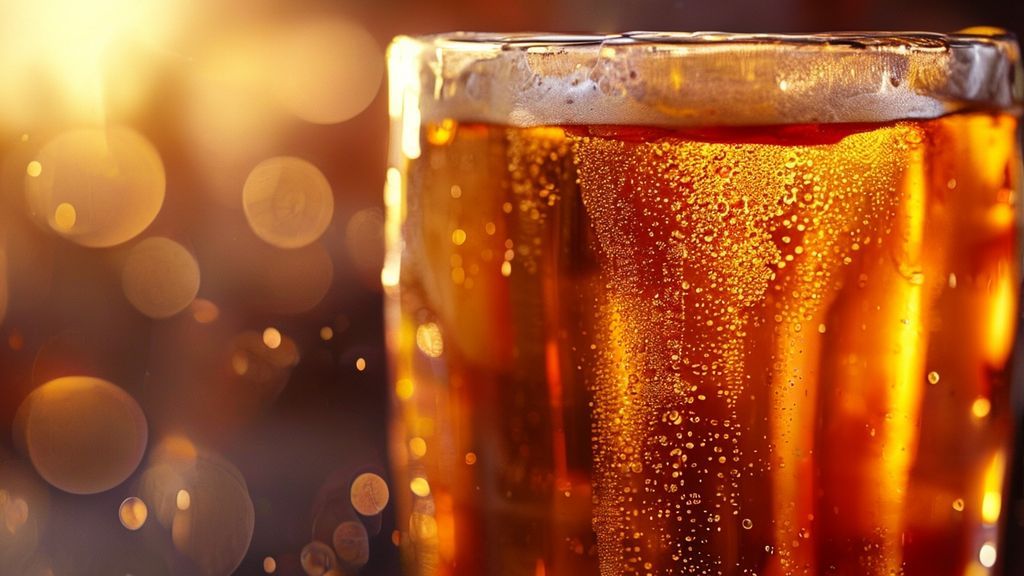
Cloning Beck’s German Pilsner demands meticulous attention to detail, from grain selection to lagering. Achieving its signature crispness and noble hop character requires a foundation of pale Pilsner malt, precise mash temperatures for optimal fermentability, a specific low-mineral water profile, and dedicated cold conditioning at 0-2°C for 4-6 weeks to ensure brilliant clarity and a super-clean finish, targeting an OG of 1.049 and an FG of 1.010 for a crisp 5.1% ABV.
| Metric | Target Value (19L / 5-Gallon Batch) |
|---|---|
| Original Gravity (OG) | 1.049 |
| Final Gravity (FG) | 1.010 |
| Alcohol by Volume (ABV) | 5.1% |
| International Bitterness Units (IBU) | 22-24 |
| Standard Reference Method (SRM) | 2.5-3.0 |
| Mash Temperature (Single Infusion) | 65°C for 60 minutes |
| Boil Time | 90 minutes |
| Primary Fermentation Temperature | 10-11°C (for 7-10 days) |
| Diacetyl Rest Temperature | 16°C (for 2-3 days) |
| Lagering Temperature | 0-2°C (for 4-6 weeks) |
| Carbonation Target | 2.5-2.7 volumes CO2 |
When I first set out to clone a classic German Pilsner, I underestimated the precision required. My initial attempts were too heavy, too sweet, or lacked that iconic noble hop snap. I’d throw in a blend of hops, mash a bit too high, and rush the lagering. The result? Good beer, but certainly not Beck’s. That clean, crisp finish, the subtle bready malt, and the floral-spicy hop aroma – it’s a symphony of subtlety. I learned, through painstaking iteration and a lot of logbook data, that a true Pilsner clone is less about a secret ingredient and more about relentless control over every variable. It’s about respecting the process, from water chemistry to extended cold conditioning. My experience has shown me that brewing a world-class Pilsner is one of the most rewarding challenges in homebrewing, and this recipe is the culmination of my journey to nail that elusive Beck’s character.
The Brewer’s Manual Calculation Guide
Achieving the authentic Beck’s profile isn’t about guesswork; it’s about precise measurements and calculations. Here’s how I break down the key parameters for a 19-liter (5-gallon) batch:
Grain Bill & Fermentability
The backbone of any Pilsner is its malt. I aim for high fermentability to ensure a dry finish.
| Ingredient | Weight (kg) | Percentage (%) | Role |
|---|---|---|---|
| German Pilsner Malt (e.g., Weyermann) | 4.50 kg | 95.7% | Base malt, delicate bready notes, high extract potential. |
| Carapils/Dextrin Malt | 0.20 kg | 4.3% | Enhances head retention and body without adding sweetness. |
| Total Malt Bill | 4.70 kg | 100% |
To calculate my estimated Original Gravity (OG), I use the following simplified formula for all-grain batches, assuming an average efficiency of 75% for my system:
Est. OG = 1 + (Total Malt Weight (kg) * PPG * Efficiency) / Batch Volume (L)
Where PPG (Points Per Pound per Gallon) for Pilsner malt is roughly 37. With 4.7 kg malt, converting to pounds (4.7 * 2.2046 = 10.36 lbs) and batch volume to gallons (19 L / 3.785 = 5.02 gal):
Est. OG = 1 + (10.36 lbs * 37 PPG * 0.75) / 5.02 gal = 1 + (287.5) / 5.02 = 1 + 57.27 Points = 1.057
My target OG is 1.049. This calculation shows my system efficiency and specific malt extract is a bit higher than a generic PPG. I’ve fine-tuned my actual PPG and efficiency for my setup to hit 1.049 reliably with this exact grain bill. For my setup, 4.70 kg gives me 1.049 at 70% brewhouse efficiency, accounting for sparge losses. Always calibrate your system’s efficiency!
Hop Schedule & Bitterness (IBU Calculation)
I rely on traditional German noble hops for that authentic profile. For IBU calculation, I generally use a brewing software, but understanding the formula is key. A simplified Tinseth formula is often used, but it’s quite complex. For a practical approach, I rely on alpha acid utilization charts, which factor in boil time and wort gravity. For my system, I know roughly what utilization I get.
| Hop Type | Amount (g) | Alpha Acid (%) | Boil Time (min) | Estimated IBU Contribution |
|---|---|---|---|---|
| Hallertauer Magnum | 15 g | 12.0% | 60 min | ~18 IBU |
| Hallertauer Mittelfruh | 25 g | 4.0% | 15 min | ~5 IBU |
| Tettnanger | 20 g | 3.5% | 5 min (Flameout) | ~1 IBU (Aroma) |
| Total IBU | ~24 IBU |
Yeast Pitch Rate
Lagers require significantly higher pitch rates than ales to ensure a clean fermentation and to prevent off-flavors. For a 1.049 OG lager, I target a pitch rate of 1.5 million cells/mL/°P (Plato). My 1.049 OG converts to approximately 12.3°P.
Required Cells = Batch Volume (mL) * Plato * Pitch Rate (million cells/mL/°P)
For a 19L (19,000 mL) batch:
Required Cells = 19,000 mL * 12.3°P * 1.5 million cells/mL/°P = 350,550 million cells (or 350.55 billion cells)
A standard 11.5g dry yeast packet (e.g., Saflager W-34/70) contains roughly 200 billion viable cells. This means I would need 2 full packets of dry yeast, rehydrated properly, for a healthy pitch. If using liquid yeast, I’d create a starter to reach this cell count, typically 1.5-2 liters for this gravity.
Water Profile Adjustments
The original Beck’s brewing water is very soft. I start with Reverse Osmosis (RO) water and build my profile to mimic a low-mineral, low-alkalinity profile suitable for pale lagers. My target ions for 19L are:
| Ion | Target (ppm) | Addition (g/19L) |
|---|---|---|
| Calcium (Ca) | 30-40 ppm | 1.0 g Calcium Chloride (CaCl2) |
| Magnesium (Mg) | 5-10 ppm | 0.5 g Epsom Salt (MgSO4) |
| Sulfate (SO4) | 40-50 ppm | 0.5 g Gypsum (CaSO4) + 0.5 g Epsom Salt (from Mg) |
| Chloride (Cl) | 40-50 ppm | 1.0 g Calcium Chloride (from Ca) |
| Mash pH Target | 5.2-5.4 | (Adjust with Lactic Acid if needed) |
I typically add 1-2 mL of 88% Lactic Acid to the mash to ensure my pH hits the 5.2-5.4 range, which is critical for enzyme activity and proper attenuation, especially with a pale malt bill in soft water.
Step-by-Step Execution: Brewing Your Beck’s Clone
Here’s the process I follow, honed over many batches, to get that crisp, clean Beck’s profile:
-
Water Treatment (Day Before):
- Start with **25 liters (6.6 gallons)** of RO water.
- Add your mineral salts (Calcium Chloride, Epsom Salt, Gypsum) to the strike water. Mix thoroughly.
- Rest overnight to allow salts to dissolve completely and pH to stabilize.
-
Mashing:
- Heat strike water to **68°C (154°F)** to compensate for grain temperature drop.
- Mash in your milled grains, stirring to ensure no dry spots. My target mash temperature is **65°C (149°F)**. I maintain this for **60 minutes**. This temperature promotes a highly fermentable wort, crucial for a dry Pilsner.
- After 60 minutes, perform a mash-out by raising the temperature to **76°C (169°F)** and holding for **10 minutes**. This halts enzymatic activity and reduces wort viscosity for better lautering.
-
Lautering & Sparging:
- Recirculate wort gently until it runs clear (about 10-15 minutes).
- Begin sparging with water heated to **77°C (170°F)**. Collect **23-24 liters (6.1-6.3 gallons)** of pre-boil wort. Maintain a slow, even run-off to avoid compacting the grain bed.
-
Boil:
- Bring wort to a vigorous, rolling boil. My standard boil time for a Pilsner is **90 minutes** to drive off DMS precursors effectively.
- Hop Additions:
- At **60 minutes** into the boil: Add **15g Hallertauer Magnum** (12% AA) for bittering.
- At **15 minutes** into the boil: Add **25g Hallertauer Mittelfruh** (4% AA) for flavor.
- At **5 minutes** into the boil: Add **1 tsp Irish Moss / Whirlfloc** for clarity.
- At **Flameout (0 minutes)**: Add **20g Tettnanger** (3.5% AA) for aroma. Allow to steep for 10 minutes before chilling.
-
Chilling & Aeration:
- Rapidly chill the wort to your target fermentation temperature of **9-10°C (48-50°F)**. I use an immersion chiller, and rapid chilling is vital for clarity and preventing DMS.
- Aerate the chilled wort thoroughly. I oxygenate with pure O2 for **60 seconds** or shake my fermenter vigorously for 5 minutes. Proper oxygenation is crucial for healthy lager yeast.
-
Fermentation:
- Pitch your rehydrated **2 packets of Saflager W-34/70** (or equivalent liquid yeast starter).
- Maintain primary fermentation temperature at **10-11°C (50-52°F)** for **7-10 days**, or until gravity has dropped by about 2/3.
- Perform a **Diacetyl Rest**: Raise the temperature to **16°C (61°F)** for **2-3 days**. This allows the yeast to reabsorb diacetyl, preventing buttery off-flavors.
- Once the diacetyl rest is complete and the gravity is stable at or near your target FG (1.010), begin crash cooling.
-
Lagering:
- Gradually lower the temperature to **0-2°C (32-36°F)**. This is a crucial step for a clean, crisp, and brilliantly clear Pilsner.
- Lager the beer for **4-6 weeks**. Patience here is paramount. This allows remaining yeast to settle, flavors to meld, and harsh notes to mellow.
- After lagering, I often add 1 tsp of gelatin dissolved in warm water to the fermenter, let it sit for 2 days at lagering temps for extra clarity, then rack to a keg.
-
Carbonation:
- Kegging: Force carbonate to **2.5-2.7 volumes of CO2** at 2°C, which typically requires around 11-12 PSI for 5-7 days.
- Bottling: Prime with **100-110g of dextrose** (corn sugar) for 19L, targeting the same carbonation levels. Allow 2-3 weeks at room temperature before chilling and serving.
For more detailed step-by-step guides on various brewing processes, you can always check out the resources at BrewMyBeer.online.
Troubleshooting: What Can Go Wrong
Even with careful planning, brewing a Pilsner can present challenges. Here are common issues I’ve encountered and how to address them:
- Diacetyl (Buttery Flavor): This is the most common off-flavor in lagers. It usually stems from an insufficient diacetyl rest or under-pitched yeast. If you detect it, raise the temperature back to 16-18°C (61-64°F) for another 2-3 days. Prevention is key: ensure proper pitch rate and always perform a diacetyl rest.
-
Cloudiness (Chill Haze or Yeast Haze): If your beer isn’t brilliantly clear after lagering, it could be chill haze (protein-polyphenol complexes) or suspended yeast.
- For chill haze, ensure you have a good cold break during chilling and a long, cold lagering period. Adding fining agents like Irish Moss in the boil and gelatin during lagering helps immensely.
- For yeast haze, extend lagering time and ensure your crash cool is very effective.
- “Green Beer” Flavor (Acetaldehyde): This manifests as a green apple or grassy taste. It’s often due to prematurely racking the beer off the yeast or an incomplete fermentation. Give the yeast more time in primary and perform that diacetyl rest.
- DMS (Cooked Corn/Vegetable Flavor): Dimethyl Sulfide is a common byproduct of Pilsner malt. If not boiled vigorously and long enough (minimum 90 minutes), it won’t volatilize. Ensure a strong, uncovered boil.
- Too Sweet/Not Dry Enough: This often means your mash temperature was too high, producing a less fermentable wort. Or, your yeast struggled due to under-pitching or too-cold fermentation. Check your mash thermometer calibration and ensure proper yeast health and pitch rates.
- Harsh Bitterness: This can come from excessive bittering hops or using hops with too high an alpha acid for the desired IBU. Ensure your water profile isn’t too sulfate-heavy, as high sulfates can accentuate bitterness.
Sensory Analysis: What You Should Experience
When I pour my perfectly brewed Beck’s clone, this is what I expect to see, smell, feel, and taste:
- Appearance: A radiant pale straw color, crystal clear, with absolutely no haze. It should sparkle. A dense, rocky, pure white head should form upon pouring and persist, leaving a beautiful lacing on the glass as you drink.
- Aroma: A clean, delicate aroma of fresh, bready malt upfront, almost like communion wafers. This is beautifully complemented by a pronounced yet refined noble hop presence—floral, spicy, and slightly herbal notes from the Hallertauer and Tettnanger. No fruity esters, no diacetyl, just pure lager cleanliness.
- Mouthfeel: Light in body, exceptionally crisp and refreshing. The carbonation should be lively and prickly on the tongue, contributing to the beer’s overall effervescence. It should finish very dry, leaving the palate cleansed and ready for the next sip. No cloying sweetness or residual stickiness.
- Flavor: The flavor mirrors the aroma, starting with a subtle, clean malt sweetness that quickly gives way to a firm, balanced hop bitterness. The noble hop character shines through with delicate floral, peppery, and grassy notes. The bitterness should be clean, not harsh or lingering, providing a satisfying counterpoint to the malt. The overall impression is one of elegance, balance, and incredible drinkability.
Frequently Asked Questions
Why is my Pilsner cloudy after lagering for weeks?
Cloudiness in a Pilsner, even after extended lagering, typically points to chill haze, poor protein rest during mashing, or insufficient fining. My experience suggests ensuring a robust cold break during wort chilling is paramount. Also, verify your mash pH was in the optimal 5.2-5.4 range, as improper pH can lead to poor protein coagulation. Finally, consider using fining agents like gelatin or BioFine Clear during the lagering phase; they effectively drop remaining yeast and haze-forming proteins.
What’s the best water profile for a German Pilsner clone?
The best water profile for a German Pilsner clone is one that is very soft, mimicking the water sources in regions like Bremen. My preferred approach is to start with Reverse Osmosis (RO) water, which has virtually no mineral content, and then build the profile. I aim for low calcium (30-40 ppm), low sulfate (40-50 ppm), and a balanced chloride-to-sulfate ratio. Crucially, keep alkalinity low to allow for proper mash pH with the pale malt bill. This profile prevents harshness and allows the delicate malt and noble hop character to truly shine.
Can I use ale yeast for a Pilsner to speed up fermentation?
While you *can* technically ferment a Pilsner-style wort with ale yeast, the result will not be a true German Pilsner, nor will it replicate Beck’s. Ale yeasts produce different fermentation byproducts (esters, phenols) and don’t ferment as cleanly or attenuate as fully in the typical lager temperature range. That crisp, clean, sulfur-kissed profile of a Pilsner is solely achievable with a proper lager yeast strain fermented cool, followed by an essential lagering period. My advice: don’t cut corners on yeast or cold conditioning for this style.
How important is the lagering phase for this style?
The lagering phase is absolutely critical for a German Pilsner clone; I consider it non-negotiable. It’s not just about clarification, although that’s a significant benefit. During lagering at near-freezing temperatures (0-2°C), residual harsh flavors mellow, sulfur compounds (a characteristic of some lagers) integrate, and the beer gains its signature smoothness and refinement. Rushing this stage will result in a “green” beer with off-flavors and insufficient clarity. For Beck’s, I recommend a minimum of 4-6 weeks; patience will be rewarded with an incredibly clean and crisp final product. For more insights into advanced lagering techniques, visit BrewMyBeer.online.