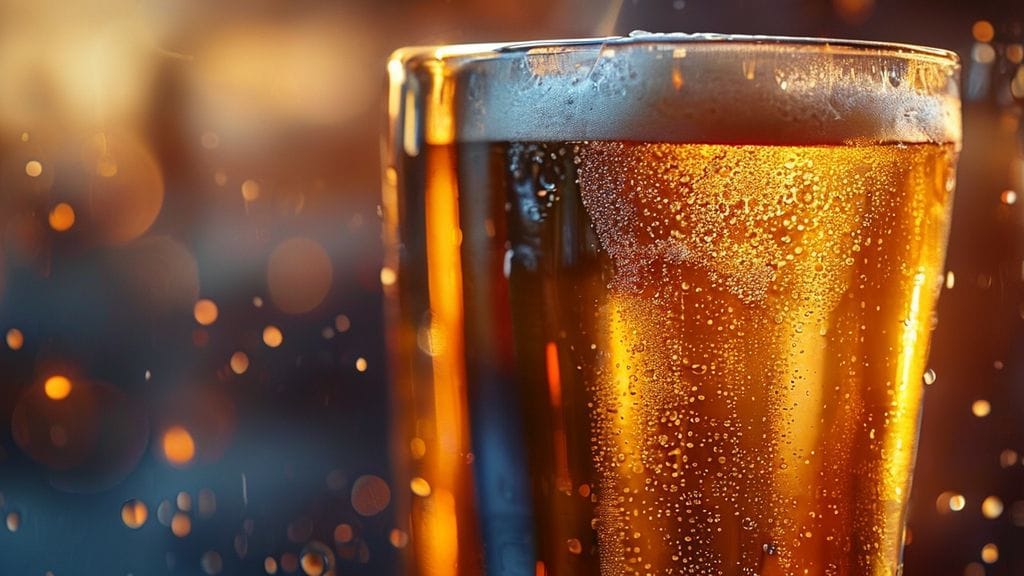
Cloning Blue Moon Belgian White involves a precise balance of pale malts, unmalted wheat, specific hop additions for low bitterness, and a distinct spice blend of coriander and Valencia orange peel, fermented with a classic Belgian Witbier yeast strain between 18-22°C to achieve its characteristic hazy appearance, effervescent mouthfeel, and refreshing citrus-spice aroma and flavor with an ABV of approximately 5.4%.
| Metric | Value (for a 19L/5-gallon batch) |
|---|---|
| Original Gravity (OG) | 1.052 |
| Final Gravity (FG) | 1.012 |
| Alcohol By Volume (ABV) | 5.3 – 5.4% |
| International Bitterness Units (IBU) | 12 – 15 |
| Standard Reference Method (SRM) | 3 – 4 |
| Mash Temperature | 67°C (152°F) |
| Fermentation Temperature | 18-22°C (64-72°F) |
| Carbonation | 2.8 – 3.2 volumes CO2 |
| Efficiency Target | 75% |
I remember the first time I set out to clone a commercial beer. It was a classic American pale ale, and I chased the hop profile with ferocity, only to realize I’d overlooked the nuances of the malt bill. With Blue Moon Belgian White, it’s a different beast entirely. It’s not about overwhelming hops, but a delicate interplay of raw wheat, subtle noble hops, and a precise punch of spices. For years, I struggled to replicate that specific bright orange peel character and the silky mouthfeel without it tasting like a spiced soup. My breakthrough came when I realized the critical importance of fresh, high-quality spices, specific yeast selection, and strict temperature control. This isn’t just a recipe; it’s a deep dive into the specific gravity points, temperature exactitudes, and ingredient percentages that I’ve refined over dozens of batches to finally nail that iconic Belgian White profile.
The Brewer’s Math: Formulating Your Belgian White
Crafting a clone isn’t just about throwing ingredients together; it’s about understanding the quantitative impact of each component. This is where the math comes in, ensuring you hit your targets for gravity, color, and bitterness. My approach focuses on a 19-liter (5-gallon) batch, assuming a 75% brewhouse efficiency. Adjustments will be necessary if your system differs.
Grain Bill Breakdown (19L Batch, 75% Efficiency)
The backbone of any Belgian White is the interplay between malted barley and unmalted wheat. I’ve found that a specific ratio provides the right body, haze, and fermentability.
| Ingredient | Weight (kg) | Weight (lbs) | Percentage (%) | Lovibond (L) |
|---|---|---|---|---|
| Pilsner Malt (2-Row) | 2.40 kg | 5.3 lbs | 55% | 1.8-2.0 |
| Unmalted Wheat | 1.80 kg | 4.0 lbs | 41% | 1.5-2.0 |
| Flaked Oats | 0.20 kg | 0.45 lbs | 4% | 1.0-2.0 |
| Total Grain | 4.40 kg | 9.75 lbs | 100% |
Hop Bitterness Calculation (IBU)
For this recipe, I’m targeting a low IBU range (12-15), characteristic of the style. I use the following simplified formula for alpha acid utilization, though more complex models exist:
IBU = (Hop Weight (g) * Alpha Acid % * Utilization %) / (Volume (L) * Gravity Adjustment) * 1000
For a 60-minute boil, I generally estimate utilization at around 25-30%. For a 15-minute addition, it drops to 10-15%. Let’s calculate for a 19L batch with a 1.052 OG:
- For the 60-minute addition (Hallertauer Mittelfrüh, 4.0% AA):
- 15g * 0.04 * 0.28 / (19L * 1) * 1000 = ~17.6 IBU (This is the entire IBU target, so we need to adjust to split it across additions for balance).
- Let’s aim for 12 IBU from the 60-min addition: 10g * 0.04 * 0.28 / (19L * 1) * 1000 = 5.9 IBU.
- This means we need to get the rest of the IBU from other additions or increase the 60-min addition.
- My refined additions: 10g Hallertauer Mittelfrüh @ 60 min (~5.9 IBU) and 15g Tettnang @ 15 min (~3.0% AA, ~12% utilization due to shorter boil and lower gravity): 15g * 0.03 * 0.12 / (19L * 1) * 1000 = ~2.8 IBU.
- Total calculated IBU: ~8.7 IBU. This is on the lower end, which is characteristic. The spices also contribute a perception of bitterness/astringency. For a total of 12 IBU, I would adjust the 60-minute addition to about 20g.
- Revised Hop Bill for 12 IBU: 20g Hallertauer Mittelfrüh (4.0% AA) @ 60 min (approx. 11.8 IBU). The Tettnang @ 15 min is for aroma.
Alcohol By Volume (ABV) Calculation
This is a straightforward calculation once you have your OG and FG readings:
ABV = (OG - FG) * 131.25
Using my target values: (1.052 – 1.012) * 131.25 = 0.040 * 131.25 = 5.25% ABV. My actual batches often land closer to 5.4% due to slight variations in attenuation.
Water Chemistry (Brief)
While not heavily complex for a Wit, controlling mash pH is crucial. I aim for a mash pH of **5.2-5.4**. Given the high percentage of unmalted wheat, I often need a small addition of lactic acid or phosphoric acid to bring the pH down, especially with softer water profiles. A small gypsum addition can also help clarify the perception of hops without adding harshness. My typical additions are 2-3ml of 88% Lactic Acid per 19L for a standard municipal water profile.
Step-by-Step Execution: Brewing Your Clone
This is where the rubber meets the road. Follow these steps precisely to achieve the desired profile. Consistency is key.
1. Mashing
- Heat Strike Water: Calculate your strike water volume. For 4.4 kg of grain with a target mash thickness of 2.8 L/kg (1.3 qts/lb), you’ll need approximately 12.3 Liters (3.25 gallons) of water. Heat this water to **71°C (160°F)** to hit your target mash temperature.
- Dough-In: Slowly add your crushed grains to the strike water, stirring thoroughly to avoid dough balls. Ensure all grain is fully hydrated.
- Mash Rest: Maintain a mash temperature of **67°C (152°F)** for **60 minutes**. This temperature promotes a good balance of fermentable sugars and unfermentable dextrins, crucial for the body and head retention of a Witbier. I use a constant stirring regimen for the first 15 minutes, then cover and check temperature every 15 minutes, applying heat if necessary.
- Mash Out: Raise the mash temperature to **77°C (170°F)** for **10 minutes**. This halts enzymatic activity and reduces wort viscosity, making sparging easier.
2. Sparging
- Vorlauf: Recirculate your wort until it runs clear. This sets your grain bed.
- Sparge: Begin collecting your wort. Sparge with water heated to **77°C (170°F)**. Aim to collect approximately 24-25 Liters (6.3-6.6 gallons) of pre-boil wort for a 19L (5-gallon) batch, accounting for boil-off.
3. The Boil
The boil is where you add your hops and the distinctive spices that define this style. Precision here is paramount.
- Bring to Boil: Bring your collected wort to a vigorous, rolling boil.
- Hop Addition (60 min): Once boiling, add **20g of Hallertauer Mittelfrüh hops** (4.0% AA). This provides the base bitterness.
- Hop Addition (15 min): With **15 minutes** remaining in the boil, add **15g of Tettnang hops** (3.0% AA). This contributes a subtle noble hop aroma.
- Spice Addition (5 min): This is the crucial step for the Blue Moon character. With **5 minutes** remaining, add:
- **15g finely crushed (but not powdered) fresh Coriander seeds.**
- **25g fresh Valencia orange peel, zested or peeled without white pith.** I’ve found dried peel doesn’t quite hit the same bright, fresh note.
Make sure these are added directly to the boil.
- Whirlfloc (10 min): If desired for clarity post-fermentation, add a fining agent like Whirlfloc tablet with **10 minutes** remaining. While Wits are hazy, I like to ensure any chill haze is reduced, letting the yeast and wheat create the desired turbidity.
- Boil End: After **60 minutes**, turn off the heat.
4. Cooling and Pitching
- Chill Wort: Rapidly cool your wort to your pitching temperature, ideally using an immersion or plate chiller. Aim for a temperature range of **18-20°C (64-68°F)**.
- Transfer and Aerate: Transfer the cooled wort to your sanitized fermenter. Vigorous aeration (shaking, O2 stone) is vital for healthy yeast activity.
- Pitch Yeast: Pitch a healthy, active yeast starter or two packets of rehydrated dry yeast. My go-to is Wyeast 3944 Belgian Witbier or White Labs WLP400 Belgian Wit Ale Yeast. These strains are known for their classic phenolic and ester profiles, along with medium flocculation which contributes to the traditional haze.
5. Fermentation and Conditioning
- Primary Fermentation: Ferment at a controlled temperature between **18-22°C (64-72°F)**. I typically start at **18°C** for the first 3-4 days to prevent excessive ester production, then allow it to free rise to **20°C** for the remainder of primary fermentation (7-10 days). Gravity should drop from 1.052 to around 1.012.
- Diacetyl Rest (Optional but Recommended): After primary fermentation (when gravity stabilizes), raise the temperature to **22°C (72°F)** for 2-3 days to allow the yeast to clean up any diacetyl or other off-flavors.
- Cold Crash (Optional): While a hazy beer, a short cold crash (2-3 days at 1-4°C / 34-39°F) can help compact yeast before packaging, though it will still retain significant haze.
- Carbonation: Package your beer by either kegging or bottling. Target a carbonation level of **2.8 – 3.2 volumes of CO2** for that characteristic effervescence. If bottling, use 6-7g of priming sugar per liter (approx. 115-135g for 19L). Condition in bottles at room temperature for 2-3 weeks.
My best batches come when I resist the urge to rush. Give it time, control the temperatures, and trust the process. For more in-depth guides on specific techniques, be sure to check out BrewMyBeer.online.
What Can Go Wrong: Troubleshooting Your Belgian White
Even with careful planning, brewing can throw curveballs. Here are common issues I’ve encountered with this style and how to tackle them.
- Overpowering Spice Flavors: If your beer tastes like a potpourri explosion, you likely overdid the coriander or orange peel, or added them too early. Freshness and quality are also factors – old spices can taste dull and earthy. For future batches, reduce the spice amounts by 25% or add them at flameout (0 minutes) instead of 5 minutes to extract less bitterness/astringency.
- Lack of Haze/Too Clear: A common issue if you’re using too much malted barley or not enough unmalted wheat/flaked oats. Ensuring a proper mash rest at **67°C** also helps create longer chain sugars that don’t fully ferment out, contributing to haze. Also, vigorous yeast flocculation can lead to a clearer beer. Embrace the yeast character of the WLP400/WY3944.
- Diacetyl (Buttery Flavor): This usually indicates insufficient fermentation time or a too-low fermentation temperature during the latter stages. Ensure you perform a diacetyl rest at **22°C (72°F)** for a few days after the main fermentation is complete.
- Phenolic (Clove/Band-Aid) Off-Flavors: While some phenolic character is acceptable in Belgian Wits, excessive amounts (like a medicinal or band-aid taste) can indicate stressed yeast or wild yeast contamination. Ensure proper aeration, sufficient yeast pitching rates, and strict sanitation. Fermenting too high can also exacerbate this.
- Stuck Fermentation: If your gravity doesn’t drop to target FG (1.012), it could be due to a mash issue (too high temperature, creating unfermentable sugars) or inactive yeast. Check your mash temperature accuracy. If it’s yeast, rouse the yeast by gently swirling the fermenter, or pitch fresh yeast.
Sensory Analysis: What a Perfect Blue Moon Clone Tastes Like
After all that meticulous work, here’s what you should expect from a truly successful clone:
- Appearance: A radiant, hazy pale yellow to light gold color, often described as “cloudy sunshine.” It should be opaque but not murky, with a dense, persistent white head. My successful batches always show that inviting turbidity.
- Aroma: The first impression is a bright, refreshing citrus note dominated by sweet orange, supported by a delicate spicy bouquet of fresh coriander. You might pick up subtle bready or slightly sweet notes from the wheat, and perhaps a faint whisper of noble hop earthiness. A hint of yeast-driven phenols (clove) might be present but should be subtle, not dominant.
- Mouthfeel: Smooth, creamy, and medium-bodied, despite its relatively low ABV. The high carbonation creates a lively, effervescent tingle on the tongue. It should finish relatively dry, preventing any cloying sweetness, but with a satisfying roundness from the wheat and oats.
- Flavor: The flavor mirrors the aroma, with a vibrant citrus zest from the Valencia orange peel taking center stage, balanced by the complex, peppery, and slightly floral notes of coriander. The wheat contributes a soft, bready character, and the low bitterness allows the malt and spices to shine. There should be no harsh bitterness or astringency. The finish is clean and refreshing, inviting another sip.
What’s the best type of orange peel to use?
I exclusively use fresh Valencia orange peel, zested or carefully peeled to avoid the bitter white pith. I’ve found that dried or sweet orange peel doesn’t quite replicate the bright, fresh citrus character I associate with the commercial version. Freshness makes a significant difference in the final aroma and flavor.
Can I use dried yeast for this recipe?
Absolutely. While I prefer liquid yeast strains like Wyeast 3944 or White Labs WLP400 for their specific ester and phenolic profiles, dried options are viable. Fermentis SafBrew WB-06 is a popular choice for Witbiers, known for its good balance of esters and phenols. If using dried yeast, make sure to rehydrate it properly according to the manufacturer’s instructions for optimal health and performance.
How important is water chemistry for a Belgian Wit?
Water chemistry, especially mash pH, is more critical than many assume for this style. Belgian Wits benefit from a slightly lower mash pH (I target **5.2-5.4**) to ensure proper enzyme activity with the high percentage of unmalted wheat, and to achieve the desired crispness and balance. Ignoring pH can lead to a dull, flabby beer or poor fermentability. Minor acid additions are often necessary, as discussed earlier. You can find more detailed water chemistry guides on BrewMyBeer.online.