Cloning Pliny the Elder demands meticulous precision in hop scheduling, yeast management, and water chemistry to achieve its iconic balance of intense bitterness and vibrant hop aroma. This recipe targets an Original Gravity of 1.072, finishing around 1.011, for an ABV of 8.0%, leveraging multiple dry hop additions for maximum impact and a clean fermentation profile.
| Metric | Value |
|---|---|
| Batch Size | 19 Liters (5 US Gallons) |
| Original Gravity (OG) | 1.072 |
| Final Gravity (FG) | 1.011 |
| Alcohol By Volume (ABV) | 8.0% |
| International Bitterness Units (IBU) | ~95 |
| Standard Reference Method (SRM) | 6.5 |
| Mash Temperature | 65.6°C (150°F) |
| Boil Time | 90 minutes |
| Fermentation Temperature | 18-20°C (64-68°F) |
| Yeast | WLP001 California Ale Yeast (or Wyeast 1056) |
When I first ventured into the challenging yet immensely rewarding territory of cloning this iconic Double IPA, my initial attempts were, let’s just say, “learning experiences.” I remember one batch where I nailed the bitterness but completely missed the vibrant hop aroma, resulting in a somewhat harsh, one-dimensional beer. My mistake? Underestimating the sheer volume and precise timing of the hop additions, particularly during the whirlpool and dry hopping stages. I tried to economize on hops, thinking “good enough.” It wasn’t. This recipe reflects years of iterative refinement, countless brew days, and meticulous data logging to get as close as possible to that liquid gold. I’ve found that the secret isn’t just in the ingredients, but in the rigorous adherence to process and temperature control at every single step.
The Math: Deconstructing the Double IPA Profile
Brewing a Pliny clone isn’t just throwing hops in a kettle; it’s a careful orchestration of fermentability, bitterness, and aromatic compounds. I always start with the numbers, calculating my targets and then building the recipe backward. My goal here is a dry, highly attenuated beer that showcases hops without being cloyingly sweet or overly malty.
Grain Bill and Fermentability Calculations
For a 19-liter batch targeting an OG of 1.072 with an approximate mash efficiency of 75%, my grain bill looks like this:
| Ingredient | Weight (kg) | Weight (lbs) | Percentage | Lovibond (approx.) |
|---|---|---|---|---|
| 2-Row Pale Malt | 6.0 kg | 13.2 lbs | 90.9% | 1.8-2.0 L |
| Munich Malt (light) | 0.3 kg | 0.66 lbs | 4.5% | 6-8 L |
| Crystal Malt 40L | 0.1 kg | 0.22 lbs | 1.5% | 40 L |
| Dextrose (Corn Sugar) | 0.2 kg | 0.44 lbs | 3.0% | 0 L |
| TOTAL | 6.6 kg | 14.5 lbs | 100% |
The dextrose is crucial here; it boosts ABV without adding residual body, allowing the beer to finish dry and preventing it from becoming cloying. I add it directly to the boil during the last 15 minutes to ensure full dissolution and sanitization. For every 0.1 kg of dextrose, I estimate a boost of approximately 0.004 SG points to the wort’s gravity in a 19L batch.
Strike Water Temperature Calculation
To hit my target mash temperature of **65.6°C (150°F)**, I use a simple formula, which I’ve refined over the years for my specific system. Assuming my brewing equipment is at an ambient temperature of 20°C (68°F), and my grains are at a similar temperature, I calculate my strike water temperature:
Strike Water Temp (°C) = ((0.2 * Grain Weight (kg)) / Water Volume (L)) * (Target Mash Temp (°C) - Grain Temp (°C)) + Target Mash Temp (°C)
For a 19L batch, I’d typically mash with a ratio of 2.8 L/kg. So, for 6.3 kg of grain (excluding dextrose for mash calculation):
Water Volume = 6.3 kg * 2.8 L/kg = 17.64 L
Let’s say Grain Temp = 20°C.
Strike Water Temp = ((0.2 * 6.3) / 17.64) * (65.6 - 20) + 65.6
Strike Water Temp = (1.26 / 17.64) * 45.6 + 65.6
Strike Water Temp = 0.0714 * 45.6 + 65.6
Strike Water Temp = 3.25 + 65.6 = 68.85°C (approx. 156°F)
I always aim for **68-69°C (154-156°F)** strike water to hit the 65.6°C mash temp. It’s a delicate balance, and small adjustments are often needed. Always check with a calibrated thermometer!
Step-by-Step Execution: My Brew Day Protocol
This is where the rubber meets the road. Precision is paramount to replicate the intricate balance of a beer like Pliny. My process has evolved to minimize oxygen exposure and maximize hop impact.
Water Treatment (Day Before Brew Day)
I start by filling my hot liquor tank the day before. For 19L, I calculate approximately **26-28 liters of total brewing water** (mash + sparge) to account for boil-off and grain absorption. I target a water profile emphasizing sulfates for hop sharpness and a balanced pH for mash efficiency.
Mineral Addition (grams for 27L) Target Ions (ppm) Gypsum (CaSO4) 6.0 g Ca: 100-110, SO4: 250-280 Calcium Chloride (CaCl2) 3.0 g Cl: 50-60 Epsom Salt (MgSO4) 1.5 g Mg: 10-15 I aim for a mash pH of **5.2-5.4** measured at room temperature. Lactic acid is my go-to for fine-tuning.
Mash (90 minutes)
Heat **17.64 liters of strike water** to **68.85°C (156°F)**. Slowly add the crushed grains, stirring vigorously to prevent dough balls. Ensure the mash temperature settles at **65.6°C (150°F)**. Maintain this temperature for **90 minutes**. This slightly longer mash at a lower temperature promotes higher fermentability, which is key for a dry finish.
Mash Out & Lautering (30 minutes)
Raise the mash temperature to **77°C (170°F)** for **10 minutes** to halt enzymatic activity and reduce wort viscosity. Begin recirculating your wort until it runs clear. Then, slowly drain the wort into your boil kettle, sparging with water heated to **77°C (170°F)** until you collect approximately **26 liters** of pre-boil wort. My target pre-boil gravity is usually around 1.059-1.061.
The Boil & Hop Schedule (90 minutes)
Bring the wort to a rolling boil. My boil schedule is extremely hop-heavy and precise. I use pellet hops exclusively for better utilization in the homebrew setting.
Time in Boil Hop Type Weight (grams) Alpha Acid (est.) Purpose 90 min Columbus (CTZ) 28 g 15.0% Bittering 60 min Simcoe 14 g 13.0% Bittering 45 min Centennial 14 g 10.5% Flavor 30 min Columbus (CTZ) 14 g 15.0% Flavor/Aroma 15 min Simcoe 14 g 13.0% Flavor/Aroma 15 min Dextrose 200 g N/A ABV Boost/Dryness 5 min Centennial 14 g 10.5% Aroma 0 min (Flameout) Simcoe, Amarillo, Centennial 28 g each (84 g total) Varies Whirlpool Aroma/Flavor Whirlpool (20 minutes)
After flameout, immediately begin a whirlpool for **20 minutes** at **80°C (176°F)**. This is a critical stage for hop aroma and flavor development without extracting excessive bitterness. The 84g addition at flameout should be kept in contact with the hot wort as it cools. If you can, maintain 80°C for the first 10 minutes, then let it naturally cool.
Chilling & Pitching
Rapidly chill the wort to **18°C (64°F)**. This is crucial for preventing DMS formation and ensuring a clean fermentation. Transfer to a sanitized fermenter, measuring your OG. My target is **1.072**. Aerate thoroughly; I use pure oxygen for **60-90 seconds**. Pitch a healthy starter of WLP001 California Ale Yeast (or Wyeast 1056). A 2-liter starter with 2-3 packs of yeast is ideal for this gravity. Ferment at **18°C (64°F)** for the first 3 days, then allow it to free rise to **20°C (68°F)** for the remainder of primary fermentation.
Dry Hopping Schedule (Multi-Stage)
This is where the magic truly happens, and my personal experience confirms that multiple small additions are superior to one large dump.
- **Dry Hop 1 (Day 4):** Once fermentation shows signs of slowing (around 1.025-1.030 SG), add **42g Simcoe, 28g Amarillo, 28g Centennial** to the primary fermenter. Maintain fermentation temperature.
- **Dry Hop 2 (Day 8-10):** When fermentation is complete (FG stable for 2 days, around 1.011), transfer to a purged secondary fermenter (or simply remove hops if using bags and add fresh). Add **42g Simcoe, 28g Columbus (CTZ), 28g Centennial**. Keep beer at **20°C (68°F)** for an additional **3-4 days**.
Cold Crash & Packaging
After the final dry hop, cold crash the beer to **0-2°C (32-35°F)** for at least **48 hours**. This helps drop yeast and hop particulates, improving clarity. Transfer to a CO2-purged keg or bottles. If bottling, use **2.2-2.4 volumes of CO2**. I personally prefer kegging for this style due to the extreme sensitivity to oxidation. Purge the keg multiple times with CO2 before transfer. Condition for at least 1-2 weeks at cold temperatures before serving. My experience shows that the hop aroma peaks around 2-3 weeks post-packaging. You can find more detailed packaging tips on BrewMyBeer.online.
Troubleshooting: What Can Go Wrong
Even with the most meticulous planning, brewing can throw curveballs. Here are common issues I’ve encountered and how to address them:
- Lack of Hop Aroma/Flavor: This is the most frequent complaint. My initial mistake was insufficient dry hopping or dry hopping at too low a temperature. Ensure your dry hops are fresh, use the prescribed amounts, and maintain contact time at fermentation temperature (18-20°C). Oxygen exposure during dry hopping or packaging can also strip delicate hop oils.
- Too Bitter/Harsh Bitterness: This can stem from over-boiling bittering hops, especially if your alpha acid ratings are higher than estimated, or from a high mash pH. Check your water chemistry and ensure your mash pH is in the **5.2-5.4** range. High sulfate concentrations can accentuate bitterness, so ensure your gypsum additions are accurate.
- Cloudiness/Hop Haze Not Clearing: While some haze is acceptable in this style due to heavy dry hopping, excessive cloudiness might indicate poor cold crashing, insufficient fining, or even an infection. Ensure your cold crash is at **0-2°C** for long enough. A small addition of gelatin during cold crash can also help.
- Diacetyl (Buttery/Butterscotch Flavor): This indicates an incomplete diacetyl rest or early cold crashing. Ensure your fermentation is fully complete and the beer has spent enough time at fermentation temperature (or slightly above) after reaching FG to allow the yeast to clean up diacetyl. I usually ensure a stable FG for 2-3 days before any cold crashing or dry hop additions.
- Oxidation (Cardboard/Sherry Flavor): The biggest enemy of any heavily hopped beer. Minimize oxygen exposure at every step post-fermentation: use CO2-purged fermenters for dry hopping, transfer to CO2-purged kegs/bottles, and avoid splashing. This is an area where I constantly strive for perfection.
Sensory Analysis: The Pliny Experience
After all that effort, the moment of truth arrives. Here’s what I expect from a successful Pliny clone:
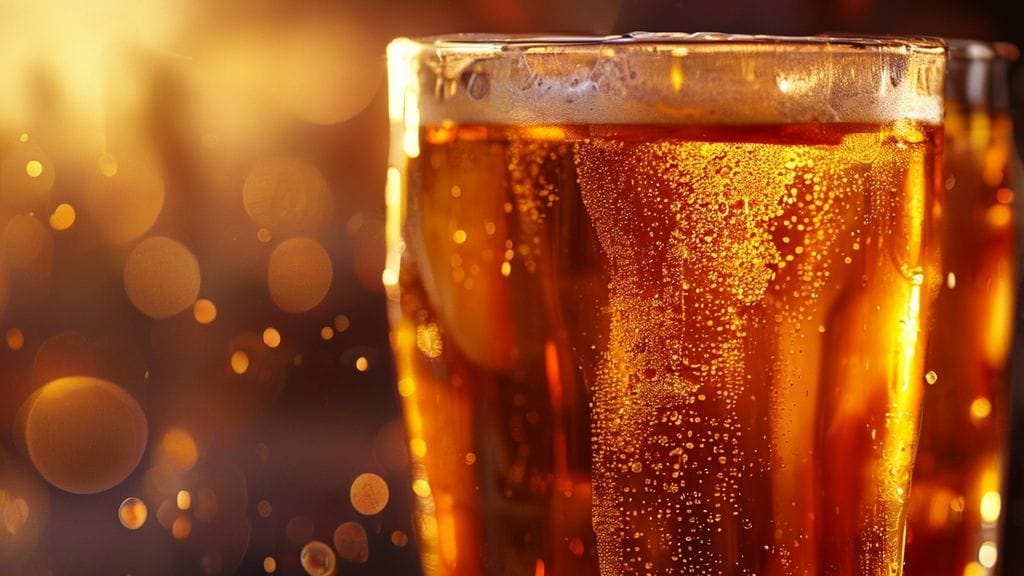
- Appearance: A radiant, brilliant golden color, often with a slight haze (from massive dry hopping). It should present a very thick, persistent, rocky white head, demonstrating excellent head retention. The clarity, while good, won’t be crystal clear due to the hop oils.
- Aroma: A huge, complex bouquet that immediately screams “hops!” I’m looking for intense notes of citrus (grapefruit, orange zest), pine resin, dankness, and sometimes a hint of tropical fruit or stone fruit (apricot, peach) from the Simcoe and Amarillo. There should be no perceivable malt sweetness or alcohol heat in the aroma.
- Mouthfeel: Medium-light bodied, surprisingly dry on the finish given its ABV. It should have a crisp, almost effervescent carbonation that tingles the palate, followed by a smooth, lingering bitterness. The alcohol warmth is present but well-integrated, never harsh or boozy.
- Flavor: The flavor mirrors the aroma, delivering a powerful punch of hop bitterness upfront, balanced by a subtle, clean malt character that provides just enough backbone. Citrus, pine, and resin dominate, with a long, satisfying bitter finish that compels another sip. The absence of cloying sweetness is paramount, leaving the palate refreshed and ready for more. My aim is for a beer that finishes clean, highlighting the incredible hop profile.
Frequently Asked Questions
What is the importance of multiple dry hop additions?
In my experience, multiple dry hop additions are critical for achieving the multifaceted aroma profile of this style. The first dry hop, introduced during active fermentation, leverages biotransformation by yeast to convert hop compounds into new, complex aromas. The second addition, typically after fermentation is complete, provides fresh, potent hop aroma and flavor that hasn’t been scrubbed by CO2 or altered by yeast. It’s about layering and maximizing hop presence, not just dumping them all in at once. This technique has significantly elevated my IPA game, and you can learn more about it on BrewMyBeer.online.
How crucial is accurate fermentation temperature control for this recipe?
Extremely crucial. The WLP001/Wyeast 1056 yeast strains are known for their clean fermentation, but only if kept within their optimal temperature range. Fermenting too warm will produce unwanted fruity esters and fusel alcohols, which can clash with the delicate hop profile and make the beer taste boozy. Fermenting too cold can lead to sluggish fermentation, diacetyl production, or incomplete attenuation. Sticking to the **18-20°C (64-68°F)** range ensures a clean, crisp backdrop for the hops to shine.
Can I scale this recipe up or down for different batch sizes?
Absolutely, with some considerations. The percentages of the grain bill and the relative ratios of hops should remain consistent. However, hop utilization (IBU) can change with batch size and boil gravity. You’ll need to recalculate hop additions to hit your target IBU. Also, yeast pitching rates are vital: a larger batch will require a significantly larger yeast starter. Always remember to adjust your water chemistry additions proportionally to your total water volume.
What’s the best serving temperature for a Pliny clone?
I find this style shines when served slightly chilled, typically between **8-12°C (46-54°F)**. Too cold, and the subtle nuances of the hop aroma and flavor become muted. Too warm, and the alcohol warmth might become more prominent, and the crispness might be lost. This temperature range allows the complex hop oils to volatilize and the intricate flavors to be fully appreciated.