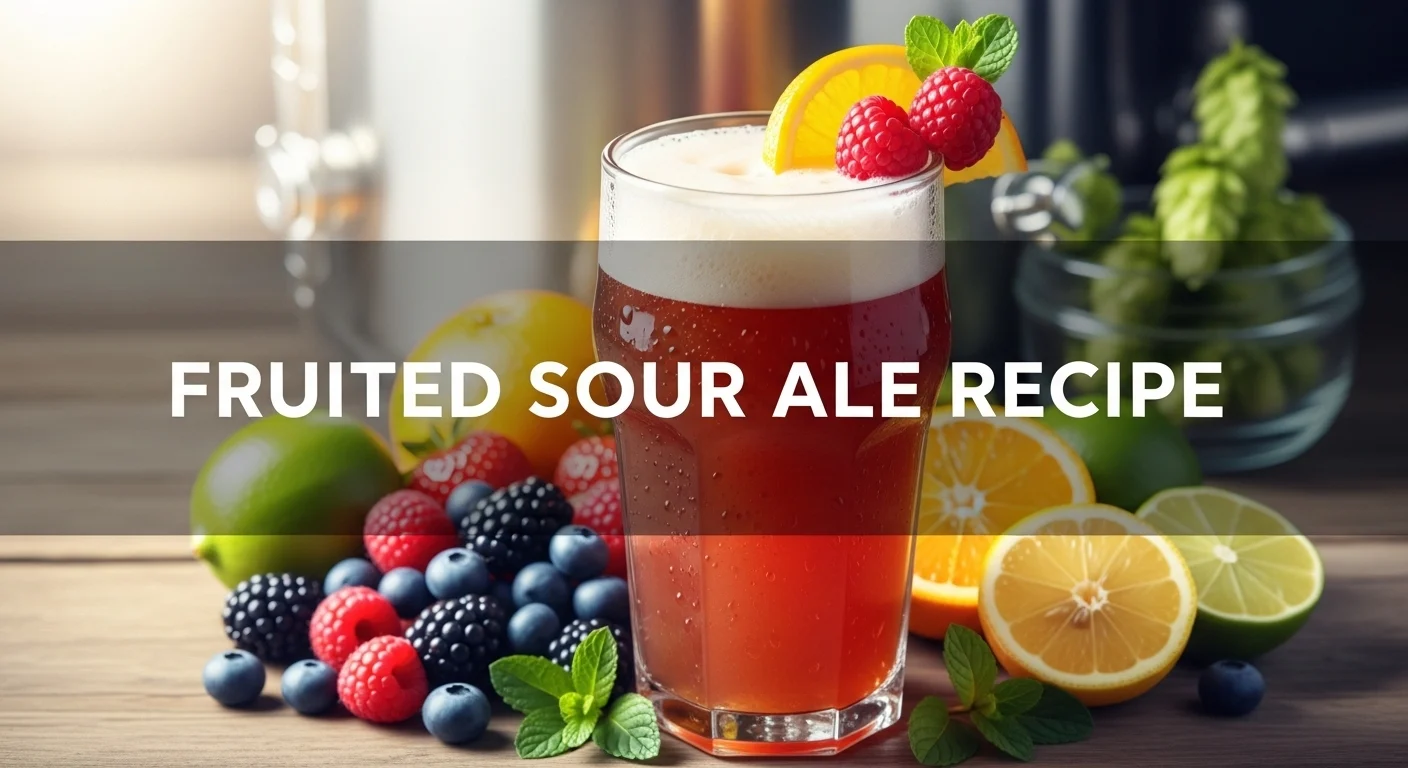
Master the complete Fruited Sour Ale recipe with kettle souring techniques, proper fruit integration, specialized yeast management, and optimal timing for creating balanced tart ales.
Fruited Sour Ale recipe represents one of the most exciting and rapidly evolving styles in modern craft brewing, requiring mastery of controlled souring techniques, strategic fruit integration, and careful balance management to create the characteristic bright tartness, vibrant fruit aromatics, and refreshing drinkability that has made these beers the fastest-growing segment in American craft brewing. After developing numerous Fruited Sour Ale recipe variations over the past five years and experimenting with kettle souring and Philly Sour techniques, I can confidently state that mastering this style demands understanding the delicate interplay between controlled acidification, timing of fruit additions, and maintaining clean fermentation that creates beers with remarkable tartness while showcasing natural fruit character through innovative brewing methods.
My Fruited Sour Ale recipe journey began with attempts that either produced harsh, unbalanced sourness or bland, watery beers where fruit character was overwhelmed by acidity. The breakthrough came when I discovered that proper kettle souring protocols and strategic fruit timing create the foundation while controlled fermentation and quality fruit selection develop the bright, balanced character that separates exceptional fruited sours from ordinary tart beers through systematic brewing approaches.
This comprehensive Fruited Sour Ale recipe guide explores every aspect of modern sour brewing including kettle souring techniques, fruit selection and preparation, specialized yeast applications, and conditioning methods that produce the signature brilliant colors, intense fruit aromatics, and clean tartness defining contemporary American sour beer innovation. From understanding the science behind controlled acidification to mastering fruit integration timing, this guide provides complete knowledge for creating outstanding fruited sours that showcase both brewing creativity and natural ingredient harmony.
Whether you’re beginning sour beer exploration or seeking to master contemporary brewing techniques, learning Fruited Sour Ale recipe provides essential skills while creating vibrant beers that demonstrate both technical precision and creative expression through systematic approach and proven methods.
Understanding Modern Fruited Sour Character
Authentic Fruited Sour Ale displays vibrant fruit-derived colors with balanced tartness ranging from 1.035-1.055 original gravity while achieving 4.0-6.5% alcohol content through simple grain bills enhanced by substantial fruit additions that create the signature bright acidity, intense fruit aromatics, and refreshing finish defining contemporary American sour brewing excellence.
Brilliant Fruit-Derived Appearance
Modern fruited sours exhibit vibrant colors reflecting fruit additions ranging from pale pink to deep purple while showcasing proper fruit integration and controlled acidification that creates visual appeal essential for contemporary presentation.
Balanced Tart Character
Controlled souring provides clean acidity without harsh astringency while targeting pH levels between 3.3-3.8 creates refreshing tartness that enhances rather than overwhelms fruit character through systematic acidification control.
Intense Fruit Aromatics
Substantial fruit additions create distinctive varietal character while proper timing and processing preserve delicate fruit aromatics that define exceptional fruited sour quality through specialized integration techniques.
Light-Medium Body Profile
Simple grain bills provide clean foundation for fruit expression while wheat malt additions enhance mouthfeel and head retention without competing with fruit character through balanced formulation.
Exceptional Sessionability
Moderate alcohol and clean finish encourage extended consumption while refreshing tartness and bright fruit character create perfect warm weather beers through optimal balance achievement.
For comprehensive Fruited Sour Ale brewing techniques and modern souring methods, explore the innovative brewing resources at BrewMyBeer’s sour beer section, where contemporary souring wisdom meets systematic brewing precision.
Essential Fruited Sour Ingredients
Authentic Fruited Sour Ale recipe requires specific ingredient combinations including quality base malts, substantial fruit additions, minimal hops, and specialized yeast strains that create distinctive character through ingredient quality and modern brewing innovation.
Simple Base Malt Foundation
Pilsner malt comprises 50-70% of grain bills providing clean, neutral grain character while contributing light color foundation that showcases fruit additions without competing flavors through quality malt selection.
Wheat Malt Enhancement
White wheat malt adds 25-40% protein and body while improving head retention and creating smooth mouthfeel that supports fruit oils and enhances drinking experience through systematic grain integration.
Adjunct Additions
Flaked oats provide 5-10% texture improvement while contributing protein content and smooth mouthfeel that enhances fruit integration and creates substantial drinking experience.
Acidulated Malt Integration
Small amounts help achieve proper mash pH while supporting enzyme activity in simple grain bills and providing slight acidity contribution through traditional German brewing techniques.
Substantial Fruit Additions
Quality fruit puree or whole fruit provides 1-4 lbs per gallon while creating intense varietal character and natural color development through proper selection and processing methods.
Minimal Hop Character
Low-alpha hops provide subtle bitterness without interfering with fruit while noble varieties contribute gentle balance that supports rather than competes with acidity and fruit integration.
Specialized Yeast Strains
Philly Sour yeast or traditional ale yeasts with lacto cultures produce controlled sourness while maintaining clean fermentation that showcases fruit character through innovative yeast applications.
| Ingredient Component | Percentage Range | Character Contribution | Quality Requirements | Modern Innovation |
|---|---|---|---|---|
| Pilsner Malt | 50-70% | Clean foundation | Premium quality | Neutral base |
| Wheat Malt | 25-40% | Body enhancement | White variety | Protein contribution |
| Flaked Oats | 5-10% | Texture improvement | Pre-processed | Mouthfeel support |
| Fruit Additions | 1-4 lbs/gallon | Intense character | Quality processing | Defining feature |
| Minimal Hops | 5-15 IBU | Subtle balance | Low-alpha varieties | Supporting role |
Complete Modern Fruited Sour Recipe
This proven Fruited Sour Ale recipe produces 5 gallons of contemporary raspberry sour with proper balance, vibrant color, and exceptional drinkability through carefully selected ingredients and proven modern brewing techniques.
Kettle Sour Recipe Specifications
Target original gravity 1.048, final gravity 1.008, 12 IBU, pH 3.5, and 5.2% ABV while creating authentic fruited sour character through traditional grain ratios and systematic modern methods.
Simple Effective Grain Bill
Premium ingredients include 5 lbs Pale Ale malt, 4 lbs white wheat malt, 1 lb flaked oats, and 8 oz acidulated malt while providing proper foundation, body, and neutral character development.
Strategic Fruit Integration
49 oz Oregon Fruit raspberry puree added on day 5 provides intense varietal character while timing preserves aromatics and ensures proper integration through proven addition protocols.
Controlled Hopping Schedule
1 oz Tettnang at 30 minutes provides minimal bitterness while maintaining balance without interfering with fruit or acid character through restrained application.
Philly Sour Yeast Application
WildBrew Philly Sour creates controlled sourness and alcohol fermentation while eliminating need for separate lacto cultures through innovative single-strain brewing technology.
Kettle Souring Technique Mastery
Kettle souring provides controlled, efficient acidification for Fruited Sour Ale recipe while creating clean tartness without funky flavors through systematic temperature and timing management that produces consistent results.
Wort Preparation Protocol
Create hop-free wort through normal mashing and lautering while avoiding hop additions that might inhibit lactobacillus activity during acidification process through specialized wort production.
Temperature Control Strategy
Chill wort to 100-115°F for optimal lacto activity while maintaining consistent temperature throughout souring period that promotes efficient acid production without encouraging unwanted bacteria.
pH Pre-Acidification
Add lactic acid to achieve pH 4.3-4.5 before inoculation while preventing enterobacteria growth and creating optimal conditions for clean lactobacillus fermentation.
Lactobacillus Inoculation
Pure lacto cultures provide predictable sourness development while commercial cultures including Omega Yeast OYL-605 create consistent results without off-flavor risks.
Monitoring and Control
Track pH development targeting 3.3-3.6 final acidity while maintaining temperature and preventing contamination throughout 24-48 hour souring period.
Advanced Philly Sour Applications
Philly Sour yeast revolutionizes Fruited Sour Ale recipe production while combining acidification and alcohol fermentation in single organism that simplifies process and ensures consistent results through innovative biotechnology.
Simplified Process Benefits
Single yeast eliminates kettle souring complexity while producing both lactic acid and ethanol simultaneously through specialized metabolic pathways that create clean, controlled sourness.
Temperature Management
Ferment at 68-75°F for optimal Philly Sour performance while higher temperatures increase acid production and lower temperatures favor alcohol development through systematic temperature control.
Controlled Sourness Development
pH typically drops to 3.3-3.5 during fermentation while monitoring development and adjusting fruit additions to achieve proper balance through systematic evaluation.
Fruit Addition Timing
Add fruit during active fermentation for biotransformation while yeast activity enhances fruit integration and prevents oxidation through metabolic processing.
Quality Control Advantages
Reduced contamination risk compared to traditional methods while pure culture eliminates wild bacteria concerns and creates predictable results through commercial yeast technology.
Strategic Fruit Selection and Preparation
Fruit selection represents the most critical aspect of Fruited Sour Ale recipe development while variety choice, processing methods, and timing create the distinctive character that separates exceptional fruited sours from ordinary tart beers.
Optimal Fruit Varieties
Berry fruits including raspberry, blackberry, and cherry provide ideal character while high acidity and intense aromatics complement sour base beer through natural flavor synergy and traditional pairing success.
Fruit Processing Options
Purees provide consistent results and reduced sediment while whole fruit offers more complex character but requires additional processing and clarification through systematic handling methods.
Quantity Guidelines
Use 1-2 lbs per gallon for balanced character while heavily fruited styles may require 3-4 lbs per gallon for intense fruit-forward character through systematic scaling approaches.
Frozen Fruit Benefits
Freezing breaks cell walls improving extraction while frozen berries provide consistent availability and often superior extraction compared to fresh fruit through cellular damage.
Quality Assessment Standards
Select ripe, quality fruit avoiding overripe or damaged specimens while poor quality fruit creates off-flavors that compromise final beer quality through systematic ingredient evaluation.
Fermentation Management and Fruit Integration
Successful fruited sour fermentation requires systematic timing coordination while understanding fruit impact on yeast performance and beer development creates optimal conditions for character integration.
Primary Fermentation Strategy
Complete initial fermentation before fruit addition while active yeast populations handle fruit sugars effectively and prevent stuck fermentation through systematic timing coordination.
Fruit Addition Timing
Add fruit after 3-5 days of active fermentation while yeast activity remains high enough to process fruit sugars and integrate character through biotransformation processes.
Secondary Fermentation Management
Extended contact time develops complex fruit integration while 2-4 weeks on fruit creates optimal extraction without excessive tannin development through controlled contact duration.
Temperature Control During Fruit Phase
Maintain fermentation temperature throughout fruit contact while consistent conditions optimize extraction and prevent temperature shock that might affect yeast performance.
Monitoring and Assessment
Track gravity changes and flavor development during fruit fermentation while understanding completion signals and optimal packaging timing through systematic evaluation protocols.
Water Chemistry for Sour Beers
Proper water chemistry supports Fruited Sour Ale recipe development while mineral profiles influence both mash performance and final beer character through systematic chemistry management that optimizes extraction and flavor development.
Mineral Profile Optimization
Moderate chloride levels enhance mouthfeel and fruit character while supporting fruit integration and body development without harsh mineral interference through balanced chemistry approaches.
pH Management Strategy
Target mash pH around 5.2-5.4 despite simple grain bills while ensuring proper enzyme activity and extraction efficiency from wheat-heavy formulations through systematic monitoring.
Acidification Impact
Consider final beer pH when adjusting water chemistry while extremely low pH may affect mineral perception and require adjusted treatment approaches.
Chloride-Sulfate Balance
Favor chloride for enhanced fruit integration while moderate sulfate provides structure without harsh hop character inappropriate for fruited sours.
Treatment Simplicity
Minimal water modification maintains clean character while avoiding excessive chemistry that might interfere with delicate fruit and acid balance through restraint approaches.
Advanced Fruit Integration Techniques
Professional fruited sour production employs sophisticated integration methods that optimize character development while maintaining stability and preventing contamination through systematic processing and timing coordination.
Split Fruit Addition Strategy
Divide fruit between fermentation and conditioning phases while creating layered fruit character through fermented and fresh fruit components that enhance complexity and aromatics.
Biotransformation Optimization
Active yeast transforms fruit compounds creating unique flavors while enzymatic activity develops tropical and stone fruit character from various berry additions through metabolic processing.
Cold-Side Fruit Additions
Post-fermentation fruit maintains fresh character while requiring refrigeration to prevent secondary fermentation and potential over-pressurization through controlled processing.
Fruit Extraction Techniques
Gentle handling preserves aromatics while maximizing extraction through systematic processing that balances character development with quality preservation.
Quality Control Protocols
Monitor fruit condition and integration throughout process while preventing contamination and off-flavor development through systematic handling and sanitation procedures.
Packaging and Carbonation Considerations
Fruited sour packaging requires specialized protocols while managing residual sugars, carbonation levels, and stability concerns create optimal drinking experience and package integrity.
Residual Sugar Management
Monitor final gravity ensuring complete fermentation while residual fruit sugars may cause over-carbonation if packaging occurs before fermentation completion.
Carbonation Level Optimization
Target moderate carbonation enhancing tartness and fruit character while 2.6-3.2 volumes CO2 provides refreshing mouthfeel without harsh carbonic bite.
Cold Storage Requirements
Heavily fruited versions require continuous refrigeration while unfermented fruit additions create secondary fermentation risk that demands temperature control.
Sediment Considerations
Fruit particles create natural settling requiring careful handling while extended conditioning improves clarity through patient development processes.
Package Stability Monitoring
Extended fruit contact may affect long-term stability requiring evaluation and potential processing adjustments for optimal shelf life through systematic quality assessment.
Troubleshooting Fruited Sour Production
Common Fruited Sour Ale recipe challenges require systematic solutions while addressing problems including excessive sourness, poor fruit integration, fermentation issues, and stability concerns that affect quality and drinkability.
Excessive Sourness Issues
Over-acidification creates harsh, unbalanced character requiring pH monitoring and controlled souring techniques while maintaining proper balance with fruit sweetness through systematic timing control.
Poor Fruit Integration
Inadequate fruit character indicates timing or quantity problems requiring improved fruit selection, increased quantities, or better processing methods while ensuring proper extraction.
Fermentation Performance Problems
Acid stress affects yeast health requiring enhanced management through adequate nutrients and optimal environmental conditions for challenging fermentation conditions.
Clarity and Presentation Issues
Fruit particles and proteins affect visual appeal requiring extended conditioning and fining techniques while achieving clear presentation through systematic processing.
Package Stability Concerns
Continuing fermentation creates over-carbonation risks requiring complete sugar conversion monitoring and temperature management through systematic quality control.
Modern Sour Style Variations
Contemporary Fruited Sour Ale recipe development explores creative possibilities while maintaining balanced foundations through innovative fruit combinations and processing techniques that honor traditional methods.
Smoothie Sour Applications
Heavily fruited versions with lactose additions create dessert-like character while substantial fruit quantities and milk sugar enhance sweetness and body through creative brewing approaches.
Tropical Fruit Integrations
Passion fruit, guava, and mango create exotic profiles while tropical varieties provide unique aromatics and flavor combinations through creative ingredient selection.
Catharina Sour Inspiration
Brazilian style emphasizes wheat base with tropical fruits while traditional formulations showcase regional ingredients through cultural brewing adaptation.
Seasonal Fruit Utilization
Local, seasonal fruits create unique expressions while supporting regional agriculture and creating memorable terroir expressions through systematic seasonal planning.
Blending Opportunities
Combine different fruit additions for complex profiles while systematic blending creates unique flavor combinations and enhanced complexity through creative brewing approaches.
Conclusion and Brewing Excellence
Mastering Fruited Sour Ale recipe requires understanding modern techniques and ingredient integration while systematic souring methods, quality fruit selection, and proper timing create exceptional examples that showcase contemporary brewing innovation.
Begin with proven souring methods and quality ingredients while building understanding of controlled acidification and fruit behavior that enables authentic character development through modern techniques.
Master timing coordination and balance management while developing skills in pH control and fruit integration that separate exceptional fruited sours from ordinary tart beers through technical excellence.
Practice systematic evaluation and recipe development while understanding that exceptional fruited sours reward creativity and quality ingredients through proven brewing methods and innovative expression.
Remember that Fruited Sour Ale recipe success depends on balance achievement while creating refreshing, vibrant beers that demonstrate both brewing skill and ingredient appreciation through systematic technique application.
The investment in understanding sour brewing provides lasting education while creating exceptional fruit-forward ales that showcase the marriage between traditional brewing principles and contemporary creative expression.
Choose quality ingredients and proven techniques while maintaining respect for balance and drinkability that makes fruited sours both technically challenging and remarkably rewarding to create and enjoy.
About the Author
Tyler Yeastman specializes in fermentation microbiology and yeast behavior, bringing over 12 years of experience in both commercial brewing and laboratory research to his analysis of complex fermentation systems including sour beer production. His expertise in microbial ecology and controlled fermentation makes him particularly knowledgeable about the precise environmental controls required for successful fruited sour production, especially managing mixed fermentation cultures and understanding the interactions between acidifying bacteria, brewing yeast, and fruit-derived sugars.
Tyler has extensively studied modern sour brewing innovations through research with craft breweries pioneering kettle souring and Philly Sour applications where he documented the optimization of controlled acidification methods and fruit integration techniques. His scientific approach to understanding fermentation helps brewers appreciate the remarkable biological complexity involved in managing controlled sourness while maintaining clean flavor profiles and preventing contamination in fruit-forward applications. Tyler maintains a comprehensive fermentation laboratory where he studies lactobacillus behavior, fruit fermentation patterns, and pH development, contributing to several research publications on sour beer production and modern acidification techniques.
His systematic approach to yeast management and controlled fermentation makes him particularly skilled at troubleshooting the unique challenges presented by fruited sour brewing including managing competing microorganisms and optimizing fruit integration timing. When not analyzing fermentation data or researching sour brewing techniques, Tyler enjoys exploring how traditional European souring methods can be enhanced through modern microbiological understanding while embracing the creative freedom that makes fruited sour ales such a remarkable expression of both brewing science and artistic innovation. Contact Tyler at [email protected] or explore his comprehensive fermentation guides and sour brewing resources at brewmybeer.online.