Match the measurement principle to the decision. This page compares current manufacturer
specifications; it does not rank products or repeat the detailed final-gravity lesson already
owned by BrewMyBeer’s hydrometer-versus-refractometer guide.
Representative sample, temperature limits, calibration and the instrument’s stated scale.
Original and final gravity
Suitable direct density method
Sample temperature, bubbles, cleaning, instrument calibration and repeat readings.
Fermentation direction and rate
Continuous logger plus an independent endpoint check
Krausen, bubbles, vessel signal, receiver uptime and whether the trend has genuinely stabilised.
Three methods with different evidence
These are different tools with different jobs. The figures are manufacturer specifications, not
BrewMyBeer bench results. Specifications can change by model or region; open the source and
confirm the exact product before acting.
Small-sample pre-fermentation checks
MA871 digital Brix refractometer
Milwaukee Instruments
You want a fast Brix reading from a small, representative wort or juice sample before alcohol is present.
Specification
Published value
Brix range
0–85% Brix
Brix resolution
0.1% Brix Resolution is not the same as accuracy.
Stated Brix accuracy
±0.2% Brix
Minimum sample
100 µL; prism fully covered
Compensation range
10–40 °C
Check before choosing
The instrument reports Brix from refractive index; it is not a direct finished-beer gravity meter.
Automatic temperature compensation applies only inside the maker’s stated 10–40 °C compensation range.
After fermentation begins, use a validated alcohol correction with an original reading or cross-check another suitable method.
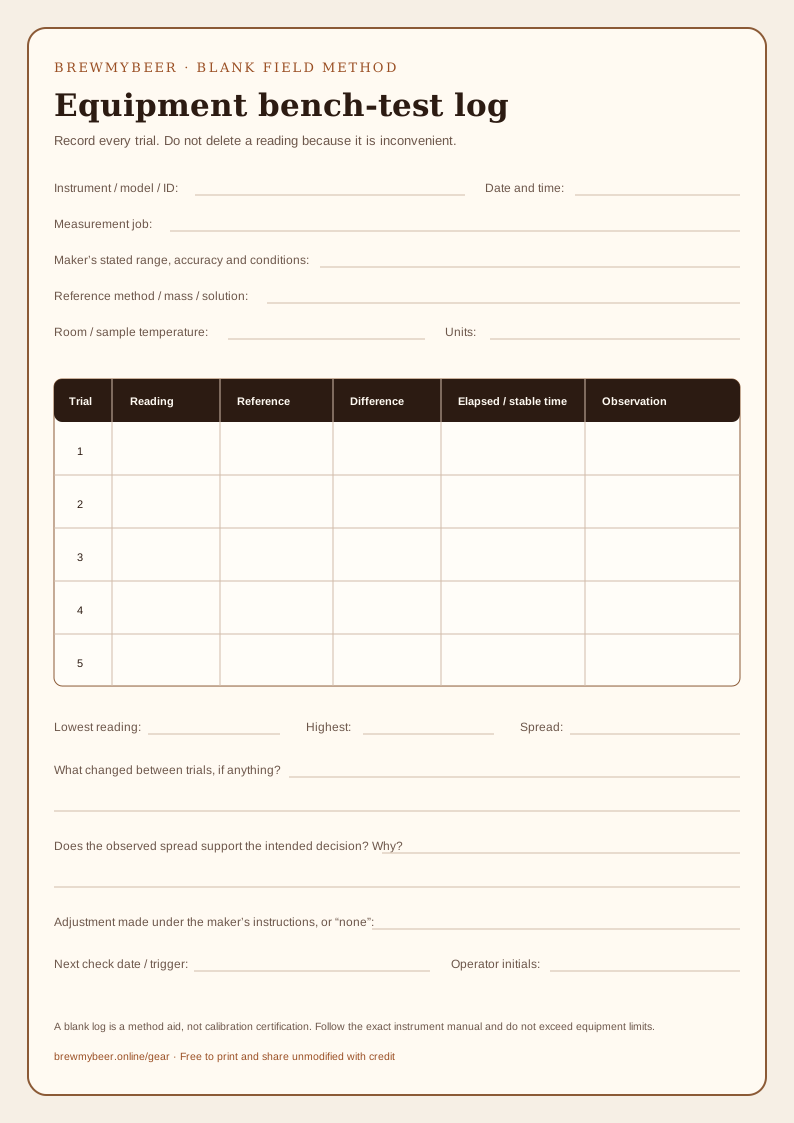
Write the instrument ID, model, lot or serial reference and the maker’s calibration
method.
Prepare one homogeneous sample and record its temperature before splitting it.
Take at least five readings without discarding an inconvenient value.
Record cleaning, bubbles, fill level, elapsed time and any correction used.
Compare spread and method limits before deciding whether the difference matters.
Manufacturer sources checked 8 October 2026. Specifications may change. BrewMyBeer has not run the
physical comparisons and does not infer current price, stock or affiliate approval.