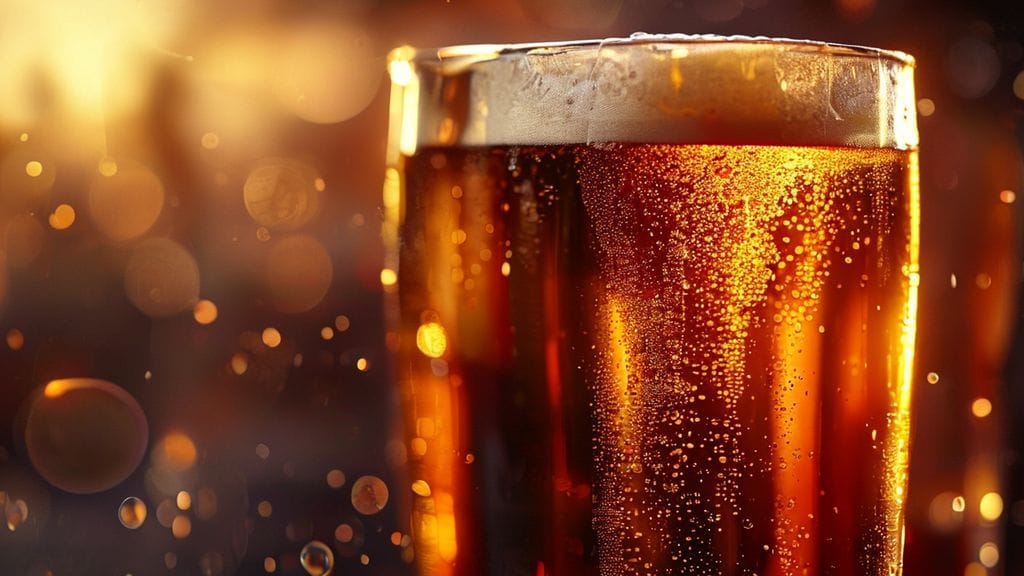
Brewing a Dark American Lager requires a precise balance of traditional lager techniques with a judicious hand in specialty malt selection. My approach emphasizes a clean, crisp fermentation profile to showcase a harmonious interplay of subtly roasted, bready malts and balanced hop bitterness, aiming for a highly drinkable, clear, and flavorful dark lager with a gravity range of 1.044-1.050 and a color between 18-25 SRM.
| Metric | Target Range | My Typical Result |
|---|---|---|
| Original Gravity (OG) | 1.044 – 1.050 | 1.048 |
| Final Gravity (FG) | 1.008 – 1.012 | 1.010 |
| Alcohol by Volume (ABV) | 4.5% – 5.5% | 5.0% |
| Color (SRM) | 18 – 25 | 22 |
| Bitterness (IBU) | 20 – 28 | 25 |
| Fermentation Temperature | 10°C – 13°C | 11.5°C |
| Mash Temperature | 65°C – 67°C | 66°C |
When I first ventured into brewing a Dark American Lager, I made a critical error many brewers do: I treated it like a stout with a lager yeast. My initial batches were either too roasty, too sweet, or simply lacked the crisp, clean finish I expected from a lager. It took me a few iterations to realize that the genius of this style lies in its subtlety – the dark malts should complement, not overpower, the fundamental character of a well-executed lager. This isn’t a Black IPA or a Robust Porter; it’s a dark beer that drinks remarkably light and clean, with an almost ‘sessionable’ quality despite its color. It’s a beer that challenges you to appreciate nuanced malt character without the heavy handedness often associated with darker brews. For me, perfecting this style became a mission to achieve clarity, a balanced roast profile, and that signature lager crispness. It’s a rewarding brew that truly showcases a brewer’s understanding of both malt chemistry and yeast behavior.
The Math Behind My Dark American Lager
Precision is paramount in brewing, and nowhere is this truer than in achieving the desired balance of a Dark American Lager. My approach starts with meticulous calculations for the grain bill, water chemistry, and hop additions to hit specific targets. I don’t just throw ingredients in; I engineer the beer from the ground up.
Grain Bill Formulation and Efficiency
My typical grain bill targets a brewhouse efficiency of 75%. This efficiency is crucial for accurately predicting OG and ABV. The use of adjuncts like flaked maize or rice is traditional for this style, contributing to a lighter body and crisp finish, while specialty dark malts provide color and subtle roast character without astringency. I’ve found that leveraging Carafa Special II or III, which are dehusked, minimizes unwanted harshness.
| Malt/Adjunct | Weight (kg for 20L batch) | Percentage (%) | Contribution (SRM) |
|---|---|---|---|
| 6-Row Pale Malt | 3.50 kg | 70.0% | 2.5 |
| Flaked Maize | 1.00 kg | 20.0% | 0.5 |
| Munich Malt (Light) | 0.25 kg | 5.0% | 4.0 |
| Carafa Special II (Dehusked) | 0.20 kg | 4.0% | 450 |
| Chocolate Malt | 0.05 kg | 1.0% | 350 |
| Total | 5.00 kg | 100.0% |
My estimated OG based on this bill and 75% efficiency for a 20L batch is approximately 1.048. To calculate the color contribution using the Morey equation:
SRM = 1.4922 * (MCU ^ 0.6843) where MCU = (Grain Weight in lbs * Grain SRM) / Volume in gallons. This calculates to an approximate **22 SRM**.
Hop Schedule and IBU Calculation
I aim for a balanced bitterness that supports the malt profile without being assertive. My preferred hops are clean and traditional, providing a smooth bitterness and very subtle noble aroma.
| Hop Type | Alpha Acid (%) | Amount (g) | Boil Time (min) | Estimated IBU Contribution |
|---|---|---|---|---|
| Magnum | 14.0% | 20g | 60 | 22.0 |
| Saaz | 3.5% | 15g | 10 | 3.0 |
| Total | ~25.0 IBU |
My IBU calculations use a modified Rager formula, which considers hop utilization based on wort gravity and boil time. For example, the 60-minute Magnum addition provides the bulk of the bitterness, while a small late addition of Saaz adds a whisper of noble hop character without any significant green or grassy notes that would be out of place in a lager.
Water Chemistry Adjustment
Water chemistry is often overlooked but is crucial for a clean lager. I target a mash pH of **5.2 – 5.4**. Given the dark malts, which are acidic, and the adjuncts, which are neutral, I often start with a moderately hard water profile. My typical additions for a 25L mash volume (for 20L finished beer) using reverse osmosis water are:
- Calcium Chloride (CaCl2): 5g (for 68 ppm Ca2+, 125 ppm Cl–)
- Gypsum (CaSO4): 2g (for 19 ppm Ca2+, 46 ppm SO42-)
- Lactic Acid (88%): 3-5ml (adjusted to hit mash pH target)
This provides sufficient calcium for enzyme function and yeast health, and balances chloride for mouthfeel with sulfate for hop definition.
Step-by-Step Execution: Brewing My Dark American Lager
Brewing a successful Dark American Lager is about precision and patience. I follow a regimented process to ensure consistency and quality in every batch. My equipment is always meticulously cleaned and sanitized.
- Milling the Grains: I mill my grains just before mashing, aiming for a consistent crush that leaves the husks largely intact while thoroughly breaking up the endosperm. This helps with efficient lautering and reduces the risk of astringency.
- Mash In: I heat my strike water to **71°C** to achieve a mash temperature of **66°C** after dough-in. I mash in with a thickness ratio of 2.8 L of water per kilogram of grain (approx. 14 L for 5 kg). I let this single infusion rest for **60 minutes**. During this time, I monitor the mash pH, adjusting with lactic acid if necessary to maintain the **5.2-5.4** range.
- Mash Out: After 60 minutes, I raise the mash temperature to **77°C** for **10 minutes** to halt enzymatic activity and reduce wort viscosity, which aids in lautering.
- Lautering and Sparging: I recirculate for 15 minutes until the wort runs clear. Then, I slowly drain the first runnings. I sparge with water heated to **77°C**, aiming for a total pre-boil volume of **26 Liters** and a gravity around **1.040**. Careful sparging prevents over-extraction of tannins from the husks.
- Boil: I bring the wort to a vigorous boil for **60 minutes**.
- 60 minutes: Add **20g Magnum (14% AA)** for bittering.
- 15 minutes: Add a whirlfloc tablet and yeast nutrient (e.g., 1/2 tsp Wyeast Yeast Nutrient).
- 10 minutes: Add **15g Saaz (3.5% AA)** for aroma.
I always make sure to keep boil-overs in check and monitor the boil intensity for consistent hop utilization.
- Chilling: After the boil, I rapidly chill the wort to my target fermentation temperature of **10°C** using an immersion chiller. Quick chilling helps to set chill haze and reduces the risk of off-flavor formation. Once chilled, I transfer the wort to a sanitized fermenter, aiming for **20 Liters**.
- Yeast Pitching: I typically use a healthy pitch of a clean German or American Lager yeast strain (e.g., Wyeast 2124 Bohemian Lager or White Labs WLP830 German Lager). I prepare a 2L yeast starter two days prior, ensuring a cell count of at least 1.5 million cells/ml/°P, which for this beer, means roughly **375 billion cells**. Oxygenation is critical for lagers, so I oxygenate the wort for **60 seconds** with pure O2 before pitching. My target pitching temperature is **10°C**.
- Fermentation: I maintain a fermentation temperature of **10°C** for the first 5-7 days. I monitor gravity daily.
- Diacetyl Rest: Once fermentation slows and gravity drops to within 3-4 points of my target FG (e.g., around **1.013-1.014**), I raise the temperature to **15-18°C** for **2-3 days**. This allows the yeast to reabsorb diacetyl and acetaldehyde. This step is absolutely non-negotiable for a clean lager.
- Crash Cooling: After the diacetyl rest, I gradually drop the temperature by 2°C per day until it reaches **0-2°C**.
- Lagering: This is where the magic happens for lagers. I transfer the beer to a sanitized secondary fermenter (or keep it in primary if space allows) and lager it at **0-2°C** for a minimum of **4-6 weeks**. This extended cold conditioning clarifies the beer, mellows flavors, and further smooths the profile. I often add fining agents like gelatin or BioFine Clear during the first week of lagering to aid clarity. You can find more detailed advice on lagering on BrewMyBeer.online.
- Packaging: I force carbonate my Dark American Lager to **2.5 volumes of CO2**. I ensure my kegs or bottles are thoroughly cleaned and sanitized. For bottles, I use carbonation drops or a priming sugar solution calculated to achieve the desired carbonation level.
Troubleshooting: What Can Go Wrong with Dark American Lager
Even with meticulous planning, brewing can throw curveballs. Here are common issues I’ve encountered or helped others troubleshoot with Dark American Lagers, and how to address them:
Astringent or Harsh Roast Character
Cause: Over-extraction of tannins from dark malts, especially if husks are damaged during milling, or if sparge water pH is too high (above 6.0). Excessive amounts of highly roasted malts (e.g., Black Patent without dehulling) can also contribute.
Fix:
- Ensure proper milling: Aim for a fine crush that keeps husks mostly intact.
- Monitor sparge water pH: Keep it below **6.0**. I use acidulated malt or lactic acid in my sparge water if necessary.
- Utilize dehusked dark malts (Carafa Special series) for color with less roast astringency.
- Consider late addition of dark malts to the mash (e.g., adding them for the last 15-20 minutes of the mash).
Diacetyl (Buttery/Butterscotch Flavor)
Cause: Inadequate diacetyl rest, underpitching of yeast, or insufficient lagering time. Yeast produces diacetyl as an intermediate compound, and needs time to reabsorb it.
Fix:
- Always perform a diacetyl rest at **15-18°C** for **2-3 days** towards the end of primary fermentation.
- Pitch sufficient healthy yeast. For lagers, this is often double the rate of an ale.
- If detected post-fermentation, warm the beer back up to **18°C** for a few days to encourage yeast activity and diacetyl reabsorption.
Excessive Chill Haze
Cause: Insufficient cold conditioning, inadequate protein rest (if using 6-row malt without adjuncts), or rapid chilling without proper fining.
Fix:
- Ensure rapid chilling post-boil.
- Employ a fining agent like whirlfloc in the boil, and gelatin or BioFine Clear during lagering.
- Extend lagering time at **0-2°C**. Patience is key for crystal-clear lagers.
Green Apple (Acetaldehyde)
Cause: Racking beer off yeast too early, premature packaging, or stressed yeast from underpitching or poor oxygenation.
Fix:
- Allow sufficient time for primary fermentation and diacetyl rest. Don’t rush the beer off the yeast.
- Ensure proper yeast pitching rates and wort oxygenation.
- Extend conditioning time. If already packaged, time can sometimes resolve it, though often it’s a permanent flaw.
Sensory Analysis: What to Expect from My Dark American Lager
A well-crafted Dark American Lager is a testament to balance and subtlety. Here’s what I experience when I pour a glass of my best batches:
Appearance
The beer pours a beautiful, deep garnet to dark brown color, often with shimmering ruby highlights when held to the light. It’s consistently brilliant in clarity, a hallmark of proper lagering. A persistent, creamy, off-white to light tan head forms, offering excellent retention and leaving elegant lacing on the glass. The effervescence is lively, with fine bubbles steadily rising.
Aroma
My first impression is always a clean, bready malt character, often with hints of toasted biscuit or caramel. There’s a delicate undercurrent of subtle roast, reminiscent of dark chocolate or coffee, but never burnt or harsh. I pick up a very low hop aroma, typically noble, with slight floral or spicy notes that complement the malt. Importantly, the nose is free from any fruity esters, diacetyl, or solventy alcohol notes – a testament to a clean lager fermentation.
Mouthfeel
This beer is remarkably smooth and crisp, with a medium-light to medium body that belies its dark color. The carbonation is moderate, providing a refreshing effervescence without being fizzy. It finishes dry and clean, inviting another sip, and lacks any cloying sweetness or lingering bitterness. There’s a pleasant creaminess that integrates the flavors beautifully, making it exceptionally drinkable.
Flavor
The flavor journey begins with a gentle malt sweetness, quickly followed by the nuanced notes of the specialty grains: a mild toast, a hint of dark bread, and a whisper of chocolate or coffee. The roast character is restrained and integrated, never acrid or aggressive. Hop bitterness is moderate and balanced, providing just enough counterpoint to the malt, leading to a clean, crisp finish. I never detect harshness, metallic notes, or significant fruity esters. The aftertaste is clean, slightly roasty, and satisfyingly refreshing. It’s a complex yet highly drinkable profile that surprises many who expect a heavier beer due to its color. For more specific flavor profiles and pairing suggestions, check out BrewMyBeer.online.
Frequently Asked Questions About Dark American Lager
Why are adjuncts like flaked maize or rice commonly used in Dark American Lagers?
I use adjuncts primarily to lighten the body and contribute to the crisp, dry finish characteristic of American Lagers. While they add little to no flavor, they dilute the protein content of the malt, which can also aid in achieving better clarity and head retention. They essentially help to prevent the beer from becoming too heavy or sweet, allowing the subtle dark malt character to shine without a cloying mouthfeel.
What is a diacetyl rest, and why is it crucial for lagers, especially dark ones?
A diacetyl rest is a critical step where, towards the end of primary fermentation, I raise the beer’s temperature to **15-18°C** for a couple of days. This temporary warming reactivates the yeast, encouraging it to reabsorb and metabolize diacetyl (which tastes like butter or butterscotch) and its precursor alpha-acetolactate. For dark lagers, where off-flavors can sometimes be masked by richer malt profiles, ensuring a clean fermentation free of diacetyl is even more vital to achieve that signature crisp and smooth lager character.
Can I use an ale yeast to brew a “Dark American Lager”?
While you could certainly brew a dark ale with a similar malt bill, it wouldn’t technically be a “Dark American Lager.” The defining characteristic of a lager is its clean, crisp fermentation profile achieved through specific lager yeast strains fermented at colder temperatures, followed by extended cold conditioning (lagering). An ale yeast, fermented warmer, would produce more fruity esters and phenols, fundamentally altering the flavor profile and mouthfeel away from the intended lager style. I’ve experimented with hybrid yeasts for other styles, but for this, stick to true lager yeast for authenticity.
How long should I typically lager a Dark American Lager?
I recommend a minimum of **4-6 weeks** of lagering at **0-2°C**. While some lighter lagers might benefit from even longer periods, this timeframe is generally sufficient for a Dark American Lager to fully mature. During this cold conditioning, the beer clarifies, harsh flavors mellow, and the overall profile smooths out significantly. It allows the yeast to clean up any remaining off-flavors and ensures a truly crisp and refined final product. Patience here genuinely pays off in the final sensory experience.