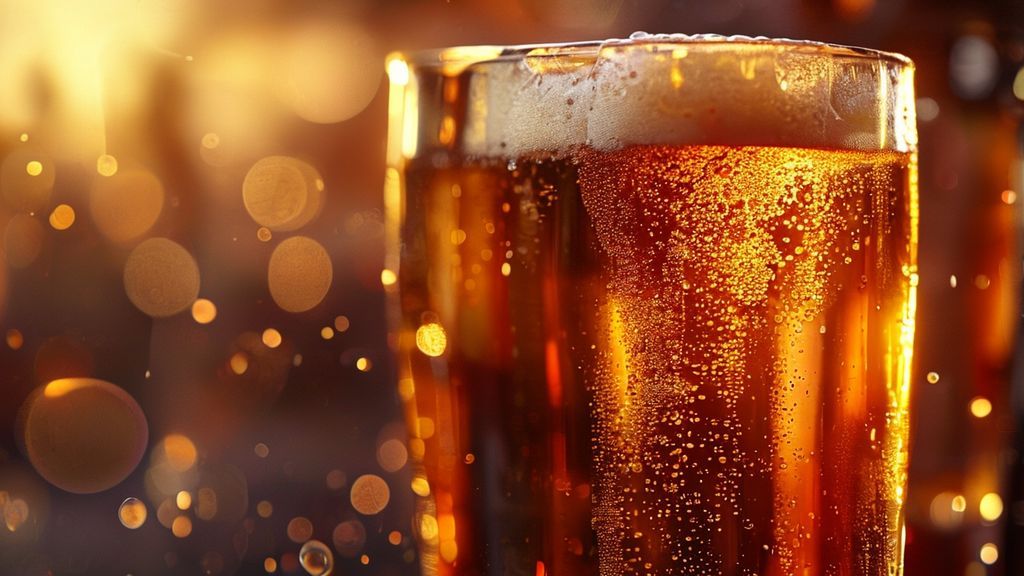
Old Ale is a deep, complex, and often age-matured ale, characterized by its robust malt profile, balanced bitterness, and frequently vinous, fruit ester notes. Traditionally brewed for extended conditioning, its high original gravity (typically 1.060-1.090) leads to a substantial alcohol content (6.0-9.0% ABV), developing a nuanced character often enhanced by slight oxidation or microbial action over time.
| Metric | Value (Target for 23L Batch) | Notes |
|---|---|---|
| Original Gravity (OG) | 1.075 | High gravity for a rich malt base. |
| Final Gravity (FG) | 1.018 | Retained body and residual sweetness. |
| Alcohol By Volume (ABV) | 7.4% | Robust, warming alcohol presence. |
| Bitterness (IBU) | 45 | Balanced against significant malt sweetness. |
| Color (SRM) | 18 | Dark amber to deep reddish-brown. |
| Mash Temperature | 67.5°C (153.5°F) | For good body and fermentable sugars. |
| Fermentation Temperature | 19°C (66°F) | Controlled ester production. |
| Conditioning Time | 6-12+ Months | Essential for character development. |
When I first ventured into brewing an Old Ale, I made the classic mistake of underestimating the power of time. My initial batch, while technically sound with its robust OG and balanced IBU, was rushed. I bottled it after merely three months, expecting the rich complexity I’d read about. What I got was a good, strong ale, but it lacked the vinous depth, the warming sherry notes, and the integrated flavors that define a truly great Old Ale. It was like tasting a fine wine before it had a chance to breathe. This experience hammered home a critical lesson: some beers aren’t just brewed; they’re aged into existence. Now, I approach Old Ale with the patience of a seasoned barrel cooper, knowing that the real magic happens over months, sometimes years, in the quiet solitude of the cellar.
The Core of Complexity: Understanding Old Ale’s Math
Crafting an Old Ale is as much about precision math as it is about brewing artistry. To hit that 1.075 Original Gravity with a target 23-liter batch and a realistic brewhouse efficiency of 75%, my calculations guide every kilogram of grain.
Manual Calculation Guide: Grain Bill for a 23L Batch (Target OG 1.075, 75% Efficiency)
To achieve an OG of 1.075, we need 75 “gravity points” per liter. For a 23L batch, this means 75 points/L * 23 L = 1725 total gravity points. Given a 75% brewhouse efficiency, the total potential gravity points from our grain bill must be higher to compensate for losses. We divide by our efficiency: 1725 / 0.75 = 2300 potential gravity points.
Assuming an average extract potential across the grain bill of 280 LDK (liters per kilogram of grain at 1.001 density), our total grain weight is:
Total Grain (kg) = Total Potential Gravity Points / Average Extract Potential (LDK)
Total Grain (kg) = 2300 / 280 = 8.21 kg
| Grain Type | Percentage (%) | Weight (kg) | Function |
|---|---|---|---|
| Pale Malt (e.g., Maris Otter) | 80% | 6.57 kg | Base fermentable sugars, rich malt backbone. |
| Crystal Malt (60-90L) | 10% | 0.82 kg | Caramel, toffee notes, residual sweetness, color. |
| Brown Malt | 5% | 0.41 kg | Biscuit, toasted notes, traditional character. |
| Chocolate Malt | 3% | 0.25 kg | Dark color, hint of roast and cocoa. |
| Flaked Barley | 2% | 0.16 kg | Enhanced body and head retention. |
| Total | 100% | 8.21 kg |
ABV Calculation
The alcohol by volume is derived from the difference between the Original Gravity (OG) and the Final Gravity (FG). I use the standard formula for an approximate ABV:
ABV = (OG - FG) * 131.25
For my target Old Ale:
ABV = (1.075 - 1.018) * 131.25 = 0.057 * 131.25 = 7.48%
This provides a warming, yet not overpowering, alcohol presence that contributes to the beer’s complexity during aging.
Step-by-Step Execution: Brewing Your Old Ale
This is where the rubber meets the road. Follow these steps meticulously, and you’ll be on your way to a truly remarkable Old Ale.
- Water Treatment: Start with at least 30 liters of brewing water for a 23-liter finished batch. For an Old Ale, I usually aim for a slightly malt-forward profile with a balanced mineral content. My typical additions per 20 liters are 5g Gypsum (CaSO4) and 3g Calcium Chloride (CaCl2), targeting a mash pH between 5.2 and 5.4.
- Milling: Crush your grains for an efficient mash, ensuring the husks remain largely intact for a good filter bed.
- Mashing: Mash in with your treated water at a liquor-to-grist ratio of approximately 3:1 (liters of water per kg of grain). My target mash temperature is **67.5°C (153.5°F)**. Hold this temperature for **90 minutes**. This slightly higher temperature promotes a good balance of fermentable and unfermentable sugars, essential for body and residual sweetness.
- Lautering & Sparging: Recirculate your first runnings until clear, then slowly draw off the wort. Begin sparging with water heated to **77°C (170°F)**. Collect approximately **26-27 liters** of wort to account for boil-off and achieve a pre-boil gravity around 1.066.
- Boil: Bring the wort to a vigorous boil for **90 minutes**.
- At **60 minutes** remaining: Add 25g Magnum (14% AA) for bittering (approx. 35 IBU).
- At **15 minutes** remaining: Add 30g East Kent Goldings (5% AA) for flavor and aroma (approx. 10 IBU).
- At **5 minutes** remaining: Add yeast nutrient (e.g., 1/2 tsp Wyeast Beer Nutrient) and whirlfloc tablet for clarity.
After the boil, you should have around 23 liters of wort with an Original Gravity of **1.075**.
- Chilling & Aeration: Rapidly chill the wort to **18°C (64°F)**. Thoroughly aerate the wort either by shaking the fermenter vigorously for several minutes or using an oxygenation system, as high-gravity worts require plenty of oxygen for healthy yeast propagation.
- Pitching Yeast: Pitch a healthy, active English Ale yeast strain (e.g., Wyeast 1028, WLP002, or 2 sachets of Fermentis S-04). For this high-gravity brew, I always recommend a **starter** if using liquid yeast to ensure an adequate cell count of at least 600 billion cells for optimal fermentation.
- Fermentation: Ferment at a steady temperature of **19°C (66°F)** for the primary fermentation, which typically lasts **2-3 weeks**. Once fermentation activity subsides and gravity stabilizes, transfer the beer to a secondary fermenter or clean carboy.
- Aging & Conditioning: This is the most crucial step. Condition the Old Ale for a minimum of **6 months**, and ideally **12-24 months**, in a cool, dark environment (e.g., **10-15°C / 50-59°F**). During this period, the flavors will meld, harshness will mellow, and complex sherry-like, leathery, or dried fruit notes will develop. I’ve found that patience here pays dividends unmatched by any other step.
- Packaging: Carbonate to 1.8-2.2 volumes of CO2. Bottle conditioning with priming sugar (e.g., 6-7g/L dextrose) or kegging are both suitable. Allow another **1-2 months** in the bottle for carbonation and further conditioning before enjoying.
What Can Go Wrong: Troubleshooting Your Old Ale
Even with careful planning, brewing an Old Ale can present unique challenges, especially given its long conditioning period. Here are common issues I’ve encountered and how I address them:
- Stuck Fermentation: High gravity worts are notorious for this. If your gravity drops too slowly or stalls high (e.g., above 1.025), I first check my fermentation temperature; a slight increase to **20-21°C (68-70°F)** can sometimes restart activity. Ensuring proper yeast health and pitching rate (using a robust starter) is preventative. If it’s truly stuck, a re-pitch of fresh, active yeast, perhaps a more attenuative strain, might be necessary.
- Oxidation (Pre-Aging): Introducing oxygen during fermentation or transfer to secondary can create acetaldehyde (green apple flavor) or other off-flavors that won’t age out well. Minimize splashing at every stage post-boil, especially during transfer. Use CO2 purging in secondary fermenters if possible.
- Lack of Depth/Complexity: If your aged Old Ale tastes “thin” or lacks the anticipated character, it’s often due to insufficient aging time or an under-built malt bill. I’ve learned that you can’t rush tradition; let it sit longer. For future batches, consider a touch more specialty malt or a slightly higher mash temperature.
- Infection: A long aging period provides ample opportunity for unwanted microbes. Scrupulous sanitation is paramount. If you detect sourness, phenols (band-aid, clove), or pellicle formation, it’s likely an infection. While some Old Ales develop a pleasant sourness from controlled Brettanomyces, unintentional infection usually ruins the batch. Dump and sanitize everything.
- Excessive Sweetness/Cloying: If the FG ends up too high (e.g., 1.030+), the beer can be excessively sweet. This often points to a mash temperature that was too high, converting fewer fermentable sugars. For future brews, lower the mash temperature to **65-66°C (149-151°F)** for a slightly drier finish, or consider a yeast strain with higher attenuation.
Sensory Analysis: Unveiling the Old Ale’s Character
An Old Ale, when properly brewed and aged, is a sensory journey. Here’s what I look for when I finally uncork one of my prized bottles:
- Appearance: It pours with a deep, alluring hue, ranging from a rich mahogany to a very dark ruby-brown. It should be clear, almost brilliant, with a moderate, tan head that dissipates slowly, often leaving intricate lacing on the glass. A slight chill haze might be present in younger examples, but clarity improves with age.
- Aroma: The nose is a complex tapestry. I typically detect significant malt character, presenting notes of caramel, toffee, dried dark fruits (raisin, fig, prune), and often a hint of sherry or port from the oxidation that occurs over long aging. Subtler notes of roasted malt, nuts, or even a slight smokiness can emerge from specialty grains. Hop aroma is low to medium, generally earthy or spicy, serving as a backdrop to the malt. Esters from fermentation might present as plum or dark cherry.
- Mouthfeel: This beer demands a full, viscous body. It feels substantial on the palate, often with a velvety or chewy texture. Carbonation is moderate to low, contributing to its smooth drinkability. A noticeable alcohol warmth should be present, but it should be smooth and integrated, never harsh or boozy. The finish is typically medium-sweet, but balanced by a lingering, pleasant bitterness.
- Flavor: The flavor mirrors the aroma, starting with a rich burst of complex malt. Deep caramel, molasses, treacle, and dark fruit flavors dominate. I often pick up notes of toasted bread, nuts, and a subtle chocolate or coffee undertone. The hop bitterness provides a necessary counterpoint, preventing it from becoming cloyingly sweet. As it ages, I’ve noticed flavors of dried leather, tobacco, and even faint vanilla or oak if conditioned in wood. The alcohol notes become more refined, contributing a vinous quality. The finish is long and satisfying, with a delicate interplay of sweetness and bitterness.
What is the ideal fermentation temperature for Old Ale, and why?
I find the ideal primary fermentation temperature for an Old Ale to be around **19°C (66°F)**. This temperature range allows the English ale yeast to produce a clean base fermentation, providing subtle fruity esters (like plum or dark cherry) that complement the rich malt profile without becoming overpowering or solventy. Maintaining a steady temperature also minimizes the production of fusel alcohols, which can contribute to harsh flavors, especially important for a beer destined for long-term aging.
Can I use a different yeast strain for Old Ale, such as a Belgian or a Brettanomyces strain?
While traditional Old Ales are typically fermented with a clean English ale yeast, experimenting with other strains can certainly be done, but it shifts the style. Using a Belgian strain would introduce distinct phenolic (clove, spice) or highly fruity ester characteristics, pushing it towards a Belgian Dark Strong Ale profile. Introducing Brettanomyces for secondary fermentation and aging is a fascinating path I’ve explored, leading to notes of leather, horse blanket, and increased dryness, adding a traditional “stock ale” complexity. However, if you choose this route, be prepared for even longer aging times and dedicated BrewMyBeer.online sanitation practices to prevent cross-contamination in your other brews. Just ensure you know what you’re aiming for, as these strains fundamentally alter the beer’s character.
How long should I age my Old Ale, and what are the benefits of extended conditioning?
I recommend aging an Old Ale for a minimum of **6 months**, with many of my best batches benefiting from **12 to 24 months**, or even longer. The benefits of extended conditioning are profound. Over time, the harsh edges of hop bitterness and fresh alcohol smooth out, allowing the complex malt flavors to fully integrate. Subtle oxidation introduces vinous (sherry, port-like) notes and dried fruit characteristics. Complex chemical reactions transform the beer, developing layers of flavor like caramel, toffee, dried fruit, and sometimes even leathery or nutty nuances. The mouthfeel often softens and becomes more luxurious. It’s a transformative process that turns a strong ale into a truly “old” and profound drinking experience. For more insights on cellaring, check out our resources at BrewMyBeer.online.