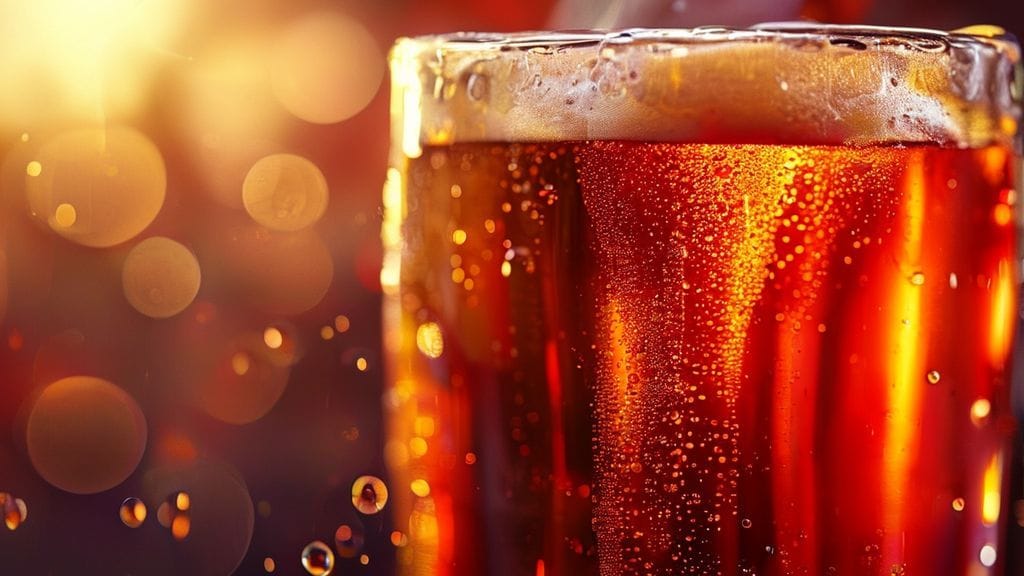
A Red IPA is a captivating beer style, meticulously balancing assertive hop bitterness and aroma with a rich, malty backbone that imparts a distinct reddish hue. My approach emphasizes selecting specific crystal and specialty malts for color and body, alongside a generous hop schedule focusing on West Coast-style aromatics, culminating in a complex, yet remarkably drinkable, hop-forward brew.
| Metric | Value (for 19 L batch) |
|---|---|
| Original Gravity (OG) | 1.068 |
| Final Gravity (FG) | 1.015 |
| Alcohol By Volume (ABV) | 7.0% |
| International Bitterness Units (IBU) | 65 |
| Standard Reference Method (SRM) | 15-18 |
| Mash Temperature | 66°C |
| Fermentation Temperature | 18-20°C |
| Boil Time | 60 minutes |
When I first ventured into brewing a Red IPA, I made the classic mistake of focusing too much on just the color, often sacrificing hop punch or ending up with an astringent roast character. My early attempts used too much roasted malt for the “red” aspect, resulting in a murky, sometimes acrid beer that missed the vibrant hop aroma crucial to an IPA. What I learned over two decades of brewing is that the Red IPA isn’t just an IPA that happens to be red; it’s a careful dance between rich, bready, caramel malt flavors and a formidable hop presence. It demands precision in malt selection to achieve that striking ruby hue without introducing harsh roast notes, while still providing a robust canvas for expressive, resinous hops. It’s a style that truly tests a brewer’s ability to balance power and finesse. My experience has taught me that meticulous temperature control during fermentation and aggressive dry hopping are non-negotiable for capturing that elusive balance.
The Brewer’s Math: Crafting the Red IPA Profile
Achieving the perfect Red IPA isn’t about guesswork; it’s about precise calculations and understanding how each ingredient contributes to the final product. I’ve refined my recipes over many years, and these formulas and ratios are what I consistently rely on to hit my targets.
Malt Bill Composition (for a 19 L Batch)
The malt bill is where we establish the color, body, and the foundational sweetness that supports the hop bitterness. My goal is a deep ruby-red, not brown, and definitely not black. This requires careful selection of crystal and specialty malts, minimizing anything that leans towards roast unless it’s a dehusked variety for color adjustment only.
| Malt Type | Quantity (kg) | Percentage (%) | Contribution |
|---|---|---|---|
| Pale Malt (2-Row) | 4.5 kg | 78.3% | Base fermentables, light color |
| Crystal Malt (60L) | 0.5 kg | 8.7% | Caramel sweetness, body, red hue |
| Crystal Malt (120L) | 0.3 kg | 5.2% | Deeper caramel, pronounced red, residual sweetness |
| Munich Malt | 0.3 kg | 5.2% | Malty complexity, bready notes |
| Carafa Special III | 0.15 kg | 2.6% | Color adjustment (red/ruby) without roast/astringency |
Hop Schedule and IBU Calculation
The IBU (International Bitterness Unit) calculation is critical for managing bitterness. I primarily use the Tinseth formula in my brewing software, which accounts for wort gravity and boil time. The target is 65 IBU, but the perceived bitterness will be softened by the substantial malt body.
| Hop Variety | Alpha Acid (AA%) | Quantity (g) | Boil Time (min) / Addition Type | Estimated IBU Contribution |
|---|---|---|---|---|
| Magnum | 14.0% | 20 g | 60 min | ~35 IBU |
| Simcoe | 13.0% | 28 g | 15 min | ~15 IBU |
| Centennial | 10.0% | 28 g | 5 min | ~8 IBU |
| Amarillo | 8.0% | 56 g | Whirlpool (80°C, 20 min) | ~7 IBU |
| Simcoe | 13.0% | 84 g | Dry Hop (Day 3 of fermentation) | 0 IBU (Aroma) |
| Centennial | 10.0% | 84 g | Dry Hop (Day 3 of fermentation) | 0 IBU (Aroma) |
Original Gravity (OG) and Predicted Final Gravity (FG)
The OG (1.068) is a result of my chosen malt bill and an estimated brewhouse efficiency of 75%. The FG (1.015) is predicted based on the yeast’s attenuation characteristics (typically 75-80% for American ale strains) and the unfermentable sugars from the crystal malts. The calculation is straightforward: ABV = (OG - FG) * 131.25. For this recipe, that puts us right at 7.0% ABV, which is exactly where I like a Red IPA to sit – strong enough to command respect, but balanced enough to invite another sip.
Step-by-Step Execution: Brewing Your Red IPA
This is where the rubber meets the road. Follow these steps meticulously, as every detail contributes to the final beer.
- Water Treatment: Start with quality water. My target profile for a Red IPA emphasizes a balance of sulfates and chlorides (e.g., SO4:Cl ratio around 1.5-2.0). I usually aim for a residual alkalinity of about -50 to -70 ppm CaCO3 for a slightly lower mash pH. Adjust your brewing water to achieve a mash pH of 5.3-5.4 at mash temperature. For a typical 19L batch, I add approximately 5g Gypsum (Calcium Sulfate) and 3g Calcium Chloride to my strike water to enhance hop perception and smooth out the malt profile.
- Mash: Combine your crushed grains with the treated strike water at a liquor-to-grist ratio of about 2.8 L/kg. Mash in, ensuring thorough mixing to avoid dough balls. Maintain a constant temperature of 66°C for 60 minutes. This single-infusion mash promotes good conversion while leaving enough dextrins for body. After 60 minutes, perform an iodine test to confirm starch conversion is complete.
- Mash Out & Sparge: Raise the mash temperature to 76°C for 10 minutes to stop enzymatic activity and reduce wort viscosity. Begin to sparge slowly, collecting your pre-boil wort. My target pre-boil volume is 23-24 L, aiming for an OG of 1.058-1.060 to account for boil-off and hop absorption. Ensure your sparge water doesn’t exceed 78°C to prevent tannin extraction.
- The Boil: Bring your collected wort to a vigorous, rolling boil.
- 60 minutes: Add 20g Magnum (14.0% AA).
- 15 minutes: Add 28g Simcoe (13.0% AA).
- 10 minutes: Add 1 tsp Irish Moss or 1/2 tablet Whirlfloc to aid in clarity.
- 5 minutes: Add 28g Centennial (10.0% AA).
- End of Boil (Flameout/Whirlpool): Turn off the heat. Initiate a whirlpool by stirring vigorously for 2 minutes, then let it rest for 15-20 minutes. As the wort cools during the whirlpool, add 56g Amarillo (8.0% AA). Maintain the wort temperature between 80-85°C for this addition to extract maximum aroma without significant bitterness.
- Chilling: Chill the wort rapidly to your pitching temperature of 18°C. Rapid chilling helps prevent DMS formation and creates a good cold break.
- Fermentation:
- Pitching: Transfer the chilled wort to a sanitized fermenter. Aerate thoroughly (oxygenating for 60 seconds with pure O2 or vigorous shaking for 5 minutes). Pitch 1 sachet (11.5g) of a clean American Ale yeast (e.g., SafAle US-05 or similar). If you’re building a starter, ensure you have about 200 billion cells for this OG.
- Primary Fermentation: Maintain fermentation temperature strictly at 18-20°C. This keeps off-flavors (like fusel alcohols or excessive esters) at bay. Fermentation will typically be vigorous for 3-5 days.
- Dry Hopping (1st Addition): On Day 3 of fermentation, once krausen starts to subside but fermentation is still active, add 84g Simcoe (13.0% AA) and 84g Centennial (10.0% AA). The active yeast helps biotransform hop compounds, enhancing tropical and fruity aromas.
- Secondary/Diacetyl Rest: Allow fermentation to complete, typically 7-10 days. My experience has shown that letting the beer sit for an extra 2-3 days at 20°C post-primary fermentation (diacetyl rest) is crucial for ensuring diacetyl is reabsorbed by the yeast. Monitor gravity readings; once stable (e.g., two identical readings 24 hours apart), your FG should be around 1.015.
- Cold Crash & Packaging:
- Cold Crash: Once fermentation is complete and stable, drop the temperature to 2-4°C for 3-5 days. This helps clarify the beer and drops yeast and hop particulate.
- Kegging/Bottling: Transfer the beer carefully, avoiding disturbing the trub. For kegging, carbonate to 2.4-2.6 volumes of CO2. If bottling, prime with 120-130g dextrose for a 19 L batch. Allow 2-3 weeks for bottle conditioning at 20°C.
What Can Go Wrong: Troubleshooting Your Red IPA
Even with the best planning, brewing can throw curveballs. Here are common issues I’ve encountered and how to address them, drawing from my experience over at BrewMyBeer.online.
- Lack of Red Color / Too Brown: This is a common pitfall. Often, it’s due to insufficient use of crystal malts (especially those around 120L) or an over-reliance on darker roasted malts. My advice: revisit your grain bill. Ensure you’re using Carafa Special III or similar dehusked dark malts sparingly, focusing on Crystal 60L-120L for the primary color contribution. Sometimes, high mash pH can also leach tannins and darken the color. Ensure your mash pH is in the 5.3-5.4 range.
- Too Bitter / Astringent: If the beer tastes overly bitter or has a drying, harsh sensation, several factors could be at play.
- Over-sparging: If your sparge water is too hot (>78°C) or your sparge runs too long, you can extract tannins from the grain husks, leading to astringency. My fix is to monitor specific gravity during sparging; stop when it drops below 1.010.
- Hop Schedule: Too many high-alpha hops in the bittering charge, or not enough malt sweetness to balance. Ensure a good proportion of hops are added later in the boil or in the whirlpool for aroma rather than just bitterness.
- Water Chemistry: A high sulfate-to-chloride ratio (e.g., 5:1) can accentuate bitterness excessively. Dial back the gypsum if you’re experiencing this.
- Lack of Hop Aroma / Flavor: This is a major disappointment in an IPA.
- Insufficient Late Additions/Dry Hopping: My dry hop schedule is aggressive for a reason. Don’t be shy! If your aroma is lacking, increase your dry hop quantities significantly, or consider a second dry hop charge later in conditioning.
- Oxygen Exposure: Hops are delicate. Any oxygen exposure post-fermentation will rapidly degrade hop aroma. I’ve learned to purge my kegs multiple times with CO2 and minimize transfers to reduce oxidation.
- Poor Hop Storage: Hops lose AA% and aroma compounds over time, especially if not stored cold and airtight. Always use fresh, properly stored hops.
- Sweetness Overload / Not Attenuated Enough: If your beer is too sweet and sticky, your yeast might not have done its job, or your mash temperature was too high.
- Mash Temperature: A mash temperature above 68°C can produce more unfermentable sugars. Stick to the 66°C target.
- Yeast Health/Pitch Rate: Ensure you pitch enough healthy yeast. Underpitching leads to sluggish fermentation and incomplete attenuation.
- Fermentation Temperature: If fermentation temperatures drop too low, yeast can go dormant. Maintain that 18-20°C range.
Sensory Analysis: What to Expect from My Red IPA
After all that meticulous work, here’s the payoff – what you should experience when you finally raise that glass.
- Appearance: A Red IPA should pour a dazzling, clear ruby-red to deep copper color. Expect a persistent, dense, off-white to slightly tan head with good lacing that clings to the glass. Clarity is paramount; it should sparkle.
- Aroma: The initial hit is a vibrant bouquet of hop aromatics. I typically pick up notes of pine, resin, grapefruit, and tangerine from the Simcoe and Amarillo, often complemented by a subtle floral or spicy edge from Centennial. Beneath the hops, there should be a pleasant, clean malt sweetness—caramel, toffee, and a hint of biscuit or breadiness, never cloying. No roast, no astringency, just a harmonious blend.
- Mouthfeel: This beer should have a medium-full body, substantial enough to stand up to the hop assault without being syrupy. Carbonation should be moderate, providing a slight effervescence that lifts the hop character without being prickly. Expect a gentle hop resinousness on the palate, contributing to a smooth, lingering finish that isn’t overly dry or harsh.
- Flavor: The first sip delivers a punch of hop bitterness, immediately followed by the complex interplay of hop flavors: citrus peel, pine needles, and a subtle tropical fruit character. This transitions smoothly into the malt backbone, where notes of toasted bread, rich caramel, and a touch of dark fruit emerge. The balance is key here – the bitterness is assertive but not overwhelming, perfectly counterpointed by the residual malt sweetness. The finish is clean, lingering with hop character and a satisfying dryness that invites another sip.
What’s the ideal water profile for a Red IPA?
From my experience, a balanced water profile is crucial for a Red IPA. I typically aim for a Chloride:Sulfate ratio of about 1:1.5 to 1:2.0. This means favoring sulfates slightly to accentuate hop bitterness and dryness, but keeping chlorides high enough (e.g., 80-100 ppm) to support the malt backbone and enhance mouthfeel. Residual alkalinity should be low (often negative, around -50 ppm CaCO3) to ensure mash pH lands in the ideal 5.3-5.4 range, promoting efficient extraction and a clean, vibrant color. For more specific guidance, check out the water chemistry calculators at BrewMyBeer.online.
How do I balance the red color without roastiness?
Achieving a brilliant ruby-red without any harsh roast character is a finesse act. My go-to strategy involves a combination of Crystal Malts (60L and 120L are excellent) for their caramel and red spectrum contribution, and a small percentage (1-3%) of dehusked dark malt like Carafa Special III. The dehusked nature of Carafa Special III prevents the roasted grain flavors from entering the wort, providing pure color. Avoid standard Black Patent or Chocolate malts unless you’re specifically targeting a roast character, which is generally not desirable in a classic Red IPA.
Which yeast strain works best for a Red IPA?
For a Red IPA, I always opt for a clean, attenuative American Ale yeast. Strains like SafAle US-05, Wyeast 1056 (American Ale), or White Labs WLP001 (California Ale) are ideal. These yeasts ferment cleanly, allowing the hop and malt characteristics to shine without imparting significant fruity esters or phenols. Their moderate-to-high attenuation helps dry out the beer enough to balance the residual sweetness from the crystal malts, crucial for the IPA character.