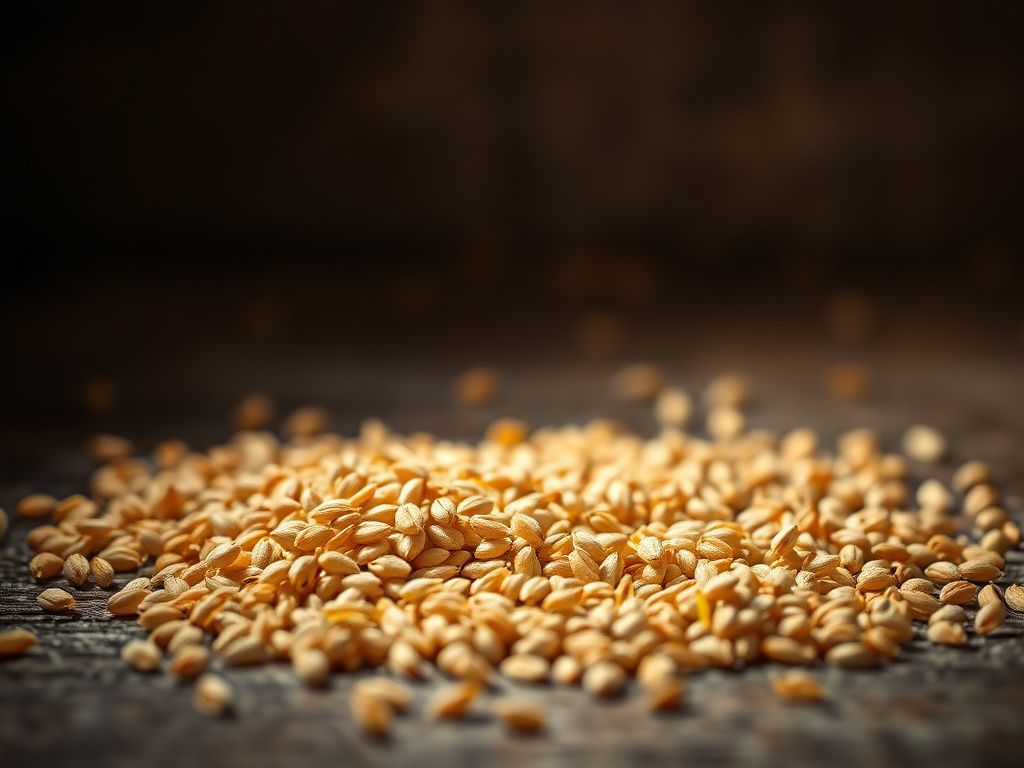
The Brew in a Bag (BIAB) method revolutionizes all-grain brewing, offering a simplified, cost-effective approach without compromising beer quality. This guide provides a rigorous technical framework, detailing critical process parameters from grain milling to fermentation preparation, empowering brewers to achieve consistent, high-fidelity results. Optimize thermal efficiency and extract maximum fermentables, ensuring superior batch performance and flavor profiles.
BIAB Process Flow: Critical Parameters & Control
Technical Overview of Key Brewing Stages
The following table outlines the essential technical aspects for each stage of the Brew in a Bag process, focusing on measurable parameters, control mechanisms, and potential failure points to ensure optimal wort production and subsequent fermentation.
| Process Step | Objective | Key Parameter | Control Mechanism | Potential Issue |
|---|---|---|---|---|
| Grain Milling | Optimize surface area for enzymatic hydrolysis while preserving husks for filtration. | Grist fineness (0.025-0.035″ gap) | Adjustable roller mill gap, consistent feed rate. | Stuck mash (too fine), low efficiency (too coarse), astringency (excessive husk damage). |
| Water Treatment | Adjust mineral ion profile to optimize mash pH, enhance enzyme function, and balance flavor. | Residual Alkalinity (RA), pH, ion concentrations (Ca²⁺, Mg²⁺, SO₄²⁻, Cl⁻). | Addition of brewing salts (CaSO₄, CaCl₂, MgSO₄), lactic acid, phosphoric acid, CaCO₃. | Off-flavors, poor enzymatic conversion, excessive haze, poor yeast flocculation. |
| Mash Initiation (Strike) | Hydrate milled grist and achieve target saccharification temperature swiftly. | Strike Temperature, Mash Temperature (148-158°F / 64-70°C). | Pre-calculated strike water temperature, thorough stirring, insulation. | Missed mash temperature, incomplete starch conversion, inconsistent fermentability. |
| Saccharification Rest | Facilitate enzymatic hydrolysis of starches into fermentable sugars and unfermentable dextrins. | Mash Temperature (±1°F/0.5°C), Mash pH (5.2-5.6). | Precise temperature control (PID/thermostat), insulation, pH adjustment. | Low efficiency, stuck fermentation, excessive dextrins (sweetness), too dry. |
| Mash Out | Inactivate amylolytic enzymes and decrease wort viscosity for improved drainage. | Temperature (168-170°F / 75.5-76.7°C). | Direct heat application to the mash, gentle stirring. | Tannin extraction (above 170°F), cloudy wort, reduced enzymatic activity prior to full conversion. |
| Bag Lift & Drain | Separate sweet wort from spent grain efficiently with minimal particulate carryover. | Drainage rate, volume recovery, particulate load. | High-quality mesh bag, slow gravity drain, gentle squeezing (optional). | Excessive grain particulate (haze), low pre-boil volume, potential scorching. |
| Boil Initiation | Rapidly bring wort to a vigorous rolling boil. | Temperature (212°F / 100°C at sea level), boil intensity. | High-power heat source, correct kettle size for volume. | Scorching, boil-overs, inadequate protein coagulation (DMS precursor). |
| Hop Additions | Isomerize alpha acids for bitterness, impart flavor and aroma compounds. | Alpha Acid % (AA%), Boil Time, Wort pH, Addition Timing. | Precision scale, timer, hop varietal selection. | Imbalanced bitterness, grassy off-flavors, lack of hop character. |
| Wort Chilling | Rapidly reduce wort temperature to yeast pitching range (60-70°F / 15-21°C). | Cooling Rate, Final Wort Temperature. | Immersion chiller, counterflow chiller, ice bath. | DMS retention, increased infection risk, poor cold break formation, reduced yeast viability. |
| Yeast Pitching | Introduce a sufficient population of healthy, viable yeast cells to ferment wort. | Pitch Rate (cells/mL/°P), Yeast Viability, Oxygenation Level (8-10 ppm O₂). | Yeast starter, pure oxygen/air stone, temperature-controlled environment. | Stuck/sluggish fermentation, off-flavors (esters, fusels), infection. |
BIAB Core Calculations
Critical Parameters for Consistent Brewing Outcomes
Understanding and accurately calculating your batch parameters is fundamental to consistent, repeatable BIAB brewing. These formulae guide precise process control.
Assumed Scenario:
Target Fermentor Volume: 5.5 US Gallons (20.82 Liters)
Grain Bill: 10.0 lbs (4.54 kg)
Target Mash Temperature: 152°F (66.7°C)
Grain Temperature: 70°F (21.1°C)
Boil-Off Rate: 1.0 gal/hour (3.78 L/hour)
Boil Duration: 60 minutes
Grain Absorption Factor: 0.125 gal/lb (1.04 L/kg)
Trub/Chiller Loss: 0.5 gal (1.89 L)
BIAB Mash Efficiency: 70%
1. Total Mash Water Volume (Full Volume BIAB):
V_mash = V_fermentor + V_boiloff + V_trub + (W_grain * F_absorption)
V_fermentor = Target final volume in fermentor.
V_boiloff = Boil-off rate per hour multiplied by boil duration.
V_trub = Volume lost to trub cone and chiller displacement.
W_grain = Total weight of grain in pounds.
F_absorption = Grain absorption factor (approx. 0.125 gal/lb).
Calculation:
V_boiloff = 1.0 gal/hr * (60 min / 60 min/hr) = 1.0 gal
V_mash = 5.5 gal + 1.0 gal + 0.5 gal + (10.0 lbs * 0.125 gal/lb) = 5.5 + 1.0 + 0.5 + 1.25 = 8.25 US Gallons (31.23 Liters)
2. Strike Water Temperature (T_strike):
T_strike = ( (0.2 * (T_mash - T_grain)) / WR ) + T_mash
T_mash = Target mash temperature.
T_grain = Ambient temperature of the grain.
WR = Water-to-Grain Ratio in quarts per pound (V_mash in quarts / W_grain in pounds).
0.2 = Specific heat constant for grain relative to water.
Calculation:
WR = (8.25 gal * 4 qt/gal) / 10.0 lbs = 33 qt / 10.0 lbs = 3.3 qt/lb
T_strike = ( (0.2 * (152°F – 70°F)) / 3.3 ) + 152°F = ( (0.2 * 82) / 3.3 ) + 152°F = ( 16.4 / 3.3 ) + 152°F = 4.97°F + 152°F = 156.97°F ≈ 157°F (69.4°C)
3. Target Original Gravity (OG) Estimation:
OG = 1 + ( ( Σ (PPG_malt * W_malt) ) * Efficiency ) / V_fermentor_points
PPG_malt = Potential Points per Gallon for each malt type (e.g., 2-Row = 37 PPG).
W_malt = Weight of each malt type in pounds.
Efficiency = Mash efficiency as a decimal (e.g., 70% = 0.70).
V_fermentor_points = Target fermentor volume for points calculation (same as V_fermentor but specifically for the “points” aspect).
Calculation (assuming 10 lbs of 2-Row Malt):
Total Potential Points = 10.0 lbs * 37 PPG = 370 points
Actual Points = 370 points * 0.70 (efficiency) = 259 points
OG = 1 + (259 points / 5.5 gal) / 1000 = 1 + (47.09) / 1000 = 1.047
4. Hop Bitterness (IBU) – Simplified Tinseth Equation:
IBU = ( AA% * W_hops_oz * Utilization ) / ( V_preboil_gal * 1.34 )
AA% = Alpha Acid percentage of hops (e.g., 6.0%).
W_hops_oz = Weight of hops in ounces.
Utilization = Factor based on boil time, wort gravity, and hop form (e.g., 25% for 60 min boil, 1.050 OG).
V_preboil_gal = Pre-boil volume in gallons (approx. 7.0 gal from earlier calculations).
1.34 = Conversion factor for units.
Example: For 1.0 oz of 6.0% AA hops boiled for 60 min in 7.0 gal of 1.047 wort (Utilization ≈ 0.25):
IBU = (6.0 * 1.0 * 0.25) / (7.0 * 1.34) = 1.5 / 9.38 = 16.0 IBU
5. Yeast Pitch Rate (for Ale, Direct Pitch):
Cells_needed = Pitch_Rate_factor * °P * V_wort_mL
Pitch_Rate_factor = 0.75 million cells/mL/°P (for standard ale, direct pitch).
°P = Plato value of wort (approx. (OG – 1) * 250).
V_wort_mL = Volume of wort in milliliters (5.5 gal ≈ 20820 mL).
Calculation:
°P = (1.047 – 1) * 250 = 0.047 * 250 = 11.75 °P
Cells_needed = 0.75 * 11.75 * 20820 = 183,446,250,000 cells (approx. 183.4 Billion cells)
Note: A standard 11.5g dry yeast packet typically contains ~200 billion viable cells, sufficient for this batch.
Deep Dive: Mastering All-Grain BIAB Brewing
Precision and Process Control for Superior Wort Production
The Brew in a Bag (BIAB) methodology has revolutionized homebrewing, democratizing all-grain production by simplifying the equipment footprint and process complexity typically associated with multi-vessel systems. While lauded for its accessibility, BIAB is far from a simplistic approach to quality beer; rather, it demands an equally rigorous understanding of underlying biochemical processes and precise process control as any traditional setup. This comprehensive guide dissects the technical intricacies of BIAB, empowering the brewer to consistently produce high-quality wort.
I. Foundations of BIAB: Concept and Core Advantages
BIAB fundamentally consolidates the mash tun, lauter tun, and hot liquor tank functions into a single brewing kettle. The grist is contained within a high-temperature-tolerant, fine-mesh bag directly immersed in the full volume of strike water within the boil kettle. Following the mash, the bag containing the spent grains is simply lifted, allowing the sweet wort to drain, eliminating the need for separate sparging vessels or complex recirculation systems. This integrated approach offers several technical advantages:
Reduced Equipment Footprint: Minimizes capital expenditure and storage requirements, making all-grain brewing viable in smaller spaces.
Streamlined Process Flow: Eliminates transfers between vessels, reducing thermal loss potential and simplifying sanitation protocols.
Thermal Efficiency: The single vessel can be directly heated during the mash, allowing for precise temperature adjustments and even step mashing with minimal effort.
Consistent Extraction: Full-volume mashing, common in BIAB, ensures optimal solvent-to-solute interaction, potentially leading to excellent extraction rates when executed correctly.
While conceptually straightforward, achieving high efficiency and desired wort characteristics requires meticulous attention to detail in each stage.
II. Essential Equipment for the BIAB Brewer
Beyond the fundamental kettle and bag, several instruments are critical for precision brewing:
Brew Kettle: Sized to accommodate the full mash volume, plus boil-off and headspace. A 10-15 gallon (38-57L) kettle is typical for 5-gallon (19L) batches. Stainless steel is preferred for durability and ease of sanitation.
BIAB Bag: Constructed from food-grade, heat-resistant polyester or nylon mesh, designed to withstand mash and boil temperatures. Mesh size is critical; typically 200-400 microns (50-75 thread count) to prevent excessive particulate matter while allowing efficient liquid flow.
Heat Source: High-BTU propane burners or robust electric elements (e.g., 240V, 3500W+) are necessary for rapid heating and vigorous boils, especially with larger volumes.
Precision Thermometer: Digital thermometers with a resolution of 0.1-0.5°F (0.1-0.3°C) are crucial for accurate mash temperature control. Calibration against known standards is imperative.
Hydrometer and/or Refractometer: For measuring wort specific gravity (SG) at various stages (pre-boil, post-boil, during fermentation). A refractometer offers quick, small-sample measurements but requires temperature correction and conversion for fermented beer.
Wort Chiller: Immersion or counterflow chillers are essential for rapid cooling, mitigating Dimethyl Sulfide (DMS) formation and reducing the window for microbial infection.
Fermentor: Food-grade plastic buckets, carboys, or stainless conical fermentors. Must be impeccably sanitized.
Grain Mill (Optional but Recommended): Allows for a finer, customized crush optimized for BIAB, which can significantly enhance efficiency compared to commercial coarse grinds. A typical BIAB crush gap is 0.025-0.035 inches.
III. Grain Selection and Milling: Optimizing Starch Accessibility
The selection and proper milling of brewing grains are paramount. Malted barley provides the enzymatic potential and starch substrate for sugar conversion. Base malts (e.g., 2-row, Maris Otter) constitute the bulk of the grist, while specialty malts contribute color, flavor, and dextrins. For detailed malt specifications, consult industry standards.
The “crush” or grist fineness is exceptionally critical in BIAB. Unlike traditional systems where husks form a filter bed, BIAB relies on the bag for filtration. Therefore, a finer crush is permissible, even desirable, as it exposes more starch endosperm to enzymatic action, potentially increasing mash efficiency. However, an excessively fine crush can lead to a “stuck” mash, forming a dense, impermeable bed within the bag, hindering drainage. It can also increase tannin extraction if pH control is suboptimal. Aim for a crush that breaks the kernels into multiple pieces without pulverizing the husks entirely.
IV. Water Chemistry: The Unseen Ingredient
Brewing water is not merely a solvent; its mineral profile profoundly impacts mash pH, enzyme activity, hop utilization, and final beer flavor. Understanding your source water profile, typically obtained via a municipal water report or laboratory analysis, is the first step. For advanced water treatment techniques, refer to expert resources.
Mash pH: The optimal pH range for saccharification enzymes (alpha and beta amylase) is generally 5.2-5.6 at mash temperature (measured at room temperature, this typically corresponds to 5.0-5.4). pH outside this range drastically reduces enzyme efficiency, leading to incomplete starch conversion, low fermentability, and off-flavors.
Residual Alkalinity (RA): This parameter indicates the water’s buffering capacity against pH drop during mashing. High RA waters require acid additions (lactic, phosphoric) or dark malts to reach the target mash pH. Low RA or soft waters may require calcium carbonate additions to prevent pH from dropping too low.
Key Ions:
Calcium (Ca²⁺): Essential for enzyme activity, protein coagulation, yeast health, and oxalate precipitation. Target range: 50-150 ppm.
Magnesium (Mg²⁺): Co-factor for enzymes, yeast nutrient. Target range: 10-30 ppm.
Sulfate (SO₄²⁻): Enhances hop bitterness perception, contributes to a dry finish. Target range: 50-400 ppm (style-dependent).
Chloride (Cl⁻): Enhances malt sweetness and body, contributes to a rounded character. Target range: 50-200 ppm (style-dependent).
Water adjustments are made using brewing salts (e.g., Gypsum (CaSO₄), Calcium Chloride (CaCl₂), Epsom Salt (MgSO₄)) and food-grade acids. Specialized brewing software significantly aids in calculating precise additions.
V. The Mash Process: Enzymatic Conversion of Starches
The mash is where complex starches are converted into fermentable sugars and unfermentable dextrins by various enzymes present in the malt. Precision in temperature and pH is paramount.
Strike Temperature: The temperature of the initial water addition (strike water) is carefully calculated to achieve the target mash temperature once the grains are added. Factors include desired mash temperature, grain temperature, water-to-grain ratio, and thermal mass of the kettle. Failure to hit the target mash temperature results in suboptimal enzyme activity. The formula provided in the Math Box is crucial.
Mash Schedule – Single Infusion: Most BIAB brewers utilize a single infusion mash, holding the grist at a constant temperature for 60-90 minutes. The chosen temperature dictates the wort’s fermentability:
Lower temperatures (148-152°F / 64-67°C): Favor beta-amylase, producing more fermentable sugars (maltose), resulting in a drier beer.
Higher temperatures (154-158°F / 68-70°C): Favor alpha-amylase, producing more unfermentable dextrins, resulting in a fuller-bodied, sweeter beer.
Mash pH: As discussed, maintaining mash pH between 5.2-5.6 is crucial. Monitor with a calibrated pH meter and adjust if necessary, typically with lactic or phosphoric acid during the mash. Always stir thoroughly before taking a pH reading.
Mash Efficiency: BIAB efficiency is influenced by crush, mash temperature, duration, and water-to-grain ratio. While often perceived as lower than traditional systems, well-executed BIAB can achieve 70-80% efficiency. Recirculating a small volume of wort from the bottom of the kettle over the top of the grain bag can enhance conversion by improving contact between enzymes and substrate, though this is less common in simplified BIAB setups.
VI. Mash Out: Halting Enzyme Activity
After saccharification, a “mash out” step is performed by raising the mash temperature to 168-170°F (75.5-76.7°C) for 10-15 minutes. This serves two primary functions:
Enzyme Denaturation: Permanently deactivates amylolytic enzymes, locking in the sugar profile of the wort and preventing further conversion.
Wort Viscosity Reduction: Decreases the viscosity of the wort, facilitating easier drainage from the grain bag and potentially enhancing sugar extraction. Exceeding 170°F (76.7°C) can risk extracting undesirable tannins from the grain husks, leading to astringency.
VII. Bag Removal and Wort Drainage
Once mash out is complete, the grain bag is carefully lifted from the kettle, allowing the sweet wort to drain. A pulley system or a sturdy metal grate over the kettle can assist in holding the heavy, hot bag. The duration of drainage impacts the final volume and efficiency. Some brewers gently squeeze the bag to extract additional wort; however, vigorous squeezing can force fine particulate matter and tannins into the wort, potentially leading to haze and astringency. For beginners, a gentle, gravity-assisted drain is recommended. The drained wort is now referred to as “pre-boil wort.”
VIII. The Boil: Sterilization, Isomerization, and Concentration
The boil is a critical stage lasting typically 60-90 minutes, driven by several key objectives:
Sterilization: High temperature eliminates most wort-spoiling microorganisms and undesirable enzymes.
Hop Isomerization: Alpha acids from hops are isomerized into iso-alpha acids, which contribute bitterness. Longer boil times increase isomerization and thus IBU (International Bitterness Units). Different hop additions are timed for bittering (60+ min), flavor (15-30 min), and aroma (0-10 min, or whirlpool/dry hop).
Concentration: Evaporation during the boil concentrates the sugars, increasing the specific gravity towards the target Original Gravity (OG).
Protein Coagulation (Hot Break): Proteins denature and coagulate, forming a “hot break” that settles out, improving beer clarity and stability. A vigorous boil is essential for a good hot break.
DMS Reduction: Dimethyl Sulfide, a compound causing a creamed corn or cooked vegetable off-flavor, is produced during mashing and boiling from S-methylmethionine (SMM). It is highly volatile and driven off during a vigorous boil. A strong, uncovered boil for at least 60 minutes is crucial, especially for lighter lagers and pilsners that use high proportions of pale malts.
Kettle Additions: Finings like Irish moss or Whirlfloc are added near the end of the boil (10-15 min) to promote protein coagulation and clarity. Yeast nutrients may also be added to ensure healthy fermentation.
IX. Wort Chilling: Speed and Sanitation
Rapid cooling of the wort from boiling to yeast pitching temperature (typically 60-70°F / 15-21°C for ales) is critically important. This swift temperature drop achieves two main goals:
Cold Break Formation: Further coagulation and precipitation of proteins and polyphenols occur as the wort rapidly cools, enhancing clarity.
Minimizing Infection Risk: The period between pasteurization (boil) and yeast pitching is the most vulnerable for wort infection by wild yeasts and bacteria. Rapid cooling reduces this exposure time. This process is often referred to as the “cold side” of brewing, where sanitation is absolutely non-negotiable.
Immersion chillers (copper or stainless coil submerged in hot wort, circulating cold water) or counterflow chillers (wort and cold water flowing in opposite directions through concentric tubes) are common tools. Ensure all chilling equipment is thoroughly sanitized before contact with the cooled wort.
X. Sanitation: The Golden Rule of Brewing
From wort chilling onwards, every surface that contacts the wort must be impeccably sanitized. Unsanitized equipment introduces wild yeasts and bacteria, leading to off-flavors (e.g., diacetyl, acetic acid, phenolic notes), spoiled beer, or stuck fermentations. Cleaners (e.g., PBW) remove organic matter, while sanitizers (e.g., Star San, Iodophor) kill microorganisms. Always clean before you sanitize.
XI. Fermentation Preparation: Yeast Health and Pitching
Successful fermentation hinges on pitching healthy, viable yeast at the correct rate into properly oxygenated wort at the optimal temperature.
Oxygenation: Yeast requires oxygen for sterol synthesis, which is critical for cell membrane health and successful reproduction. Aerate the chilled wort by shaking, stirring vigorously, or using an oxygenation system (e.g., pure O₂ tank with diffusion stone). Target 8-10 ppm dissolved oxygen.
Yeast Pitching Rate: Under-pitching (too few yeast cells) leads to sluggish fermentation, off-flavors, and increased susceptibility to infection. Over-pitching can strip flavor and lead to premature flocculation. The Math Box provides a calculation for appropriate pitch rates. Dry yeast is typically rehydrated; liquid yeast is often pitched directly or via a starter culture for larger/higher gravity brews. For quality yeast handling protocols and resources, check specialized brewing platforms.
Fermentation Temperature Control: Maintaining the yeast’s preferred temperature range is paramount for producing desired flavor profiles and minimizing off-flavors. Fermentation creates exothermic heat, which must be managed. Fermentation chambers, temperature controllers (STCs), or simple water baths can achieve this. Deviations can result in excessive ester production (too warm) or fusel alcohols, or a stalled fermentation (too cold).
XII. Post-Fermentation and Advanced Considerations
Once primary fermentation completes, the beer typically undergoes a conditioning phase, either in the fermentor or in a secondary vessel, to allow flavors to meld and yeast/particulates to drop out. Packaging (bottling or kegging) follows, where the beer is primed with a small amount of sugar for carbonation. For deeper insights into conditioning and packaging, or to explore specific beer style parameters, consult detailed brewing guides.
For troubleshooting common issues such as low efficiency, off-flavors, or stuck fermentation, a systematic approach involving data logging (mash temperatures, gravities, pH) and process review is crucial. Utilizing brewing software to manage recipes, calculate additions, and predict outcomes will significantly elevate your BIAB brewing precision. Advanced BIAB brewers may explore adaptations like recirculating BIAB (RIMS/HERMS style elements), pressure fermenting, or active yeast harvesting. Continuous learning and meticulous process control are the hallmarks of a master brewer, regardless of the chosen equipment platform.