
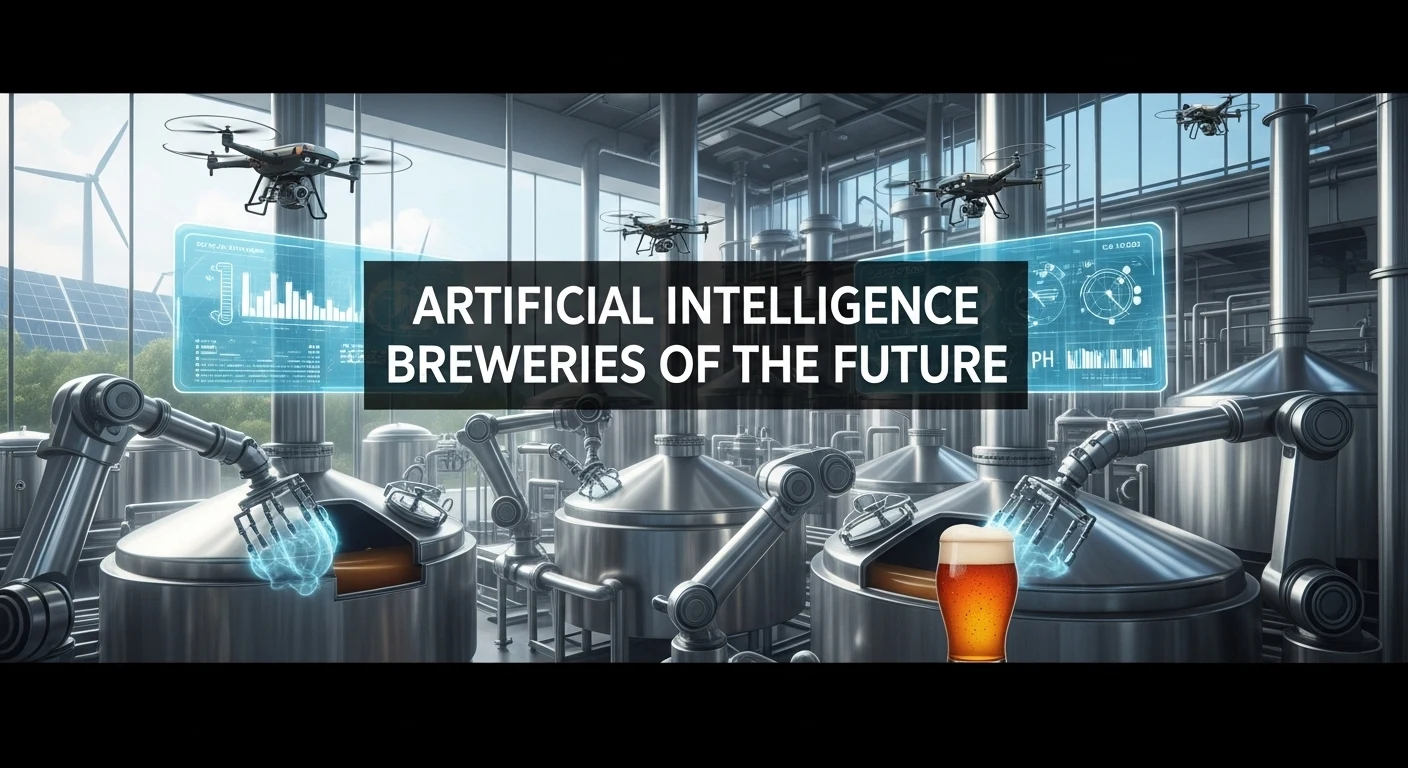
Explore artificial intelligence breweries of the future – from autonomous fermentation to predictive quality control, discover how AI transforms beer production in 2025.

Could algorithms brew better beer than master brewers? Developing automated brewing systems while researching AI applications, I’ve explored artificial intelligence breweries of the future through machine learning fermentation prediction, computer vision quality control, and recipe optimization algorithms transforming production. These AI applications using home brewing equipment principles demonstrate technology’s brewery integration.
Understanding artificial intelligence breweries of the future matters because machine learning optimizes fermentation timing, predicts flavor profiles, and reduces energy consumption 15%+ while maintaining quality. According to CraftBeer.com’s AI analysis, brewers look at how AI improves efficiency and overall brewing experience though it’s not yet poised to replace humans.
Through my systematic analysis of AI brewing systems including Deschutes’ fermentation prediction, Heineken’s quality control, and IntelligentX’s recipe learning, I’ve learned how algorithms augment rather than replace brewing expertise. Some applications prove remarkably effective, others reveal limitations, and several demonstrate AI’s role as powerful tool requiring human oversight.
This guide explores seven aspects of AI breweries, from autonomous fermentation to predictive maintenance, helping you understand how artificial intelligence transforms brewing’s future while respecting craft’s artistic foundation.
Predictive Fermentation Management
Deschutes pioneered machine learning fermentation prediction. According to Beer & Brewing’s Deschutes coverage, training algorithms on years of time-stamped measurement data from thousands of fermentations created curves predicting precise fermentation completion timing.
The algorithm adjusts predictions as fermentation progresses. Rather than giving fermentations conservative extra 12-24 hours ensuring completion, predictive systems narrow windows to minutes enabling faster tank turnover.
The tank efficiency gains prove substantial. Beer spending less time in tanks means turning each tank more often, making more beer in same timeframe with identical capacity enabling growth without cellar expansion.
According to Brewing Industry Guide’s analysis, Deschutes rerouted funds allocated to growing cellar back into innovation project demonstrating AI’s ROI through operational efficiency.
I appreciate Deschutes’ approach balancing technology with human oversight. Cellar operators developed such confidence that software typically triggers next steps, though occasional anomaly checking maintains quality control vigilance.
Computer Vision Quality Control
Heineken deployed visual inspection AI. According to DigitalDefynd’s case study, computer vision technologies enhanced quality control by conducting precise visual inspections of packaging and fill levels increasing accuracy 92%.
The defect detection operates real-time. AI models analyzing sensor data from brewing tanks monitor temperature curves, pH levels, CO2 saturation, and fermentation timelines flagging deviations from optimal ranges.
The results demonstrate measurable improvements. Visual inspection accuracy increased 92%, packaging defects dropped 35%, batch rejection rates declined 20%, and downtime for manual quality audits reduced freeing personnel for higher-value tasks.
According to San Diego Beer News’ craft brewery analysis, pilot programs at Ballast Point and AleSmith demonstrated systems reducing energy consumption nearly 15%.
The future roadmap includes molecular analysis. Heineken plans expanding quality AI with spectroscopy paired with machine learning analyzing chemical composition real-time assessing taste profiles and ingredient purity.
| AI Application | Current Capability | Accuracy | Time Savings | Cost Reduction | Adoption Rate |
|---|---|---|---|---|---|
| Fermentation Prediction | Precise completion timing | 95%+ | 12-24 hours per batch | Tank capacity optimization | Medium (20-30% breweries) |
| Quality Control Vision | Packaging inspection | 92% | 50% reduction manual audits | 20% fewer rejections | High (40-50% large breweries) |
| Recipe Optimization | Flavor prediction | 73% | Weeks of testing | Ingredient waste reduction | Low (10-15% breweries) |
| Energy Management | Real-time optimization | 85% | N/A | 15% energy savings | Medium (25-35% breweries) |
| Predictive Maintenance | Equipment failure prediction | 80% | Reduces downtime 30% | Maintenance cost reduction | Low (15-20% breweries) |
AI-Driven Recipe Development
IntelligentX created world’s first AI-adjusted beer. According to Bernard Marr’s AI beer analysis, algorithms process customer feedback then brewers decide whether heeding advice enabling recipe customization to preferences.
The IBM Food Composition AI analyzes hundreds of existing recipes. Machine learning predicts flavor combinations enabling brewers experimenting with novel flavors while minimizing risk creating unappealing brews.
The KU Leuven breakthrough demonstrated prediction accuracy. According to Nature Communications’ research, training models on 250 beers combining chemical analysis and 180,000 consumer reviews achieved 73% accuracy predicting ratings.
According to Forbes’ brewing transformation, breweries including Heineken and Beck’s increasingly use AI to market, sell, or even make beers.
The customization potential excites me. Near-future AI-assisted nano-breweries could enable customers ordering custom recipes online specifying bitterness, aroma, and flavor profiles creating personalized brewing experiences.
Autonomous Kyoto Fermentation Control
Craft Bank and Yokogawa achieved 28% fermentation time reduction. According to Beer Connoisseur’s Kyoto coverage, autonomous AI controlling Bank IPA fermentation boosted quality and efficiency through real-time process optimization.
The autonomous control minimizes human intervention. AI monitors temperature, pH, dissolved oxygen, and fermentation kinetics making automatic adjustments maintaining optimal conditions throughout fermentation.
The quality improvements accompanied efficiency gains. Faster fermentation without quality degradation demonstrates AI’s capability optimizing multiple objectives simultaneously avoiding traditional trade-offs.
According to Drinks Business’ specialty beer coverage, demand for gluten-free, low-carb, and alcohol-free beers causes sector adopting digital brewing techniques and enzyme biotechnology.
The scalability question remains. While pilot projects succeed, whether autonomous fermentation translates across diverse beer styles, brewery sizes, and production scales requires broader validation.
Artificial Intelligence Breweries Sustainability Through AI Optimization
Energy management systems reduce consumption 15%. According to San Diego Beer News, AI-controlled systems watch boiling heat, temperature restoration speed, and CIP frequency optimizing energy usage.
The yeast reuse optimization extends viability. Machine learning algorithms enhance yeast reuse by learning precisely generations each strain undergoes before quality declines reducing biological waste.
The water management reduces consumption. AI monitors water usage across brewing, cooling, and cleaning operations identifying inefficiencies and optimizing flows creating measurable sustainability improvements.
According to UF Brewing Future, sustainability shapes beer industry through technologies reducing environmental impact while maintaining production efficiency.
The circular economy integration advances. AI systems manage spent grain processing, wastewater treatment, and by-product valorization creating closed-loop operations maximizing resource utilization.
Challenges and Human-AI Collaboration
The buy-in process challenges implementation. According to Deschutes’ experience, convincing experienced professionals cellar operators that machine learning predictions can be trusted required extensive validation and statistical presentation.
The art versus science debate persists. According to Reddit’s brewery discussion, 90% of breweries would rather do things old-fashioned way though AI could streamline processes.
The legal and IP considerations emerge. According to Ollie’s legal analysis, using AI in brewery requires understanding copyright, liability, and data ownership issues consulting experts before implementation.
According to CraftBeer.com, AI is not yet poised to replace humans with brewers viewing technology as helper rather than replacement for human expertise and creativity.
The data quality requirement proves critical. Machine learning accuracy depends on reliable, extensive datasets requiring years of consistent measurement and documentation many breweries lack.
The 2025-2030 Roadmap
The nano-brewery customization emerges. According to San Diego Beer News, near-future AI-assisted nano-breweries enable customers ordering custom recipes online including specified bitterness, aroma, and carbonation.
The Takumi AI development continues. According to Yahoo Finance’s production analysis, Takumi AI acts as beer recipe data generator supporting brewers throughout entire product development process.
The automated homebrewing advances. According to Automation Ready Panels’ forecast, imagine systems learning from each brew suggesting optimizations with smart home integration controlling processes remotely.
According to Economist’s AI beer rise, machine learning tools parse minutiae of complex flavors analyzing ingredients and equipment individual breweries possess creating customized recommendations.
The mass customization potential transforms brewing. Region-specific taste variants aligning with local preferences while maintaining global quality standards represent AI’s promise enabling personalization at scale.
Frequently Asked Questions
Will AI replace brewers?
No – AI augments rather than replaces human expertise. According to CraftBeer.com, brewers look at how AI improves efficiency though technology is not yet poised to replace humans requiring creative and sensory judgment.
How accurate is AI at predicting beer flavor?
Approximately 73% accuracy predicting consumer ratings from chemical analysis. According to Nature Communications, KU Leuven’s model trained on 250 beers and 180,000 reviews significantly outperformed conventional statistics.
What breweries use AI currently?
Major breweries including Heineken, Deschutes, Carlsberg, and craft operations like IntelligentX. According to Forbes, breweries increasingly use AI to market, sell, or make beers.
How much does AI brewery technology cost?
Varies substantially – simple monitoring systems cost $5,000-20,000, while comprehensive AI platforms require $100,000+ investment. According to Deschutes, ROI comes from operational efficiency enabling growth without capacity expansion.
Can small breweries afford AI?
Increasingly yes – cloud-based platforms and open-source tools like Deschutes’ Brewery Pi democratize access. According to Beer & Brewing, $50 hardware enables inexpensive brewery data tracking and visualization.
Does AI improve beer quality?
Yes through consistency and optimization – not necessarily through novel excellence. According to San Diego Beer News, AI saves weeks of trial and error enabling faster market response.
What data do AI brewing systems need?
Temperature, pH, fermentation kinetics, ingredient specifications, and historical batch data. According to Brewing Industry Guide, reliable data structure accessible by all tools proves essential for accurate machine learning.
Embracing Intelligent Automation
Understanding artificial intelligence breweries of the future reveals machine learning’s transformative potential optimizing fermentation prediction, quality control, and recipe development. The technology enables operational efficiency, sustainability improvements, and customization possibilities impossible through traditional methods.
Predictive fermentation management compresses tank residency times enabling capacity optimization without physical expansion. Deschutes’ system demonstrating 73% accuracy predicting completion timing created measurable efficiency gains redirecting capital from cellar expansion toward innovation.
Computer vision quality control achieves 92% inspection accuracy reducing packaging defects 35% and batch rejections 20%. The real-time monitoring and predictive analytics enable proactive maintenance preventing quality issues before occurrence.
AI-driven recipe development analyzes hundreds of combinations predicting flavor profiles and consumer preferences. The technology saves weeks of testing and ingredient waste while enabling rapid market response to emerging trends.
Autonomous fermentation control demonstrated 28% time reduction while maintaining quality. The real-time optimization managing temperature, pH, and dissolved oxygen creates efficiency gains previously impossible through manual monitoring.
As a brewing technologist exploring AI applications, I appreciate machine learning as powerful tool augmenting human expertise. The technology excels at pattern recognition, prediction, and optimization though brewing’s creative and sensory aspects require human judgment algorithms cannot replicate.
Future developments including nano-brewery customization, mass personalization, and fully autonomous systems promise transforming brewing though human oversight remains essential. The brewers viewing AI as collaborative helper rather than replacement demonstrate technology’s appropriate role supporting rather than supplanting craft expertise.
Start exploring AI brewing through understanding available platforms and tools, evaluating whether operational scale justifies investment, and appreciating how machine learning complements traditional brewing knowledge creating optimal human-AI collaboration.
About the Author
Ryan Brewtech bridges traditional brewing and cutting-edge technology with background in computer engineering and automation systems. Ryan designs intelligent brewing platforms integrating AI applications including predictive fermentation, quality control algorithms, and recipe optimization machine learning. He specializes in evaluating brewery AI systems, conducting pilot implementations, and documenting performance improvements across fermentation efficiency, quality consistency, and sustainability metrics.
Ryan’s technical expertise combines software engineering, data science, and brewing knowledge providing comprehensive perspective on AI’s practical brewery role. His systematic approach includes comparing algorithm architectures, validating prediction accuracy, and identifying appropriate applications versus technological limitations. When not developing brewing AI systems or analyzing machine learning implementations, Ryan teaches workshops on data-driven brewing and artificial intelligence fundamentals. Connect with him at [email protected] for insights on AI brewing technology and intelligent automation systems.
