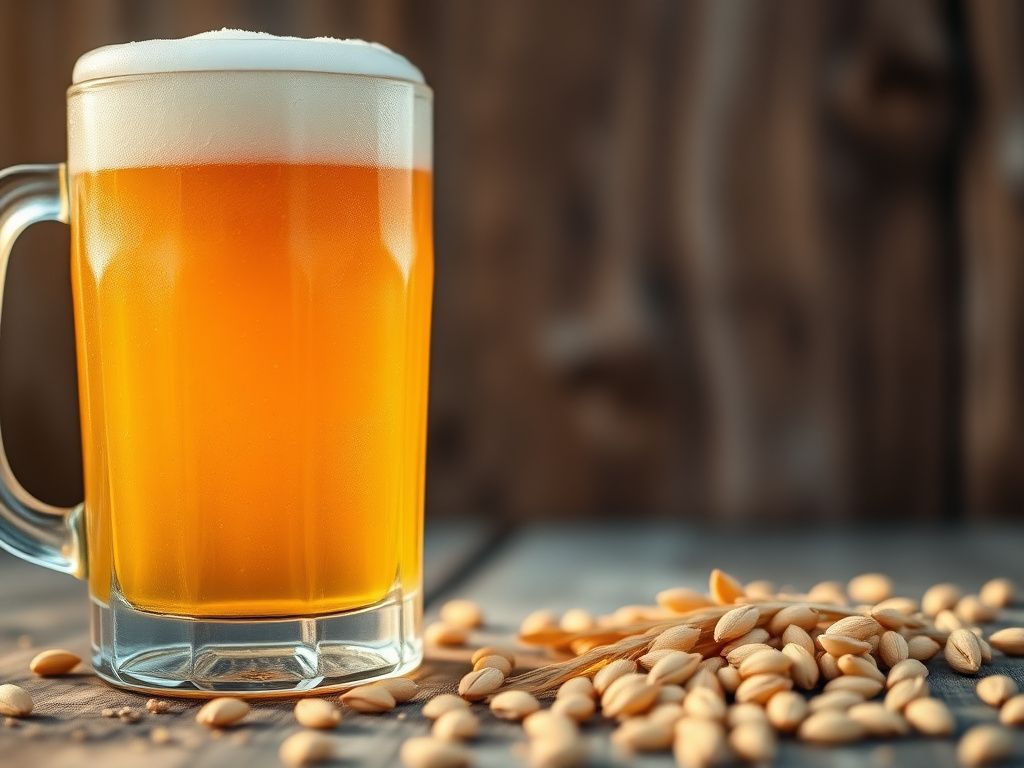
This guide meticulously details the definitive 2026 Sierra Nevada Pale Ale clone recipe, focusing on a precise grain bill update for enhanced consistency and efficiency. We dissect malt selection, hop optimization, yeast kinetics, and advanced water chemistry to replicate the iconic profile, providing a robust framework for professional and advanced homebrewers to master this benchmark American Pale Ale.
Recipe: Sierra Nevada Pale Ale Clone (The 2026 Grain Bill Update)
| Ingredient Type | Specific Ingredient (2026 Spec) | Amount (for 5.5 Gal/21 L Batch) | Role/Purpose | Technical Specification/Note |
|---|---|---|---|---|
| Base Malt | Rahr North Star Pilsner Malt (2-Row, High Extract) | 10.0 lbs (4.54 kg) | Primary fermentable, clean malt backbone, enzyme source. | SRM 1.5-2.0, Diastatic Power >120 °L, Extract FG >80% (Dry Basis). Chosen for consistent enzyme package and high extract yield, critical for 2026 efficiency targets. |
| Specialty Malt | Caramel/Crystal Malt 40L (Crisp Maltings) | 1.0 lb (0.45 kg) | Color, body, subtle caramel sweetness, fermentable dextrins. | SRM 38-42, ~65% extract. A single-source, highly consistent C-40 chosen for its reliable flavor contribution and color stability against supply chain shifts. |
| Bittering Hop | Cascade Hops (Pellet) | 1.0 oz (28 g) | Initial bitterness, foundational hop character. | Alpha Acid: 6.5% – 8.0%. Added at 60 minutes. Target IBU contribution: ~20-25. Precise AA analysis crucial for consistent bittering. |
| Flavor Hop | Cascade Hops (Pellet) | 0.75 oz (21 g) | Mid-boil hop flavor, aromatic precursors. | Alpha Acid: 6.5% – 8.0%. Added at 15 minutes. Target IBU contribution: ~5-7. Contributes significant citrus/floral notes. |
| Aroma Hop | Cascade Hops (Pellet) | 0.75 oz (21 g) | Late boil aroma, high volatile oil retention. | Alpha Acid: 6.5% – 8.0%. Added at 5 minutes. Minimal IBU contribution, maximized aroma compounds (myrcene, humulene, caryophyllene). |
| Whirlpool Hop | Cascade Hops (Pellet) | 1.0 oz (28 g) | Intense hop aroma and flavor extraction without bitterness. | Alpha Acid: 6.5% – 8.0%. Added at flameout/whirlpool (170°F/77°C for 20 mins). Maximize hop oil isomerization and dissolution. |
| Dry Hop | Cascade Hops (Pellet) | 2.0 oz (56 g) | Primary aroma contribution, signature SNPA nose. | Alpha Acid: 6.5% – 8.0%. Added post-fermentation for 3-5 days at 60-65°F (15-18°C). Critical for amplifying the distinctive grapefruit and floral bouquet. |
| Yeast | White Labs WLP001 California Ale Yeast | 1 Vial (or 2 liquid packs) | Fermentation, ester production, attenuation. | Attenuation: 73-80%, Flocculation: Medium-High, Optimal Temp: 68-72°F (20-22°C). Clean fermentation profile, slight fruitiness. Pitch 1.5M cells/mL/°P. |
| Water Adjunct | Gypsum (CaSO4) | 3-6g (to target) | Sulfate addition for hop crispness, mash pH adjustment. | Ca2+: 23.2% (per gram), SO42-: 55.8% (per gram). Target SO4:Cl ratio > 2:1. Exact amount depends on base water profile. |
| Water Adjunct | Calcium Chloride (CaCl2) | 1-3g (to target) | Chloride addition for body/mouthfeel, mash pH adjustment. | Ca2+: 27.2% (per gram), Cl-: 48.2% (per gram). Balances sulfate, contributes to perceived body. |
| Water Adjunct | Lactic Acid (88%) | 2-5 mL (to target) | Mash pH adjustment to optimal range. | Food grade, 88% concentration. Target mash pH: 5.2-5.4 at mash temp. Essential for enzyme activity and tannin prevention. |
Calculations & Parameters
Target Original Gravity (OG): 1.054
Target Final Gravity (FG): 1.012
Target ABV: ~5.5%
Target IBU: 38-40
Target SRM: 9-10
Mash Efficiency: Assume 75% for initial calculations.
1. Gravity Contribution Calculation (5.5 Gallon Batch)
Rahr North Star Pilsner: 10.0 lbs * (37 PPG / lb) = 370 gravity points
Caramel Malt 40L: 1.0 lb * (33 PPG / lb) = 33 gravity points
Total Gravity Points: 370 + 33 = 403 points
Assumed Mash Efficiency: 75%
Usable Gravity Points: 403 points * 0.75 = 302.25 points
OG Calculation: (302.25 points / 5.5 gallons) = 54.95 points per gallon. Thus, OG = 1.055 (rounded).
2. IBU Calculation (Simplified Tinseth for main bittering)
60 min Cascade (6.5% AA): ((1.0 oz * 6.5 AA) * Utilization Factor) / (Volume Gallons) = IBU
Assuming a utilization factor of 0.28 for 60 min boil, OG 1.055, 5.5 gallons:
((1.0 * 6.5 * 0.28) / 5.5) * 1000 / (1.055 – 1) * 1.65 = 20.3 IBU (Approx)
Note: Full IBU calculation requires summing contributions from all additions considering OG, boil time, and volume.
3. Mash pH Adjustment (Example)
Initial Strike Water pH: 7.8 (hypothetical RO base water with additions)
Target Mash pH: 5.3 @ 152°F (67°C)
Malt Acid Contribution: Rahr Pilsner (low acidity), C-40 (moderate acidity)
Required Acidification: Using a brewing software like Bru’n Water or equivalent, input full grain bill and water profile. For a typical RO water profile with 6g Gypsum and 2g CaCl2, an additional 3mL of 88% Lactic Acid may be required to reach 5.3 pH.
Monitoring: pH meter readings throughout mash are critical. Adjust with small increments of lactic acid if necessary.
Deep Dive: Sierra Nevada Pale Ale Clone – The 2026 Grain Bill Update
Replicating Sierra Nevada Pale Ale (SNPA) is not merely a task; it’s an exercise in precision and understanding the intricate balance of classic American brewing. The 2026 Grain Bill Update for this iconic clone is predicated on optimizing raw material consistency, extract efficiency, and subtle flavor refinement, anticipating future shifts in agricultural supply chains and brewing technology. This iteration prioritizes reliable performance and faithful reproduction of SNPA’s signature profile, rather than a radical departure. Our goal is to craft a beer that is unequivocally Sierra Nevada Pale Ale, yet built upon a foundation robust enough for the next decade of brewing. To further explore advanced techniques and expand your repertoire, visit BrewMyBeer.online for comprehensive guides.
Malt Bill Analysis: Precision & Consistency for 2026
The core of any great beer lies in its malt bill. For the 2026 SNPA clone, we’ve refined the base malt selection and specified the caramel contribution to ensure maximum fidelity. The classic SNPA profile relies on a clean, robust malt backbone with a distinct, yet restrained, caramel sweetness that supports the hop character without dominating it. Our update focuses on choosing specific maltsters and types known for consistency and optimal performance.
Base Malt: Rahr North Star Pilsner Malt (2-Row, High Extract)
Historically, SNPA has utilized a clean, American two-row barley as its primary fermentable. For the 2026 update, we pivot to Rahr North Star Pilsner Malt. While traditionally associated with lagers, this particular North American-grown, two-row malt offers several compelling advantages for our updated pale ale. Its exceptionally high extract efficiency (typically >80% dry basis) minimizes potential gravity fluctuations due to variations in crop yield or processing, a critical factor in a dynamic global supply chain. Furthermore, its clean, slightly bready, and subtly sweet flavor profile provides an ideal canvas for the Cascade hops. The diastatic power, consistently above 120 °L, guarantees robust enzymatic conversion during mashing, allowing for precise control over fermentable sugar ratios. This choice enhances mash performance, contributing to a more stable and predictable Original Gravity (OG) extraction, which is paramount for commercial consistency. The low protein content also aids in achieving excellent clarity, a characteristic hallmark of the original SNPA.
Specialty Malt: Caramel/Crystal Malt 40L (Crisp Maltings)
The judicious use of caramel malt is non-negotiable for SNPA. It provides the characteristic amber hue, medium body, and that unmistakable touch of caramel and toasted biscuit flavor that perfectly complements the Cascade hops. For 2026, we specify Crisp Maltings’ Caramel/Crystal Malt 40L. Crisp Maltings is renowned for its stringent quality control and consistency, offering a C-40 that delivers reliable color and flavor contribution batch after batch. The 40 Lovibond rating is critical; it provides sufficient color and residual sweetness without venturing into heavier, darker fruit notes that would clash with the bright hop profile. The dextrins contributed by the C-40 also enhance mouthfeel and head retention, contributing to the overall perception of richness without increasing the final gravity excessively. Precision in sourcing this specialty malt is crucial, as off-spec crystal malts can drastically alter the final product’s color, sweetness, and overall balance.
Malt Selection Philosophy: The 2026 grain bill emphasizes sourcing malts from reputable producers known for consistency and detailed technical specifications. This mitigates risks associated with variable raw material quality and ensures that the desired flavor profile remains stable across production cycles. The slight increase in extract efficiency from the chosen base malt also offers a marginal, yet measurable, cost and resource optimization, aligning with modern brewing sustainability initiatives. For brewers looking to optimize their malt handling and extraction processes, BrewMyBeer.online offers advanced guides on milling and mashing techniques.
Hop Schedule Breakdown: Cascade Dominance & Modern Application
Sierra Nevada Pale Ale is synonymous with Cascade hops. This varietal is the undisputed star, providing the beer’s iconic citrus, floral, and piney aroma and flavor. The 2026 update to the hop schedule isn’t about introducing new varietals but rather optimizing the utilization and presentation of Cascade’s unique character through a multi-stage addition strategy.
Cascade: The Cornerstone Varietal
Cascade hops (Humulus lupulus ‘Cascade’) boast a distinctive aroma profile characterized by grapefruit, orange, and floral notes, underpinned by a resinous, piney quality. This is largely due to its specific balance of hop acids and essential oils. Key aroma compounds include myrcene (citrus/green), humulene (woody/spicy), and caryophyllene (woody/spicy). Understanding these compounds is crucial for maximizing their impact. We employ a multi-addition approach to capture different aspects of the hop’s character.
- 60-Minute Bittering Addition: A substantial charge of Cascade pellets at the beginning of the boil provides the foundational bitterness. While a higher alpha acid hop could provide more efficient bitterness, using Cascade here contributes a subtle, clean bitterness that integrates seamlessly with the later additions. The extended boil time isomerizes alpha acids into iso-alpha acids, which are responsible for the majority of the beer’s bitterness. Targeting 20-25 IBU from this addition ensures a firm, yet balanced, bitterness that doesn’t overwhelm the malt backbone.
- 15-Minute Flavor Addition: Adding Cascade at 15 minutes allows for significant flavor extraction while also contributing a small amount of additional bitterness (typically 5-7 IBU). At this stage, more volatile hop oils are retained than at 60 minutes, contributing directly to the beer’s “hop flavor” rather than just bitterness. This builds complexity in the mid-palate.
- 5-Minute Aroma Addition: A late kettle addition ensures that delicate aroma compounds, which are highly volatile and easily driven off during longer boils, are preserved. This contributes to the initial aromatic impression when the beer is poured, emphasizing the fresh, vibrant citrus notes of Cascade.
- Whirlpool/Flameout Addition: This is a critical stage for modern pale ale brewing, optimized for the 2026 update. Adding Cascade at flameout (0 minutes boil) and allowing it to steep in the hot wort during a 15-20 minute whirlpool at ~170°F (77°C) extracts significant hop oils without generating additional bitterness. At temperatures below 180°F (82°C), alpha acid isomerization is minimal, but volatile aroma compounds are efficiently dissolved. This technique maximizes hop character in the finished beer, providing a burst of fresh hop aroma and flavor that is a hallmark of SNPA. Process control here is paramount; maintaining the target temperature and contact time ensures consistent extraction.
- Dry Hopping: The final, and arguably most crucial, hop addition for SNPA’s aromatic intensity. A generous dry hop charge of Cascade is added post-fermentation, after primary fermentation is complete and residual sugars are attenuated. Dry hopping at fermentation temperature (60-65°F / 15-18°C) for 3-5 days allows for optimal extraction of hop oils without promoting grassy or vegetal off-flavors. The choice of pellets for all additions is standard, offering better utilization and less vegetal matter than whole cone hops, especially in a professional setting. The impact of dry hopping on haze formation is a consideration, but traditional SNPA is a clear beer, so proper cold crashing and fining are important post-dry hop. Understanding hop utilization and the chemistry behind it is key to successful brewing, as detailed by resources from the Brewers Association.
Yeast Strain & Fermentation Kinetics
The “Chico” yeast strain (commonly WLP001 California Ale Yeast or SafAle US-05) is fundamental to replicating SNPA. Its clean fermentation profile, medium-high attenuation, and moderate flocculation are precisely what’s needed to let the malt and hop character shine. The 2026 update emphasizes precise control over fermentation kinetics for repeatable results.
WLP001 California Ale Yeast: This strain is renowned for producing a very clean, crisp beer with minimal ester production. It allows the malt and hop character to be the primary focus. Its attenuation typically ranges from 73-80%, ensuring a relatively dry finish that enhances hop bitterness and crispness. Medium-high flocculation means it drops out of suspension reasonably well, aiding in beer clarity, which is crucial for SNPA. The optimal fermentation temperature range is 68-72°F (20-22°C). Maintaining this temperature precisely is vital to avoid off-flavors: too cold, and fermentation can stall or produce diacetyl; too warm, and excessive esters or fusel alcohols can develop, masking the delicate hop aromatics.
Pitching Rate & Oxygenation: For a 5.5-gallon batch with an OG of 1.055, a healthy pitching rate of 1.5 million cells/mL/°P is recommended. This translates to roughly two liquid yeast packs or a robust yeast starter. Proper oxygenation of the wort prior to pitching is critical for healthy yeast growth and reproduction. Aim for 8-10 ppm dissolved oxygen. Insufficient oxygen leads to sluggish fermentations, diacetyl production, and poor attenuation. Over-oxygenation, especially post-fermentation, leads to oxidation. For detailed yeast management protocols, consult resources from the Homebrewers Association.
Fermentation Schedule:
Upon pitching, maintain a steady 68°F (20°C) for the first 3-4 days. As fermentation activity subsides, allow the temperature to free-rise to 70-72°F (21-22°C) for a diacetyl rest for 2-3 days. This ensures any diacetyl (a buttery off-flavor) produced during the early stages is reabsorbed by the yeast. Once fermentation is complete (indicated by stable gravity readings over 24-48 hours), gradually reduce the temperature to 35-40°F (1-4°C) for cold crashing. This aids in yeast flocculation and clarification, preparing the beer for dry hopping or packaging.
Water Chemistry: The Invisible Ingredient
Water chemistry plays a profound, yet often underestimated, role in flavor perception, mash efficiency, and overall beer quality. The 2026 update emphasizes a precise water profile to support the SNPA character, particularly its crisp hop bitterness and clean malt presence. A target profile mimicking Chico, California, water is ideal, with careful adjustments.
Target Ion Profile (ppm):
Calcium (Ca²⁺): 50-75 ppm (aids enzyme function, yeast health, clarity)
Sulfate (SO₄²⁻): 100-150 ppm (enhances hop bitterness, provides dry finish)
Chloride (Cl⁻): 50-70 ppm (enhances malt sweetness, body)
Magnesium (Mg²⁺): 10-15 ppm (enzyme cofactor, yeast nutrient)
Sodium (Na⁺): <50 ppm (too high can lead to salty taste)
Bicarbonate (HCO₃⁻): <100 ppm (impacts mash pH, higher levels can cause harshness)
The key here is the Sulfate-to-Chloride ratio, ideally around 2:1 or slightly higher, to accentuate hop crispness. A good base starts with reverse osmosis (RO) water to provide a blank slate for precise mineral additions.
Adjuncts:
Gypsum (CaSO₄): Primary source of sulfate and calcium. Increases hop bitterness perception and provides a dry finish.
Calcium Chloride (CaCl₂): Primary source of chloride and calcium. Enhances malt sweetness, mouthfeel, and perception of body.
Lactic Acid (88%): Used for mash pH adjustment. Target mash pH between 5.2 and 5.4 at mash temperature is critical for optimal enzymatic activity, efficient sugar extraction, and preventing tannin leaching. Monitoring mash pH with a calibrated pH meter is non-negotiable for consistent results.
Example Adjustment Strategy: Starting with RO water, add Gypsum and Calcium Chloride to achieve the desired Ca²⁺, SO₄²⁻, and Cl⁻ levels. Then, use Lactic Acid to fine-tune mash pH, usually requiring 2-5 mL for a 5-gallon batch, depending on the grist and desired pH. Water treatment is an area where specific tools like Bru’n Water or BeerSmith are invaluable for accurate calculations and predictions. Understanding your source water analysis is the first step in building a precise water profile.
Brewing Process: Technical Execution
The “2026 Update” integrates refined process control for maximum efficiency and consistency, minimizing variability in the final product.
Mash Schedule: A single infusion mash is typical for SNPA. Aim for a mash temperature of 150-152°F (65.5-66.6°C) for 60 minutes. This temperature range favors beta-amylase activity, producing a highly fermentable wort that leads to the dry finish characteristic of the style. A mash out at 170°F (77°C) for 10 minutes denatures enzymes, halts conversion, and lowers wort viscosity for more efficient lautering. Careful temperature control during mashing, ideally with a recirculating mash system, ensures uniform conversion.
Lautering: Begin with a vorlauf (recirculation) phase for 15-20 minutes until the wort runs clear. This sets the grain bed and prevents particulate matter from clogging the pump or kettle. Sparge with water at 170°F (77°C) to maintain the grain bed temperature and minimize tannin extraction. Monitor run-off gravity; stop sparging when the gravity drops below 1.010 to avoid extracting harsh tannins from the grain husks. A slow, steady run-off rate is crucial for efficiency.
Boil: A vigorous 60-minute boil is essential. This ensures proper hot break formation (coagulation of proteins), sterilizes the wort, drives off undesirable volatile compounds (like DMS precursors), and facilitates hop isomerization. Pay attention to boil kettle dynamics; a consistent rolling boil aids in evaporation and concentration. Add Irish Moss or Whirlfloc at 10-15 minutes remaining in the boil to aid in hot break precipitation and improved clarity.
Chilling: Rapid chilling of the wort post-boil is paramount. Aim to cool to pitching temperature (68°F / 20°C) within 20-30 minutes using an immersion or plate chiller. Rapid cooling induces the “cold break,” where proteins and polyphenols precipitate, contributing to beer clarity and stability. It also minimizes the risk of infection by quickly passing through the “danger zone” for microbial growth. Ensure all chilling equipment is meticulously sanitized.
Packaging: After primary fermentation and dry hopping, cold crash the beer to 35°F (1.6°C) for several days. This helps to drop out remaining yeast and hop particulate, contributing to a cleaner, clearer beer. For force carbonation, target 2.5 volumes of CO2 at serving temperature. When transferring to kegs or bottles, minimize oxygen ingress at all stages. Counter-pressure filling is ideal for bottling to prevent oxidation. Oxygen scavengers can also be used in bottles. Proper carbonation and minimizing dissolved oxygen are critical for shelf stability and preserving the delicate hop aromatics that define SNPA.
Quality Control & Sensory Analysis
Consistent quality control is paramount in replicating a commercial benchmark like SNPA. Throughout the process, monitor key parameters: pH (mash, wort, finished beer), gravity (OG, FG), temperature (mash, fermentation, serving), and dissolved oxygen. Detailed record-keeping for each batch is essential for troubleshooting and continuous improvement. Regularly calibrate all measurement instruments.
Sensory Evaluation: The ultimate test is sensory analysis. Conduct blind taste tests against commercial Sierra Nevada Pale Ale. Evaluate aroma (hop intensity, malt character, yeast esters), appearance (color, clarity, head retention), flavor (bitterness, malt sweetness, hop flavor), and mouthfeel (body, carbonation, astringency). Look for off-flavors such as diacetyl (butterscotch), DMS (cooked corn), acetaldehyde (green apple), or oxidation (papery, sherry-like). The BJCP Style Guidelines for American Pale Ale (BJCP Style 18B) provide an excellent framework for evaluating the beer against established standards.
The 2026 Grain Bill Update for Sierra Nevada Pale Ale isn’t just a recipe; it’s a technical methodology designed for precision, consistency, and a profound understanding of brewing science. By meticulously controlling raw materials and process parameters, brewers can reliably reproduce this iconic beer, honoring its legacy while incorporating forward-thinking approaches to quality and efficiency. Mastering this clone provides an invaluable foundation for perfecting your craft beer recipes.