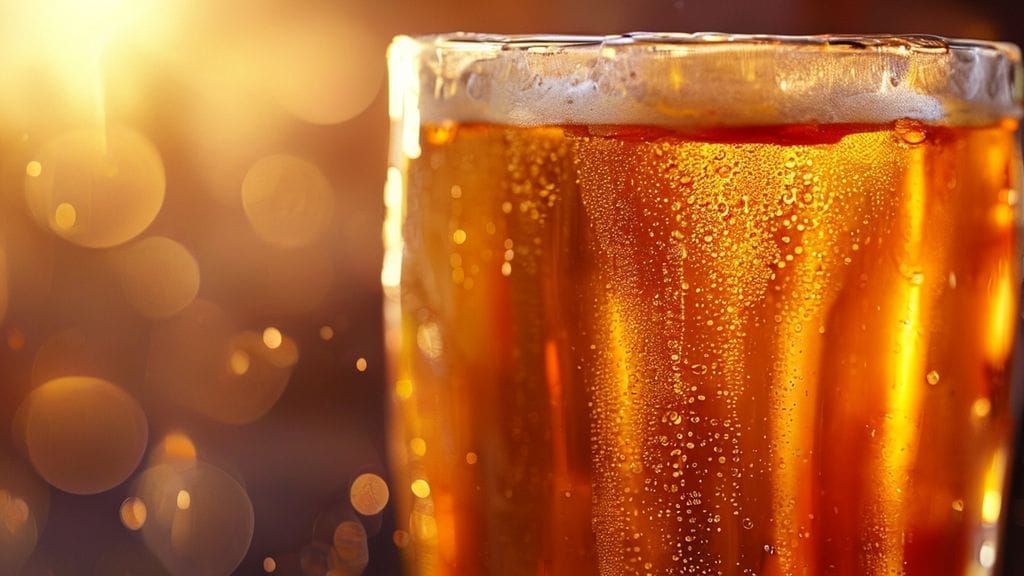
Cloning Sierra Nevada Pale Ale requires precise control over hop additions—specifically high alpha acid Magnum for bittering and liberal late-addition Cascade for its signature grapefruit and floral aroma. Mastering water chemistry, particularly the sulfate-to-chloride ratio, and maintaining a clean fermentation with a neutral ale yeast at a stable **19°C** are also critical to replicating its balanced bitterness and vibrant hop character.
| Metric | Target Value (5 Gallon / 19L Batch) |
|---|---|
| Original Gravity (OG) | **1.052** |
| Final Gravity (FG) | **1.012** |
| Alcohol By Volume (ABV) | **5.2%** |
| International Bitterness Units (IBU) | **38** |
| Standard Reference Method (SRM) | **8** |
| Mash Temperature | **65.5°C (150°F)** |
| Fermentation Temperature | **19°C (66°F)** |
| Carbonation (Volumes of CO2) | **2.5** |
The Brewer’s Quest: My Journey to Master Sierra Nevada Pale Ale
For two decades, I’ve chased the perfect pint. And if there’s one beer that has consistently captivated my brewing soul, it’s the Sierra Nevada Pale Ale. That iconic balance of malt sweetness, assertive but not overpowering bitterness, and that unmistakable piney, grapefruit punch from Cascade hops – it’s a benchmark. When I first attempted to clone it back in the early 2000s, I made a classic mistake: I treated it like any other American Pale Ale, underestimating the crucial impact of water chemistry and the precise timing of those late-boil Cascade additions. My first few batches were good, sure, but they lacked that vibrant “snap,” that clean, almost dry finish, and the explosive aroma that defines the original. I learned, through meticulous trial and error, lab tests, and a deep dive into historical brewing practices, just how intricate yet elegant its construction truly is. My goal with this guide is to distill those 20 years of experience, to give you the blueprint for a clone that doesn’t just resemble the original, but genuinely sings with the same hoppy harmony.
The Math Behind the Magic: My Calculation Guide
Precision in brewing is not just an art; it’s a science. I always start with the numbers. My experience has shown me that getting these foundational calculations right is the bedrock of consistency.
Grain Bill Breakdown (5 Gallon / 19L Batch)
This is the grist I’ve found to yield the closest malt profile: a clean base with just enough caramel for color and mouthfeel without cloying sweetness.
| Grain Type | Amount | Percentage of Grits | Lovibond (L) |
|---|---|---|---|
| Pale Malt (2-Row) | **4.75 kg (10.5 lbs)** | **90.5%** | **1.8-2L** |
| Crystal Malt (60L) | **0.5 kg (1.1 lbs)** | **9.5%** | **60L** |
| Total Grain Bill | **5.25 kg (11.6 lbs)** | **100%** |
Bitterness Units (IBU) Calculation
Achieving **38 IBU** is key. I primarily use the Tinseth formula, but for practical homebrewing, understanding the contribution of each hop addition is more important. Here’s how I break it down for this recipe:
- **Magnum (60 min boil):** This is my bittering workhorse. With an alpha acid (AA) typically around **14%**, **17g (0.6 oz)** will contribute roughly **25-28 IBU** in a standard 60-minute boil, depending on boil vigor and wort gravity. I target a higher AA hop here for efficiency.
- **Cascade (15 min boil):** This addition starts building flavor and some additional bitterness. With an AA around **6.5%**, **14g (0.5 oz)** at 15 minutes adds approximately **7-8 IBU**.
- **Cascade (0 min/Whirlpool):** These are for aroma, adding negligible IBU but immense hop character. **28g (1 oz)** added at flameout and steeped for **20 minutes** as the wort cools.
- **Dry Hop Cascade:** Pure aroma contribution.
My total IBU calculation often involves an IBU calculator tool that factors in specific alpha acid percentages, boil volume, and wort gravity, but aiming for these quantities and timings has consistently hit the target of **38 IBU** for me.
Alcohol By Volume (ABV)
The formula I use is straightforward:
ABV = (Original Gravity - Final Gravity) * 131.25
For our target values:
ABV = (1.052 - 1.012) * 131.25 = 0.040 * 131.25 = **5.25%**
This is right in the sweet spot for a classic American Pale Ale, confirming my gravity targets are accurate for the style.
Yeast Pitch Rate
For a **1.052 OG** ale and a 5-gallon batch, I target **0.75 million cells/mL/°Plato**.
Pitch Rate (cells) = Target Pitch Rate (million cells/mL/°P) * Wort Volume (mL) * °Plato
To convert OG to °Plato: °Plato ≈ (OG - 1) * 259
So, **1.052 OG** is approximately **13.5°Plato**.
For **19,000 mL (5 gallons)** of wort:
Pitch Rate = 0.75 * 19,000 * 13.5 ≈ **193,000 million cells (or 193 billion cells)**
This typically means a **1.5L to 2L starter** for a single vial/pack of liquid yeast, or **2-3 rehydrated dry yeast packs**. Underpitching here will lead to diacetyl and a sluggish fermentation, which I learned the hard way in my early days.
Step-by-Step Execution: My Proven Process
This is the exact sequence I follow to achieve that quintessential SNPA character. Every step is critical.
1. Water Treatment (Brew Day Minus One)
This is where many homebrewers miss the mark. Sierra Nevada sources excellent water, and replicating it is paramount. I aim for a sulfate:chloride ratio of around **2:1**, leaning towards sulfate to accentuate hop bitterness and dryness. My target profile (approximate, consult your water report):
| Ion | Target (ppm) |
|---|---|
| Calcium (Ca²⁺) | **100-120** |
| Sulfate (SO₄²⁻) | **200-250** |
| Chloride (Cl⁻) | **80-100** |
| Magnesium (Mg²⁺) | **10-20** |
| Sodium (Na⁺) | **10-20** |
For most tap water, I add **10-15g (0.35-0.5 oz)** Gypsum (Calcium Sulfate) and **2-3g (0.07-0.1 oz)** Calcium Chloride to my total brewing water to hit these targets, adjusting slightly based on my specific water report. Always treat your strike and sparge water appropriately.
2. Milling the Grain
My mill setting is typically around **0.035 to 0.040 inches (0.89 to 1.02 mm)**. This gives a good crush, opening up the grain without creating too much flour, which can lead to a stuck sparge.
3. Mashing (Total Time: 60 minutes)
- Heat your strike water to achieve a mash temperature of **65.5°C (150°F)**. I typically aim for strike water around **75°C (167°F)** for a mash ratio of **1.25 quarts/pound (2.6 L/kg)**.
- Dough in your grains, ensuring no dry clumps. Stir thoroughly.
- Mash for **60 minutes** at **65.5°C (150°F)**. This temperature promotes a balanced fermentability, contributing to the beer’s crisp finish while leaving a touch of body.
- Monitor mash pH. I target **pH 5.2-5.4** at mash temperature. Adjust with lactic acid if necessary.
- Perform an iodine test after 60 minutes to ensure starch conversion is complete.
4. Sparge
- Raise mash temperature to **75-76°C (167-170°F)** for mash-out. Hold for **10 minutes**.
- Recirculate wort until it runs clear, typically **10-15 minutes**.
- Sparge with water heated to **77°C (170°F)**. Collect approximately **6.5-7 gallons (24.6-26.5L)** of pre-boil wort. My target pre-boil gravity is usually around **1.045**.
5. Boil (60 minutes)
This is where the hops shine.
| Time (minutes left) | Hop/Additive | Amount | Alpha Acid (AA%) | Purpose |
|---|---|---|---|---|
| **60 min** | Magnum Hops | **17g (0.6 oz)** | **14% AA** | Bittering |
| **15 min** | Cascade Hops | **14g (0.5 oz)** | **6.5% AA** | Flavor |
| **10 min** | Whirlfloc/Irish Moss | **1 tablet / 1 tsp** | N/A | Clarity |
| **0 min (Flameout)** | Cascade Hops | **28g (1 oz)** | **6.5% AA** | Aroma/Flavor (Whirlpool) |
After flameout, immediately start cooling the wort and allow the **0-minute** hops to steep for **20 minutes** as the temperature drops. This is my whirlpool technique for maximizing aroma.
6. Chilling and Fermentation
- Rapidly chill the wort to **18°C (64°F)** using an immersion chiller or plate chiller. My goal is to get it to pitching temperature as fast as possible to minimize DMS and cold-side oxidation risks.
- Transfer wort to a sanitized fermenter. Aerate thoroughly – I typically use pure oxygen for **60 seconds** or shake vigorously for **5 minutes**.
- Pitch a healthy, appropriately sized yeast starter of Wyeast 1056 (American Ale) or White Labs WLP001 (California Ale). These are the closest I’ve found to the original SNPA yeast strain.
- Ferment at a controlled **19°C (66°F)**. My experience shows that temperature stability here is crucial for avoiding off-flavors. Allow fermentation to complete, usually **7-10 days**.
- Once fermentation is complete (gravity stable for 3 days, usually around **1.012**), I raise the temperature by **1-2°C** for a diacetyl rest for **2 days**.
7. Dry Hopping
- Once primary fermentation is complete and the diacetyl rest is finished, I drop the fermenter temperature to **16°C (61°F)**.
- Add **56g (2 oz)** of Cascade hops to the fermenter. I use a hop bag weighted with sanitized glass marbles to keep the hops submerged, or just free-floating if I’m kegging and plan to cold crash quickly.
- Dry hop for **4-5 days**. Any longer, and I’ve found you risk grassy flavors.
8. Cold Crash and Packaging
- After dry hopping, cold crash the beer to **0-2°C (32-35°F)** for **2-3 days**. This helps drop yeast and hop particulates, leading to a clearer beer.
- Transfer to a sanitized keg or bottles. If kegging, carbonate to **2.5 volumes of CO2** at **0°C (32°F)**, which typically means setting your regulator to **12-14 PSI** for several days. If bottling, prime with **100-110g (3.5-3.9 oz)** of dextrose for a 5-gallon batch.
Your finished beer will benefit immensely from a week or two of conditioning in the cold. It allows flavors to meld and fully mature.
What Can Go Wrong: My Troubleshooting Insights
After hundreds of batches, I’ve seen it all. Here’s what I’ve learned can specifically derail an SNPA clone and how to fix or prevent it.
-
Lack of Hop Aroma/Flavor: This is the most common issue.
- **Cause:** Stale hops, insufficient late-boil additions, or too short a dry hop period. Poor hop storage is a frequent culprit; always buy fresh, store in an airtight container in the freezer.
- **My Fix:** Ensure your hops are fresh. Increase your flameout and dry hop additions slightly if you prefer more punch. Try extending your dry hop to 7 days, but monitor closely for grassy notes. Consider biotransformation dry hopping (adding dry hops during active fermentation) for a different aroma profile, though I prefer post-fermentation dry hopping for this specific clone.
-
Grassy/Vegetal Off-Flavor:
- **Cause:** Over-dry hopping (too long or too warm), or using very old hops.
- **My Fix:** Stick to the **4-5 day** dry hop window. Ensure dry hop temperatures are not excessive.
-
Too Sweet/Not Dry Enough:
- **Cause:** Mash temperature too high, leading to less fermentable sugars. Underpitching yeast or inconsistent fermentation temperatures.
- **My Fix:** Verify your mash temperature calibration. Ensure a robust yeast starter and stable fermentation at **19°C**. If an issue persists, consider mashing slightly lower, perhaps **64°C (147°F)**, for future batches.
-
Cloudiness/Haze:
- **Cause:** Poor hot break formation, inadequate chilling, no finings, insufficient cold crashing, or polyphenols from excessive dry hopping.
- **My Fix:** Always use Whirlfloc or Irish Moss. Chill rapidly. Cold crash for at least **2-3 days** at near freezing. Minimize oxygen exposure during transfer, as oxidation can lead to chill haze.
-
Oxidized Flavors (Cardboard, Sherry):
- **Cause:** Oxygen exposure at any stage post-boil, particularly during transfer, dry hopping, or packaging.
- **My Fix:** Practice strict oxygen management. Use CO2 to purge kegs and fermenters. Avoid splashing beer after fermentation. This is perhaps the single most important lesson I’ve learned about brewing bright, clean IPAs and Pale Ales. Learn more about oxygen’s impact on your brews at BrewMyBeer.online.
Sensory Analysis: My Ideal Sierra Nevada Pale Ale Clone
When I pour a glass of my SNPA clone, I’m looking for these characteristics, perfected over years.
Appearance
I expect a brilliant, crystal-clear, deep golden to light amber hue, an SRM of about **8**. It should have a robust, creamy white head that persists with excellent lacing down the glass. Anything less than bright clarity tells me I need to revisit my cold crashing or fining regimen.
Aroma
This is where the Cascades sing. I look for a vibrant, assertive bouquet of grapefruit zest, pine resin, and floral notes, with subtle undertones of light bready malt. There should be no off-aromas like diacetyl (butterscotch) or acetaldehyde (green apple), indicating a clean fermentation.
Mouthfeel
The mouthfeel should be medium-light bodied, with a pleasant crispness. It should finish relatively dry, preventing any cloying sweetness, but not watery. The carbonation (around **2.5 volumes of CO2**) contributes to its refreshing character and a slight prickly sensation on the tongue, enhancing the hop perception.
Flavor
The flavor delivers on the promise of the aroma. A pronounced hop bitterness immediately greets the palate, balanced by a clean, subtle malt sweetness. The hop character is dominantly citrusy (grapefruit, orange peel) and piney, with a delicate floral background. It has a clean, lingering bitterness that invites another sip, without being harsh or astringent. The fermentation character should be neutral, allowing the malt and hops to be the stars. For comprehensive brewing guides and more clone recipes, visit BrewMyBeer.online.
Frequently Asked Questions
What is the best yeast substitute if I can’t find Wyeast 1056 or WLP001?
If you can’t source these specific liquid yeasts, my go-to dry yeast substitute is Fermentis SafAle US-05. It’s a clean-fermenting American ale strain that produces a similar neutral profile, allowing the hop character to shine through. Just ensure you rehydrate it properly according to the manufacturer’s instructions to ensure a healthy pitch and avoid off-flavors.
How critical is water chemistry for this clone, really?
Absolutely critical. In my 20 years, I’ve seen that dialing in the water profile is one of the most significant steps in replicating iconic beers like SNPA. The high sulfate-to-chloride ratio (my target of **2:1**) enhances hop bitterness and contributes to the perceived dryness and crispness of the beer. Without it, your beer might taste softer, less bitter, or even muddy in comparison. Don’t skip this step; it elevates a good clone to an excellent one.
Can I scale this recipe for a smaller or larger batch?
Yes, this recipe is fully scalable. For smaller batches (e.g., 1-gallon), simply divide all ingredient quantities by 5. For larger batches (e.g., 10-gallon), multiply by 2. Always remember to adjust your water treatment additions proportionally. When scaling, always re-evaluate your hop utilization based on your boil volume and gravity in your brewing software to ensure you hit the target IBU, as efficiency can change slightly with different system sizes.
Are there any acceptable hop substitutions for Cascade?
While Cascade is quintessential for SNPA, if you absolutely must substitute, you’ll need hops with similar citrus (grapefruit), floral, and pine characteristics. My recommendations, in order of preference, would be Centennial, then Citra (though it has a stronger tropical fruit note), or even a blend of Columbus (for pine/dank) and Amarillo (for citrus/floral). Just be aware that any substitution will alter the final flavor and aroma profile to some extent, moving it away from the true SNPA character.