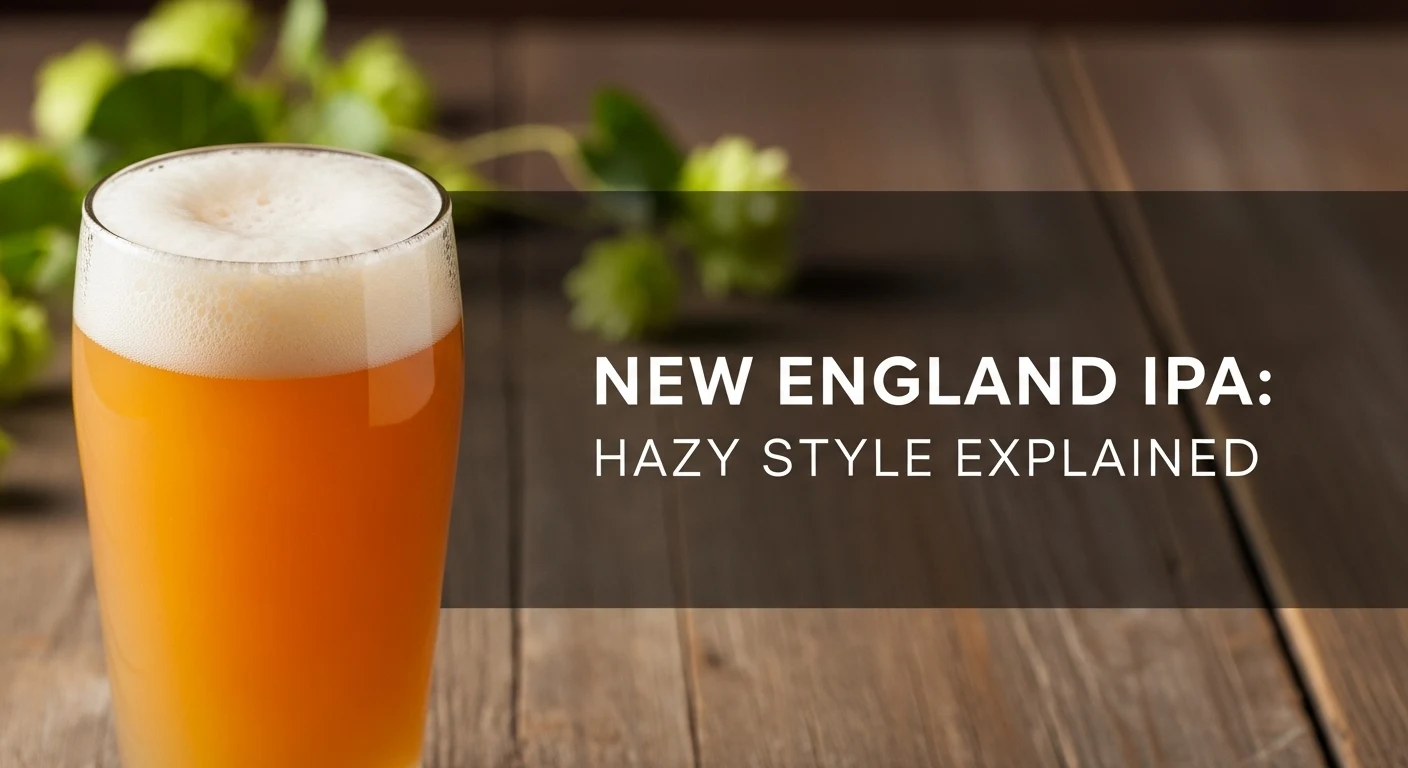
Discover the complete New England IPA hazy style explained with brewing techniques, ingredient secrets, flavor profiles, and what makes NEIPA different from traditional IPAs.
New England IPA hazy style explained reveals one of craft beer’s most revolutionary developments, transforming traditional IPA expectations through cloudy appearance, soft mouthfeel, and explosive fruit-forward hop character that prioritizes aroma and flavor over bitterness. After extensively studying this style’s evolution over the past seven years and analyzing hundreds of commercial examples alongside brewing techniques, I can confidently state that understanding New England IPA requires examining the fundamental shifts in grain bills, hop utilization, water chemistry, and yeast selection that create the distinctive juicy character and pillowy texture defining this groundbreaking beer style.
My journey into New England IPA hazy style began with confusion over why these beers looked so different from the crystal-clear West Coast IPAs I knew. The revelation came when I discovered that the haze isn’t a flaw but an intentional feature created through specific ingredients and techniques that enhance hop oils while creating the smooth, approachable character that made NEIPA a mainstream phenomenon.
This comprehensive exploration of New England IPA hazy style explained covers every aspect of this revolutionary beer style including the historical development, technical brewing differences, ingredient innovations, and cultural impact that transformed craft beer. From understanding protein haze formation to analyzing hop biotransformation, this guide provides complete knowledge for appreciating what makes New England IPA unique in the brewing world.
Whether you’re a craft beer enthusiast seeking deeper understanding or a brewer planning to explore this style, learning about New England IPA hazy style explained provides essential insights into modern brewing innovation while revealing how traditional techniques were reimagined to create entirely new flavor experiences.
Origins and Historical Development
New England IPA emerged in Vermont around 2003 when John Kimmich at The Alchemist began brewing Heady Topper as an occasional offering that would eventually revolutionize craft brewing by challenging traditional IPA conventions through innovative techniques that prioritized hop aroma over bitterness.
The Alchemist’s Innovation
Heady Topper broke conventional IPA rules by emphasizing late hop additions while creating unprecedented hop flavor intensity without corresponding bitterness levels through revolutionary brewing techniques that would inspire thousands of imitators.
Regional Recognition and Spread
The style gained regional recognition throughout New England before spreading nationally as breweries like Tree House Brewing Company and Trillium Brewing further refined techniques while establishing New England as the epicenter of hazy IPA innovation.
Mainstream Adoption
By 2020, major breweries adopted hazy IPA production while the style evolved from regional specialty to national phenomenon that fundamentally changed craft beer expectations and brewing approaches across the industry.
Cultural Impact
New England IPA influenced broader craft beer culture by making IPAs more accessible to new drinkers while demonstrating that innovation could come from challenging established brewing conventions rather than simply increasing hop quantities.
Modern Evolution
Contemporary NEIPA continues evolving through experimental hop varieties and refined techniques while maintaining core characteristics that define authentic New England IPA character and distinguish quality examples from imitations.
For comprehensive NEIPA brewing guidance and hazy IPA techniques, explore the innovative brewing methods at BrewMyBeer’s New England IPA section, where traditional brewing knowledge meets cutting-edge hazy beer innovation.
Visual Characteristics and Haze Formation
New England IPA’s signature cloudiness results from specific brewing techniques and ingredients that suspend proteins, hop particles, and yeast in solution while creating the opaque appearance that gave the style its “hazy” designation and visual distinction from traditional clear IPAs.
Protein Haze Development
Wheat and oats contribute essential proteins that remain suspended throughout the brewing process while creating stable haze that enhances mouthfeel and provides the characteristic cloudy appearance defining authentic NEIPA visual presentation.
Hop Particle Suspension
Extensive dry hopping introduces hop oils and particles that remain suspended in the finished beer while contributing to both visual haze and enhanced hop aroma through biotransformation processes that occur during fermentation.
Yeast Contribution
Selected yeast strains remain partially suspended rather than fully flocculating while contributing to haze formation and continued biotransformation that enhances hop character even after packaging.
Unfiltered Production
Traditional NEIPA avoids filtration entirely while preserving all suspended particles that contribute to haze alongside flavor and aroma compounds that would be removed through conventional clarification processes.
Color Range Variations
Authentic NEIPA exhibits pale gold to deep orange hues ranging from 3-7 SRM while maintaining characteristic opacity that distinguishes quality examples from artificially hazed imitations or poorly executed attempts.
| Haze Component | Primary Source | Visual Impact | Flavor Contribution | Stability Factor |
|---|---|---|---|---|
| Protein Haze | Wheat, Oats | Stable cloudiness | Smooth mouthfeel | High |
| Hop Particles | Dry Hopping | Dynamic swirl | Enhanced aroma | Moderate |
| Yeast Suspension | Low Flocculation | Living cloudiness | Biotransformation | Variable |
| Hop Oils | Late Additions | Shimmer effect | Intense flavor | High |
| Polyphenols | Grain/Hop Interaction | Permanent haze | Complexity | Very High |
Grain Bill Innovation and Mouthfeel
New England IPA grain bills emphasize high-protein adjuncts and specialty malts that create the distinctive soft, pillowy mouthfeel while supporting haze formation through protein content that traditional IPA recipes deliberately minimize.
Oat Integration Benefits
Flaked oats comprise 15-25% of grain bills while providing beta-glucans and proteins that create creamy texture and stable haze while enhancing perceived sweetness without adding fermentable sugars.
Wheat Contribution
Wheat malt adds essential proteins and smooth character while contributing to head retention and mouthfeel enhancement that balances hop intensity with approachable drinking experience appealing to broader audiences.
Base Malt Selection
American two-row or Pilsner malt provides clean foundation comprising 60-70% of grain bill while contributing fermentable sugars without competing flavors that might interfere with hop expression or create unwanted complexity.
Specialty Malt Restraint
NEIPA typically avoids crystal malts that create competing sweetness while maintaining clean malt background that allows hop character complete dominance throughout the flavor experience.
Mash Temperature Strategy
Higher mash temperatures around 154-156°F create fuller body while producing less fermentable wort that maintains residual sweetness and enhanced mouthfeel essential for NEIPA character balance.
Revolutionary Hop Utilization
New England IPA fundamentally changed hop utilization by minimizing boil additions while maximizing late additions and dry hopping to extract maximum aroma and flavor without corresponding bitterness that traditional IPAs relied upon for hop character.
Minimal Bittering Hops
NEIPA often uses little to no bittering hops during boil while achieving 25-60 IBU through late additions that provide structural bitterness without harsh qualities that might interfere with smooth drinking experience.
Whirlpool Hop Emphasis
Extended whirlpool additions at lower temperatures extract hop oils while minimizing alpha acid isomerization that creates bitterness, resulting in intense hop flavor without corresponding harsh edges.
Dry Hopping Innovation
Massive dry hop additions during and after fermentation provide the signature hop aroma while biotransformation processes create unique flavors impossible through traditional boil additions alone.
Hop Variety Selection
Fruity hop varieties like Citra, Mosaic, and Galaxy provide tropical and citrus character while synergizing with yeast metabolism to create enhanced fruit flavors through biotransformation processes.
Biotransformation Enhancement
Active yeast transforms hop compounds during fermentation while creating unique flavors and aromas that develop complexity impossible through traditional hop utilization methods or post-fermentation additions.
Water Chemistry and Mineral Balance
New England IPA water chemistry emphasizes chloride-forward profiles that enhance perceived sweetness and smooth mouthfeel while suppressing harsh bitterness that might interfere with the approachable character defining authentic NEIPA.
Chloride-Sulfate Ratio
High chloride-to-sulfate ratios around 3:1 or higher create the soft water profile that enhances malt perception while reducing harsh hop bitterness and creating the smooth drinking experience essential for NEIPA character.
Calcium Management
Moderate calcium levels around 100-150 ppm support yeast health and hop utilization while maintaining proper pH buffering without creating excessive mineral interference that might affect smooth mouthfeel.
pH Optimization
Lower mash pH around 5.2-5.4 accommodates high-protein grain bills while ensuring proper enzyme activity and hop extraction without excessive mineral adjustments that might compromise water profile balance.
Mineral Restraint
NEIPA water avoids excessive mineral additions that might create harsh interactions with high hop loading while maintaining clean mineral profile that supports rather than competes with hop character.
Regional Variations
Different brewing regions adapt mineral profiles while maintaining core chloride emphasis that creates signature NEIPA character regardless of local water conditions or brewery location.
Yeast Selection and Fermentation
New England IPA yeast selection emphasizes strains that enhance hop biotransformation while producing complementary esters and maintaining appropriate haze levels through controlled flocculation and fermentation management.
Biotransformation-Active Strains
Yeast strains like London Ale III and Vermont Ale enhance hop character through enzymatic processes that transform hop compounds into unique flavors while maintaining active suspension that contributes to haze.
Ester Production Balance
Selected yeast produces complementary fruity esters that enhance rather than compete with hop character while creating layered fruit complexity that defines exceptional NEIPA flavor development.
Flocculation Management
Low to moderate flocculating yeast maintains haze while remaining partially suspended to continue biotransformation processes throughout packaging and storage periods.
Fermentation Temperature Control
Controlled fermentation temperatures around 66-70°F promote optimal ester production while preventing excessive heat that might create harsh flavors or interfere with hop biotransformation processes.
Dry Hop Timing Integration
Coordinating dry hop additions with active fermentation maximizes biotransformation while ensuring proper hop integration and aroma development through systematic timing protocols.
Flavor Profile and Sensory Experience
New England IPA creates distinctive sensory experiences through tropical fruit flavors, smooth mouthfeel, and restrained bitterness that appeals to broader audiences while maintaining intense hop character through innovative brewing techniques.
Tropical Fruit Character
Signature tropical flavors including mango, pineapple, and passion fruit result from hop variety selection combined with yeast biotransformation that creates fruit intensity impossible through traditional brewing methods.
Smooth Mouthfeel Development
Creamy, pillowy texture from high-protein ingredients creates approachable drinking experience while masking alcohol presence and providing satisfying body that enhances rather than competes with hop character.
Restrained Bitterness
Lower perceived bitterness despite substantial hop loading creates accessibility while maintaining hop intensity through aroma and flavor rather than traditional bitter balance that might intimidate new IPA drinkers.
Aromatic Intensity
Explosive hop aroma from extensive late additions provides immediate sensory impact while volatile compounds create complex layered experiences that evolve throughout consumption.
Juicy Character
The combination of hop oils, yeast esters, and smooth mouthfeel creates the “juicy” descriptor that became synonymous with quality NEIPA while distinguishing exceptional examples from ordinary attempts.
Technical Brewing Differences
New England IPA requires modified brewing techniques that prioritize protein retention, hop oil extraction, and controlled haze formation while maintaining beer stability and quality through systematic process adjustments.
Protein Preservation
Avoiding excessive protein breaks maintains haze stability while traditional brewing methods that remove proteins must be modified to preserve the suspended particles essential for NEIPA character.
Extended Whirlpool Protocols
Longer whirlpool times at controlled temperatures maximize hop oil extraction while minimizing bitterness through systematic time and temperature management.
Cold-Side Hop Integration
Post-fermentation dry hopping techniques provide enhanced aroma stability while preventing volatile compound loss that occurs during active fermentation.
pH Management
Controlled pH throughout brewing and packaging prevents haze instability while maintaining hop character and preventing oxidation that might compromise quality or shelf stability.
Oxygen Exclusion
Strict oxygen exclusion during and after fermentation prevents hop oil oxidation while maintaining the fresh, vibrant character that defines quality NEIPA throughout shelf life.
Style Variations and Substyles
New England IPA encompasses various substyles and interpretations while maintaining core characteristics through different strength levels, hop varieties, and regional brewing approaches that expand style boundaries.
Double and Triple NEIPA
Higher alcohol versions maintain NEIPA character while increased grain bills and hop loading create intensified versions that push style boundaries without compromising smooth drinkability.
Session NEIPA
Lower alcohol versions preserve hop character while maintaining essential NEIPA characteristics through proportional scaling and modified brewing techniques that create accessible everyday drinking options.
Fruit-Infused Variations
Fruit additions enhance tropical character while complementing rather than overwhelming hop flavors through strategic integration that maintains style authenticity and balance.
Regional Interpretations
Different regions emphasize various hop varieties while maintaining core NEIPA principles through local ingredient availability and brewing preferences that create unique regional expressions.
Experimental Hop Combinations
Innovative hop blending creates unique flavor profiles while exploring new varieties and combinations that expand NEIPA flavor possibilities within established style parameters.
Quality Assessment and Evaluation
Evaluating New England IPA requires understanding style-specific criteria that differ from traditional IPA assessment while recognizing authentic characteristics versus common flaws or poorly executed attempts.
Authentic Haze vs Artificial
Quality NEIPA haze appears natural and integrated while artificial haze from additives or poor brewing creates unnatural appearance and flavor interference that compromises style authenticity.
Hop Character Balance
Exceptional examples balance intense hop aroma with smooth drinkability while avoiding harsh edges or overwhelming intensity that might compromise the approachable character defining quality NEIPA.
Mouthfeel Standards
Proper NEIPA mouthfeel feels creamy and substantial while avoiding excessive thickness or cloying sweetness that might indicate poor fermentation management or grain bill imbalance.
Freshness Requirements
NEIPA quality depends heavily on freshness while hop character degrades rapidly compared to traditional styles, making proper packaging and distribution essential for maintaining quality.
Off-Flavor Recognition
Common NEIPA flaws include vegetal hop character and harsh bitterness while understanding these issues helps identify quality examples and appreciate proper brewing execution.
Cultural Impact and Industry Influence
New England IPA transformed craft beer culture by making IPAs accessible to new audiences while demonstrating that innovation could challenge established brewing conventions and create entirely new market segments.
Accessibility Enhancement
NEIPA’s smooth character attracted non-IPA drinkers while expanding craft beer audiences through approachable hop character that avoided traditional IPA intimidation factors.
Brewing Innovation Catalyst
The style encouraged experimental brewing approaches while demonstrating that challenging conventional wisdom could create successful new products rather than simply following established formulas.
Market Transformation
NEIPA became dominant craft beer style while forcing established breweries to adapt brewing capabilities and ingredient sourcing to compete in transformed marketplace.
Ingredient Industry Impact
Increased demand for specialty hops and adjuncts transformed agricultural and supply chain considerations while creating new market opportunities for ingredient suppliers.
Global Influence
International adoption of NEIPA techniques demonstrated American craft brewing innovation while influencing brewing practices worldwide and establishing new quality standards.
Future Evolution and Trends
New England IPA continues evolving through ingredient innovation and brewing refinement while maintaining core characteristics that define authentic style expression and quality standards.
Hop Breeding Programs
New hop varieties designed specifically for NEIPA applications create enhanced biotransformation potential while providing unique flavor profiles that expand style possibilities.
Yeast Development
Specialized yeast strains optimized for hop biotransformation enhance NEIPA character while improving consistency and reducing fermentation variables that affect quality.
Process Refinement
Advanced brewing techniques improve haze stability and shelf life while maintaining authentic character through better understanding of underlying science and chemistry.
Sustainability Integration
Environmental considerations influence ingredient selection while breweries adapt NEIPA production to reduce environmental impact without compromising quality or authenticity.
Quality Standardization
Industry development of quality standards and evaluation criteria helps distinguish authentic examples while maintaining style integrity against commercial pressures or cost-cutting measures.
Conclusion and Style Significance
New England IPA hazy style explained reveals a brewing revolution that fundamentally changed craft beer by prioritizing accessibility and innovation while demonstrating that challenging conventional brewing wisdom could create entirely new categories and market opportunities.
Understanding NEIPA requires recognizing the technical innovations including protein management, hop biotransformation, and water chemistry optimization that create the distinctive character separating authentic examples from imitations.
The style’s cultural impact extends beyond brewing technique while influencing ingredient development, market expectations, and brewing education that continues shaping craft beer evolution and consumer preferences.
Appreciating New England IPA means understanding both innovation and authenticity while recognizing quality examples that honor the style’s revolutionary spirit without compromising the technical excellence that made it successful.
Remember that New England IPA represents ongoing evolution rather than fixed tradition while continuing to influence brewing innovation and demonstrate that craft beer’s future lies in creative problem-solving rather than rigid adherence to historical precedent.
The investment in understanding NEIPA provides insights into modern brewing while appreciating how innovation can create new possibilities rather than simply repeating established formulas or following conventional approaches.
Choose authentic examples that demonstrate proper technique while supporting breweries that maintain quality standards and contribute to continued style development and refinement.
About the Author
Tyler Yeastman specializes in fermentation microbiology and yeast behavior, bringing over 12 years of experience in both commercial brewing and laboratory research to his analysis of beer styles. With a Master’s degree in Microbiology and extensive training in yeast propagation and fermentation management, Tyler has become a recognized expert in understanding how different yeast strains influence beer character. His research on hop biotransformation and yeast-hop interactions has been featured in several brewing science publications and industry conferences. Tyler has worked closely with New England breweries to optimize their NEIPA production, studying how yeast selection and fermentation management create the distinctive hazy character and tropical flavors that define exceptional examples.
His scientific approach to understanding fermentation helps brewers and beer enthusiasts appreciate the complex biological processes that transform simple ingredients into revolutionary beer styles. When not analyzing fermentation data or consulting with breweries on yeast management, Tyler enjoys exploring how traditional fermentation principles apply to modern brewing innovations while maintaining the scientific rigor that ensures quality and consistency. Contact Tyler at [email protected] or explore his comprehensive fermentation guides and yeast resources at brewmybeer.online.