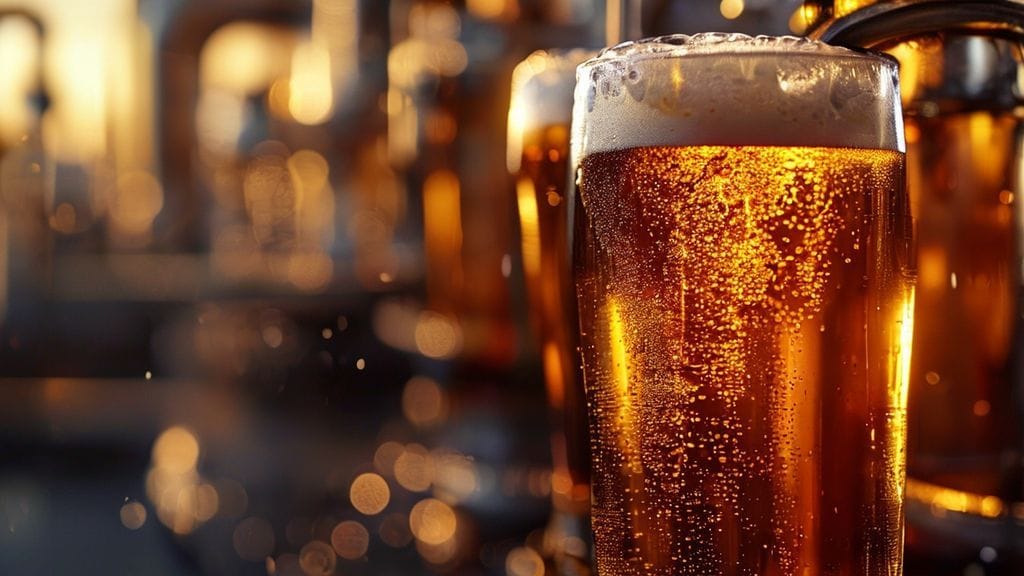
Choosing between a pure nitrogen tank and a Beer Gas (G-Mix) setup hinges entirely on your desired pour and beer style. Pure nitrogen delivers the iconic cascading head and creamy mouthfeel for stouts and porters, requiring a stout faucet and higher pressures. Beer Gas, a blend of nitrogen and carbon dioxide, offers versatility, maintaining carbonation while providing a smoother pour than pure CO2, suitable for a broader range of draft beers, balancing carbonation and head.
| Metric | Pure Nitrogen (N2) System | Beer Gas (G-Mix) System |
|---|---|---|
| Primary Gas Content | 100% Nitrogen (N2) | Nitrogen (N2) & Carbon Dioxide (CO2) Blend |
| Typical Blend Ratios (G-Mix) | N/A | 70% N2 / 30% CO2 (for lagers, ales) 75% N2 / 25% CO2 (for stouts, porters, less carbonated) |
| Serving Pressure Range | 25-35 PSI (typically for stout faucets) | 10-25 PSI (varies based on blend, beer, carbonation target) |
| Required Faucet Type | Stout Faucet (Restrictor Plate) | Standard Draft Faucet |
| Effect on Beer Carbonation | De-carbonates beer over time; primarily for dispense | Maintains carbonation (CO2 portion); N2 limits over-carbonation |
| Ideal Beer Styles | Dry Stouts, Oatmeal Stouts, Milk Stouts, Nitro Porters | Ales, Lagers, Pilsners, IPAs (for smoother dispense) |
| Cost Implications (Relative) | Similar tank cost to CO2; N2 gas refills often cheaper than CO2 per volume | G-Mix tanks/refills can be slightly more expensive due to blending; specialized regulators |
| Regulator Type | High-pressure N2 regulator | High-pressure N2/CO2 Beer Gas regulator |
The Brewer’s Hook: My Journey Through the Gas Maze
When I first started dabbling in draft systems, fresh out of brewing school twenty years ago, I made the classic newbie mistake: I assumed one gas fits all. My very first stout, a beautifully roasty oatmeal stout I was immensely proud of, was utterly ruined by pure CO2. It poured like a cheap soda, with an aggressive, prickly carbonation that annihilated its creamy potential. I remember staring at that glass, the disappointment a bitter taste far worse than the beer itself. That experience, though frustrating, launched me into a deep dive into dispensing gases, particularly the nuances of nitrogen and its blends. I quickly learned that understanding your gas setup is as critical as your fermentation process for delivering a truly exceptional beer experience. My journey from that fizzy stout to perfectly cascaded nitro pours and flawlessly carbonated lagers has taught me that the devil, or in this case, the deliciousness, is truly in the details of your gas management.
The “Math” Section: Decoding Gas Blends and Dissolved CO2
Understanding how nitrogen and CO2 interact with your beer is not just about turning a knob; it’s about physics and chemistry. When you’re dealing with Beer Gas (G-Mix), the most critical concept is the partial pressure of CO2. Nitrogen is largely insoluble in beer at dispensing pressures, serving primarily as a propellant and to create that beautiful cascade. CO2, however, readily dissolves, and its partial pressure dictates the final carbonation level of your beer.
Here’s my manual calculation guide for G-Mix systems:
Target Carbonation Volume Calculation (for G-Mix)
Let’s say you’re aiming for a carbonation volume (Vols CO2) in your beer, typically expressed as volumes of CO2 per volume of beer. For a G-Mix blend, you need to calculate the actual partial pressure exerted by the CO2 component.
1. Henry’s Law Constant (kH): This constant relates the solubility of a gas to its partial pressure. For CO2 in beer, it varies slightly with temperature. A good approximation is 0.0303 mol/(L·atm) at 10°C (50°F).
2. Target Dissolved CO2 (C): Convert your desired carbonation volume into grams per liter or moles per liter.
* 1 Vol CO2 at standard conditions (0°C, 1 atm) ≈ 1.96 g/L.
* To get moles/L: Target Vols CO2 * 44.01 g/mol (molar mass of CO2) / 22.4 L/mol (molar volume at STP).
* Alternatively, use a carbonation chart for direct pressure readings against temperature and desired volumes.
3. Partial Pressure of CO2 (P_CO2): This is the pressure of the CO2 component in your gas blend.
* `P_CO2 = P_Total * %CO2_in_Blend`
* Where `P_Total` is your total serving pressure (e.g., 15 PSI) and `%CO2_in_Blend` is the decimal percentage of CO2 in your G-Mix (e.g., 0.30 for a 70/30 blend).
* Convert PSI to atmospheres (atm): `1 PSI ≈ 0.06805 atm`.
4. Example Calculation:
* Let’s target 2.5 Vols CO2 for an ale served at 10°C (50°F).
* Using a standard carbonation chart or formula, at 10°C, 2.5 Vols CO2 requires approximately 12 PSI of pure CO2 pressure. This is our `P_Pure_CO2`.
* If you’re using a 70/30 N2/CO2 blend (30% CO2):
* `P_Total_Required = P_Pure_CO2 / %CO2_in_Blend`
* `P_Total_Required = 12 PSI / 0.30 = 40 PSI`
* So, to maintain 2.5 Vols CO2 in your beer with a 70/30 G-Mix at 10°C, you would need to set your total regulator pressure to approximately **40 PSI**. This is crucial; simply setting it to 12 PSI will result in rapid de-carbonation. My experience confirms this math again and again.
Line Length and Restriction
Line length is another critical calculation, particularly for pure N2 setups with stout faucets. The restrictor plate in a stout faucet needs higher pressure to push the beer through, creating the cascade. Without adequate line restriction, you’ll get excessive foam.
* For Pure N2 (Stout Faucet): I typically aim for 25-35 PSI serving pressure. To balance this, I’ll use 5-7 feet of 3/16″ ID beer line. The small ID provides enough resistance at these higher pressures.
* For G-Mix (Standard Faucet): With lower overall serving pressures (10-25 PSI), you’ll need longer lines, often 8-12 feet of 3/16″ ID line, to achieve proper resistance and prevent foaming.
These are not arbitrary numbers; they are derived from fluid dynamics and real-world testing. Neglect these calculations, and you’ll be pouring foam, not beer.
Step-by-Step Execution: Setting Up Your System
No matter if you’re going pure nitro or G-Mix, precision is paramount. Here’s how I approach setting up both systems.
Pure Nitrogen (N2) System Setup
This setup is specifically for nitrogenated beers like Irish Dry Stouts.
1. Acquire Your Gear:
* A high-pressure nitrogen tank (typically 20-40 cubic feet).
* A **nitrogen regulator** (specific for N2, threads are different from CO2, CGA-580 connection).
* A stout faucet with a restrictor plate.
* 3/16″ ID beer line (5-7 feet for typical homebrew setup).
* Gas line and appropriate clamps.
* Corny keg or commercial keg connector (e.g., S-type coupler for a Guinness keg).
2. Tank Connection:
* Ensure the nitrogen regulator’s washer is seated correctly in the tank valve.
* Hand-tighten the regulator nut, then use a wrench to snug it down another quarter to half turn. **Do not overtighten.** This is a CGA-580 connection; it’s different from a CGA-320 CO2 connection.
3. Regulator Adjustment:
* Close the regulator’s shut-off valve (if present) and turn the pressure adjustment screw counter-clockwise until it’s fully backed out.
* Slowly open the main valve on the nitrogen tank. The high-pressure gauge will show the tank’s contents.
* Slowly turn the pressure adjustment screw clockwise until the low-pressure gauge reads your desired serving pressure, typically **25-35 PSI**. For a true cascading stout pour, I usually start at **30 PSI** and adjust from there.
4. Line Connections:
* Connect the gas line from the regulator to the “gas in” post on your keg.
* Connect your 3/16″ ID beer line (5-7 ft) to the “liquid out” post on your keg.
* Attach the other end of the beer line to your stout faucet.
5. Leak Test:
* Spray all connections (regulator to tank, gas line to regulator, gas line to keg) with a solution of soapy water. Look for bubbles. Even a tiny leak will deplete your tank rapidly.
6. Conditioning & Serving:
* Allow the keg to sit under pressure for at least 24 hours to ensure the beer is thoroughly infused with nitrogen. Remember, nitrogen doesn’t carbonate; it’s primarily a propellant and forms the head.
* Serve through the stout faucet. The restrictor plate is key to generating the famous cascading effect and creamy head.
Beer Gas (G-Mix) System Setup
This setup offers a balance of carbonation and smooth dispense for a wider variety of styles.
1. Acquire Your Gear:
* A Beer Gas tank (this is a pre-blended N2/CO2 tank, usually 70/30 or 75/25 N2/CO2).
* A **Beer Gas regulator** (specific for blends, often CGA-580 with a dual gauge for tank pressure and output pressure, or even a specialized blended gas regulator).
* Standard draft faucet.
* 3/16″ ID beer line (8-12 feet for typical homebrew setup).
* Gas line and appropriate clamps.
* Corny keg or commercial keg connector (e.g., D-type for common European lagers).
2. Tank Connection:
* Similar to N2, ensure the regulator washer is in place.
* Hand-tighten, then snug with a wrench. These tanks also typically use a CGA-580 connection.
3. Regulator Adjustment:
* Close regulator shut-off, back out adjustment screw.
* Slowly open the tank valve. The high-pressure gauge shows tank content.
* Adjust the pressure screw clockwise to your desired serving pressure. This will vary depending on your beer’s carbonation level, temperature, and G-Mix ratio. For a typical 70/30 blend and an ale at 10°C (50°F) aiming for 2.4-2.6 Vols CO2, I often set it to **15-20 PSI** based on my calculations outlined previously. **Remember the partial pressure math!**
4. Line Connections:
* Connect the gas line to the “gas in” post on your keg.
* Connect your longer 3/16″ ID beer line (8-12 ft) to the “liquid out” post.
* Attach the other end to your standard draft faucet.
5. Leak Test:
* As before, use soapy water on all connections. Don’t skip this; a blended gas leak can be more costly.
6. Serving & Maintaining Carbonation:
* The CO2 in the blend will maintain your beer’s carbonation while the nitrogen helps push the beer and creates a tighter, creamier head than pure CO2.
* Monitor your pours and adjust pressure slightly if you experience excessive foam (reduce pressure or increase line length) or flat beer (increase pressure).
I always ensure my setup is correct from the start. A faulty connection or incorrect pressure setting can completely derail the serving experience. For more detailed instructions and equipment reviews, don’t forget to check out BrewMyBeer.online.
Troubleshooting: What Can Go Wrong
Even with the best intentions and equipment, issues can arise. Here are the common problems I’ve encountered and my solutions:
*
Foamy Pours: The Headache of Imbalance
* Problem: Your beer is pouring as mostly foam, leading to wasted beer and frustration.
* My Experience & Solution: This is almost always a pressure imbalance. For pure N2, it means too much pressure for your line length or a faulty stout faucet. For G-Mix, it’s typically too high a total pressure for the CO2 partial pressure you’re trying to maintain, or your beer line is too short for the pressure.
* Fix:
* **Check Temperature:** Ensure your beer is adequately chilled (ideally 2-4°C / 35-40°F). Warmer beer releases CO2 more readily, causing foam.
* **Reduce Pressure:** Gradually lower your regulator pressure by 1-2 PSI increments and test the pour.
* Increase Line Length:** If reducing pressure isn’t enough, you might need a longer beer line (especially for G-Mix). For a standard 3/16″ ID line, every foot adds roughly 2-2.5 PSI of resistance.
*
Flat Beer: Losing the Sparkle
* Problem: Your beer lacks effervescence, tasting dull and lifeless.
* My Experience & Solution: With pure N2, this is expected over time as it doesn’t maintain carbonation. With G-Mix, it means the CO2 partial pressure is too low, or you have a slow leak.
* Fix:
* **Increase G-Mix Pressure:** Slowly increase your Beer Gas regulator pressure by 1-2 PSI, allowing 12-24 hours for the CO2 to dissolve back into the beer.
* **Check for Leaks:** Perform a thorough leak test (soapy water) on all connections. A slow leak can silently de-carbonate your beer.
* **Verify G-Mix Blend:** Ensure you’re actually using Beer Gas and not mistakenly pure N2 for carbonated styles. I’ve seen this happen!
*
No Pour / Slow Pour: The Stubborn Keg
* Problem: Beer barely trickles out, or nothing comes at all.
* My Experience & Solution: This usually points to a gas issue or a clog.
* Fix:
* **Check Tank Pressure:** Is your gas tank empty? Check the high-pressure gauge.
* **Regulator Failure:** Ensure your regulator isn’t frozen or faulty. Sometimes turning the tank off, relieving pressure, and slowly repressurizing can resolve minor regulator sticking.
* **Clogged Lines/Faucets:** Disassemble and clean your beer lines and faucet. Yeast sediment or hop material can easily clog things up.
*
Off-Flavors (Less Common but Possible):
* Problem: Your beer develops an unexpected off-flavor.
* My Experience & Solution: While gas itself rarely causes off-flavors (unless impurities), a dirty draft system is a primary culprit.
* Fix: **Clean Your Lines!** I cannot stress this enough. Every 2-4 weeks, run a proper brewery wash through your lines. Sanitizing isn’t enough; you need to remove organic buildup.
Sensory Analysis: The Gas’s Impact on Your Beer
The gas you choose fundamentally alters the sensory experience of your beer, extending beyond just carbonation.
*
Pure Nitrogen (N2) Dispense: The Creamy Dream
* **Appearance:** This is where N2 shines. Immediately upon pouring, you observe a dramatic “cascading” effect, a reverse waterfall of tiny bubbles rushing upwards as a dense, creamy, persistent head forms. The head itself is usually a rich, off-white, and incredibly stable, lasting until the last sip.
* **Aroma:** The thick head acts like a blanket, trapping some volatile aromas initially. However, as it slowly dissipates, the aromas are gently released, often perceived as smoother and less pungent than a CO2 pour. You’ll get more subtle notes of roast, chocolate, or coffee in a stout.
* **Mouthfeel:** This is the hallmark. Nitrogen imparts an incredibly smooth, silky, almost velvety mouthfeel. The tiny bubbles create a sensation of creaminess that coats the palate, reducing any sharp edges from high bitterness or roast character. It’s often described as “chewy” or “full-bodied,” even in medium-bodied beers.
* **Flavor:** The flavor delivery is softer, less acidic, and less carbonation-driven. It allows the malt and hop flavors to present themselves in a more subdued, integrated fashion, emphasizing richness over effervescence. The lack of carbonic bite makes it exceptionally smooth drinking.
*
Beer Gas (G-Mix) Dispense: The Balanced Brew
* **Appearance:** G-Mix pours will have a tighter, denser head than pure CO2 pours, but typically not the dramatic cascade of pure N2 (unless it’s a very high N2 blend). The bubbles are finer, and the head is usually more persistent than pure CO2, but less opaque than a nitro pour.
* **Aroma:** The blended gas allows for good aroma release without the aggressive scrubbing effect of high CO2. It presents a balanced aromatic profile, allowing hop aromatics in an IPA or malty notes in a lager to come through clearly, often with slightly less volatility than pure CO2.
* **Mouthfeel:** This is a middle ground. G-Mix provides a smoother, less prickly mouthfeel than pure CO2, thanks to the nitrogen. It’s not as silky as pure N2, but it offers a pleasant creaminess and a softer carbonation bite that enhances drinkability for many styles. It prevents the “soda water” effect often associated with over-carbonated beers.
* **Flavor:** Flavors are delivered with a subtle effervescence that cleanses the palate without overwhelming it. The balance between nitrogen and CO2 allows the true character of the beer—its malt, hop, and yeast-derived notes—to be appreciated without excessive carbonic acid perception. It’s an excellent choice for a wider range of beers where a gentle lift and smooth finish are desired.
FAQs: Common Questions I Get on Gas Setups
Can I use a pure N2 tank for all my beers?
No, absolutely not. Pure nitrogen will de-carbonate your beer over time, leaving it flat and lifeless unless it’s specifically designed to be nitrogenated (like a stout). Nitrogen is highly insoluble in beer at typical serving pressures and serves primarily as a propellant and to create a specific mouthfeel and head. For any beer where carbonation is desired, you need CO2 or a G-Mix blend.
What’s the optimal serving pressure for a stout with pure N2?
My sweet spot for most stouts on a pure N2 system with a stout faucet is **30-35 PSI**. However, this can vary slightly based on your beer line length (I use 5-7 feet of 3/16″ ID line) and the specific restrictor plate in your stout faucet. Start at 30 PSI, observe the pour, and adjust in 1-2 PSI increments until you achieve that perfect cascading effect and creamy head without excessive foam.
How often do I need to refill my gas tank?
This depends entirely on your tank size and how much beer you’re dispensing. A 20lb CO2 tank can typically carbonate and dispense 5-8 five-gallon kegs. For nitrogen or Beer Gas, the volume consumed is often less per keg, as less gas dissolves into the beer. A 20 cubic foot N2 tank might last 10-15 kegs, while a larger 40 cubic foot tank could handle 20-30. If you’re constantly troubleshooting foamy pours, you might be losing gas through leaks, which would necessitate more frequent refills. I always keep a backup tank on hand, just in case.
Is it cheaper to use pure N2 or G-Mix for my homebrew setup?
The initial cost for tanks and regulators is comparable, though a specialized Beer Gas regulator might be slightly more expensive due to its blend compatibility. In terms of gas refills, pure nitrogen can sometimes be slightly cheaper per cubic foot than CO2. However, G-Mix refills can sometimes be a bit pricier than pure CO2 or N2 due to the blending process. The real cost consideration is gas efficiency: pure N2 is less soluble, so you might use less gas volume to dispense beer than with pure CO2, but if you’re dispending a carbonated beer with a G-Mix, you’re using more gas to maintain the CO2 partial pressure. Ultimately, the choice should be driven by the beer style, not just marginal cost differences. For quality and versatility, I often find the G-Mix a good value for a wider range of beers, while pure N2 is essential for dedicated nitro taps. Remember, investing in quality gear pays off in the long run. Learn more at BrewMyBeer.online.