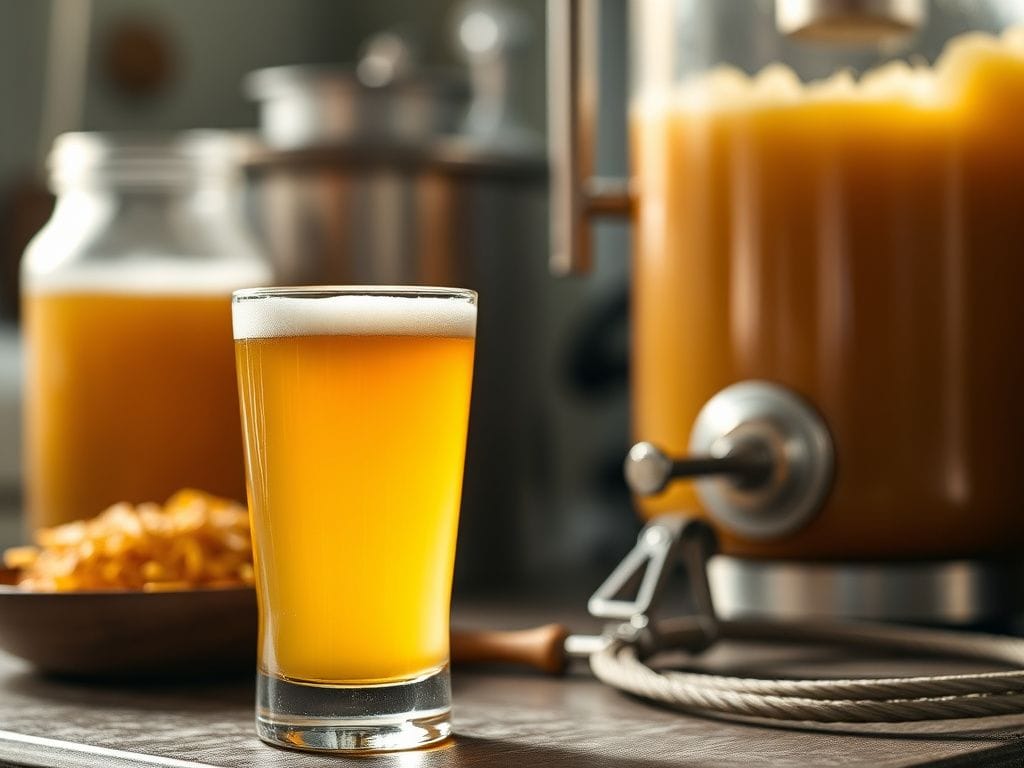
I still remember my first sip of American Cream Ale – it was love at first taste. The smooth, creamy texture and the subtle flavors of malt and hops had me hooked. As a homebrewer, I was determined to recreate this style in my own brewery. After months of experimentation, I finally nailed down the perfect American Cream Ale recipe. In this article, I’ll share my knowledge and experience with you, so you can brew your own delicious American Cream Ale at home. With its rich history and unique style characteristics, American Cream Ale is a beer that’s both easy to drink and fun to brew. From its origins in the United States in the late 19th century to its current popularity among craft brewers and homebrewers, American Cream Ale has a fascinating story to tell. In this article, we’ll explore the history, ingredients, brewing process, and techniques required to brew a delicious American Cream Ale.
My journey with American Cream Ale began with researching its history and style characteristics. American Cream Ale is a style of beer that originated in the United States in the late 19th century, specifically in the Midwest and Northeast regions. It was brewed as an alternative to lagers, using a warm fermentation process and a blend of malt and corn. The result was a beer that was smooth, creamy, and easy to drink. Today, American Cream Ale is a popular style among craft brewers and homebrewers alike, with its characteristic straw-gold color, creamy head, and subtle flavors of malt, hops, and fruit. Whether you’re a seasoned brewer or just starting out, American Cream Ale is a great style to brew and enjoy. Its versatility and drinkability make it a perfect choice for any occasion, from casual gatherings to special events. As a homebrewer, I can attest to the fact that American Cream Ale is a style that’s both rewarding to brew and enjoyable to drink.
Essential Ingredients for American Cream Ale Recipe
When it comes to brewing American Cream Ale, the right ingredients are crucial. The grain bill typically consists of a combination of pale malt, flaked maize, and flaked wheat. The pale malt provides the base flavor and body, while the flaked maize and wheat add a touch of sweetness and creaminess. For hops, American Cream Ale brewers often use a combination of Cluster, Willamette, and Saaz hops. Cluster hops provide a balanced bitterness, while Willamette and Saaz hops add a subtle flavor and aroma. Yeast is also an important ingredient, with many brewers using a warm-fermenting ale yeast such as Wyeast 1007 or White Labs WLP001. The yeast strain used can greatly impact the flavor and character of the beer, so it’s essential to choose a yeast that’s well-suited for American Cream Ale. In addition to the grain bill, hops, and yeast, water is also a critical ingredient in brewing American Cream Ale. The water profile should be balanced, with a moderate level of minerals and a neutral pH. A balanced water profile will help to bring out the subtle flavors and aromas of the beer, while a water profile that’s too extreme can result in an unbalanced flavor.
| Ingredient | Quantity | Percentage |
|---|---|---|
| Pale Malt | 6 lbs | 60% |
| Flaked Maize | 2 lbs | 20% |
| Flaked Wheat | 1 lb | 10% |
| Cluster Hops | 1 oz | |
| Willamette Hops | 1 oz | |
| Saaz Hops | 1 oz |
In addition to the ingredients listed above, there are several other factors to consider when brewing American Cream Ale. One of the most important factors is the brewing water. The water used for brewing should be of high quality, with a balanced mineral profile and a neutral pH. A water profile that’s too extreme can result in an unbalanced flavor, so it’s essential to use a water treatment system or adjust the water chemistry to achieve a balanced profile. Another important factor is the brewing equipment. American Cream Ale can be brewed using a variety of equipment, from extract kits to all-grain systems. Regardless of the equipment used, it’s essential to ensure that it’s clean and sanitized to prevent contamination and spoilage. Finally, the brewing technique used can also impact the flavor and character of the beer. American Cream Ale is typically brewed using a warm fermentation process, with a fermentation temperature of around 65-70°F. The brewing technique used can also impact the flavor and character of the beer, so it’s essential to use a technique that’s well-suited for American Cream Ale.
Step-by-Step Brewing Process for American Cream Ale
Brewing American Cream Ale is a relatively straightforward process. The first step is to mash the grains at a temperature of around 152°F to create a fermentable wort. The mash should be held for 60 minutes to allow for complete conversion of the starches to sugars. After mashing, the wort is sparged with hot water to extract the sugars and then boiled for 60 minutes. During the boil, hops are added at various times to provide bitterness, flavor, and aroma. The boil is typically divided into three stages: bittering, flavor, and aroma. The bittering stage typically lasts for 60 minutes, during which time the bittering hops are added. The flavor stage typically lasts for 15-30 minutes, during which time the flavor hops are added. The aroma stage typically lasts for 5-15 minutes, during which time the aroma hops are added. After the boil, the wort is cooled and transferred to a fermenter where it’s pitched with yeast.
| Step | Time | Temperature |
|---|---|---|
| Mash | 60 minutes | 152°F |
| Sparge | 30 minutes | 170°F |
| Boil | 60 minutes | 212°F |
| Cooling | 30 minutes | 70°F |
In addition to the steps listed above, there are several other factors to consider when brewing American Cream Ale. One of the most important factors is the sanitation and cleaning of the equipment. American Cream Ale is a style that’s prone to contamination and spoilage, so it’s essential to ensure that the equipment is clean and sanitized before brewing. Another important factor is the control of fermentation temperature. American Cream Ale is typically fermented at a temperature of around 65-70°F, which is warmer than most other ale styles. The fermentation temperature can greatly impact the flavor and character of the beer, so it’s essential to use a thermometer and temperature control system to maintain a consistent temperature. Finally, the conditioning time can also impact the flavor and character of the beer. American Cream Ale is typically conditioned for several weeks, during which time it will clarify and develop its characteristic flavor and aroma.
Understanding the Role of Hops in American Cream Ale Recipe
Hops play a crucial role in the flavor and aroma of American Cream Ale. The style typically uses a combination of bittering, flavor, and aroma hops to create a balanced and refreshing beer. Cluster hops are often used for bittering, providing a clean and crisp bitterness. Willamette and Saaz hops are used for flavor and aroma, adding a subtle fruitiness and spiciness to the beer. The hopping rate for American Cream Ale is typically relatively low, with a total of 1-2 oz of hops per 5-gallon batch. The hops are added at various times during the boil, with the bittering hops added at the beginning of the boil and the flavor and aroma hops added towards the end. The type of hops used can greatly impact the flavor and character of the beer, so it’s essential to choose a hop variety that’s well-suited for American Cream Ale.
| Hop Variety | Quantity | Time |
|---|---|---|
| Cluster | 1 oz | 60 minutes |
| Willamette | 1 oz | 15 minutes |
| Saaz | 1 oz | 5 minutes |
In addition to the hop varieties listed above, there are several other factors to consider when using hops in American Cream Ale. One of the most important factors is the alpha acid content of the hops. The alpha acid content can greatly impact the bitterness of the beer, so it’s essential to choose a hop variety with an alpha acid content that’s well-suited for American Cream Ale. Another important factor is the beta acid content of the hops. The beta acid content can greatly impact the flavor and aroma of the beer, so it’s essential to choose a hop variety with a beta acid content that’s well-suited for American Cream Ale. Finally, the hop form can also impact the flavor and character of the beer. American Cream Ale can be brewed using whole hops, pellet hops, or extract hops, each of which has its own unique characteristics and advantages.
BJCP-Style Stats for American Cream Ale
| Statistic | Value |
|---|---|
| OG | 1.042-1.055 |
| FG | 1.008-1.012 |
| IBU | 15-20 |
| SRM | 2.8-5.0 |
| ABV | 4.5-5.5% |
The BJCP-style stats listed above provide a general guideline for brewing American Cream Ale. However, it’s essential to note that the actual stats may vary depending on the specific recipe and brewing technique used. The original gravity (OG) of American Cream Ale is typically between 1.042 and 1.055, which is relatively low compared to other ale styles. The final gravity (FG) is typically between 1.008 and 1.012, which is also relatively low. The international bittering units (IBU) are typically between 15 and 20, which is relatively low compared to other ale styles. The standard reference method (SRM) is typically between 2.8 and 5.0, which is relatively light compared to other ale styles. The alcohol by volume (ABV) is typically between 4.5 and 5.5%, which is relatively low compared to other ale styles.
Fermentation and Conditioning Techniques for American Cream Ale
Fermentation and conditioning are critical steps in brewing American Cream Ale. The yeast used for fermentation is typically a warm-fermenting ale yeast such as Wyeast 1007 or White Labs WLP001. The fermentation temperature should be around 65-70°F, with a fermentation time of 7-10 days. After fermentation is complete, the beer is transferred to a conditioning tank where it’s allowed to mature for several weeks. The conditioning temperature should be around 40-50°F, with a conditioning time of 2-4 weeks. During conditioning, the beer will clarify and develop its characteristic flavor and aroma. The fermentation and conditioning techniques used can greatly impact the flavor and character of the beer, so it’s essential to use a technique that’s well-suited for American Cream Ale.
In addition to the fermentation and conditioning techniques listed above, there are several other factors to consider when brewing American Cream Ale. One of the most important factors is the control of fermentation temperature. American Cream Ale is typically fermented at a temperature of around 65-70°F, which is warmer than most other ale styles. The fermentation temperature can greatly impact the flavor and character of the beer, so it’s essential to use a thermometer and temperature control system to maintain a consistent temperature. Another important factor is the control of conditioning temperature. American Cream Ale is typically conditioned at a temperature of around 40-50°F, which is cooler than most other ale styles. The conditioning temperature can greatly impact the flavor and character of the beer, so it’s essential to use a thermometer and temperature control system to maintain a consistent temperature. Finally, the length of conditioning time can also impact the flavor and character of the beer. American Cream Ale is typically conditioned for several weeks, during which time it will clarify and develop its characteristic flavor and aroma.
American Cream Ale Recipe: Tips and Variations for Advanced Brewers
For advanced brewers, there are several tips and variations that can be used to create a unique and delicious American Cream Ale. One variation is to use a different type of grain, such as wheat or rye, to add a unique flavor and character to the beer. Another variation is to use a different type of hop, such as Cascade or Chinook, to add a more citrusy or piney flavor to the beer. Additionally, brewers can experiment with different yeast strains, such as a lager yeast or a wild yeast, to create a beer with a unique flavor and character. The tips and variations listed above can be used to create a unique and delicious American Cream Ale that’s tailored to the brewer’s personal preferences.
| Recipe | Grain Bill | Hop Schedule |
|---|---|---|
| Recipe 1 | 6 lbs Pale Malt, 2 lbs Flaked Maize, 1 lb Flaked Wheat | 1 oz Cluster (60 minutes), 1 oz Willamette (15 minutes), 1 oz Saaz (5 minutes) |
| Recipe 2 | 6 lbs Pale Malt, 2 lbs Flaked Rye, 1 lb Flaked Wheat | 1 oz Cascade (60 minutes), 1 oz Chinook (15 minutes), 1 oz Saaz (5 minutes) |
In addition to the recipes listed above, there are several other factors to consider when brewing American Cream Ale. One of the most important factors is the brewing technique used. American Cream Ale can be brewed using a variety of techniques, from extract kits to all-grain systems. Regardless of the technique used, it’s essential to ensure that the equipment is clean and sanitized to prevent contamination and spoilage. Another important factor is the control of fermentation temperature. American Cream Ale is typically fermented at a temperature of around 65-70°F, which is warmer than most other ale styles. The fermentation temperature can greatly impact the flavor and character of the beer, so it’s essential to use a thermometer and temperature control system to maintain a consistent temperature. Finally, the length of conditioning time can also impact the flavor and character of the beer. American Cream Ale is typically conditioned for several weeks, during which time it will clarify and develop its characteristic flavor and aroma.
Troubleshooting Common Issues in American Cream Ale Brewing
Like any style of beer, American Cream Ale can be prone to certain issues and problems. One common issue is a lack of clarity, which can be caused by a number of factors, including poor sanitation, inadequate cooling, or insufficient conditioning time. Another common issue is an imbalance of flavors, which can be caused by a number of factors, including incorrect hopping rates, inadequate fermentation temperatures, or insufficient aging time. To troubleshoot these issues, brewers can use a number of techniques, including checking the sanitation and cleaning of the equipment, adjusting the hopping rates and fermentation temperatures, and allowing the beer to condition for a longer period of time. By troubleshooting common issues and problems, brewers can create a delicious and refreshing American Cream Ale that’s tailored to their personal preferences.
In addition to the issues listed above, there are several other common problems that can occur when brewing American Cream Ale. One common problem is a stuck fermentation, which can be caused by a number of factors, including inadequate yeast pitching, insufficient oxygenation, or poor fermentation temperature control. Another common problem is a sour or infected beer, which can be caused by a number of factors, including poor sanitation, inadequate cooling, or insufficient conditioning time. To prevent these problems, brewers can use a number of techniques, including ensuring proper sanitation and cleaning of the equipment, controlling fermentation temperature, and monitoring the beer’s progress during conditioning. By preventing common problems and issues, brewers can create a delicious and refreshing American Cream Ale that’s tailored to their personal preferences.
Common Questions
- Q: What is the ideal fermentation temperature for American Cream Ale? A: The ideal fermentation temperature for American Cream Ale is around 65-70°F.
- Q: What type of yeast is typically used for American Cream Ale? A: The type of yeast typically used for American Cream Ale is a warm-fermenting ale yeast such as Wyeast 1007 or White Labs WLP001.
- Q: How long does it take to condition American Cream Ale? A: The conditioning time for American Cream Ale can vary, but it’s typically around 2-4 weeks.
- Q: Can I use a different type of grain for American Cream Ale? A: Yes, you can use a different type of grain for American Cream Ale, such as wheat or rye, to add a unique flavor and character to the beer.
- Q: What is the typical hopping rate for American Cream Ale? A: The typical hopping rate for American Cream Ale is around 1-2 oz of hops per 5-gallon batch.
- Q: What is the ideal water profile for American Cream Ale? A: The ideal water profile for American Cream Ale is a balanced profile with a moderate level of minerals and a neutral pH.
- Q: Can I use a lager yeast for American Cream Ale? A: Yes, you can use a lager yeast for American Cream Ale, but it’s not recommended as it can result in a beer that’s too dry and crisp.
- Q: How do I prevent a stuck fermentation in American Cream Ale? A: To prevent a stuck fermentation in American Cream Ale, ensure proper yeast pitching, sufficient oxygenation, and good fermentation temperature control.
- Q: Can I use a wild yeast for American Cream Ale? A: Yes, you can use a wild yeast for American Cream Ale, but it’s not recommended as it can result in a beer that’s too sour or funky.
- Q: What is the typical ABV for American Cream Ale? A: The typical ABV for American Cream Ale is around 4.5-5.5%.