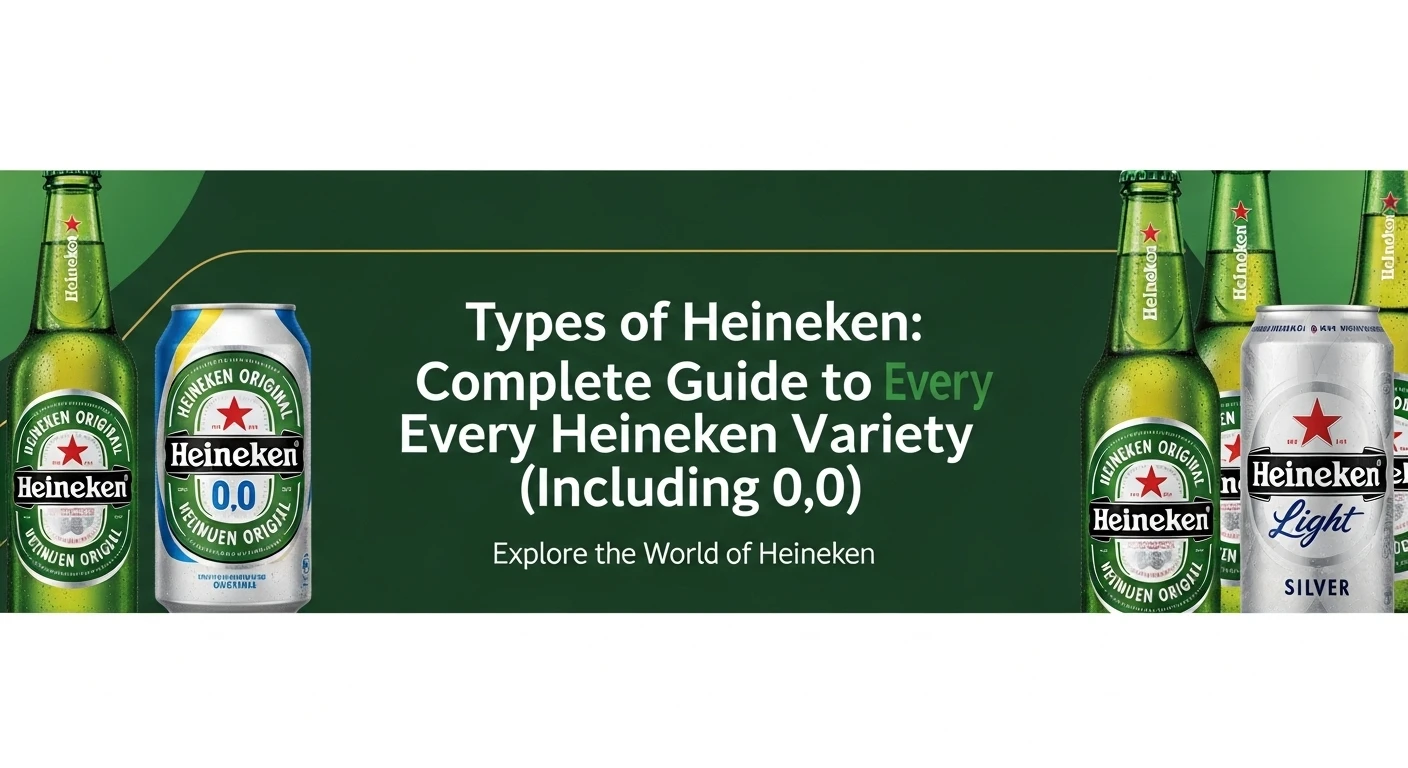
Discover all types of Heineken including Complete Guide to Every Heineken Variety Original, Silver, and 0.0 with nutrition facts, taste profiles, and help choosing the right variety.
You’re browsing the beer aisle and notice multiple types of Heineken – the classic green bottle, a silver label, and one marked 0.0. What’s the difference? After spending over 10 years researching European brewing traditions and analyzing beer nutrition, I’ve studied how Heineken evolved from a single Dutch lager into a global brand offering multiple varieties for different preferences.
Here’s what you need to know about the types of Heineken: Heineken produces three main varieties globally – Heineken Original (5.0% ABV, 148 calories), Heineken Silver (4.0% ABV, 95 calories, launched 2023), and Heineken 0.0 (0.03% ABV non-alcoholic, 69 calories, launched 2017). Each type of Heineken targets different drinkers – from traditional lager lovers to health-conscious consumers seeking low-calorie or alcohol-free options while maintaining Heineken’s signature taste.
After years analyzing brewing processes and European beer culture, I’m breaking down every type of Heineken available. Whether you’re choosing your first Heineken, exploring lower-calorie options, or curious about alcohol-free alternatives, this comprehensive guide reveals what distinguishes each variety and helps you choose the right one for your preferences.
Heineken Original: The Classic Dutch Lager
Let’s start with the foundation – Heineken Original, the iconic pale lager that built the brand’s reputation since 1873. This is what most people mean when they say “Heineken.”
Heineken Original Specifications:
- Alcohol Content: 5.0% ABV
- Calories: 148 per 12 oz (123 per 330ml)
- Carbohydrates: 11.3g per 12 oz
- Protein: 1.5g
- Bitterness: ~19 IBU (International Bitterness Units)
- Color: Pale golden (4-6 EBC)
Brewing Process:
Heineken Original uses the proprietary A-yeast strain developed in 1886 by Dr. H. Elion at Heineken’s laboratory in Rotterdam. This specific Saccharomyces cerevisiae yeast creates Heineken’s distinctive slightly fruity, mildly skunky character that fans recognize instantly. The brewing process includes pure malted barley, hop extract, and water – no adjunct grains like rice or corn.
The beer undergoes horizontal lagering (cold storage) for several weeks, creating its clean, crisp finish. Heineken’s signature green bottle famously allows light penetration, creating “light-struck” or “skunky” character from isomerized alpha acids – technically a flaw but considered part of Heineken’s identity by many drinkers.
Taste Profile:
Heineken Original delivers grainy malt sweetness with meadowy, grassy hop character. The body is medium-light with high carbonation creating refreshing effervescence. The finish brings moderate bitterness with lingering hop notes and that characteristic slight funkiness. When fresh and properly stored, it’s balanced and clean. When light-struck (common in green bottles under fluorescent lights), it develops more pronounced skunky character.
From my European brewing research, Heineken Original represents Dutch pilsner tradition – not as hop-forward as German pilsners or Czech varieties, but clean and accessible with signature fruity yeast character distinguishing it from generic pale lagers.
Heineken Silver: The Low-Calorie Premium Option
Launched in 2023, Heineken Silver represents Heineken’s response to the premium light beer market dominated by Michelob Ultra and Corona Premier.
Heineken Silver Specifications:
- Alcohol Content: 4.0% ABV
- Calories: 95 per 12 oz (90 per 330ml)
- Carbohydrates: 2.9-3.2g per 12 oz
- Protein: Similar to Original (~1.5g)
- Flavor: “Extra refreshing” crisp lager
The Ice-Cold Lagering Process:
According to Heineken’s descriptions, “Heineken Silver is brewed using an ice-cold lagering process at -1°C.” This sub-zero lagering allows the beer to retain Heineken’s signature fruity aroma and balanced bitterness while achieving dramatically lower calories and carbs. The process creates what Heineken calls “Extra Fresh, For Real.”
Nutrition Comparison:
| Type | Calories (12oz) | Carbs | ABV |
|---|---|---|---|
| Heineken Original | 148 | 11.3g | 5.0% |
| Heineken Silver | 95 | 2.9g | 4.0% |
| Difference | -53 cal (-36%) | -8.4g (-74%) | -1.0% |
Who It’s For:
Heineken Silver targets calorie-conscious drinkers who want premium imported beer without the nutritional commitment. At 95 calories and under 3g carbs, it’s keto-friendly and competes directly with Michelob Ultra (95 calories, 2.6g carbs) while offering Heineken’s brand prestige and European heritage.
Taste Profile:
Reviewers describe Heineken Silver as full-bodied despite low calories, maintaining Heineken’s fruity aroma with crisp, subtle finish. The 4.0% ABV makes it sessionable without feeling watery. The ice-cold lagering smooths bitterness, creating something refreshing and easy-drinking that doesn’t sacrifice too much flavor for calorie reduction.
If you’re fascinated by how brewers manipulate fermentation and lagering to achieve different nutritional profiles, exploring craft beer brewing techniques provides incredible insight into these processes.
Heineken 0.0: The Non-Alcoholic Pioneer Complete Guide to Every Heineken Variety
Launched in 2017, Heineken 0.0 represents one of the beer industry’s most successful non-alcoholic offerings, winning multiple awards and gaining widespread acceptance.
Heineken 0.0 Specifications:
- Alcohol Content: 0.03% ABV (legally alcohol-free)
- Calories: 69 per 12 oz (approximately)
- Carbohydrates: ~16g per 12 oz
- Sugar: Contains added sugar for flavor balance
- Process: Vacuum distillation dealcoholization
The Dealcoholization Process:
Heineken 0.0 starts as regular Heineken beer brewed with the same A-yeast strain and ingredients. After fermentation, the alcohol is removed through vacuum distillation – a gentle process that heats beer under reduced pressure, allowing alcohol to evaporate at lower temperatures that preserve flavor compounds better than traditional boiling methods.
According to detailed reviews, “What truly sets Heineken 0.0 apart is the brewery’s commitment to maintaining the quality of the original Heineken product. Unlike some big brewery non-alcoholic beers that feel like an afterthought, Heineken put considerable effort into ensuring that 0.0 would be a product that stands on its own merit.”
Taste Profile:
Multiple taste tests confirm Heineken 0.0 tastes remarkably similar to regular Heineken. Reviewers note: “The aroma is remarkably similar to traditional Heineken with all the skunk on the nose… It offers a delicate balance of grainy malt sweetness, subtle herbal hops, and a touch of citrus zest.”
Key differences from regular Heineken:
- Slightly sweeter finish (added sugar compensates for missing alcohol body)
- More pronounced fruity notes (without alcohol’s masking effect)
- Lighter body (alcohol provides mouthfeel that’s hard to replicate)
- Cleaner finish (no alcohol warmth)
Who It’s For:
Heineken 0.0 serves designated drivers, pregnant women, people reducing alcohol consumption, fitness enthusiasts, and anyone wanting beer flavor without intoxication. Reddit users consistently praise it as one of the best-tasting non-alcoholic beers, with many noting they prefer it over regular Heineken in blind tests.
Regional Heineken Varieties
Beyond the main three types of Heineken, several regional varieties exist in specific markets. These are less common but worth knowing if you encounter them.
Heineken Premium Light:
Discontinued in many markets but occasionally available, this was Heineken’s original light beer attempt before Silver’s launch. Contained approximately 99 calories and 6.8g carbs with 3.3% ABV – positioned between Silver and Original.
Heineken Tarwebok:
A Dutch wheat bock available seasonally in the Netherlands. This 6.5% ABV amber wheat beer represents Heineken’s specialty brewing capabilities beyond pale lagers. Rich, malty, and completely different from classic Heineken character.
Heineken Oud Bruin:
A traditional Dutch brown ale brewed by Heineken for local markets. Smooth, slightly sweet, with caramel notes – showing Heineken’s ability to brew traditional Dutch styles beyond international pale lager.
Heineken Dark Lager:
Available in select Asian and African markets, this dark lager variant maintains Heineken’s smooth character with roasted malt notes. Not widely distributed but demonstrates brand flexibility.
Heineken’s global portfolio includes over 170 beer brands worldwide through acquisitions. However, products bearing the Heineken name specifically remain limited to Original, Silver, 0.0, and these regional specialties.
Choosing the Right Type of Heineken
With multiple types of Heineken available, choosing the right one depends on your priorities. Here’s my recommendation guide based on different drinking situations:
Choose Heineken Original If:
- You want traditional Heineken taste and experience
- Calories and carbs aren’t primary concerns
- You’re pairing with food (full flavor works better)
- You prefer stronger alcohol content (5.0% ABV)
- You want the iconic Heineken that built the brand
Choose Heineken Silver If:
- You’re counting calories (95 vs 148 in Original)
- You’re following keto or low-carb diets (2.9g carbs)
- You want sessionable lower-alcohol beer (4.0% ABV)
- You prefer lighter, crisper finish
- You want premium light beer with Heineken branding
Choose Heineken 0.0 If:
- You’re avoiding alcohol (driving, pregnant, sober)
- You want beer flavor without intoxication
- You’re tracking calories strictly (69 calories)
- You want to pace alcohol consumption at events
- You genuinely prefer the taste (many do in blind tests)
From my brewing research experience, the types of Heineken represent smart market positioning – maintaining brand identity while serving different consumer segments without diluting the core Original product.
Common Questions About Types of Heineken
How many types of Heineken are there?
Heineken produces three main varieties globally: Heineken Original (5.0% ABV), Heineken Silver (4.0% ABV, low-calorie), and Heineken 0.0 (non-alcoholic). Regional markets may have additional varieties like Heineken Premium Light (discontinued in many areas), Tarwebok (seasonal Dutch wheat bock), or Oud Bruin (Dutch brown ale), but the core global lineup consists of these three types.
What’s the difference between Heineken and Heineken Silver?
Heineken Original has 148 calories, 11.3g carbs, and 5.0% ABV, while Heineken Silver has 95 calories, 2.9g carbs, and 4.0% ABV. Silver is brewed using ice-cold lagering at -1°C to achieve lower calories while maintaining Heineken’s fruity aroma. Silver saves 53 calories and 8.4g carbs per serving, making it keto-friendly and appealing to calorie-conscious drinkers.
Does Heineken 0.0 taste like regular Heineken?
Yes, remarkably so. Multiple reviews confirm Heineken 0.0 tastes very similar to regular Heineken, maintaining the grainy malt, grassy hops, and characteristic slight skunkiness. The main differences are slightly sweeter finish (added sugar), more prominent fruit notes, and lighter body. Many reviewers note they prefer Heineken 0.0 over regular Heineken in blind comparisons, praising its clean, refreshing character.
Which type of Heineken has the fewest calories?
Heineken 0.0 has the fewest calories at 69 per 12 oz serving, followed by Heineken Silver at 95 calories, and Heineken Original at 148 calories. However, Heineken 0.0 has more carbohydrates (~16g) than Silver (2.9g) because added sugar compensates for missing alcohol. For lowest-carb option, choose Heineken Silver.
Is Heineken 0.0 actually alcohol-free?
Heineken 0.0 contains 0.03% ABV – legally considered alcohol-free (regulations require less than 0.5% in most countries). This trace amount is comparable to ripe fruit or bread. It’s safe for pregnancy, designated drivers, and people avoiding alcohol. The dealcoholization process removes nearly all alcohol through vacuum distillation.
When was Heineken Silver released?
Heineken Silver was launched in 2023 as Heineken’s premium light beer entry. It competes directly with Michelob Ultra, Corona Premier, and other low-calorie premium imports. The ice-cold lagering process at -1°C differentiates it from competitors while achieving 95 calories and under 3g carbs per serving.
Do all types of Heineken use the same yeast?
Yes, all Heineken varieties (Original, Silver, and 0.0 before dealcoholization) use Heineken’s proprietary A-yeast strain developed in 1886. This specific Saccharomyces cerevisiae yeast creates Heineken’s signature slightly fruity, distinctive character across all products. The yeast is one of brewing’s most closely guarded secrets and key to Heineken’s consistent global taste.
Where can I buy Heineken Silver?
Heineken Silver is available at most major retailers in the US, Canada, and expanding globally. Check beer aisles at grocery stores, liquor stores, and convenience stores. It’s sold in 6-packs, 12-packs, and 24-packs of bottles or cans. Availability varies by region – Original and 0.0 have wider distribution currently, but Silver is expanding rapidly.
The Final Verdict: Understanding Types of Heineken
After comprehensive analysis of brewing processes, nutrition profiles, and taste characteristics, the types of Heineken reveal smart brand evolution. Heineken Original remains the flagship – the classic Dutch pale lager with 150+ years of brewing tradition and distinctive A-yeast character that built global recognition.
Heineken Silver addresses modern consumer demand for premium light beer, achieving impressive 95 calories and 2.9g carbs while maintaining recognizable Heineken flavor through ice-cold lagering innovation. It competes effectively with American light imports without abandoning Heineken’s European identity.
Heineken 0.0 represents genuine commitment to non-alcoholic beer quality, using vacuum distillation to preserve flavor rather than creating an inferior product. The remarkably authentic taste makes it one of the beer industry’s most successful alcohol-free offerings since its 2017 launch.
Understanding the types of Heineken helps you choose based on priorities – traditional full-flavor experience (Original), calorie-conscious premium drinking (Silver), or genuine beer flavor without alcohol (0.0). Each serves distinct purposes while maintaining Heineken’s core brand identity.
My recommendation: try all three types of Heineken to understand which best fits your preferences and situations. Keep Original for traditional beer occasions, Silver for health-conscious drinking, and 0.0 for when you want flavor without alcohol. Having all three available provides flexibility matching your needs to the appropriate Heineken variety.
The evolution from a single Dutch lager to a portfolio addressing diverse consumer needs shows how traditional breweries adapt without abandoning brewing heritage. Whether you reach for the iconic green bottle Original, the lighter Silver, or the innovative 0.0, you’re experiencing Heineken’s commitment to quality lager brewing across the spectrum.
If you’re passionate about understanding how different brewing processes create distinct beer profiles, exploring homebrewing and fermentation science provides hands-on experience with the techniques that create beers like Heineken’s various offerings.
About the Author
Amber Maltson is a beer nutrition specialist and European brewing historian with over 10 years of experience analyzing beverage nutrition, researching European brewing traditions, and consulting with breweries on product development. She holds certifications in nutrition science and has published research on beer flavor compounds and nutritional profiles across international markets. Amber specializes in helping consumers understand beer varieties and make informed choices based on nutrition, taste preferences, and health goals.
She maintains extensive databases tracking beer nutrition evolution and regularly conducts comparative analysis of brewing methods. When not analyzing beer chemistry or researching brewing history, Amber enjoys cycling through European countryside, visiting historic breweries, and teaching brewing science workshops. Connect with her for evidence-based insights on beer nutrition, brewing traditions, and choosing beers that match your lifestyle.