Last updated:
Hyderabad’s water supply from the Manjeera and Krishna river systems produces a moderate-hardness municipal water that sits between Mumbai’s soft profile and Delhi’s very hard alkaline water. I’ve brewed with HMWSSB water and the profile is workable with targeted adjustments, the main challenges are moderate bicarbonate alkalinity and variable seasonal mineral concentration as the city draws from different reservoirs.
Hyderabad water profile: Manjeera and Krishna sources
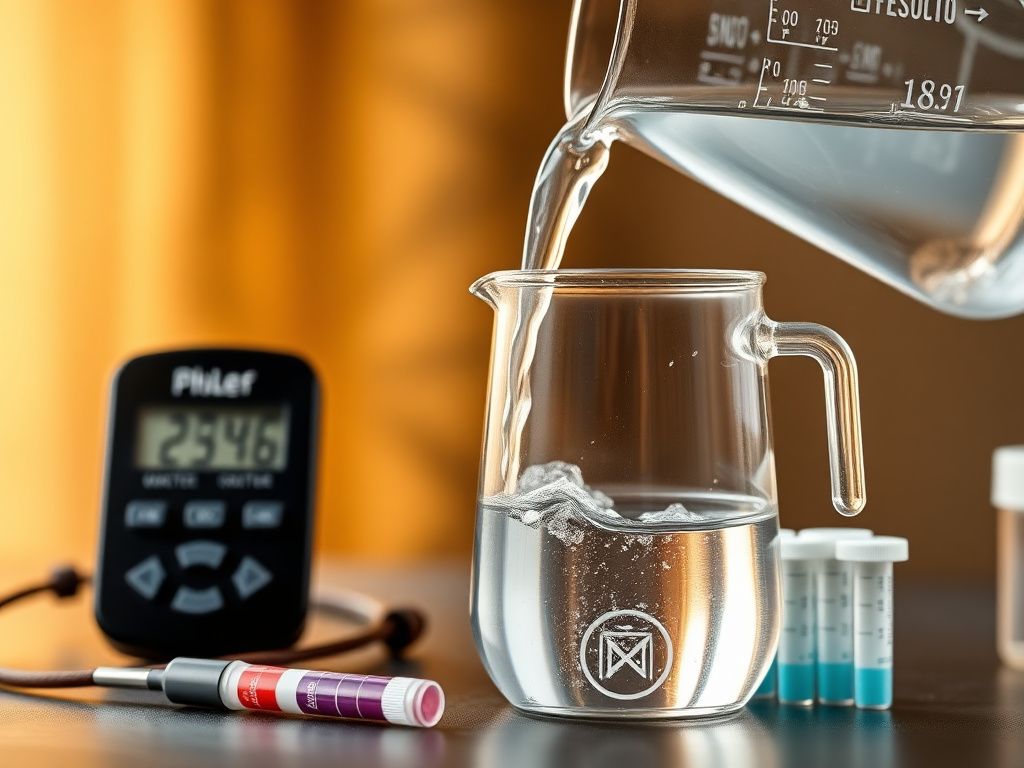
HMWSSB tap water (typical profile): Hyderabad Metro Water draws from Manjeera reservoir, Singur dam, Osman Sagar, Himayat Sagar, and Krishna river water via the SLBC canal. The blended treated water delivered to taps shows moderate mineralization. Typical measured values: Calcium (Ca²⁺): 40–80 mg/L; Magnesium (Mg²⁺): 10–25 mg/L; Sodium (Na⁺): 15–35 mg/L; Chloride (Cl⁻): 25–60 mg/L; Sulfate (SO₄²⁻): 20–45 mg/L; Bicarbonate (HCO₃⁻): 100–180 mg/L; Total Dissolved Solids (TDS): 200–400 mg/L; pH: 7.2–8.0. The bicarbonate at 100–180 mg/L places Hyderabad water in a range that requires acid treatment for pale beer styles but is manageable without the heavy intervention Delhi water demands. Total hardness (calcium + magnesium contribution) of 150–300 mg/L as CaCO₃ equivalent makes this a moderately hard water. Manjeera vs. Krishna source differences: Manjeera reservoir water is softer (TDS typically 150–250 mg/L) than Krishna river water drawn via SLBC canal (TDS 300–500 mg/L). Hyderabad’s supply blends these sources seasonally, during peak summer when Manjeera levels drop, Krishna water proportion increases and tap water TDS and hardness rise noticeably. Brewers who test their water in summer may see values 20–40% higher than winter measurements. Old City vs. Cyberabad variation: The older distribution network in the Old City and central Hyderabad can contribute additional mineral pickup from aged pipes. Cyberabad (HITEC City, Gachibowli, Kondapur) areas with newer distribution infrastructure typically show water closer to treatment plant output values. Using a TDS meter at your tap before each brew session calibrates your expectations for the day’s water.
Adjustments for Hyderabad brewing water
Chlorine and chloramine treatment: HMWSSB uses chlorination and periodic chloramine treatment. Use one Campden tablet (potassium metabisulfite) per 20 liters of brewing water, crushed and dissolved before mineral additions. An activated carbon inline filter is the convenience solution for regular brewers. Do not rely on boiling to remove chloramine, it doesn’t work. For pale ales and IPAs (Hyderabad tap as base): Hyderabad water’s 100–180 mg/L bicarbonate requires neutralization for pale mash pH targets. Add 2–3 mL of 85% lactic acid per 10 liters of mash water to drive bicarbonate down and mash pH to 5.3–5.5. Supplement with gypsum at 0.5–1 g per 5 liters to boost sulfate to 100–150 mg/L for hop character. Existing calcium from the tap (40–80 mg/L) may already be in range, use Bru’n Water or Brewer’s Friend water calculator to verify total calcium after additions stay between 75–150 mg/L. For 50/50 RO dilution approach: Mixing 50% RO water with 50% Hyderabad tap water cuts bicarbonate to 50–90 mg/L, which is much easier to fine-tune with small acid additions. This approach suits brewers making delicate styles (hefeweizens, kölsch, pale lagers) where excess acid treatment is undesirable. From the diluted base, add minerals to style-specific targets. For dark ales and stouts: Hyderabad water’s moderate alkalinity complements dark malt grain bills. Use the tap water with Campden treatment, add calcium chloride at 0.5 g per 5 liters to ensure calcium is above 50 mg/L, and allow roasted malt acidity to balance mash pH naturally, typically landing in the 5.3–5.5 range with Hyderabad water and a 10–15% roasted malt proportion. Recommended brewing water calculator: Martin Brungard’s Bru’n Water spreadsheet (free, widely used) allows entering Hyderabad water values and calculates required acid and salt additions for any target water profile. Entering your measured TDS/pH and using the estimated ion profile above as a starting point produces reliable addition calculations.
Common Questions
How does Hyderabad’s hard water affect mash efficiency?
Hyderabad’s moderately hard water affects mash efficiency primarily through its bicarbonate alkalinity, not through calcium hardness, which is actually beneficial for mashing. Here’s the distinction: calcium ions (from calcium sulfate or calcium chloride) activate mash enzymes, reduce mash pH, and promote flocculation, all beneficial. High calcium is good for efficiency. Bicarbonate (HCO₃⁻) is the problem: it buffers mash pH upward, opposing the natural pH drop that occurs in the mash. At elevated mash pH (above 5.7), alpha and beta amylase enzyme activity decreases, conversion completeness drops, and extraction efficiency suffers. For untreated Hyderabad water with 150–180 mg/L bicarbonate, a pale malt mash will land at pH 5.8–6.1, alpha amylase activity is acceptable up to pH 5.8 but beta amylase (which produces fermentable sugars) becomes significantly less active above 5.5. Practically: an untreated-water mash in Hyderabad may show 5–10% lower conversion efficiency compared to a properly acidified mash, and the beer may taste more dextrinous and less fermentable. Fix the bicarbonate alkalinity with acid treatment or RO dilution as described above, and efficiency returns to normal. Dark grain bills compensate automatically, dark malt acidity counters alkalinity, which is why stouts and porters historically brewed well in hard water cities.