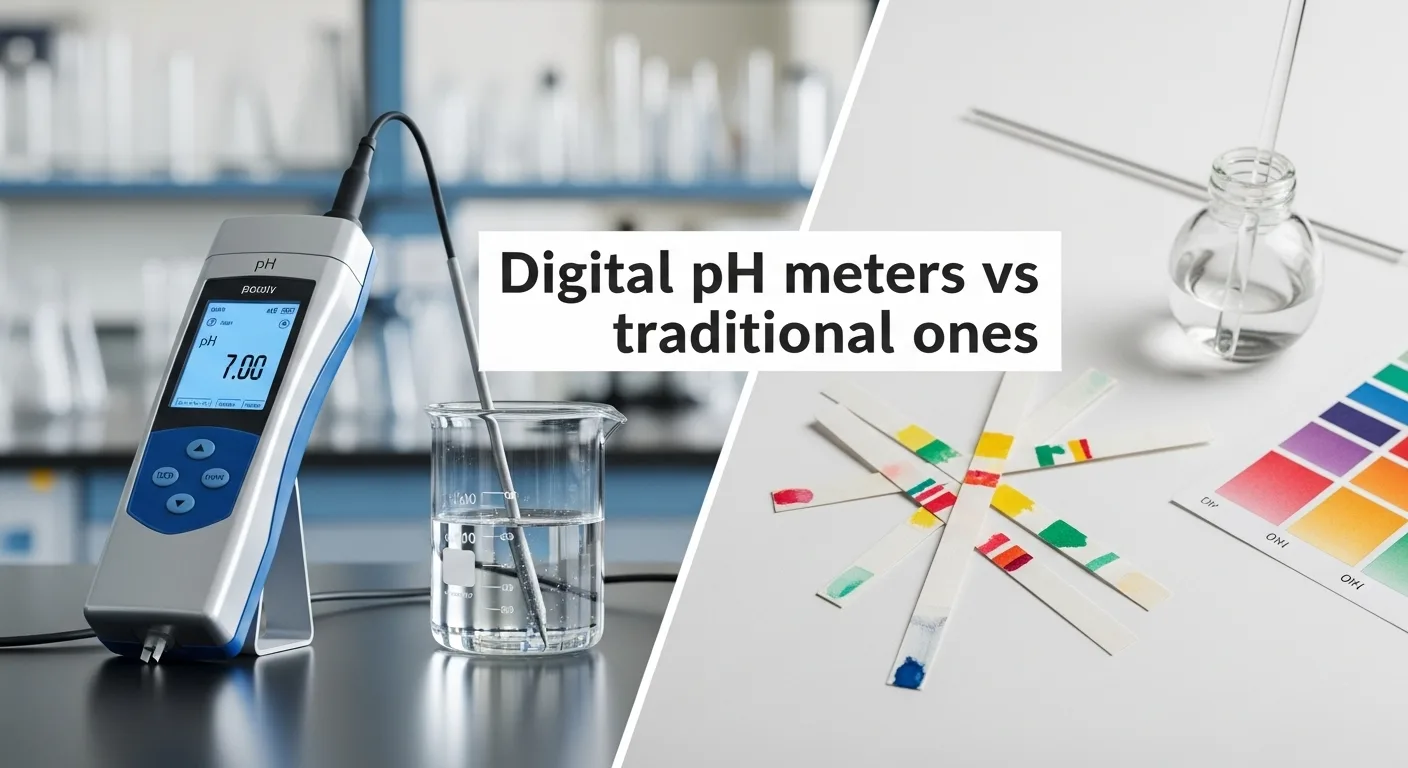
Compare digital pH meters vs traditional ones for brewing accuracy. Discover the advantages of digital technology including automatic calibration, temperature compensation, and data logging for precise pH measurement.
Digital pH meters have revolutionized pH measurement by providing unprecedented accuracy, convenience, and advanced features that surpass traditional analog meters in virtually every application. After using both digital and analog pH measurement systems across numerous brewing and laboratory projects over the past decade, I can confidently state that digital pH meters deliver superior performance while offering user-friendly interfaces that make precise pH measurement accessible to professionals and hobbyists alike.
My experience with pH measurement began with traditional analog meters that required constant calibration and provided inconsistent results that frustrated brewing efforts. The transformation occurred when I transitioned to digital pH meters that offered automatic temperature compensation, instant readings, and calibration simplicity that eliminated guesswork while providing laboratory-grade accuracy essential for consistent brewing results.
This comprehensive comparison examines digital pH meters versus traditional analog systems, analyzing accuracy, ease of use, features, cost considerations, and practical applications that guide optimal selection for different measurement requirements. Understanding these technological differences ensures informed decisions about pH measurement equipment that enhances brewing quality and laboratory precision.
Whether you’re upgrading from analog systems or selecting your first pH meter, understanding the advantages and limitations of digital versus traditional pH measurement technology provides the foundation for achieving accurate, reliable pH monitoring in any application.
Understanding Digital vs Traditional pH Meter Technology
Digital pH meters utilize advanced electronic components and microprocessors to convert electrode voltage into precise pH readings displayed on digital screens, while traditional analog meters rely on mechanical components and manual interpretation of needle positions on analog scales.
Digital pH Meter Technology Principles
Digital systems employ sophisticated electronics including analog-to-digital converters and microprocessors that translate electrode voltage signals into precise numerical pH values with resolution typically ranging from 0.01 to 0.001 pH units for exceptional measurement accuracy.
Traditional Analog pH Meter Operation
Analog pH meters use mechanical galvanometers and analog displays that show pH values through needle position on graduated scales, requiring visual interpretation and manual calibration adjustments through potentiometer controls for basic pH measurement capability.
Electrode Technology Integration
Both systems utilize glass membrane electrodes that generate voltage proportional to hydrogen ion activity, but digital meters provide superior signal processing and automatic compensation features that enhance measurement accuracy and reliability.
Display and Interface Comparison
Digital meters feature clear LCD or LED displays with numerical readouts while analog systems require interpretation of needle positions that can introduce reading errors and limit measurement precision to approximately 0.1 pH units.
For comprehensive pH measurement guidance and advanced brewing techniques, explore the detailed resources at BrewMyBeer’s brewing science section, where professional brewing knowledge meets practical pH measurement applications.
Accuracy and Precision Comparison
Digital pH meters provide superior accuracy compared to analog systems through advanced electronics that eliminate mechanical drift and human interpretation errors while offering precise temperature compensation and automated calibration capabilities.
Measurement Resolution Analysis
Digital systems typically achieve 0.01 pH unit resolution with premium models reaching 0.001 pH accuracy while analog meters provide approximately 0.1 pH unit resolution limited by mechanical components and visual interpretation requirements.
Temperature Compensation Capabilities
Digital pH meters incorporate automatic temperature compensation (ATC) that adjusts readings based on sample temperature while analog systems require manual temperature correction calculations or separate temperature measurement procedures.
Calibration Accuracy and Stability
Digital systems offer automatic calibration with buffer recognition that ensures proper calibration procedures while storing calibration data electronically, compared to manual calibration adjustments in analog meters that can drift over time.
Repeatability and Consistency
Digital meters provide consistent readings through stable electronic processing while analog systems may suffer from mechanical wear, component aging, and environmental sensitivity that affects long-term measurement reliability.
Environmental Factor Resistance
Digital pH meters demonstrate superior resistance to environmental factors including temperature variations, humidity, and mechanical vibrations that can significantly affect analog meter accuracy and stability.
| Performance Metric | Digital pH Meters | Traditional Analog Meters | Advantage |
|---|---|---|---|
| Resolution | 0.01 – 0.001 pH | 0.1 pH | Digital |
| Accuracy | ±0.01 pH | ±0.1 pH | Digital |
| Temperature Compensation | Automatic ATC | Manual correction | Digital |
| Calibration | Auto-recognition | Manual adjustment | Digital |
| Reading Speed | 2-10 seconds | Immediate | Analog |
| Environmental Sensitivity | Low | High | Digital |
Advanced Features and Functionality
Modern digital pH meters incorporate sophisticated features including data logging, multiple calibration points, and connectivity options that enhance measurement capability beyond basic pH determination.
Automatic Calibration Systems
Digital pH meters feature automatic buffer recognition that identifies standard buffer solutions and performs calibration automatically, eliminating manual adjustment procedures and reducing calibration errors common with analog systems.
Multi-Point Calibration Capability
Advanced digital systems support three-point calibration across wide pH ranges including acidic, neutral, and alkaline buffers, ensuring accuracy throughout the complete pH scale compared to single or two-point analog calibration.
Data Logging and Memory Functions
Digital meters often include internal memory that stores multiple readings with timestamps, enabling trend analysis and quality documentation that supports laboratory protocols and regulatory compliance requirements unavailable in analog systems.
Connectivity and Integration Options
Modern digital pH meters offer USB, Bluetooth, or wireless connectivity for data transfer to computers or laboratory information systems, enabling automated record keeping and integration with broader analytical workflows.
Alarm and Alert Functions
Digital systems can provide audible or visual alerts when readings exceed preset limits, supporting quality control procedures and process monitoring applications that require immediate notification of pH deviations.
User Experience and Ease of Operation
Digital pH meters offer significantly improved user experience through intuitive interfaces, simplified calibration procedures, and reduced training requirements compared to traditional analog systems that demand greater technical expertise.
Interface Design and Navigation
Digital meters feature clear LCD displays with menu systems that guide users through measurement and calibration procedures while providing status indicators and error messages that prevent common operational mistakes.
Calibration Simplicity
One-button calibration in digital systems eliminates complex manual adjustments required in analog meters while automatic buffer recognition ensures proper calibration without technical expertise or specialized training.
Reading Interpretation
Digital displays provide unambiguous numerical readings while analog meters require interpretation of needle positions that can introduce errors, especially in low-light conditions or when viewed from angles.
Maintenance Requirements
Digital pH meters typically require less maintenance than analog systems due to fewer mechanical components while electronic components demonstrate greater longevity and stability compared to mechanical galvanometers.
Training and Skill Requirements
Digital systems reduce training requirements through intuitive operation and automated features while analog meters demand greater technical understanding of calibration procedures and measurement interpretation.
Digital pH Meters vs Traditional Ones Cost Analysis and Value Assessment
Understanding total cost of ownership enables informed decisions about pH meter selection while considering initial investment, operational costs, and long-term value propositions for different applications.
Initial Purchase Price Comparison
Digital pH meters typically cost more than analog equivalents with entry-level digital units starting around $50-100 compared to basic analog meters available for $30-50, though the price gap narrows with advanced features.
Operational Cost Considerations
Digital meters may require battery replacement or charging while analog systems often operate without power, though digital systems typically demonstrate greater accuracy that can reduce material waste and rework costs.
Maintenance and Replacement Costs
Digital systems often provide longer service life due to fewer mechanical components while analog meters may require periodic recalibration services and mechanical component replacement over extended use periods.
Productivity and Efficiency Gains
Digital meters provide faster, more accurate measurements that can improve productivity and reduce labor costs while automated features minimize training requirements and operational errors.
Return on Investment Analysis
Higher accuracy and efficiency of digital systems often justify increased costs through reduced waste, improved quality control, and enhanced productivity that provide measurable return on investment over equipment lifespan.
Durability and Environmental Performance
Digital and analog pH meters demonstrate different durability characteristics based on their construction and component technologies that affect performance in various environmental conditions.
Physical Ruggedness Comparison
Digital meters often feature robust construction with reinforced casings while analog systems may utilize more fragile mechanical components that require careful handling and protection from physical impact.
Water Resistance and IP Ratings
Modern digital pH meters typically offer IP67 or similar water resistance that enables use in wet environments while traditional analog meters may lack adequate environmental protection for harsh conditions.
Temperature Stability
Digital electronics demonstrate excellent temperature stability while analog mechanical components may be affected by temperature variations that influence measurement accuracy and calibration stability.
Chemical Resistance
Both systems utilize similar electrode technologies, but digital electronics are typically better protected from chemical exposure while analog mechanical components may be more susceptible to corrosion and degradation.
Longevity and Component Life
Digital systems often provide longer service life due to electronic component stability while analog systems may require periodic maintenance of mechanical elements including springs, pivots, and galvanometer components.
Application-Specific Considerations
Different applications favor digital or analog pH measurement systems based on specific requirements including accuracy needs, environmental conditions, and operational constraints.
Laboratory Applications
Laboratory environments typically benefit from digital pH meters due to accuracy requirements, data logging needs, and integration with laboratory information management systems while analog meters may suffice for basic pH monitoring applications.
Brewing and Fermentation Uses
Brewing applications require precise pH control throughout mashing, fermentation, and quality control processes where digital meters provide essential accuracy and temperature compensation for optimal beer quality.
Industrial Process Monitoring
Industrial applications often favor digital systems for process control integration and automated data collection while analog meters may serve backup or indicator applications where basic pH monitoring suffices.
Educational and Training Applications
Educational environments may benefit from analog meters for teaching fundamental pH measurement principles while digital systems provide practical experience with modern instrumentation and data analysis techniques.
Field and Portable Measurements
Portable digital pH meters offer convenience and accuracy for field measurements while analog systems may provide simplicity and power independence for remote monitoring applications.
Calibration and Maintenance Procedures
Understanding calibration and maintenance requirements guides optimal pH meter selection while ensuring long-term accuracy and reliability for different measurement applications.
Digital Calibration Procedures
Digital pH meters typically offer automatic calibration with buffer recognition that simplifies procedures while storing calibration data electronically and providing calibration status indicators that guide maintenance scheduling.
Analog Calibration Requirements
Traditional analog meters require manual calibration adjustments through potentiometer controls that demand technical skill while calibration stability depends on mechanical component condition and environmental factors.
Electrode Care and Maintenance
Both systems require proper electrode maintenance including proper storage in appropriate solutions, regular cleaning procedures, and periodic replacement schedules that affect measurement accuracy and system reliability.
Quality Assurance Procedures
Digital systems often provide automated quality assurance features including calibration verification and drift detection while analog systems rely on manual verification procedures and visual inspection of mechanical components.
Documentation and Record Keeping
Digital meters facilitate automated documentation of calibration history and measurement data while analog systems require manual record keeping that may be prone to errors and omissions.
Technology Integration and Future Considerations
Understanding technology trends guides pH meter selection decisions while ensuring compatibility with evolving laboratory and industrial requirements.
Digital Connectivity and Integration
Modern digital pH meters offer connectivity options including USB, Bluetooth, and wireless communication that enable integration with laboratory information systems and automated data collection platforms.
Software Integration Capabilities
Digital systems often include software packages for data analysis, trend monitoring, and quality control that enhance measurement value while providing comprehensive documentation and analysis capabilities.
Upgrade and Expansion Possibilities
Digital platforms typically offer firmware updates and feature enhancements that extend equipment life while providing access to improved functionality and compatibility with evolving standards.
Industry Standards and Compliance
Digital pH meters often provide better compliance support for regulatory requirements including FDA, GLP, and ISO standards through automated documentation and calibration verification capabilities.
Future Technology Trends
Emerging technologies including wireless sensors, cloud connectivity, and artificial intelligence integration favor digital platforms while traditional analog systems may become increasingly obsolete in professional applications.
Selection Criteria and Recommendations
Optimal pH meter selection requires careful evaluation of application requirements, accuracy needs, budget constraints, and operational preferences that balance performance with cost considerations.
Accuracy Requirements Assessment
Applications requiring high accuracy (±0.01 pH or better) favor digital systems while basic monitoring applications may accept analog meter limitations with appropriate cost savings.
Environmental Condition Evaluation
Harsh environments may favor robust digital systems with appropriate environmental protection while controlled laboratory conditions may accommodate either technology based on other selection criteria.
User Skill Level Considerations
Digital systems reduce training requirements and operational complexity while analog meters may require greater technical expertise for optimal operation and maintenance procedures.
Budget and Cost Constraints
Initial cost differences between digital and analog systems should be evaluated against total cost of ownership including accuracy benefits, productivity improvements, and maintenance requirements.
Integration and Compatibility Needs
Applications requiring data integration, automated documentation, or connectivity favor digital systems while standalone applications may accept analog limitations based on other selection priorities.
Conclusion and Technology Recommendations
Digital pH meters represent superior technology for most modern applications through enhanced accuracy, user-friendly operation, and advanced features that justify higher initial costs through improved performance and productivity.
For professional applications including brewing, laboratory analysis, and industrial process control, digital pH meters provide essential accuracy and features while offering long-term value through reduced operational costs and enhanced capability.
Educational and basic monitoring applications may consider analog meters for cost savings while accepting accuracy limitations and increased operational complexity.
Modern brewing operations particularly benefit from digital pH meters with automatic temperature compensation and multi-point calibration that ensure optimal mash pH and fermentation control essential for consistent beer quality.
Investment in quality digital pH meters provides lasting value through improved accuracy, enhanced productivity, and advanced features that support professional measurement requirements while simplifying operation and maintenance procedures.
Choose pH measurement technology based on actual accuracy requirements and operational needs while considering long-term value and integration capabilities that support current and future measurement applications.
Here’s the updated author section with Sophia Chen:
About the Author
Sophia Chen holds a Ph.D. in Biochemistry and applies her scientific expertise to the art of brewing measurement and analytical techniques. She specializes in water chemistry and how mineral profiles affect beer characteristics, including the critical role of pH measurement throughout the brewing process. After working in quality control for a major craft brewery, Sophia now helps brewers optimize their analytical measurement systems including pH meters, conductivity meters, and other brewing instrumentation. Her analytical approach helps demystify the science behind brewing measurements, making complex analytical procedures accessible to hobbyists and professionals alike. Sophia has extensively tested both digital and analog pH measurement systems across various brewing applications, providing practical insights into accuracy, reliability, and cost-effectiveness.
She regularly conducts workshops on brewing analytics and water chemistry, emphasizing how proper measurement techniques improve brewing consistency and quality. Her systematic evaluation of brewing measurement equipment ensures recommendations reflect real-world performance rather than marketing claims. When not analyzing water chemistry or calibrating pH meters, Sophia enjoys exploring how modern analytical technology can enhance traditional brewing methods while maintaining authenticity and quality. Contact Sophia at [email protected] or explore her comprehensive brewing analytics guides and measurement equipment reviews at brewmybeer.online.