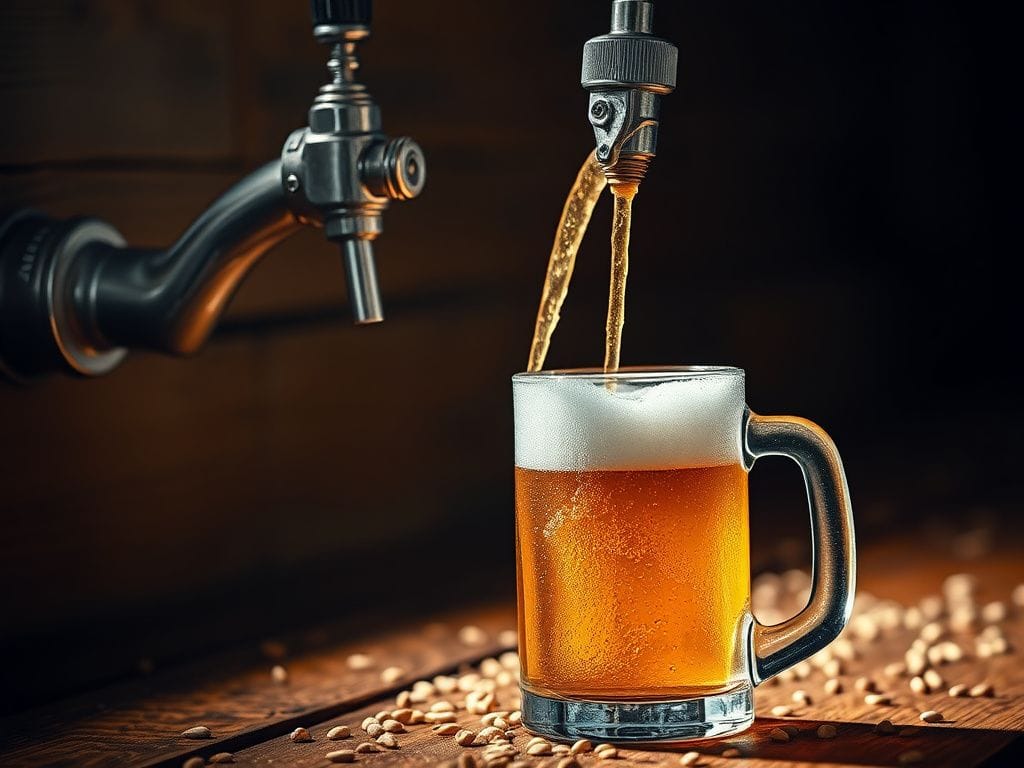
This master guide dissects the Intertap and Nukatap forward-sealing faucets, critical components for optimal home draft systems. We provide a rigorous technical comparison of their design, materials, flow dynamics, and maintenance protocols. Understanding these engineering specifics ensures superior dispense quality, hygiene, and longevity for your precision-engineered beer delivery system. Choose wisely for a consistently perfect pour.
Forward-Sealing Faucet Technical Comparison: Intertap vs. Nukatap
| Parameter | Intertap (Standard/FC) | Nukatap (Standard/FC) | Technical Mechanism/Design | Performance Impact |
|---|---|---|---|---|
| Sealing Mechanism | Shuttle-based poppet with static O-rings. Front-sealing PTFE/EPDM. | Floating shuttle with minimal dynamic O-rings. Front-sealing food-grade silicone. | Intertap uses a spring-loaded shuttle pressing a poppet against the front of the faucet body. Nukatap employs a self-centering, floating shuttle minimizing contact friction. | Nukatap’s design reduces beer exposure to air after dispense, minimizing sticky residue and preventing contamination. Less static friction on Nukatap for smoother action. |
| Material Composition | 304 Grade Stainless Steel body. Various O-ring materials (PTFE, EPDM). Chrome-plated brass options available. | 304 Grade Stainless Steel body. All internal seals are food-grade silicone. | Both utilize corrosion-resistant 304 SS for critical beer path components. Nukatap’s consistent silicone seals offer broader chemical compatibility and superior longevity. | Silicone seals in Nukatap offer enhanced resistance to caustic cleaning solutions and higher temperatures, extending service life and reducing replacement frequency compared to mixed material Intertap seals. |
| Flow Control Mechanism | FC: Roller-cam based external lever manipulates shuttle travel, restricting flow. | FC: Precision-machined internal piston moves within a tapered bore, adjusting restriction. | Intertap FC uses an external cam, which can introduce turbulence if not precisely machined. Nukatap FC uses an internal piston for finer, more linear control over flow rate. | Nukatap FC provides more laminar flow adjustment, reducing turbulence and foaming, particularly critical for highly carbonated or problematic styles. Intertap FC offers robust, but less granular control. |
| Cleaning & Maintenance | Full disassembly for deep cleaning. O-ring replacement as needed, typically every 6-12 months for heavy use. | Minimally exposed internal surfaces. Full disassembly for deep cleaning. Silicone O-rings exhibit longer service intervals. | Both are user-serviceable. Nukatap’s design reduces crevices where beer can dry, simplifying routine rinsing. Silicone seals in Nukatap resist deterioration longer. | Nukatap requires less frequent deep cleaning and O-ring replacement, leading to reduced operational downtime and maintenance costs. Both benefit from routine sanitization. |
| Thermal Mass & Transfer | Standard 304 SS body, typical thermal mass. | Standard 304 SS body, typical thermal mass. Slightly more streamlined internal geometry. | Both faucets will equilibrate to ambient temperature without a tap cooler. The internal geometry influences the beer’s residence time and potential for thermal pickup. | Minimal difference in direct thermal transfer impact. However, cleaner internal surfaces of Nukatap reduce potential nucleation sites from dried beer, which can contribute to thermal-induced foaming. |
Draft System Pressure Balancing Calculation
Achieving a balanced draft system is paramount for controlled, foam-free dispensing. This involves matching the system’s total resistance to the pressure required to maintain CO2 in solution at a given temperature and carbonation level. The faucet contributes to this total resistance, especially flow control models.
Consider a typical serving scenario:
- Desired CO2 Volume (V): 2.5 volumes
- Serving Temperature (T): 38°F (3.3°C)
First, calculate the equilibrium pressure (Ps) required to maintain carbonation:
Ps = [(V – 0.17) / 0.5] + (T * 0.05) – 0.15 (A common approximation, in PSI)
Ps = [(2.5 – 0.17) / 0.5] + (38 * 0.05) – 0.15
Ps = [2.33 / 0.5] + 1.9 – 0.15
Ps = 4.66 + 1.9 – 0.15
Ps ≈ 6.41 PSI
Next, calculate the total resistance needed from the beer line and faucet to balance this pressure, assuming a negligible elevation difference (e.g., keg and faucet at similar height).
For a standard 3/16″ ID vinyl beer line, resistance is approximately 2.2 PSI per foot (PPL).
Required Line Length (L) = Ps / PPL
L = 6.41 PSI / 2.2 PSI/ft
L ≈ 2.91 feet
This calculation provides a baseline for line length. However, the faucet itself, especially a flow control variant, adds additional resistance. A fully open flow control faucet might add 0.5-1.5 PSI of resistance, while a partially closed one can add significantly more (up to 10+ PSI). Therefore, the actual line length can be reduced when using a flow control faucet.
If the Nukatap FC (or Intertap FC) adds, for example, 3 PSI of resistance when partially open for a controlled pour, the remaining required line resistance is 6.41 PSI – 3 PSI = 3.41 PSI.
New Required Line Length = 3.41 PSI / 2.2 PSI/ft ≈ 1.55 feet.
This demonstrates how a flow control faucet provides an adjustable “resistance valve,” allowing for shorter beer lines, system fine-tuning, and the ability to dispense a wider range of carbonation levels with a single line setup, optimizing the pour without complex line changes. Precise control offered by Nukatap FC’s piston mechanism allows for more accurate adjustments to this variable resistance.
Deep Dive: Intertap vs. Nukatap – The Definitive Forward-Sealing Faucet Technical Analysis
The evolution of draft dispensing technology for the home bar and professional tasting room has culminated in the widespread adoption of forward-sealing faucets. These devices represent a significant engineering leap over traditional rear-sealing designs, primarily by eliminating the exposure of the faucet’s internal beer path to ambient air after each pour. This fundamental design choice mitigates the primary causes of dried beer residue, microbial growth, and the dreaded “first pour foam bomb” often associated with older faucet types. Within this specialized category, two brands have emerged as industry leaders due to their robust construction, innovative features, and user-centric design: Intertap and Nukatap. This deep dive rigorously dissects the technical merits and practical implications of each, providing a framework for informed selection based on performance metrics, material science, and operational longevity.
The Engineering Imperative of Forward-Sealing
Before dissecting the individual contenders, it is critical to understand the overarching advantages of the forward-sealing paradigm. In a traditional rear-sealing faucet, the sealing mechanism (a plunger or shaft) retracts into the faucet body after dispensing. This action leaves residual beer exposed to oxygen within the faucet bore. Oxidation leads to the rapid formation of sticky beer stone and provides an ideal substrate for bacterial and yeast growth. The subsequent pour forces this stagnant, often contaminated, beer through the tap, leading to off-flavors, excessive foam due to nucleation on particulate matter, and an unhygienic dispensing experience. Forward-sealing faucets, conversely, utilize a shuttle or poppet that seals at the very front of the faucet body, effectively preventing beer from lingering in the exposed tap spout. This design ensures that only fresh beer contacts the internal surfaces with each pour, vastly improving sanitation and maintaining beer quality.
Intertap: Robustness and Modularity
The Intertap faucet, manufactured by KegLand, has established itself as a workhorse in the homebrewing community due to its reliability and practical design. Its core mechanism revolves around a spring-loaded shuttle that carries a poppet. When the handle is engaged, this shuttle retracts, pulling the poppet away from the sealing surface at the front of the faucet spout. Upon release, the spring forces the poppet back into its sealing position, creating a positive seal at the exit point of the faucet. The primary sealing component is a replaceable O-ring, typically made of PTFE (Polytetrafluoroethylene) or EPDM (Ethylene Propylene Diene Monomer), which interfaces directly with the stainless steel seat.
The material composition of the Intertap is primarily 304-grade stainless steel for all components in contact with beer, ensuring excellent corrosion resistance and compatibility with various cleaning and sanitizing agents. Chrome-plated brass versions are also available, offering a more economical entry point, though stainless steel is universally recommended for its superior durability and inertness. The choice of O-ring material is a critical design consideration. PTFE offers exceptional chemical resistance and a low coefficient of friction, contributing to a smooth action. EPDM provides good elasticity and resistance to heat and many chemicals, often preferred for its sealing properties. Regular inspection and replacement of these O-rings are essential for maintaining the Intertap’s sealing integrity and preventing drips.
The Intertap Flow Control (FC) variant introduces an additional layer of complexity and functionality. This model incorporates an external lever that operates a cam mechanism. As the lever is adjusted, it modifies the travel distance of the shuttle, effectively restricting the opening within the faucet. This allows for manual control over the flow rate, which is invaluable for managing foam with highly carbonated beers, dispensing from diverse line lengths, or simply pouring slower for precise fills. The engineering of the cam mechanism requires precise manufacturing tolerances to ensure smooth, repeatable adjustments without introducing excessive turbulence into the beer stream. While highly functional, the roller-cam system, depending on its specific implementation and wear, can sometimes introduce minor turbulent vortices if not perfectly aligned or if the internal components have accumulated mineral deposits, potentially leading to slight foaming issues at certain restriction levels. This feature significantly enhances the versatility of a draft system, as detailed on BrewMyBeer.online, allowing adaptation to different beer styles and serving conditions.
Nukatap: Precision Engineering and Hygiene Optimization
The Nukatap, also a product of KegLand, represents the next generation in forward-sealing faucet design, building upon the foundational success of the Intertap while introducing several key innovations aimed at enhancing hygiene, reducing turbulence, and improving overall dispensing experience. The Nukatap’s sealing mechanism is distinct, featuring a “floating shuttle” design. Unlike the Intertap’s poppet, the Nukatap employs a shuttle that seals directly against the internal front face of the faucet, utilizing a single, strategically placed food-grade silicone O-ring. This design minimizes the number of dynamic seals, reducing friction and potential points of failure. The self-centering nature of the floating shuttle ensures a consistent, positive seal with minimal effort, contributing to a lighter, smoother handle action.
Material science is a strong suit for Nukatap. Like Intertap, its primary construction material is 304-grade stainless steel, ensuring robust chemical resistance and structural integrity. However, a significant advancement in the Nukatap is the exclusive use of food-grade silicone for all internal O-rings and seals. Silicone is prized in brewing applications for its exceptional chemical inertness, high-temperature resistance, and superior elastic recovery compared to other common polymer seals. This translates to extended service intervals, greater resistance to cleaning chemicals (e.g., PBW, Star San), and less likelihood of drying out or cracking, which are common failure modes for EPDM or PTFE seals over time. The inherent lubricity of silicone also contributes to the faucet’s smooth operation.
The Nukatap Flow Control (FC) variant elevates precision dispensing. Instead of a roller-cam system, the Nukatap FC utilizes an internal piston that moves within a precisely tapered bore. Adjusting an external lever directly controls the position of this piston, allowing for extremely fine, linear adjustments to the flow restriction. This piston-driven mechanism is engineered to minimize disruptions to the laminar flow of the beer. By carefully tapering the bore and integrating the piston seamlessly, the Nukatap FC drastically reduces the sheer forces and turbulence commonly associated with flow restriction. This results in a noticeably smoother pour, less nucleation-induced foaming, and greater control over dispense speed, making it an ideal choice for brewers experimenting with diverse beer styles, especially those with high carbonation or delicate characteristics.
Technical Comparison Points and Performance Metrics
A granular technical comparison reveals distinct advantages for each faucet across several critical parameters:
1. Sealing Mechanism & Hygiene:
The Intertap’s poppet-and-O-ring system is effective but relies on the consistent compression of the O-ring against the seat. Over time, O-rings can degrade, leading to minor drips or needing more force to seal. The Nukatap’s floating shuttle and single silicone seal design inherently reduces exposed surface area and crevices where beer can dry. Its self-centering action ensures a more consistent seal with less wear on the O-ring, translating to superior hygiene and less “sticking” after periods of inactivity. The minimized internal geometry of the Nukatap translates to fewer nucleation sites for CO2 breakout, contributing to a smoother pour even before flow control is engaged.
2. Material Durability & Chemical Compatibility:
Both faucets are constructed from 304 stainless steel, which is the industry standard for beer contact surfaces due to its corrosion resistance. The primary differentiator lies in the seal materials. While Intertap offers various O-ring materials, the Nukatap’s exclusive use of food-grade silicone provides a more unified and superior resistance profile. Silicone is highly resistant to both acidic and alkaline cleaning solutions, as well as the alcohols and organic acids present in beer. This enhances the longevity of the seals and reduces the frequency of replacement, a critical factor for high-volume environments or for those seeking minimal maintenance.
3. Flow Control Dynamics & Pour Quality:
This is where the Nukatap FC demonstrably pulls ahead. The Intertap FC’s roller-cam system, while functional, inherently introduces a point of mechanical friction and potentially turbulent flow due to the non-linear restriction method. The Nukatap FC’s internal piston within a tapered bore, conversely, is designed to maintain a more laminar flow profile as the restriction is applied. This refined engineering translates directly to a smoother, less agitated beer stream, significantly reducing foaming during dispense. For brewers who prioritize absolute control and a perfectly calm pour, the Nukatap FC’s piston mechanism offers a tangible performance advantage, particularly for styles that are prone to foaming, such as highly carbonated lagers or wheat beers. Understanding these fluid dynamics is critical for any professional brewer or serious homebrewer.
4. Cleaning & Maintenance Protocols:
Both faucets are designed for user disassembly for thorough cleaning. The Intertap requires careful removal and inspection of its multiple O-rings. The Nukatap, with its simpler internal geometry and fewer dynamic seals (and all silicone), often requires less frequent deep cleaning and O-ring replacement. Its design actively minimizes residual beer adherence, meaning routine rinsing often suffices between kegs, extending the time between full teardowns and sanitization cycles. The ease of maintenance directly impacts the overall operational efficiency of a draft system.
5. Thermal Mass & Temperature Stability:
The thermal mass of both faucets, being 304 SS, is similar. Neither faucet is inherently insulated, and both will equilibrate to ambient temperature if not actively cooled. This can lead to the “first pour foam” phenomenon if the faucet itself is significantly warmer than the beer, causing CO2 to break out of solution as it passes through the warm metal. While external tap coolers or refrigerated towers are the ultimate solution for this, the internal geometry of the Nukatap, with its smoother, less obstructed path, might slightly mitigate initial thermal-induced foaming by reducing nucleation points from internal surface irregularities or dried beer remnants. For serious draft system design, understanding optimal serving temperatures and minimizing thermal gradients is paramount, often referenced in professional brewing handbooks.
6. Shank Compatibility & Modularity:
Both Intertap and Nukatap faucets adhere to the industry-standard 1-1/8″-18 UNS threading, ensuring broad compatibility with existing beer shanks and draft towers. This modularity allows for easy upgrading of older rear-sealing faucets without requiring a complete overhaul of the draft system hardware. Both brands also offer a range of specialized accessories, such as stout spouts and growler fillers, enhancing their versatility for different dispensing needs.
Application Scenarios and Definitive Choice
The choice between Intertap and Nukatap ultimately hinges on a balance of budget, priorities, and expected usage patterns.
Choose Intertap if:
* Budget is a primary concern: Intertap faucets are generally more affordable, offering excellent performance for their price point.
* Robustness and proven track record are key: The Intertap has been a reliable staple in the homebrewing community for years.
* Modularity is desired: A wide range of accessories are readily available and interchangeable.
* Flow control is needed, but ultra-fine precision is not absolutely critical: The FC model provides effective flow adjustment for most applications.
Choose Nukatap if:
* Uncompromising hygiene and minimal maintenance are top priorities: The floating shuttle and silicone seals offer superior cleanliness and longevity.
* Absolute precision in flow control is essential: The Nukatap FC’s piston mechanism provides the most laminar and adjustable pour. This is particularly beneficial for high-carbonation beers, difficult styles, or when serving from a system with variable pressure conditions.
* Premium build quality and aesthetic design are valued: The Nukatap’s sleek design and refined action are often perceived as a step above.
* Long-term operational cost reduction is considered: Less frequent seal replacements and reduced cleaning demands contribute to lower total cost of ownership.
* Brewing highly carbonated beers or diverse styles: The superior flow control minimizes foam and ensures a consistent pour across various carbonation levels. For further insights into balanced systems, consult resources from the Homebrewers Association.
Conclusion
Both Intertap and Nukatap represent excellent choices in the forward-sealing faucet market, offering significant advantages over traditional rear-sealing designs. The Intertap stands as a highly capable, cost-effective, and durable option that will serve the vast majority of homebrewers exceptionally well. Its robust construction and effective flow control variant make it a perennial favorite.
However, the Nukatap, particularly its FC variant, represents the pinnacle of current forward-sealing faucet technology. Its refined internal geometry, exclusive use of food-grade silicone seals, and innovative piston-driven flow control mechanism elevate hygiene, reduce turbulence, and offer unparalleled precision in dispensing. For the discerning brewer or home bar enthusiast who demands the absolute best in pour quality, minimal maintenance, and long-term reliability, the incremental investment in a Nukatap, especially the FC model, is justified by its superior performance metrics and advanced engineering. The definitive choice, therefore, comes down to a nuanced understanding of these technical distinctions and alignment with individual brewing philosophies and budgetary considerations.