Last updated:
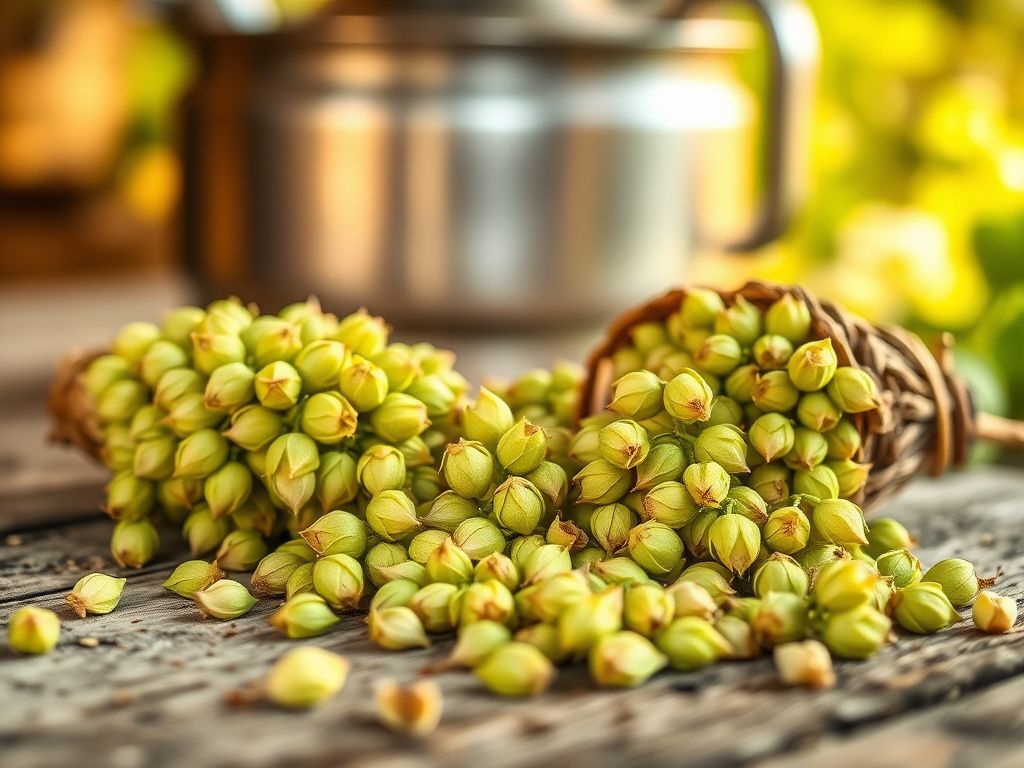
Santiam is an Oregon-bred hop variety I first encountered in a homebrew shop that carried a Pacific Northwest hop selection alongside the usual Cascade and Willamette. The breeding background told me what to expect before I even opened the bag, it’s a cross of Tettnang and Hallertau varieties, and that heritage comes through clearly: clean, noble-style character with herbal and mild floral notes that feel genuinely continental despite being American-grown. It’s the hop I reach for when I want noble character without importing from Germany. Substitutes need to respect that specific character rather than treating it as a generic bittering hop.
Santiam hop flavor profile
Santiam hops have a moderate alpha acid content (5–7% AA) with a clean, noble-style character: herbal, mildly floral, slightly spicy with earthy undertones. It’s one of the more successful American attempts at replicating continental noble hop character, bred specifically from Tettnang and Hallertau to carry their refined, old-world quality in an American-grown package. The character is cleaner and more delicate than Cascade, less aggressively earthy than Willamette, and closer to actual German noble hops than most American varieties. Used in German-style lagers (Helles, Pilsner, Märzen), continental ales, and any recipe where classic noble hop character is specified but German imports are unavailable or expensive.
Best substitutes
Hallertau (original German, closest character): The noble hop most directly ancestral to Santiam. Clean, herbal, mild, essentially what Santiam was bred to approximate. Use 1:1. Best choice if German hops are available. Tettnang (German noble): Shares the Tettnang parentage of Santiam, delicate, spicy-herbal, clean. Use 1:1. Very close in character for lager applications. Spalt (German noble): Herbal and spicy with slightly floral notes. Similar to Hallertau in the same noble family. Use 1:1. Liberty (American): American-bred Hallertau cross similar to Santiam, designed for the same continental character. Very close substitute. Use 1:1. Mt. Hood (American noble-style): Another American Hallertau descendant with clean herbal and floral character. Use 1:1, the most widely available alternative in the same noble-American category as Santiam.
Style applications
Santiam is most useful in: German-style Helles and Pilsner (where clean noble character is traditional and the hop must not compete with delicate malt), Märzen and Oktoberfest ales (herbal-floral hop character in a malt-forward framework), Kölsch and German Pils (where continental hop presence is expected), and American lagers and cream ales brewed with a continental character. For any of these styles: the German noble hops (Hallertau, Tettnang, Spalt) are the most stylistically correct substitutes; the American noble-style varieties (Liberty, Mt. Hood, Crystal) are acceptable when German imports aren’t available.
Common Questions
Is there a meaningful difference between Santiam and Liberty for homebrew purposes?
Santiam and Liberty are very similar, both are American-bred varieties developed from the same German noble hop lineage (Hallertau and Tettnang crosses) specifically to provide noble character in American-grown hops. In practice, they’re nearly interchangeable for homebrewing. Santiam is generally described as slightly more spicy and herbal, while Liberty tends toward the floral and mild side, but the difference is subtle enough that most homebrewers would struggle to distinguish them blind in a finished lager. For substitution purposes, Liberty at 1:1 is an excellent Santiam replacement and vice versa. The more meaningful distinction is between either of these American noble-style varieties and the actual German noble hops: Hallertau, Tettnang, and Spalt will always be cleaner, more refined, and more authentically continental than their American bred counterparts, which is why they command a price premium and remain the preferred choice for competition-focused German lager brewing.